The videos are both of Jordan Peterson discussing his extraordinary book, 12 Rules for Life. This is the statement that comes with the first:
The clinical psychologist Jordan Peterson sets out twelve profound and practical principles for living a meaningful life. His 12 Rules for Life will offer an antidote to the chaos in our lives: with eternal truths applied to our modern problems.
As for the book, I just finished it today, and my advice to you is to buy it and read it yourself. It is like nothing you have ever come across before.
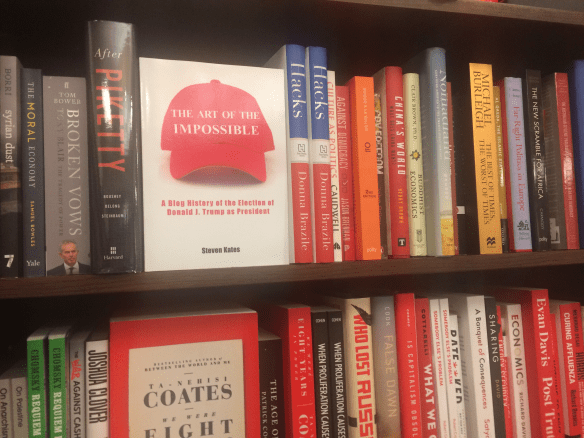
It is the first time in years I have seen a book of mine on a bookstore shelf, and a mere $39.95 as well. Has only happened twice before but incredible to see. I imagine it may have been because the title is so ambiguous – Art of the Impossible – so that it might have been anti-Trump as was every other political tract sharing the shelf. You can also buy the book from The Book Depository for A$29.21 and with worldwide free delivery. In my view, the farther we move from the election, the better the book becomes. It puts everything in context and helps you remember the might have beens, every one of which is a horror story we are not being made to endure. No book a decade from now will be able to make you understand the 2016 election the way this book does.
What has also amazed me is that even with all the interest in PDT across the world, I have never ever seen one of his own books anywhere for sale, other than in op-shops, where I am the only one to buy them at $3 a copy. In particular, why does no one sell or buy his Art of the Deal which has always been plain sailing to get through and would teach you something about the man who is president you cannot otherwise find out.
FROM THE COMMENTS: And quite unpleasant as well.
It is good to see the author is modest enough to try and wrap some sort of narrative around his ham fisted attempt to create interest in his book
So let me introduce another concept that may be foreign to some people, that it is almost a certainty that most people who write books do so in the hope that others will read them. And I will add this as well – for the author who goes to the trouble of writing these books, it is usually not to make money but just to be part of a conversation. One of the lessons, let me also add, that comes from frequenting secondhand bookshops is that you get a true understanding of how all is vanity. Every book you see – unsaleable at 50 cents – would have taken its author at least a year, and often much much more, from conception to publication. And there they now are, mouldering away, as are most of their authors. That said, every book was also something someone had once wished to do and had taken genuine effort to bring to completion. You should therefore not be resentful if an author suggests that you might read his book. In this one instance, and there are few others in life, you may be sure they are really trying to do you a good turn whatever you may think yourself.
Wandering through the city’s bookshops yesterday I came across this: Is Capitalism Obsolete? with the subtitle, “A Journey through Alternative Economic Systems”. I live in hope that there will be at least one volume somewhere that has no for an answer. Haven’t seen anything in years. The above is my picture of the back cover. If you read how they advertise the book, you will find the least unexpected turn in the history of modern publishing.
After communism collapsed in the former Soviet Union, capitalism seemed to many observers like the only game in town, and questioning it became taboo for academic economists. But the financial crisis, chronic unemployment, and the inexorable rise of inequality have resurrected the question of whether there is a feasible and desirable alternative to capitalism. Against this backdrop of growing disenchantment, Giacomo Corneo presents a refreshingly antidogmatic review of economic systems, taking as his launching point a fictional argument between a daughter indignant about economic injustice and her father, a professor of economics.
Is Capitalism Obsolete? begins when the daughter’s angry complaints prompt her father to reply that capitalism cannot responsibly be abolished without an alternative in mind. He invites her on a tour of tried and proposed economic systems in which production and consumption obey noncapitalistic rules. These range from Plato’s Republic to diverse modern models, including anarchic communism, central planning, and a stakeholder society. Some of these alternatives have considerable strengths. But daunting problems arise when the basic institutions of capitalism—markets and private property—are suppressed. Ultimately, the father argues, all serious counterproposals to capitalism fail to pass the test of economic feasibility. Then the story takes an unexpected turn. Father and daughter jointly come up with a proposal to gradually transform the current economic system so as to share prosperity and foster democratic participation.
Capitalism means a system of production in which the ownership of firms is in the hands of private individuals who use the capital they buy, rent or own, while directing the employees they hire, to produce goods and services in a lawful way to sell what they have produced to others in order to earn a profit for themselves. There are lots of variations on the theme but that is essentially it. Nothing else has ever worked, nothing else will ever work, however many fools and their fictional daughters there may be who think they have come up with something else.
My last suggestion for Christmas present is my Art of the Impossible, a book entirely made up my blog posts that led up to the American election. These posts were focused from the very start on why Donald Trump was and is the only person who might just save the American Republic and the civilisation of the West. There is the left, the faux-conservatives, the crony-capitalist Republicans, the Deep State and the media – just to name a few – who had done all they could to prevent Trump from becoming President. This book gives you an almost day-by-day description, commentary and contemporary history on how, in spite of everything ranged against him, Donald Trump ended up as president. The book will remind you exactly what’s at stake because none of his enemies have gone away, but also, everyone who wanted him president still supports him as strongly as ever.
Naturally I have a fondness for all of my books, but this one is the one that has a value beyond anything else I have written. Even to this day, there is almost nowhere you can go to find a good word said about PDT, nor anything to explain why his election is the miracle it was. You look around you and try to find anything anywhere other than occasionally explaining what he has done and why it matters. Here you may find a cut down version of the post I wrote when the book was first published in March explaining what makes the book so unique.
First, the book is almost entirely about Donald Trump. From the time I saw him speak in July 2015 it was obvious how beyond every other candidate he was both in clarity of thought and his ability to get elected. He was all that stood between us and the election of Hillary.
Second, it is a “blog history”, the first of its kind. It is therefore utterly contemporary in a way that no other book can be so that you follow the drama of the events as they happened.
Third, it is written by a classical conservative. There are plenty of ideologies in the world not based on free markets, free individuals and our living within our own historical traditions, but that is how a genuine conservative thinks. It is this conception that permeates the book.
Fourth, the events as they happened are all there. It not only brings back all of the events of the campaign right up until the election on November 8, but will help you understand what is going on right now which is a continuation of the election after the election was over.
Finally, it is an historical record that can never be re-produced. It is and will remain one of a kind. This is not a retrospective look at what happened then; it is a contemporary account of what happened as it was happening. The book’s immediacy is the book’s most astonishing aspect. You are taken right back into the maelstrom that surrounded PDT’s election.
Only for someone who recognises how important Donald Trump’s election was. No one else would read it, no one else could get past page one even if you could get them to open the book.
The Book Depository price is $30.59, it comes with free delivery, they promise delivery pre-Christmas and you can order the book here.
If you are looking for Christmas ideas, you might consider Economics for Infants, the only book of its kind.
A perfect book to read to your children and grandchildren! How do you explain the complexities of the economic order to a child? This retro-inspired illustrated book attempts this task in storybook form. A basic primer on economics for the youngest of readers.
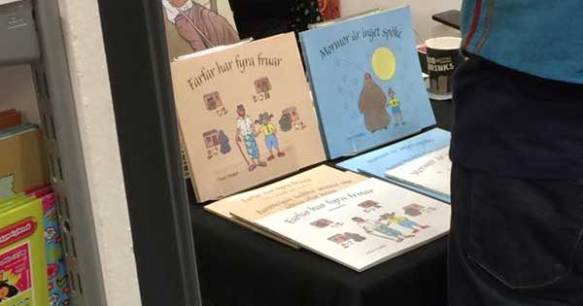
For myself, what I like best about the book are its pictures which illustrate the points with an astonishing clarity. There is no children’s book anywhere, past or present, that has illustrated Say’s Law so incredibly well along with so much more. In a recent pee’er reviewed study, 97% chose Economics for Infants as their favourite book (astonishingly, the same as the proportion of climate scientists who believe global warming is caused by humans!). The above photo was taken during that study and is conclusive proof that if your child is to succeed in getting into the best kindergartens and play groups, this is the book you will need to ensure they have read and its contents absorbed. You can see how the other books were ignored while Economics for Infants held the attention of this particularly bright child not entirely chosen at random.
And let me also say this. There may be parents of young children whom you may feel need a refresher course in the economics of the market. Give a copy to their children and contemplate the pleasure it will give in reading about how the capitalist system works for the betterment of all, that is, the pleasure it will give you contemplating their parents vetting the book while deciding whether to pass it along.
I gave a presentation yesterday on “Donald Trump – One Year On.” These were my speaking notes. And while I mainly think of politics in relation to policy, the left thinks of policy as a fashion statement. They hate capitalism and they hate Christianity which basically explains most of what they do and say. Even in a friendly audience, after a year of finding how moderate and full of good sense PDT is, I was asked, what about Russia? Well what about Russia, I replied. The 2020 election is no certainty, nor are the Congressional elections next year. There are enough on the Republican side in the same [slime]mould as our Malcolm who would prefer to see the Democrats take Congress than see Trump succeed. Anyway, this is what I said on the first anniversary of the election. And of course, the book I refer to is my Art of the Impossible which remains as alive and relevant as the day it was published. Highly recommended, if I do say so myself.
The most extraordinary part about going through the book a year after the election is to find how relevant every page of it still is.
The areas of relevance:
• domestic
• economic
• international
• cultural/social
Who are the enemies he is dealing with and what are the central issues?
fanatical and ignorant opposition
• SJW are far left anti-capitalist, anti-free institutions
• the left in the US and across the world is no longer about provisioning the welfare state but is out and out communist and totalitarian
• Antifa is representative of the mindset
far-far left media
• malevolent, ignorant and totalitarian at heart
• utterly oppositional in everything they say or write
• stand for nothing other than a series of empty clichés
• tweet-storms is Trump’s modern means to outflank the media
• Catallaxy, Quadrant, The Spectator, bits of Sky News and tiny bits of The Australian are literally the only pro-Trump sources in Australia
focus on the national economy – wishes to restore the American economy to good health – others are welcome to join in to restore their own in exactly the same way
• reduce public spending
• roll back regulations
• cut taxation – business and personal
• interest rate increases although limited
• more room for entrepreneurial decision making
• crony-capitalism [Keynesian theory] no longer at the centre of policy
judicial appointments
• rebalancing a left judicial system
• one SCOTUS appointment and others likely to follow
international trade – no evidence of protectionist sentiments – only pro-American sentiments
• no national governmwnt leaves trade relations to the market
• comparative advantage occurs automatically in an economy in which governments do nothing to promote local industry relative to foreign competition – no such government exists – TPP Agreement is 5000 pages long! – that is not free trade
• national governments in every country attempt to steer international trade towards the goods and services they already produce – subsidies, tax breaks, protectionist measures even without tariffs directly applied – plenty of cheating going on at every level
• has merely said the US will not absorb the economic losses watching others bend the rules to their advantage at America’s expense
open-borders
• believes migrants should benefit the host nation
• migration should not be a system of self-selection
• migrants should fit into our system of values based on a Judeo-Christian ethos – if you don’t like the value system here in the West you are not forced to migrate
• he thinks that the value system of the West has worked very well for us in the past – personal wealth and personal freedom to an extent found in no other societies not now nor across the entire sweep of history – and his aim is to preserve these as much as he is able
Islamic jihad
• the most dangerous ideological enemy of the West
• aims to resist to the fullest extent possible
North Korea
• developing nuclear weapons along with an ICBM delivery system
• NK leader is unstable and impossible to reason with
• massive danger
• will never permit NK to have nuclear weapons
• no one else has any plausible approach to dealing with NK – other than the usual left approach which is to do nothing and hope for the best
Global Non-Warming
• absolutely rejects global warming as a basis for policy
• pulled out of the Paris Accords already
• promoting carbon-based fuels
• pulling subsidies from alternative fuels – if you can make it on your own by being competitive OK – otherwise nothing
personal qualities
• tough minded and clear headed
• understands business and the operation of a market economy
• a strong believer in education and learning
• has a high regard for the study of history
The full quote for the title, by the way: comes from, “The difficult we do immediately. The impossible takes a little longer.”
AND FURTHERMORE: A quite striking find by mh in the comments: It’s Trump’s Party Now, wherein we find:
How could the Beltway GOP not see that its defining policies — open borders, amnesty, free trade globalism, compulsive military intervention in foreign lands for ideological ends — were alienating its coalition?
What had a quarter century of Bushite free trade produced?
About $12 trillion in trade deficits, $4 trillion with China alone, a loss of 55,000 plants and 6 million manufacturing jobs.
We imported goods “Made in China,” while exporting our future.
U.S. elites made China great again, to where Beijing is now challenging our strategic position and presence in Asia.
Could Republicans not see the factories shutting down, or not understand why workers’ wages had failed to rise for decades?
The man whose public spirit is prompted altogether by humanity and benevolence, will respect the established powers and privileges even of individuals, and still more those of the great orders and societies, into which the state is divided. Though he should consider some of them as in some measure abusive, he will content himself with moderating, what he often cannot annihilate without great violence. When he cannot conquer the rooted prejudices of the people by reason and persuasion, he will not attempt to subdue them by force; but will religiously observe what, by Cicero, is justly called the divine maxim of Plato, never to use violence to his country no more than to his parents. He will accommodate, as well as he can, his public arrangements to the confirmed habits and prejudices of the people; and will remedy as well as he can, the inconveniencies which may flow from the want of those regulations which the people are averse to submit to. When he cannot establish the right, he will not disdain to ameliorate the wrong; but like Solon, when he cannot establish the best system of laws, he will endeavour to establish the best that the people can bear.
The man of system, on the contrary, is apt to be very wise in his own conceit; and is often so enamoured with the supposed beauty of his own ideal plan of government, that he cannot suffer the smallest deviation from any part of it. He goes on to establish it completely and in all its parts, without any regard either to the great interests, or to the strong prejudices which may oppose it. He seems to imagine that he can arrange the different members of a great society with as much ease as the hand arranges the different pieces upon a chess-board. He does not consider that the pieces upon the chess-board have no other principle of motion besides that which the hand impresses upon them; but that, in the great chess-board of human society, every single piece has a principle of motion of its own, altogether different from that which the legislature might chuse to impress upon it. If those two principles coincide and act in the same direction, the game of human society will go on easily and harmoniously, and is very likely to be happy and successful. If they are opposite or different, the game will go on miserably, and the society must be at all times in the highest degree of disorder.
They have all the answers to questions that are not being asked. Smith could see the gulag even before he had seen Robespierre.
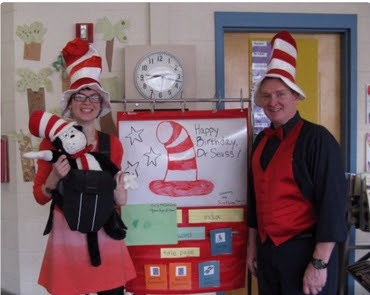
Earlier this month, the first lady sent out collections of 10 Dr. Seuss books to one school in each state to mark National Read a Book Day.
In a letter published on the Horn Book’s Family Reading blog, Cambridgeport Elementary School librarian Liz Phipps Soeiro said that her school wasn’t in need of the books, which included famous titles such as “The Cat in the Hat.”
“I work in a district that has plenty of resources, which contributes directly to ‘excellence,’” she wrote. “My students have access to a school library with over nine thousand volumes and a librarian with a graduate degree in library science.”
Instead, she wrote, the White House should worry more about providing support to schools that are underfunded and subject to government neglect.
“Why not go out of your way to gift books to underfunded and underprivileged communities that continue to be marginalized and maligned by policies put in place by Secretary of Education Betsy DeVos?” she wrote.
A moron of the most typical kind, but now an icon of the left because of her vacuous hatreds based on nothing at all other than the emptiness in her life. But let us also recall this small touch at the end at the link:
Soeiro did not note that former President Barack Obama and First Lady Michelle Obama both read Dr. Seuss books to children several times during their eight years in the White House.
There’s even more. She has even been photographed displaying The Cat in the Hat! which I have taken from Mark Steyn.
It’s not even hypocrisy. She is just a stupid woman with nothing else in her life other than the useless partisanship of her comrades on the left.
There’s a new world coming. In the meantime, if you are looking for some children’s literature, let me recommend Economics for Infants. I doubt it would make it past the librarian at Cambridgeport Elementary School even though she is in need of it more than most.
Will the ’60s ever end? Ever since the ’60s we’ve been debating the ’60s. With the recent bursts of rioting and student activism at Berkeley, Yale, Middlebury, Claremont McKenna, and across the country, even today’s millennials and post-millennials (Generation Z, as they’re called, perched on the very alphabetic cliff) find themselves drafted into nostalgic comparisons with their grandparents’ generation.
My generation, that is. An unusually stupid but arrogant crew that thought itself superior because it rightly fought for equal rights in the American south but wrongly because it fought on the side of the Vietnamese communists and helped deliver the country to a tyranny that is only now being lifted. A very interesting historical summary that can only truly be understood by someone who was there but has completely changed sides.
Singer Joy Villa shocked Hollywood after she burst onto the red carpet in February wearing a MAGA dress and a big beautiful smile to the Grammys. She became a star overnight with skyrocketing album sales as Trump supporters raced to purchase her music.
‘Tolerant’ and ‘loving’ liberals on the other hand, called for Joy Villa’s death–over her support for President Trump.
Villa claimed she had written consent from everyone in the video, however; YouTube claimed “we cannot accept or review agreements granting consent before the video was uploaded.”
YouTube is cracking down on conservatives, Christians and Trump supporters by demonetizing videos, deleting videos and suspending accounts altogether.
As TGP previously reported, pro-Trump personalities Diamond and Silk accused Google-owned YouTube of demonetizing 95 percent of their videos. The pair believes YouTube’s decision was driven by their support for President Trump.
YouTube isn’t the only platform targeting conservatives. Twitter and Facebook routinely censor and suspend pro-Trump accounts without any real explanation. Many conservatives receive vague emails claiming ‘terms of service’ was violated for benign posts while liberals and terrorists run wild on the platforms posting gruesome beheading videos, using profanity and calling for the assassination of president Trump without consequences.



 Law of Markets