Election, what election?

The front page of The Age today did not have a single story related to the election. They must be working under the guidance of, if you have nothing good to say about someone, in this case Kevin Rudd, then don’t say anything at all. Or perhaps it’s, if you have nothing bad to say about someone, and here we are talking about Tony Abbott, then it’s best not to say anything. Or perhaps they were worried about what they would discuss at this event picked up at Tim Blair:

Join senior Age journalists and a Melbourne Writers Festival guest author on Saturday morning at Federation Square to discuss the day’s headlines.

The Age Arts editor Debbie Cuthbertson will lead a conversation with Literary editor Jason Steger, Opinion editor Sushi Das and London Review of Books writer Jeremy Harding at Optic Cafe, Federation Square.

Entry is free, and for $5 you can enjoy ‘bottomless’ coffee and a copy of the Saturday Age.

Optic Café, Federation Square (enter via main plaza), Saturday, August 31, 9-10am. The Age is a Melbourne Writers Festival partner.

Alinsky’s Rules for Radicals

It is useful to remember Alinsky’s Rules for Radicals at all time when dealing with the left. These are not just an aimless series of generalisations but the actual tactics used in political war.

The abuse piled onto Rupert Murdoch is a straightforward application of Rule 12: “Pick the target, freeze it, personalize it, and polarize it.” People in general don’t understand abstractions but are happy to wallow in a specific upon which any number of negative characteristics can be attributed. It ought to be obvious that this is in part a tactical manoeuvre to rally the troops just as it is, in part, an attempt to silence critics of Labor’s incompetence. How to deal with those who apply these rules is a serious issue.

Everyone on our side should therefore be 100% aware of what is going on when an attack is focused on one individual who is intended to become the metaphor for all that is supposedly wrong on the conservative side of politics. Here are all twelve rules. They really do constitute the tactics applied by the shock troops of the left who have nothing to offer in terms of useful policy but are masters of the rhetoric of the class war.

* RULE 1: “Power is not only what you have, but what the enemy thinks you have.” Power is derived from 2 main sources – money and people. “Have-Nots” must build power from flesh and blood. (These are two things of which there is a plentiful supply. Government and corporations always have a difficult time appealing to people, and usually do so almost exclusively with economic arguments.)

* RULE 2: “Never go outside the expertise of your people.” It results in confusion, fear and retreat. Feeling secure adds to the backbone of anyone. (Organizations under attack wonder why radicals don’t address the “real” issues. This is why. They avoid things with which they have no knowledge.)

* RULE 3: “Whenever possible, go outside the expertise of the enemy.” Look for ways to increase insecurity, anxiety and uncertainty. (This happens all the time. Watch how many organizations under attack are blind-sided by seemingly irrelevant arguments that they are then forced to address.)

* RULE 4: “Make the enemy live up to its own book of rules.” If the rule is that every letter gets a reply, send 30,000 letters. You can kill them with this because no one can possibly obey all of their own rules. (This is a serious rule. The besieged entity’s very credibility and reputation is at stake, because if activists catch it lying or not living up to its commitments, they can continue to chip away at the damage.)

* RULE 5: “Ridicule is man’s most potent weapon.” There is no defense. It’s irrational. It’s infuriating. It also works as a key pressure point to force the enemy into concessions. (Pretty crude, rude and mean, huh? They want to create anger and fear.)

* RULE 6: “A good tactic is one your people enjoy.” They’ll keep doing it without urging and come back to do more. They’re doing their thing, and will even suggest better ones. (Radical activists, in this sense, are no different that any other human being. We all avoid “un-fun” activities, and but we revel at and enjoy the ones that work and bring results.)

* RULE 7: “A tactic that drags on too long becomes a drag.” Don’t become old news. (Even radical activists get bored. So to keep them excited and involved, organizers are constantly coming up with new tactics.)

* RULE 8: “Keep the pressure on. Never let up.” Keep trying new things to keep the opposition off balance. As the opposition masters one approach, hit them from the flank with something new. (Attack, attack, attack from all sides, never giving the reeling organization a chance to rest, regroup, recover and re-strategize.)

* RULE 9: “The threat is usually more terrifying than the thing itself.” Imagination and ego can dream up many more consequences than any activist. (Perception is reality. Large organizations always prepare a worst-case scenario, something that may be furthest from the activists’ minds. The upshot is that the organization will expend enormous time and energy, creating in its own collective mind the direst of conclusions. The possibilities can easily poison the mind and result in demoralization.)

* RULE 10: “If you push a negative hard enough, it will push through and become a positive.” Violence from the other side can win the public to your side because the public sympathizes with the underdog. (Unions used this tactic. Peaceful [albeit loud] demonstrations during the heyday of unions in the early to mid-20th Century incurred management’s wrath, often in the form of violence that eventually brought public sympathy to their side.)

* RULE 11: “The price of a successful attack is a constructive alternative.” Never let the enemy score points because you’re caught without a solution to the problem. (Old saw: If you’re not part of the solution, you’re part of the problem. Activist organizations have an agenda, and their strategy is to hold a place at the table, to be given a forum to wield their power. So, they have to have a compromise solution.)

* RULE 12: “Pick the target, freeze it, personalize it, and polarize it.” Cut off the support network and isolate the target from sympathy. Go after people and not institutions; people hurt faster than institutions. (This is cruel, but very effective. Direct, personalized criticism and ridicule works.)

The list is as compiled by Glenn Beck.

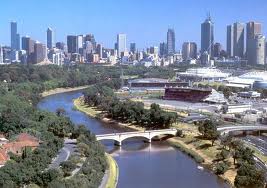
Melbourne the world’s number one city to live in

melbourne

This is a list of The Top Ten Cities in the World published by The Independent in the UK and picked up at Drudge. This is the text that goes with the story:

1. Melbourne, Australia: Australia’s second city may not have the glamour of Sydney, but its colonial heritage and multicultural dynamism more than compensates.

Sydney seventh seems about right.

Who does this remind me of?

This is from a post titled, “Eleven Signs You Might Be Dating a Sociopath“:

RED FLAG #1. Having an oversized ego.

RED FLAG #2. Lying and exhibiting manipulative behavior.

RED FLAG #3. Exhibiting a lack of empathy.

RED FLAG #4. Showing a lack of remorse or shame.

RED FLAG #5. Staying eerily calm in scary or dangerous situations.

RED FLAG #6. Behaving irresponsibly or with extreme impulsivity.

RED FLAG #7. Having few friends.

RED FLAG #8. Being charming–but only superficially.

RED FLAG #9. Living by the “pleasure principle.”

RED FLAG #10. Showing disregard for societal norms.

RED FLAG #11. Having “intense” eyes.

Hmmmmm.

Reading Abbott’s speech

It is always nice to find yourself quoted by Andrew Bolt but to match my own high regard for Tony Abbott’s campaign launch he quotes someone else who slates Abbott for the very lack of philsophy that is readily evident to anyone who actually understands philosophy. I realise you have to understand the unifying theme that exists as the foundation for what Abbott has said but it really isn’t so hard, not really. Abbott wants each of us to be self-reliant, to get on with our lives and not depend on the state. He nevertheless wants the state to use its resources to help individuals at particular moments in their lives, such as when they are sick, when they are unable to find jobs or when they have children. He also wants our productive efforts undertaken by business with governments only doing what will not be done by the private sector, either at all or to a socially optimal extent. This is, as Abbott says himself, a quite straightforward reflection of the liberal-conservative take on life. It is Robert Menzies and it is the way that all great leaders in our western tradition have exhibited the philosophy that underpins what they do. I can only say that if you can’t see it for yourself, it is because you either have little understanding of this philosophy yourself or you have a different, more socialist philosophy that does not even recognise not just the existence of this philosophical understanding but cannot see that it is superior to anything else you could possibly find anywhere else at all.

The words I liked the best

Tony Abbott’s speech at the campaign launch was to the point and a perfect summary of their ambition as they head into office. Once there it will be messier and more difficult since once the battle has been engaged all is obscured from then on forward. But they have the right philosophy and they have a clear understanding of what’s wrong that needs to be righted. The speech showed they understand the pathway they need to follow. But from the speech itself, these are the words I liked the best: “we can’t afford another three years like the last six“, a phrase that showed up twice, once near the start and again near the end.

A philosopher PM

The interview with Tony Abbott on Andrew Bolt brought out just what I admire about Tony Abbott so much. He has many qualities but his intuitive understanding of the political philosophy of the liberal-conservative side of politics is what makes this potentially one of the great governments in our history. This is from the interview.

TONY ABBOTT: Andrew, I would like Australians to feel that each of them – each of us – is coming closer to being our best selves. We all know when we are being our best selves, or when we are coming closer to being our best selves, and I’d like each of us, in his or her own way, to feel that at the end of a term of Coalition government. Because my vision is not so much to impose my views on people, but to give each and every one of us more chance to be our best selves, as we see it.

ANDREW BOLT: You seem to be suggesting you would like Australia to be, in some ways, a freer place, where people can go about acting on their own ambitions. In what way do you want Australia to be freer?

TONY ABBOTT: Well, that’s the classic Liberal position, isn’t it? Lower taxes, smaller government, greater freedom – that’s the classic Liberal position. And then of course there’s the classic conservative position – respect for the family, respect for institutions and values that have stood the test of time, and the Coalition that I have the honour to lead is the Australian custodian of both the liberal and the conservative traditions. And I guess in our culture – our English-speaking tradition – what you’ve seen is a happy marriage between liberalism and conservatism. I think it was Tennyson who summed it up, Andrew, when he talked of ‘a land of just and old renown, a land of settled government, where freedom broadened slowly down from precedent to precedent.’ I think that nicely captures the paradox of freedom and order.

Liberal and conservative. Freedom and order. And able to quote Tennyson from memory! The tensions of government are never ending but the need to find one’s way in the midst of the flood of events every political leader is certain to find before them requires a sound philosophical hold and a clear inner vision. This Tony Abbott most certainly seems to have.

TA on IR – seeking fair and just arrangements

To continue on the theme of industrial relations as discussed below, let me bring this in from the AFR today (p 12). Tony Abbott intends to rein in penalty rates using the existing IR system. These are actual quotes from Abbott with the bit in bold the statement highlighted by the AFR:

Governments of all persuasions have brought submissions to the Fair Work Commission.

The important thing is that these things will always be decided by the independent umpire.

The Fair Work Commission that this government established and this government staffed will be the independent umpire which decides all these things under an incoming Coaltion government.

I accept that businesses are under pressure and I would like businesses and their workers to come to the kind of fair and just arrangments that will maximise employment and maximise pay.

Music to my ears. This is how it needs to be done by a Coalition government. And BTW if you haven’t listened to Alan Jones in the post below you really should.

It ain’t over till it’s over

What seems to be missing from the election campaign, at least for some of us, are statements from the Coalition side that point out – using triple underlining, heavy bold and in italics – that over the last six years we have seen possibly the worst government in Australia’s history, now as before led by someone for whom to know him is to loathe him. On the personality of the Prime Minister, Andrew Bolt has an incredible story about the views on the two candidates put on facebook by the make-up artist who did them up before the debate. It is impossible to imagine just how abrasive a personality Kevin Rudd must actually be if you have not experienced it yourself. But here is the testimony of someone who has:

I have had a very similar experience! Must run in the family as Mr Howard and Mr Costello were gentlemen with a capital G. Mr Abbott is following in their footsteps. The other, I could not even face book how he treated the crew. Just abhorrent!

But we are not voting for Mr Congeniality but for the Prime Minister and these things do tend to fall by the wayside. Each of us in the end will have to decide who has the mix of policies that represent our own values and political aims. And on this, the fight is by no means over, polls or no polls, betting odds or not. Longshots get up. Rudd has a strategy and it is the one that he shares with Barack Obama who equally ought to have lost in a landslide but won it nevertheless.

Roger Franklin at Quadrant Online has a quite important article, Labor casts a misleading ad campaign (discussed by Andrew Bolt here), in which he looks at the Obama technique of slicing and dicing the electorate, aiming a message at each voter in an almost personal way. Is there something you really care about more than anything else? That is what you will be promised, and the message will be delivered to you almost as personally as it can be, as a tweet, as an email, as an SMS, or as an ad on your favourite program. And if you go to Roger’s article, as an added bonus, you get to hear my interview with 2GB where I discussed the Obama technique and the way those same techniques are being applied by Rudd.

Leaping from the life-raft onto the burning ship

media-climate-change-coverage

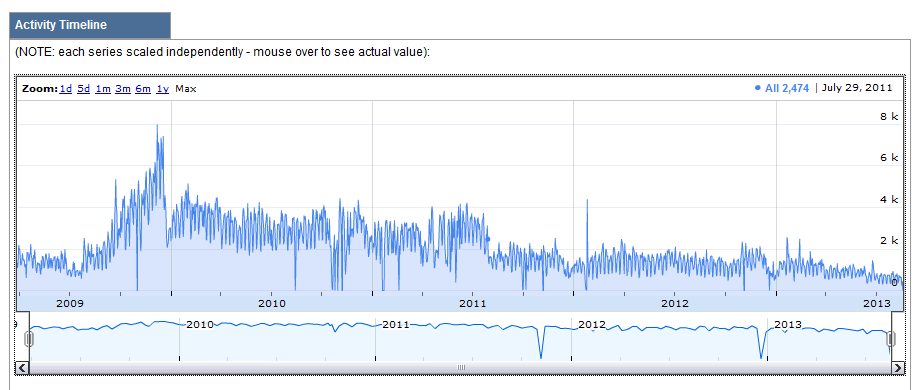
A fascinating article from JoNova that looks at trends in media reporting on global warming rather than at global temperatures themselves. She starts with “Let the historic dissection begin. Man-made global warming is a dying market and a zombie science” and then continues from there:

The Carbon Capture Report, based in Illinois, tallies up the media stories from the English speaking media on ‘climate change’ daily. Thanks to the tip from Peter Lang, we can see the terminal trend [above]. The big peak in late 2009 was the double-whammy of Climategate and Copenhagen (aka Hopenhagen). It’s all been downhill since then.

A long and detailed study of various forms of media coverage which had a sudden fall off in interest somewhere in the middle of 2011 just as our Julia was signing us onto the world’s most expensive carbon abatement scheme. Makes you proud to be an Australian:

By July 10th, perhaps the world’s media finally realized what traders, bloggers, then bureaucrats had already figured out. The price of everything to do with carbon credits was falling. It could be that in a brief flurry they woke up, announced that, and then lost interest. Meanwhile all the groups who normally issue press releases were downsizing or closing, didn’t feel like telling the world, and the rain of wind-power and climate change news slowed as the investment money, and the press writers, moved to different industries.

It seems hard to believe, but the July 10 spike could have had something to do with Australian PM Julia Gillard. With impeccable timing and style, as carbon markets fell, Julia Gillard signed Australia up to the most expensive carbon tax scheme in the world. She announced those details on Sunday July 10th. She really did pick the last possible moment to leap from the life-raft onto the burning ship. And hasn’t Australia paid dearly for that.

But the fall off in media interest also means our election is still haunted by the ghost of climate change past. No matter what either side believes in their heart of hearts, it would be death to their electoral prospects to say they think global warming is a hoax. So on it goes and it will cost us billions to feed an idiocy that just won’t go away.