For all those who like to feel good about themselves while doing incalculable harm to others, here is the mantra so perfectly stated you have to wonder why it’s not a real ad.
The all-purpose ad for parties of the left
Reply

For all those who like to feel good about themselves while doing incalculable harm to others, here is the mantra so perfectly stated you have to wonder why it’s not a real ad.
The American Government (ahem, The Council of Economic Advisers) has just released a new paper – 72 pages in length – titled: The Opportunity Costs of Socialism. Here are the first paras from the Executive Summary to give you a sense of where it is going, but just download a copy yourself. Haven’t read it all but looks both comprehensive but also easy to understand, if you are of a mind to understand.
Coincident with the 200th anniversary of Karl Marx’s birth, socialism is making a comeback in American political discourse. Detailed policy proposals from self-declared socialists are gaining support in Congress and among much of the electorate.
It is unclear, of course, exactly what a typical voter has in mind when he or she thinks of “socialism.” But economists generally agree about how to define socialism, and they have devoted enormous time and resources to studying its costs and benefits. With an eye on this broad body of literature, this report discusses socialism’s historic visions and intents, its economic features, its impact on economic performance, and its relationship with recent policy proposals in the United States.
We find that historical proponents of socialist policies and those in the contemporary United States share some of their visions and intents. They both characterize the distribution of income in market economies as the unjust result of “exploitation,” which should be rectified by extensive state control. The proposed solutions include single-payer systems, high tax rates (“from each according to his ability”), and public policies that hand out much of the Nation’s goods and services “free” of charge (“to each according to his needs”). Where they differ is that contemporary democratic socialists denounce state brutality and would allow individuals to privately own the means of production in many industries.
In assessing the effects of socialist policies, it is important to recognize that they provide little material incentive for production and innovation and, by distributing goods and services for “free,” prevent prices from revealing economically important information about costs and consumer needs and wants. To this end, as the then–prime minister of the United Kingdom, Margaret Thatcher (1976), once argued, “Socialist governments . . . always run out of other people’s money,” and thus the way to prosperity is for the state to give “the people more choice to spend their own money in their own way.”
What went wrong in Venezuela is still my acid test. It’s a technical issue as much as moral, but this seems to cover both.
AND A BIT MORE ON THE SAME REPORT: Someone has looked further into the document and this is the analysis: White House Report Says Socialist Policies Could Cut GDP Nearly in Half.
“The definition of democratic socialism to me,” Ocasio-Cortez said, “is the fact that in a modern, moral and wealthy society, no American should be too poor to live.”
To capture this variation, the CEA economists looked at how socialist policies from different countries and times would affect America’s productive output. The results were uniformly less than stellar.
“An extensive economic growth literature … documents a relationship between real GDP and the degree of socialism, measured in a large sample of countries as the opposite of economic freedom,” the report notes. “The studies suggest that moving U.S. policies to highly socialist policies would reduce real GDP at least 40 percent in the long run.”
That highly socialist benchmark is based on analyzing what the United States would look like if it implemented policies similar to Venezuela, a highly industrialized country whose major industries—most notably petroleum production—are state-owned. Such policies have led to food rationing, hyperinflation, and a mass exodus of the population. Similar policies implemented in the United States would cut GDP per capita by some $24,000 per person, the CEA estimated.
And do note the words, “at least”. They don’t want to exaggerate so provide a best case scenario, as in GDP per head might fall by only $24,000, but could be more.
More here.
Janice Fiamengo on inclusive, decolonised, anti-rational academia:
This is probably now the top hot-button issue at Canadian universities – the move to replace ‘European-based knowledge’ as exclusionary, inadequate and subjective, and to replace it in some cases with “indigenous knowledge,” and even something called “indigenous science”… what some might say is superstition or magical beliefs… The idea that “indigenous knowledge” is not to be questioned, that it has value equal to supposedly ‘European’ science… is an incredibly worrisome and strange idea.
Do watch in full for the anecdotes about the realities of so-called “affirmative action,” and the faculty lounge response to hearing of the 9/11 atrocities.

One of the greatest paradoxes in the history of philosophy may about to be resolved: Intensifying Hurricane Willa Headed Directly Toward 10,000 Migrant Caravan Path.
It appears that the migrant caravan, which has been reported to upward of 10,000 strong, might run into some extra trouble on their march to seek American asylum. A massive hurricane (named Willa) is set to cross the path that the migrants will eventually cross.
And then after that, there’s this:
There’s also a slightly smaller disturbance named Vincente to the south of Willa that meteorologists say will be consumed by the massively growing Willa, but will still pose a threat for dangerous conditions for the caravan, which has already seen its fair share of struggles with food, sanitation and organization.
We have already discussed The Irresistible Force. Now we shall see what happens when it meets The Immovable Object.
PDT comes in at around the 13-minute mark, but goes for the next hour. In contrast, Mr Nobody: Barack Obama Is Back On The Campaign Trail And Back In A Box. A handful of people to listen to him drone on about his inconsequential legacy, aside from his most important legacy of all, the election of Donald Trump as President. Here is the report. No video, not that it would interest anyone to watch it. “The current Senator” is the incumbent Republican Senator from Nevada who began as a #NeverTrumper and ended with this, “Everything you touch turns to gold,” Heller told Trump the other day. Meanwhile, Mr Nobody spoke to a largely empty hall.
“The current senator — he doesn’t seem to be willing to stand up to this,” Obama told an audience of 2,000 in a gymnasium, avoiding mentioning the senator by name, and adopting a tone of amused disappointment. “He just goes along — even when you get a sense that he knows it’s not right.”
Obama spent much of his speech on a long defense of his own presidency, and condemnation of Republican governance.
“When you hear all this talk about ‘economic miracles’ right now, remember who started it,” Obama said. He denounced Trump’s attempts to pressure the FBI and Department of Justice to target political foes.
“That is not how America works. That is how some tin-pot dictatorship works,” he said.
But Obama didn’t come to Nevada to make news, and he mostly didn’t. This is the box he’s in now. Even as he’s edged away from the tradition of post-presidential silence, there’s a more practical reason for his muted campaigning: He’s said to be afraid his presence would backfire, give Trump a foil, and energize the Republicans who Democrats hope will stay home in November.
The most interesting fact I learned from the video is that Peterson is writing the introduction to 50th anniversary edition of Solzhenitsyn’s Gulag Archipelago. Perfect person to introduce this masterpiece on tyranny and resistance to actual oppression – not the fake oppression of “the patriarchy” – to a new generation.
As for the discussion overall, JP shows a depth the other two cannot match. He thinks the left is driven by resentment, but he lets them talk their own points although has plenty to say himself. And as he says at the start about our snowflake generation, with their trigger warnings and enforced psychological protections: “You could not invent a more counterproductive mental-health movement if you set out to design it.” Confronting what you fear takes practice and with practice comes bravery. Sounds right to me. The rest is from JP’s notes. Trying to work out how this overprotectiveness has arisen. Maybe siblings make people resilient. And the fact of older parents may make a difference.
Published on 19 Sep 2018
Why should this be an irresistible force?
Happens to me all the time
My wife just stopped and said, “You weren’t even listening, were you?”
I thought, “That’s a pretty weird way to start a conversation.”
Our successor generations will despise us
Our way of life has been fantastic for those of us who have had the privilege of living within it. Our successor generations will despise us. More fool them as they are swamped by uneducated and uneducatable hordes who will tear down and destroy everything we have created. These are comments on a thread at Instapundit where whiteness and free markets are identified as the backward traits. Not by them, but by our educated classes.
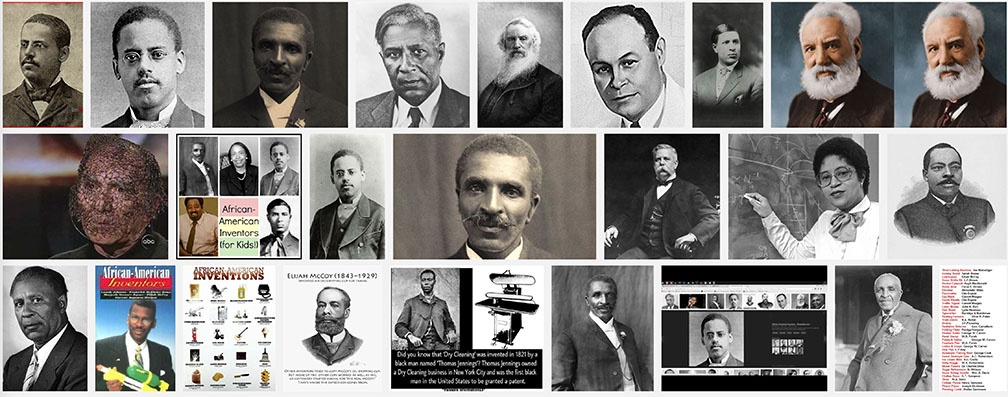
Re your comment on the ridiculously disproportionate appearance of multi-racial couples in advertising, it’s a world wide phenomenon. I live in Australia, where the number of people of African origin is miniscule. Yet our current crop of TV advertisements includes someone of African appearance in around 25% of adverts. Diversity Derangement Syndrome!



 Law of Markets