Diana West and the politics of despair
1

I’m off to the regional meeting of the Mont Pelerin Society in Palo Alto which is the meeting of the remnants of the last few remaining supporters of market economies not only as the means to prosperity, but also as a necessary element in the preservation of political freedom.
So imagine my astonishment to see this as one of the sessions being on offer:
| 1:15 pm – 2:30 pm | Lessons Learned from History for the Future of Freedom Gabriel Calzada, Universidad Francisco Marroquín (Chair) Victor Davis Hanson, Hoover Institution Amity Shlaes, Calvin Coolidge Presidential Foundation Robert Skidelsky, Warwick University |
This is from Robert Skidelsky’s Wikipedia page:
In September 2015, Skidelsky endorsed Jeremy Corbyn’s campaign in the Labour Party leadership election, writing in The Guardian: “Corbyn should be praised, not castigated, for bringing to public attention these serious issues concerning the role of the state and the best ways to finance its activities. The fact that he is dismissed for doing so illustrates the dangerous complacency of today’s political elites. Millions in Europe rightly feel that the current economic order fails to serve their interests. What will they do if their protests are simply ignored?”
As a minor matter next to this, but not minor to me, is that he is the most prominent defender of Keynesian economics, along with Paul Krugman, anywhere in the world. There is also a fact virtually unmentioned on his own Wikipedia page but mentioned here in relation to a disgraceful book he published at the start of the GFC: Keynes: The Return of the Master.
Keynes: The Return of the Master is a 2009 book by economic historian Robert Skidelsky. The work discusses the economic theories and philosophy of John Maynard Keynes, and argues about their relevance to the world following the Financial crisis of 2007–2010.
I’m not surprised he is reluctant to have the book mentioned. Want more? From the same source:
Chapter 8 sums up Keynes’s relevance to the current age as of 2009. The author suggests that Keynes would likely advise us to rethink macroeconomic policy, with a greater emphasis on balanced growth and with a somewhat large role for government in ensuring there is a smooth flow of investment to help protect the economy from unpredictable shocks. Macroeconomics should be reformed so that it again recognises the role of uncertainty and so it draws on other areas of knowledge such as history and International political economy, with a less central role for maths. The global savings glut needs to be addressed. Ethics should once again have a role in guiding capitalism, as should Keynes’s vision of harmony, where differences are cherished rather than pressured to conform, as can be the case with current concepts of “social cohesion” and “consensus”.
Why is such an out and out socialist being allowed to speak at Mont Pelerin? And on that minor matter of Keynes, this is the most recent cover description for my next book which I have just sent to the publisher.
‘Classical Economic Theory and the Modern Economy’
Steven Kates
Economic theory reached its highest level of analytical power and depth in the middle of the nineteenth century among John Stuart Mill and his contemporaries. This book explains classical economics when it was at its height, followed by an analysis of what took place as a result of the ensuing Marginal and Keynesian Revolutions that have left economists less able to understand how economies operate.
Chapters explore the false mythology that has obscured the arguments of classical economists, clouding to the point of near invisibility the theories they had developed. Kates offers a thorough understanding of the operation of an economy within a classical framework, providing a new perspective for viewing modern economic theory from the outside. This provocative book not only explains the meaning of Say’s Law in an accessible way, but also the origins of the Keynesian revolution and Keynes’s pathway in writing The General Theory. It provides a new look at the classical theory of value at its height that was not based, as so many now wrongly believe, on the labour theory of value.
A crucial read for economic policy-makers seeking to understand the operation of a market economy, this book should also be of keen interest to economists generally as well as scholars in the history of economic thought.
Reprinted in The Oz from The Economist was an article on how English lags behind in climate change word creation. It’s about how across many linguistic groups but unlike in English new terms are being coined in relation to climate change. There we find this:
Van Dale, a dictionary publisher, lets the Dutch-speaking public vote on its word of the year (in separate contests in Belgium and The Netherlands). For 2019 Belgians chose winkelhieren, or “buying local”. The Dutch went with an imported word that has a good case for being the winner in English, too: “boomer”.
As Chloe Swarbrick, a 25-year-old member of New Zealand’s parliament, was giving an impassioned speech on the impact of climate change on her generation, she coolly dismissed a heckling older MP with a curt “OK, boomer”. The phrase was already an internet meme; Swarbrick made it the talk of the offline world as well.
I’m not sure I can actually think of anyone lower on my list of authorities on anything than “a 25-year-old member of New Zealand’s parliament” but let that be. And myself being one of these baby boomers, whose generation has done so much to lower the collective common sense of the planet, I will remind Ms Swarbrick that what she thinks she knows she learned from us, from us baby-boomers, her teachers and professors at every step along the road of her education.
But what struck me even more in the search for a collective term to describe “a believer in cataclysmic anthropogenic climate-change”, now all so common everywhere, is that in her honour such people should be referred to as a “swarbrick”. It’s the brick part that I find so accurate, as in “thick as a brick”, but also because of how lacking in melody and sweetness the term itself seems to be. You’re just a swarbrick, you climate change ninny. Like Victoria was turned into “Victorian”: we would have swarbrick turned into “swarbrickian” in its adjectival form.
I imagine that Ms Swarbrick would take this usage as a badge of honour.
No one can be more consistent than the leaders of a modern left-side party. Policies are irrelevant – they just do or say whatever will lead them to power. Take this for an example: Oppose Iran sanctions, but support BDS against Israel?
Contrary to the claims of some of its apologists, the purpose of BDS is not to pressure Israel’s government to change its policies. As the founders of the movement and its leading advocates in the United States have repeatedly made clear, its goal is to eliminate Israel.
So if you support BDS against Israel but oppose sanctions against Iran—a brutal theocracy that oppresses its own people, seeks to impose its brand of Islamist tyranny on others via terrorism, and is dedicated to the goal of destroying Israel—then you are not merely being hypocritical. Singling out Jews for treatment that you think not even one of the worst governments on earth deserves is a form of bias that is indistinguishable from anti-Semitism.
Then there’s this:
Donald Trump and the mythmakers from Caroline Glick.
For the past 40-odd years, two narratives have guided American Middle East policy. Both were invented by the Carter administration. One relates to Iran. One relates to Israel.
Both narratives reject reality as the basis for foreign policy decision-making in favor of delusion. Over the past two months, President Donald Trump has rejected and disavowed them both. His opponents are apoplectic.
As far as Iran is concerned, as journalist Lee Smith explained in Tablet online magazine this week, when Iranian “students” seized the US Embassy in Tehran in November 1979 and held 52 Americans hostage for 444 days, they placed the Carter administration in a dilemma: If President Jimmy Carter acknowledged that the “students” weren’t students, but soldiers of Iran’s dictator Ayatollah Khomeini, the US would be compelled to fight back. And Carter and his advisers didn’t want to do that.So rather than admit the truth, Carter accepted the absurd fiction spun by the regime that Khomeini was an innocent bystander who, try as he might, couldn’t get a bunch of “students” in central Tehran to free the hostages.
At the base of their decision to prefer fantasy to reality in regards to Iran was the hope that Khomeini and his “students” would be satisfied with a pound or two of American flesh and wouldn’t cause Washington too many other problems.So too, as Smith noted, the Carter administration was propelled by guilt. The worldviews of many members of the administration had been shaped on radical university campuses in the 1960s. They agreed with the Iranian revolutionaries who cursed Americans as imperialists. They perceived Khomeini and his followers as “authentic” Third World actors who were giving the Americans their comeuppance.
Khomeini and his “Death to America” shouting followers got the message. They understood that Washington had given them a green light to attack Americans in moderate and, as Smith put it, “plausibly deniable” doses. it. For the next 40 years, Iran maintained its aggression against America. And from Ronald Reagan to Barack Obama, every president since Carter accepted and kept faith with Carter’s decision not to hold the Iranian regime responsible for the acts of aggression and war it carried out against America through proxies.
Which continues:
This then brings us to President Trump. Trump’s decision to kill Qassem Soleimani – who as commander of the Iranian Revolutionary Guards Corps’ Quds Force was the head of all of Iran’s regional and global terror apparatuses – destroyed the Carter administration’s Iran narrative.
Soleimani was killed in Baghdad along with Abu Mahdi al-Muhandis, the commander of one of the Soleimani-controlled Shiite militias in Iraq. Iraqi protesters, who have been demonstrating against Iran’s control over their government since last October claim that Soleimani was the one who ordered al-Muhandis to kill the demonstrators. More than 500 demonstrators have been killed by those forces in Iraq over the past three months.
By killing the two together, the Americans exposed the big lie at the root of 40 years of American deliberate blindness to the reality of Iranian culpability and responsibility for the acts of terror and aggression its surrogates have carried out against America and its allies.
By killing Soleimani, Trump made clear that the blank check for aggression the previous six presidents gave Tehran is now canceled. From now on, the regime will be held responsible for its actions. From now on US policy towards Iran will be based on reality and not on escapism.
At least from now on until the next post-modernist clown, looking to preserve every possible constituency, takes over, which must happen eventually.
Yesterday I put up a post on Craig Kelly standing up for sense in the face of the climate change idiocies we are forced to endure. I titled the post, More like Craig Kelly needed. I am coming back to it only because it has been brought up again somewhere else.
I hadn’t seen Craig Kelly’s original interview on ITV but Gerard Henderson had: Interview more about ‘look-at-me’ Piers Morgan than Craig Kelly. First the bad news, which I had not known:
Early on, Morgan put this question: “Do you accept the planet is heating up at a dangerous level — yes or no?” To which Kelly replied “yes”.
It’s almost certainly untrue, but during the times in which we live, that is the only answer a politician, other than Donald Trump, is permitted to give. There was then more. The gullible self-harming fools who watch Morning Television on ITV in the UK are not part of Craig’s constituency. So what followed next only matters here in Oz:
Within minutes, [the pommy weather girl] Tobin entered the discussion by accusing Kelly of burying his “head in the sand”. She added: “You’re not a climate sceptic, you’re a climate denier.” This, despite the fact that Kelly had accepted Morgan’s proposition that the planet is heating at a dangerous level.
This would suggest that Tobin was more interested in stating her case than listening to what Kelly had to say.
Of course they’re not interested in listening – we’re talking about the ABC and their like-minded cohorts. They are just part of the liars-squad who for reasons already well-known, are the actual deniers, the ones who deny there is no problem.
Although Henderson thinks there is nothing to be gained by putting the case that global warming “science” is almost entirely fraud, there is, in fact, a great deal to be gained. Someone in a position to actually be interviewed needs to say these things in public or they will never be said where others can hear. Good for Craig Kelly and tough luck for Britain if that is the level of their understanding about climate change.
Of course Uri Geller can bend spoons with the power of his mind, you bloody morons.
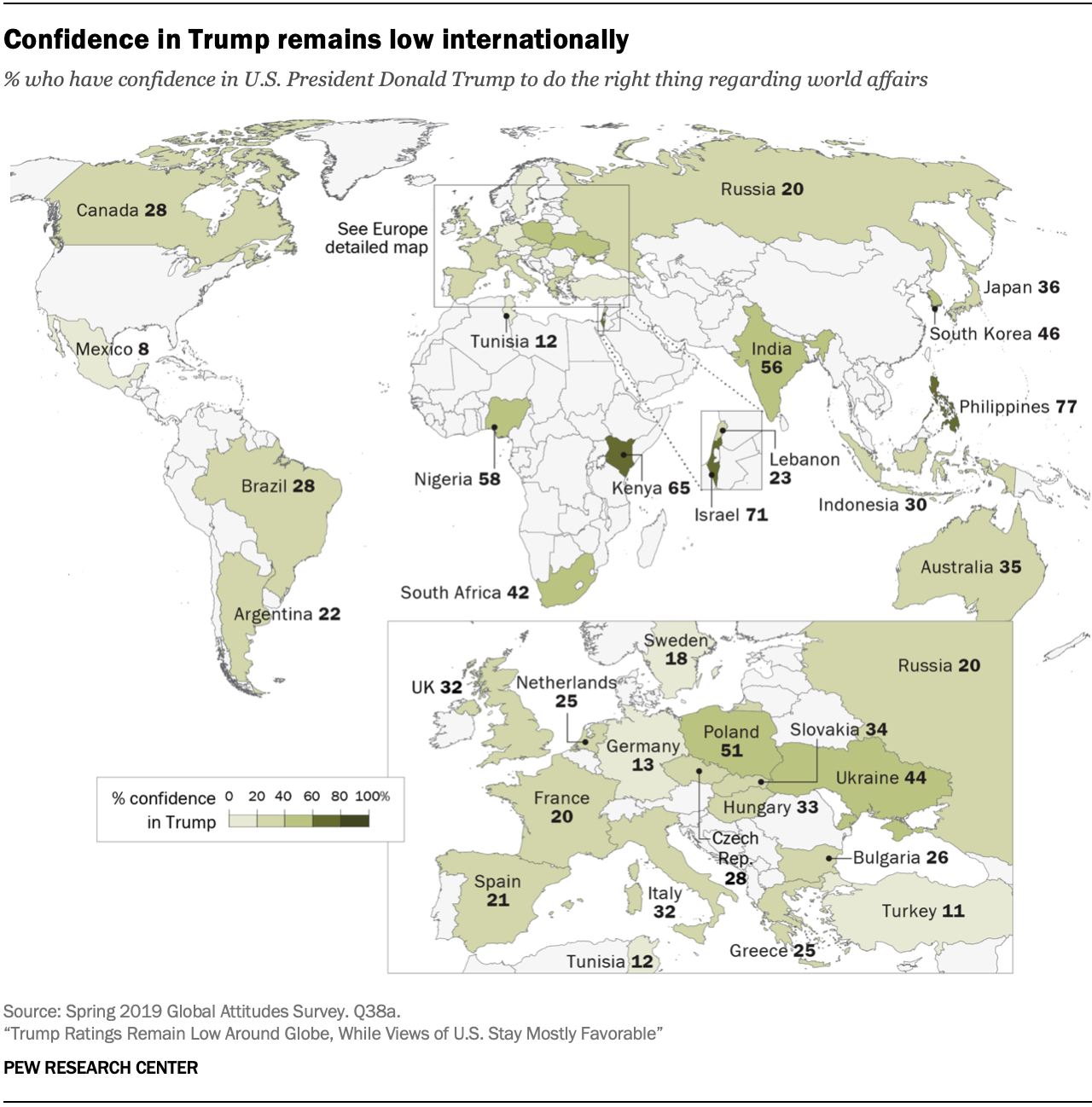
I would take a sceptical attitude as reasonable except these parts of the Anglosphere and the former members of the nation states that once comprised Western Civilisation are filled with people who are saturated in ignorance and lacking in common sense. They are impervious to the dangers they were led into by Obama and the left in general, and are fearful of the actions taken by Donald Trump. This in fact goes beyond mere ignorance into a kind of cultish stupidity that makes no sense on any level.
The ABC, and the media overall, are filled with people whose only stock in trade are their opinions. They support mass murderers who would snuff out their lives without hesitation, and snuff out their culture as well if they could.
If not Donald Trump, who do they think would do better? Hillary? Bernie? Calling them clueless is too good for them.
Here by the way is the source of the chart. And here is the president’s address this morning on Iran.
This is from 2015: Obama Strikes a Deal–With Qassem Suleimani. It’s by Lee Smith from the Hudson Institute.
According to the terms of the Iran deal announced in Vienna on Tuesday, U.N. Security Council sanctions regarding nuclear-related issues will be lifted on a number of entities and individuals—from Iranian banks to Lebanese assassins, like Anis Nacacche. The name that most sticks out is IRGC-Quds Force commander Qassem Suleimani. Administration officials counsel calm, and explain that Suleimani is still on the U.S. terror list and will remain on the terror list. But that’s irrelevant. The reality is that Suleimani is the key to the Joint Comprehensive Plan of Action.
It is all incredible, but this is extraordinary.
Obama likes Suleimani, and admires his work. As the president reportedly told a group of Arab officials in May, the Arabs “need to learn from Iran’s example.”
In fact, they need to take a page out of the playbook of the Qods Force — by which [Obama] meant developing their own local proxies capable of going toe-to-toe with Iran’s agents and defeating them. The president seemed to marvel at the fact that from Hezbollah to the Houthis to the Iraqi militias, Iran has such a deep bench of effective proxies willing to advance its interests. Where, he asked, are their equivalent on the Sunni side? Why, he wanted to know in particular, have the Saudis and their partners not been able to cultivate enough Yemenis to carry the burden of the fight against the Houthis? The Arabs, Obama suggested, badly need to develop a toolbox that goes beyond the brute force of direct intervention. Instead, they need to, be subtler, sneakier, more effective — well, just more like Iran.
Is it stupidity, incompetence or duplicity? Who can tell, but we should be very grateful it is gone for now. With foreign policy such a low-grade issue to at least half the American population, you never know who they will elect for president next. In the meantime, we have to hope they keep the one they now have for the next four years.
But where you will never unravel any of these questions is by reading the daily papers or watching the ABC. This is from the Australian Financial Review today, with this the heading in the paper, but not online: Trump scraps Obama legacy. This is the sub-head in the paper, but again, not the one used online.
“In confronting Iran, the president, driven by a desire to trash his predecessor’s foreign policy record, is determined to prove himself a superior commander-in-chief.”
And in the very middle of the page, the inset quote reads:
“I don’t think it’s too much of a stretch to say the root of much of this is Obama envy.”
It would be nice if these people would stick to foreign policy and lay off the pop-psychology. For what it’s worth, in my view Obama was the worst president in American history, both for domestic and foreign policy. Anyone who cannot at least understand why someone might come to this conclusion should be prevented from commenting on current events.
Here’s the whole thing.
https://twitter.com/AlinejadMasih/status/1150105699097161728
Positively incredible. Only “progressives” could believe in the certainty of progress. And of course, for some what exists in 2020 is an improvement on the past. You never know your own future in how the world is built. There are many worse fates than having Donald Trump as president. Many!
And let me draw your attention to a quite good article in The Oz today: Soleimani: For once the virtuous have not been meek. This is how it ends:
For the long term, the challenge for Western governments is how we defend our foreign and domestic interests from these growing networks of state and non-state terrorists. A silent risk is the growing number of people in the West who admire the likes of Soleimani.
As the British geopolitical theorist Halford Mackinder stated: “Democracy refuses to think strategically unless and until compelled to do so for purposes of defence.”
Today that is too slow. We need to wake up to the game being played against our system.
Not just by Iran but Russia and China.
Not to mention all of the “progressives” in our midst.
 Law of Markets