People do get it, or at least some do.

People do get it, or at least some do.
In politics there are no absolutes. Suppose we were in the midst of the Black Death. Suppose we were living at a time when if you caught the plague, you would first sneeze, then have a fever, find swelling under your arm and then die within three days. Suppose many in your family were dying in this way. Suppose many of your friends and associates were dying in this way. Suppose on every street in your village, town and city, there were carts coming round with the cry, “Bring out your dead!” and from up and down your street, there were dead bodies being brought out to place on these carts. Suppose there were numberless deaths until in some places everyone had died, and that across the entire continent, something like a third of the population had died within a year. Suppose all that. Then what would you wish the government to do?
In such circumstances you would wish them to do what they are doing right now and then some. You would wish the government to do every single thing they could think of to reduce the chances that you personally might also come down with the plague. There would be no limits that you or anyone else would place on government actions. There would be no levity, no debate about what to call the disease, no disputes about the need for every single resource available to be applied to dealing with the millions of deaths that were undoubtedly occurring. The availability of toilet paper would be the last thing on everyone’s minds. And you would not need any persuasion of any kind to induce people to keep their distance from others.
The reason we are in such a light mood in spite of everything, almost a holiday atmosphere,


is that we all know we are not in the midst of the Black Death. There are comparatively few deaths. Virtually no one knows anyone who has died from the virus, or is even sick because of it. Moreover, where there is fear there are also solid reasons to believe that a cure will be found for this disease and in very short order. And in spite of shortages here or there, not one person is genuinely in fear that they might not find enough to eat. And, we are all grateful that the government does take responsibility for what might eventually happen.
That I believe the government has jumped the gun and over-reacted is only my belief and it’s not the majority view. Most people, virtually everyone, believes that our governments should take whatever steps are necessary. It is only a matter of degree. Just as there are no atheists in foxholes, there are no libertarians in pandemics.
On economics, I don’t trust anyone else’s judgement but my own. The Global Financial Crisis was mismanaged to such an extent that only with the arrival of Donald Trump, who knows something about how an economy works, even if only instinctively, that the US and the rest of us subsequently have moved forward.
On politics, again I don’t trust anyone else’s judgement. Our political class are such stupidoes and so bizarrely left leaning, that the kinds of things they do in almost every circumstance is plain out wrong. The public trust looks like a scam almost in everything that is touched. And with the public service entirely university-educated, I never expect political decisions to be sensible, which they seldom are.
On climate change (formerly known as global warming) I kept a watchful eye on it all until I finally decided, now quite a while ago, that it, too, is a scam. There is absolutely nothing in any of it that should be a worry.
As for Y2K, I was a sceptic way back, well before New Year’s Eve 2000. And since, I have never seen so much madness before the day, and never an apologetic word since. Utterly nothing whatsoever in it despite the five-alarm fire.
And now we are dealing with perhaps the biggest scam of them all. I know nothing about viruses and pandemics, but was a long-time student of the Black Death and Bubonic Plague. Maybe it’s early days, but so far there is nothing going on that reminds me of the days of “Bring Out Your Dead”. I keep hearing that such pandemics grow at exponential rates, and while there is hardly anything now, just wait. Except during the Black Death, from the moment it began, there was no doubting the extent of the catastrophe.
We shall therefore see. But! All below from Instapundit. May the skepticism flourish until we are certain one way or the other. Caution is important. Blind panic is madness.
THE NUMBERS JUST DON’T ADD UP TO THE CRAZY STUFF WE’RE DOING TO “BEND A CURVE” THAT WAS NEVER THAT DANGEROUS. LOOK, EVERY DEATH IS REGRETTABLE, BUT IF THE CHINESE FLU JUSTIFIES THIS, THE YEARLY FLU SHOULD HAVE US IN QUARANTINE YEAR AROUND PRETTY MUCH: Diamond Princess Mysteries.
AND HOW: In crisis there is opportunity, and the left wants to seize it.
THE PANIC IS WHAT WILL KILL US: Apocalypse No.
I KNOW THIS IS GOING TO SOUND CRAZY, BUT PERHAPS THE RESULTS TO THE ECONOMY, TO THE ABILITY OF PEOPLE TO MOVE AROUND AND ORGANIZE IS WHAT WAS INTENDED ALL ALONG? Mayor of NYC Bill DiBlasio: Get Ready for a “Shelter in Place” Order For NYC Within the Next 48 Hours. I mean, as with global warming and other things, you have to ask yourself “What are these measures actually accomplishing?” And why are leftist governors scaling up/ramping up the shut downs and restrictions in the absence of anything justifying it?
THIS TO ME, TO ALLUDE TO SHERLOCK HOLMES, IS THE DOG THAT DIDN’T BARK IN THE NIGHT. I’M SORRY, IF YOU THINK THAT — IF NOTHING ELSE WITH DRUG DEALS AND HANDOUTS AND SUCH — THE PROFESSIONAL CLASS HAS NO CONTACT WITH THE HOMELESS, YOU’RE OUT OF YOUR MIND. ALSO THE HOMELESS ARE IN AND OUT OF HOSPITALS A LOT. THEY’RE “FREQUENT FLIERS”. SO, HOW COME THEY’RE NOT DROPPING LIKE FLIES? Another Vulnerable Population.
BUT… BUT… BUT… I THOUGHT THE REASON THIS WASN’T SPREADING IN AFRICA (MOST OF WHICH, BTW, IS NOT IN SUMMER TEMPERATURES (IN FACT ALL OF WHICH IS IN A MID-SEASON RIGHT NOW)) AND MOST BRAZILIANS AREN’T DEAD AFTER CARNIVAL WAS THAT IT DOESN’T SPREAD EVEN IN RELATIVELY WARM WEATHER. SO HOW COME CALIFORNIA NEEDS THIS? Bay Area Issues ‘Shelter in Place’ to Stop Coronavirus From Spreading. I don’t know about you guys, but I smell several large, authoritarian rats.
ITALY IS NOT THE US. REPEAT: ITALY IS NOT THE US: Distinguishing factors. But note even in Italy, a country that hugs, smokes, and uses public transportation, the average age of the victims of the Chinese Flu is 80 or so. My question is: What are we doing to protect those populations? Well, not much. Sure, we closed care centers to visitors, but we still allow the nurses to go in and out, and a lot of those people have small kids who are in daycare. As for the elders being cared for by family? Well, a lot of them still have essential doctors’ appointments as do their families. What is the quarantine doing? It is destroying the economy. It is doing that with amazing efficiency. At which point do we ask ourselves what the INTENDED effect is?
HOW MANY OF THEM ARE IN CHINESE PAY? Liberal Media Melts Down After Trump Tweets ‘Chinese Virus’.
YOU ARE BEING STAMPEDED: COVID-19: the unwarranted panic.
AND ALSO THIS: From Scott Johnson at Powerline: Notes on the Pandemic.
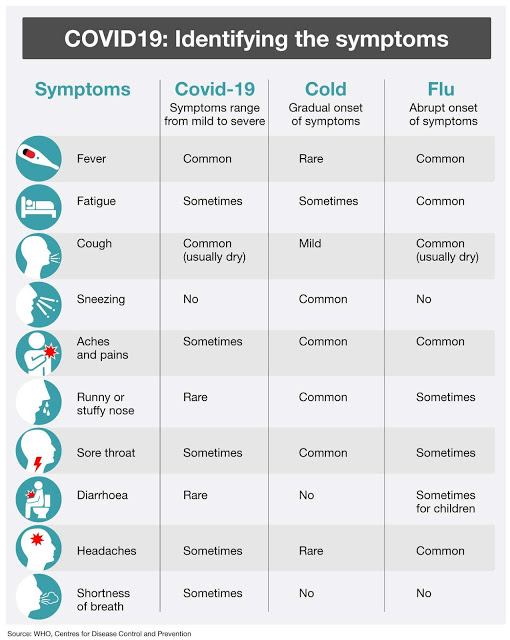
From About Those Self-Evident Truths. . . ..
In contrast with science’s confident certitude, if you asked an English professor how he knew that his interpretation of Hamlet was true, or why we should care about Henry James’s overprivileged characters in The Portrait of a Lady, he had no convincing answer, not even to himself, having not reflected much on why he loved literature or what use it had. The right answer is that the humanities embody a different kind of knowledge from that of science. They inhabit the realm of value, not fact; of judgment, not proof. They contain centuries of insightful meditations—based on observation and experience—on what human nature is, what gives life meaning, what the best kind of life is, what distinguishes good from evil and noble from base. They dramatize how experience shapes us and how our character and our choices shape our experience. They examine the nature of family, friendship, love, community, society, civility, freedom, obligation, character, and contingency. Literature shows us the churn of individual consciousness from inside—the stew of reason, passion, knowledge, belief, superstition, hope, and denial through which we all try to make sense of ourselves and our world—and the play of consciousness against consciousness, often so different in perception and intention, often distorted by dissimulation and self-deception. Philosophy asks such questions of value and judgment from a more abstract viewpoint (tellingly, Cambridge University used to call its British philosophy course “The English Moralists”), while history asks them from a more panoramic vista, trying to understand why things happened as they did and to judge the motives that produced them and the consequences that flowed from them—though trying to determine what actually happened is itself often a matter of judgment, since even primary sources are rarely as unequivocal as equations or formulas.
Bettina Arndt talks to British journalist Douglas Murray about his brilliant new book The Madness of Crowds.
One of the most egregious, and ubiquitous [supplications to the diversity gods], comes from some of those who demand gender diversity in the workplace. It is entirely reasonable to be in favour of gender diversity to increase the pool of talent. The deeper the talent pool that appointments are drawn from, the better a company will perform. That ought to be the extent of gender diversity.
Instead, there is a coterie of loud men and women who go much further. Often to justify quotas and other special measures for women, they claim that women are not just equally talented to men but also better than men.
The quote above is from Janet Albrechtsen in an article titled in the newspaper, “For better or worse, sex doesn’t define skill sets” with this as the sub-heading: Modern-day feminists are wrong to claim women are superior to men”.
This is a dangerous area for any male to get involved with, but what has brought me back into it has been going to see the latest movie incarnation of The Invisible Man. A more wicked film I have seldom seen. If you want to know the story, you can go to the link. All I will tell you is that unlike the original tale, and unlike every other film made based on the concept, this one is not primarily about someone who works out how to make themselves invisible with the plot then teasing out possible implications from having such an intriguing ability. In this film, invisibility is entirely secondary to the plot, which is about a woman who leaves an abusive husband who then, because he has, for no reason discussed in the film, a device that can make him invisible, then menaces his absent wife by turning up at various moments but invisible to her and everyone else. The invisibility aspect is entirely secondary to using the concept to portray spousal abuse.
Tomorrow there will be the final of the women’s twenty-20 cricket final. Are women better at cricket than men? On Monday, there will be thousands of men driving trucks across Australia. Are any of those truck drivers female, and are these handful of women “better” at driving trucks than any of the men? Same for plumbers, same for construction workers, same for lots of things. There was also this from Janet:
Last week, the Australian Financial Review ran this headline: “Why women make better CEOs”. The piece regurgitated some “new research” from the Macquarie Business School by Farida Akhtar, a senior lecturer in actuarial studies and business analytics, that finds that women are not only different from men, they also are better than men. According to this research, said the AFR, women create stronger corporate cultures, they nurture employees more, they create better reward systems and offer greater flexibility. Tech companies run by female chief executives do better because women can shape innovation and sustainable growth strategies.
But do such companies make more money or satisfy their customers more completely? It’s an academic writing the article so that’s the kind of question that would seldom cross such a person’s mind. And as Janet writes, “a review of more than 3000 companies fails to find any evidence that women on boards or in the C-suite cause, lead to or produce better corporate performance.” But the debate is ideological so facts will not intrude on any part of the debate or convince anyone on the other side of the divide.
There is then this about politics in the US from Cosmopolitan: Stop Lying, America: You Were Never Gonna Vote for a Woman President. Well apparently not among the Democrats, and certainly not for Elizabeth Warren. But in my time I have been all in for Margaret Thatcher and Sarah Palin among others. But here is the author reflecting on the moment that she realised that Hillary would lose in 2016:
“It’s not just about losing,” I said … to myself. “It’s about all the little boys who will grow up thinking they get to—or have to—behave that way to be president. And all the little girls who will think they’ll never have a chance.”
In deciding who gets which jobs, it’s not a matter of chivalry, men stepping aside to allow a woman to precede them, or at least it shouldn’t be. Political leaders are chosen for their leadership abilities and the clarity of their policy direction. They are not chosen because of which sex they happen to be, or at least that should never ever be part of the equation. And if you think that it should be, you are a moron, whether you are a male or a female. You are just a complete jerk.
Pinky promise! Now there is real leadership ability if you’ll pardon me while I go roll my eyes.
Nothing like globalisation. As for the damage caused in the long-term, the climate-change virus – shutting down our carbon-based power supplies which are needed to run our hospitals amongst many other things – may have the worst effects of all.
On the other hand, if this coronavirus catches on, twelve years might be the optimistic story.
Hi, Greta.
From Terry in a comment here. It’s not so much knowing them but understanding them that matters.
1. Avoid Alliteration. Always.
2. Prepositions are not words to end sentences with.
3. Avoid cliches like the plague. (They’re old hat.)
4. Employ the vernacular.
5. Eschew ampersands & abbreviations, etc.
6. Parenthetical remarks (however relevant) are unnecessary.
7. It is wrong to ever split an infinitive.
8. Contractions aren’t necessary.
9. Foreign words and phrases are not apropos.
10. One should never generalize.
11. Eliminate quotations. As Ralph Waldo Emerson once said, “I hate quotations. Tell me what you know.”
12. Comparisons are as bad as cliches.
13. Don’t be redundant; don’t use more words than necessary; it’s highly superfluous.
14. Profanity sucks.
15. Be more or less specific.
16. Understatement is always best.
17. Exaggeration is a billion times worse than understatement.
18. One word sentences? Eliminate.
19. Analogies in writing are like feathers on a snake.
20. The passive voice is to be avoided.
21. Go around the barn at high noon to avoid colloquialisms.
22. Even if a mixed metaphor sings, it should be derailed.
23. Who needs rhetorical questions?
24. Parenthetical words however must be enclosed in commas.
25. It behooves you to avoid archaic expressions.
26. Avoid archaeic spellings too.
27. Don’t repeat yourself, or say again what you have said before.
28. Don’t use commas, that, are not, necessary.
29. Do not use hyperbole; not one in a million can do it effectively.
30. Never use a big word when a diminutive alternative would suffice.
31. Subject and verb always has to agree.
32. Placing a comma between subject and predicate, is not correct.
33. Use youre spell chekker to avoid mispeling and to catch typograhpical errers.
34. Don’t repeat yourself, or say again what you have said before.
35.Use the apostrophe in it’s proper place and omit it when its not needed.
36. Don’t never use no double negatives.
37. Poofread carefully to see if you any words out.
38. Hopefully, you will use words correctly, irregardless of how others use them.
39. Eschew obfuscation.
40. No sentence fragments.
41. Don’t indulge in sesquipedalian lexicological constructions.
42. A writer must not shift your point of view.
43. Don’t overuse exclamation marks!!
44. Place pronouns as close as possible, especially in long sentences, as of 10 or more words, to their antecedents.
45. Writing carefully, dangling participles must be avoided.
46. If any word is improper at the end of a sentence, a linking verb is.
47. Avoid trendy locutions that sound flaky.
48. Everyone should be careful to use a singular pronoun with singular nouns in their writing.
49. Always pick on the correct idiom.
50. The adverb always follows the verb.
51. Take the bull by the hand and avoid mixing metaphors.
52. If you reread your work, you can find on rereading a great deal of repetition can be by rereading and editing.
53. And always be sure to finish what
Went to see on the weekend the most decadent show I have ever seen, a show so decadent it could only be seen in an upstairs back alley setting far far from the public eye. Actually, just kidding. It was the musical Chicago which has been playing to rapturous full houses at the Playhouse in Melbourne. Tell me what you think of the plot which is taken directly from Wikipedia: Chicago (musical). These bits are from Act I.
Velma Kelly is a vaudevillian who welcomes the audience to tonight’s show (“All That Jazz”). Interplayed with the opening number, the scene cuts to February 14, 1928 in the bedroom of chorus girl Roxie Hart, where she murders Fred Casely as he attempts to break off an affair with her.
None of this is ambiguous. Roxie, on stage and before the audience, murders Fred in cold blood for the reason given. Most of the rest of the plot revolves around the efforts made by Roxie’s lawyer to have her acquitted, both before the courts and before the public as filtered through the media presentation of the facts and circumstance. These are the relevant bits from Act II.
- Velma returns to introduce the opening act, resentful of Roxie’s manipulation of the system and ability to seduce a doctor into saying Roxie is pregnant; as Roxie emerges, she sings gleefully of the future of her unborn (nonexistent) child.
- Billy, Roxie’s lawyer, exposes holes in Roxie’s story by noting that she and Amos (Roxie’s husband) had not had sex in four months, meaning if she were pregnant, the child was not Amos’s, in hopes that Amos will divorce her and look like a villain, which Amos almost does.
- The trial date arrives. Billy calms Roxie by suggesting she will be fine so long as she makes a show of the trial.
- As promised, Billy gets Roxie acquitted.
- Amos (her husband) tries to get Roxie to come home. She admits she isn’t pregnant, leaving Amos.
Indeed, as we all know, Chicago has had quite an illustrious history.
The original Broadway production opened in 1975 at the 46th Street Theatre and ran for 936 performances, until 1977. Bob Fosse choreographed the original production, and his style is strongly identified with the show. It debuted in the West End in 1979, where it ran for 600 performances. Chicago was revived on Broadway in 1996, and a year later in the West End.
The 1996 Broadway production holds the record as the longest-running musical revival and the longest-running American musical in Broadway history. It is the second longest-running show to ever run on Broadway, behind only The Phantom of the Opera. Chicago surpassed Cats on November 23, 2014, when it played its 7,486th performance. The West End revival became the longest-running American musical in West End history. Chicago has been staged in numerous productions around the world, and has toured extensively in the United States and United Kingdom. The 2002 film version of the musical won the Academy Award for Best Picture.
Great music of course. About a married woman who shoots her lover [not her husband] to death because he wants to leave her, and then through the sleazy actions of her lawyer, and in particular through his ability to manipulate the press, gets her off. Having been acquitted, she ditches her husband who still loves his wife. Based on a play also titled Chicago first produced in 1926 when things were obviously very different from today. Some further details:
The play was adapted as the 1927 film Chicago, then as the 1942 film Roxie Hart, and the 1975 stage musical Chicago, which in turn was adapted as the 2002 film Chicago.
You can watch the silent film version in full at the above link. Worth every minute if for no other reason than to see how the morality of our world has changed since 1927. You can also watch the the 1942 version at the above link. We are more like 1942, starring Ginger Rogers, a comedy from end to end with a very very different kind of ending.
As for Bob Fosse who wrote the book and choreographed Chicago for the stage:
He is the only person ever to have won Oscar, Emmy, and Tony awards in the same year (1973)
There has, of course, been a petition circulated far and wide to have Fosse’s Oscar, Emmy and Tony Awards taken from him.
 Law of Markets