Whiteness are personal characteristics and not a skin colour

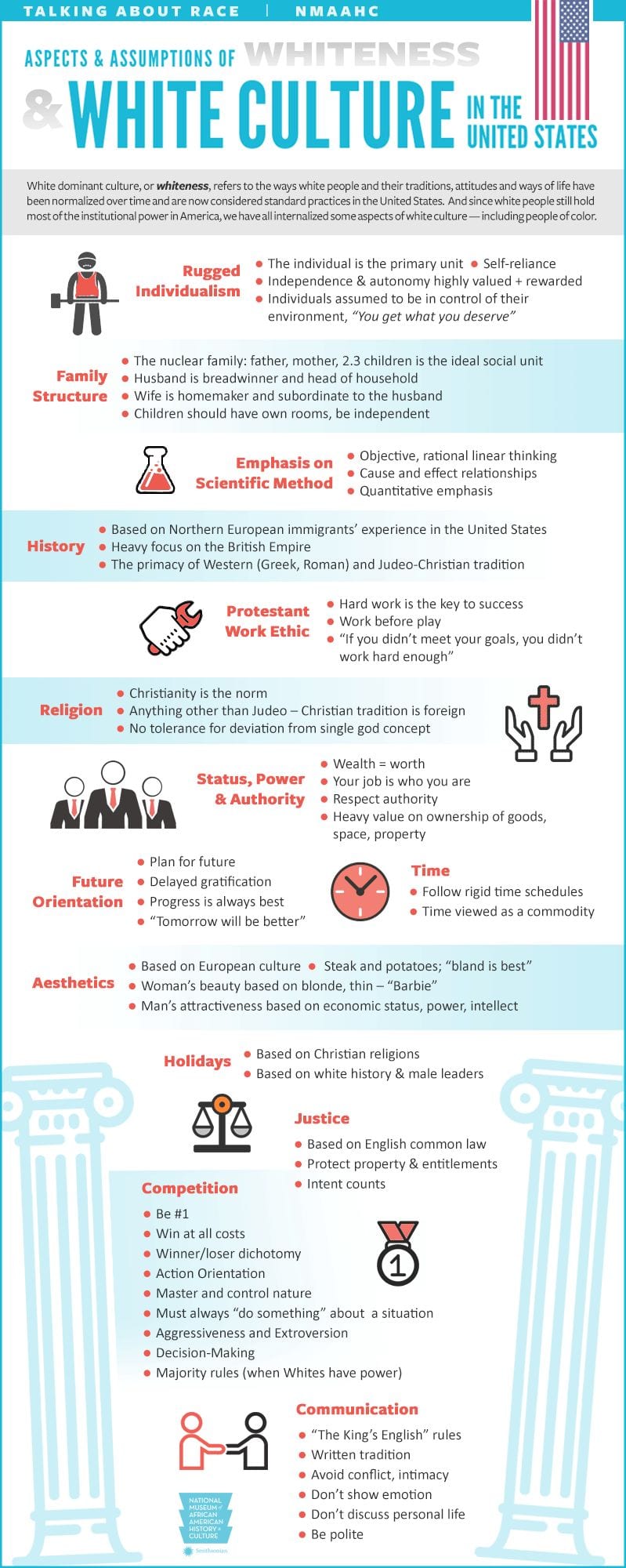
The poster is found here: Smithsonian’s Anti-White Propaganda. It supposedly provides the characteristics of “white culture”, which seems like an astonishingly racist term and generalisation. Even “people of colour” have now also adopted many of these character traits.

Yet for me, reading through the individual items, there does not seem to be a single negative characteristic. Most of it just seems to outline characteristics required for personal achievement in the modern world for anyone who wishes to get on with their own talents and abilities to achieve personal success. Whether anyone personally fits the description, unless they are a member of some dynasty or part of the ruling class where they have been born, their own wealth and wellbeing seem to be largely determined by whether the population they are embedded within have these characteristics, although some do seem to be unnecessary:

  • hardly seems necessary to be from North America
  • Christian religion seems optional – all religious traditions welcome
  • female “subordination” again seems perfectly unnecessary
  • “blonde, thin and Barbie” is plain idiotic
  • not restricted to European traditions
  • virtually no one thinks in terms of “win at all cost”
  • introverts also succeed

The people who put this together are genuinely ignorant at a very deep level. Produce something that others will buy, or possess a skill that others will hire, and you can succeed anywhere within this culture.

Absent either some product provided to the market or some specialised skill, it is hard to earn a large personal income, but can still succeed as an employee. Many do exactly that, and it has nothing to do with “whiteness”.

For more, there is this, which really has been put out by the Smithsonian: Whiteness. These personal characteristics have nothing to do with the colour of one’s skin. They can make all the excuses they like, but skin colour makes no difference in the modern world.

We are surrounded by dangerous fools at every turn. The left is repulsive in almost every respect. How can anyone take such stupidity seriously?

It’s worth having a look at the comments thread at Instapundit.

My letter to the Societies for the History of Economics [the SHOE list]

Now sent. Here is the background.

I’ve had another look at the problem raised by the Committee where they discussed their concern and acknowledged our “special responsibility, as historians of economics, to educate ourselves and others about the roles played by racism, colonialism and other forms of bias in shaping the concepts, practices, agendas and professional institutions of economists and social scientists throughout history.” I am even beginning to warm to this notion myself in the fixation among historians of economics with dead white European males [defined here:
https://en.wiktionary.org/wiki/dead_white_European_male#:~:text=(derogatory)%20Any%20of%20various%20white,ingrained%20into%20Western%20education

On further reflection, there may be a very important upside to this re-examination of our area of study. Let me look in particular at this fellow Karl Marx. There’s a dead white European male if ever there was one. Why aren’t he and all of his writings now being completely excised from our classrooms, our textbooks and from our scholarly journals? How should economists, and social theorists generally, deal with such an individual along with his close associate Fredrich Engels? Take this article, and there are many others like it:

“Marx and Engels’s theory of history: making sense of the race factor” [ https://pure.uva.nl/ws/files/44504342/Marx_and_Engels_s_theory_of_history_making_sense_of_the_race_factor.pdf ]. Here’s the abstract:

This article argues that Karl Marx and Friedrich Engels’s theory of history contained racist components. In Marx and Engels’s understanding, racial disparities emerged under the influence of shared natural and social conditions hardening into heredity and of the mixing of blood. They racialized skin-colour groups, ethnicities, nations and social classes, while endowing them with innate superior and inferior character traits. They regarded race as part of humanity’s natural conditions, upon which the production system rested. ‘Races’ endowed with superior qualities would boost economic development and productivity, while the less endowed ones would hold humanity back. Marxist race thinking reflected common Lamarckian and Romantic-Nationalist assumptions of the era.

Surely Karl Marx and his associate Fredrich Engels must now be immediately and completely removed from the study of economics and the history of economics.
/s

Cancel Karl

On further reflection, there may be some upsides to this cancel culture business, specially within economics. How bout this fellow Karl Marx. There’s a dead white European male if ever there was one. Why isn’t he now being cancelled? How should economists, and social theorists generally, deal with this: Marx and Engels’s theory of history: making sense of the race factor. Here’s the abstract:

This article argues that Karl Marx and Friedrich Engels’s theory of history contained racist components. In Marx and Engels’s understanding, racial disparities emerged under the influence of shared natural and social conditions hardening into heredity and of the mixing of blood. They racialized skin-colour groups, ethnicities, nations and social classes, while endowing them with innate superior and inferior character traits. They regarded race as part of humanity’s natural conditions, upon which the production system rested. ‘Races’ endowed with superior qualities would boost economic development and productivity, while the less endowed ones would hold humanity back. Marxist race thinking reflected common Lamarckian and Romantic-Nationalist assumptions of the era.

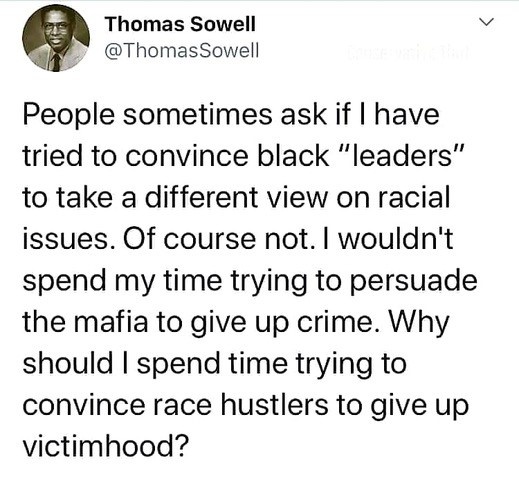
If we are going to colour-code who we allow to speak or whose words we listen to, which I do not for a second believe we should, why not turn to Thomas Sowell: Thomas Sowell says concept of systemic racism ‘has no meaning,’ warns US could reach ‘point of no return’.

“You hear this phrase, ‘systemic racism’ [or] ‘systemic oppression’,” host Mark Levin told Sowell. “You hear it on our college campuses. You hear it from very wealthy and fabulously famous sports stars. What does that mean? And whatever it means, is it true?”

“It really has no meaning that can be specified and tested in the way that one tests hypotheses,” answered Sowell, who added that the currency of the phrase reminds him of the “propaganda tactics” of Nazi Germany.

The true racists are the ones who believe skin colour should have any bearing on political issues.

“Everything is what it is, and not another thing”

And what is everything about at this time and in America? It’s All About November 3. The point of the article, by Roger Kimball, whose premise I have believed since the start:

I do not believe I am violating the principle of Bishop Butler’s argument when I say that almost everything happening in our society—all the craziness, all the posturing, all the distracting noise, exaggeration, and downright mendacity—all of it is not about itself but about something else, and that something else is Donald Trump….

The unremitting, monolithic wall of noise that has been crashing against Donald Trump since election day 2016 has gotten louder and louder, more cacophonous, more furious, more irrational. Everything is what it is, and not another thing. But the one thing that takes precedence over everything now is defeating Trump, which means defeating not only Trump himself but what he stands for—those 63 million voters who put him in office, for starters.

Do enough of us get it? Will we beat back the tide? That is what is at stake and only time will tell. Read the entire article through and think about what part you ought to take yourself. It’s not long. This is how it ends.

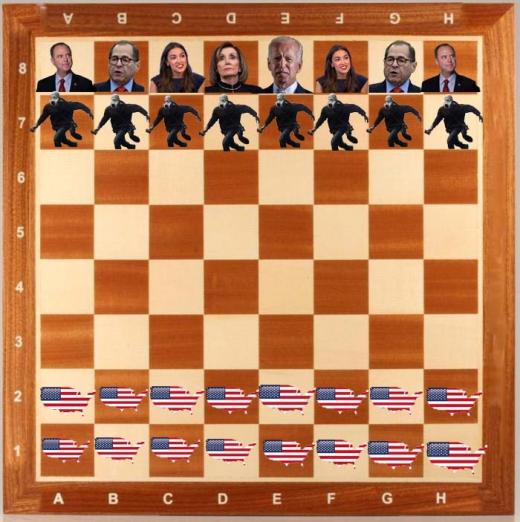
Everything that is happening between now and November 3 is about November 3. But the fundamental choice is not really Donald Trump or Joe Biden. It is civilization and America on one side, anarchy and woke tyranny on the other. The Democrats thought they could ride the tiger to victory. Instead, they will be consumed by the monster they created but could not control.

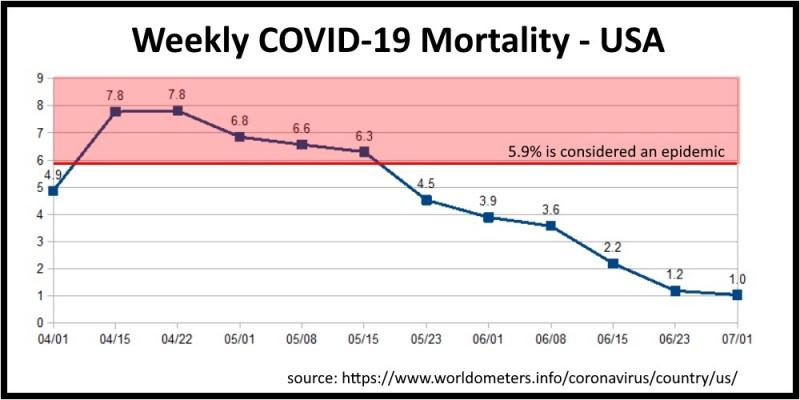
And after you read the article read the comments where you will find these charts.

Thumbnail

Thumbnail

And let me pair the above with this, via Instapundit.

WHY I SIGNED THE HARPER’S LETTER:

In 1996, the late great Iranian filmmaker Abbas Kiarostami was on stage taking questions at the Lincoln Center in New York City after the premiere of his film Through the Olive Trees, when someone asked why he had used classical music (a piece from Concerto for Oboe and Strings by Domenico Cimarosa) in a movie that was set in a small village in northern Iran? Kiarostami turned to me, his translator for the hour, and said, in his soft voice and even softer manner, “Tell him classical music has long ceased to belong to the West. It belongs to the world now.”

That exchange, the way Kiarostami disabused the audience of the notion that music knew borders or that great ideas, once invented, remained the “property” of one nation or region, was on my mind when I signed the “Letter on Justice and Open Debate,” which ran in Harper’s Magazine last Tuesday. What I saw at the heart of the text was a defense of American democracy, which no longer belongs solely to America. For every activist on the streets of Hong Kong, every feminist in the prisons of Saudi Arabia, and every interned Uighur in China, America and its democracy remain, for better or worse, the last hope. Are they naïve and misguided? Right or wrong? It does not matter. Those who are suffering under tyrannies around the world, who are trying to imagine a different future for themselves and their fellow citizens, do not dream of Moscow, Beijing, or any nation in Europe. Just as little girls in the far corners of the world who do not even speak English want to dance like Beyoncé, and just as the youth living under prohibition in the Middle East huddle together to secretly watch bootlegged copies of Hollywood films, activists everywhere look to America, and dream of this democracy.

Racism as an active agency has virtually disappeared within the civilisation of the West

I’m not going to name names here but this follows upon the issues raised by Stephen Meardon that I discussed in this post: What bravery looks like in the modern age. The following note was sent to me offline – that is, not through the Society website but to myself and a colleague personally. This was from Professor “A”.

I sent the following message to Steve Meardon. Meant to copy you two but forgot at the last minute. Hence the reason I’m resending it below. By the way, I agree with your splendid SHOE posts. They make excellent points. Here’s the resent message.

I fear that if HES gets involved in cultural/social issues, attention to economic analysis and its historical development will fall by the wayside. Everybody will be writing articles about racial and gender discrimination. None will be writing on the birth and evolution of basic, formative concepts of economics. Our journals will be filled with complaints about cultural & social bias to the exclusion of economic analysis. One won’t even have to know any economics to write such pieces.

A similar experience happened in the field of English Lit when the gender/racial crowd co-opted it. The field’s journals became filled with pieces on discrimination rather than on literature. I fear a similar outcome might happen to the history of economics.

I say the above even though I support the Black Lives Matter and similar social protest movements

My colleague then replied to the both of us. This is from Professor “B”.

Many thanks for sharing your comment with me. I think the whole list needs to hear your voice.

I tried in my comments to stay within Steve Meardon’s outline — warning about the danger of straying into a cultural/social debate. Otherwise, I would have pointed out that black lives matter to those chanting the slogan only if they are taken by the police. Clearly not all black lives matter to them. The number of blacks that die at the hands of the police in the US is minuscule compared with the number of blacks killed by other blacks. Either from ignorance or cowardice, the HES statement is silent about that; several others do the same. Some of the BLM leaders also publicly have stated that they’re “trained Marxists.”  The Marxist-inclined among us may appreciate the BLM cause. I fear the outcome of their success.

There is no excuse for the cowardly act of officer Derek Chavin killing his part-time, night club co-worker who was handcuffed at the back, lying face down, and had two other officers restraining the rest of his body. The killing has been roundly condemned by all and the officers will face justice. For the BLM movement to have taken advantage of the horrific incident to launch their assault on governmental institutions in America in pursuit of their Marxist social agenda appears duplicitous to me.

Imagine if I’d said the above in my HES comments.

Best regards.

This was the reply received from Professor “A”.

Many thanks for your fine, informative response. I’ve already heard the points you make, but usually from Caucasians. Coming from that source, the points always appeared suspicious and specious to me. It was as if they were made-up-on-the-spot special-pleading arguments designed to de-legitimize valid social protests. But coming from you, those same points take on a validity, impact, and immediacy that I hadn’t considered before. Many thanks for enunciating them and making me consider them afresh. There is much to them after all.

Your message teaches that it’s always best to get the perspectives of many different observers before forming an opinion of one’s own. That indeed is a valuable lesson. Thanks again for reminding me of it.

And now I have replied to both with my own take of this all.

I appreciate both of your letters, with “B” particular writing to “A” with myself mostly just copied in. And the fact is that no one can or does live anyone else’s life and knows what it is like to be who they are. And as with “A”, I am grateful to hear “B”‘s views since he, at least, cannot be accused of ignoring these issues because they don’t involve him directly.
These are not issues I ever write on or have been central to any of my work or research. And for what it’s worth – next to nothing in my view – I was brought up during the efforts to desegregate the American south and even remember Brown vs Board of Education which occurred in 1954, an extremely important moment in my own conscious life. I grew up through the period of these demonstrations and participated in them, to the extent anyone in Canada might ever have done so. No one, in my view, brought up during that period can be anything other than someone who entirely supports and believes in equality and human rights.
 
No one can claim that racism no longer exists, but what can be claimed, and I do claim it, is that racism as an active agency has virtually disappeared within the civilisation of the West. Virtually everyone who is raised in any society that has originated in any of the European countries of the sixteenth century and their “colonial” offshoot societies, is today as free from prejudice and bias as it is possible to be. We are societies in which individual rights are sacred and no one is handicapped due to race, religion, skin colour, gender or sexual orientation. And if I am not using the proper terminology for such discussions in the modern world, well so be it. Institutionally – that is, according to the laws of every one of these societies – everyone is encouraged to reach their full potential as human beings. Any possible social bias has been rooted out of every piece of legislation. Beyond that, all of this is taught as the straightforward core ethic of our societies.

The virtue signalling that came from the statement put out by the HES executive is not leading the way, is not advancing an unknown opinion, but is stating no more than what every one of its members already believes in their heart of hearts. But, as Steve Meardon pointed out, saying so in words does not take us forward, but backwards. Rather than letting things be as they are, by making the statement there is now obvious pressure being put on our society and its members, and the editors of its journals, to do something, and whatever something that is done, will move us away from being what we already are, an open community in which merit is the sole criterion of the work any of us put forward for judgment. There will now, inevitably, be efforts made to ensure that publications occur in relation to criteria unrelated to their academic merit, but are instead related to the personal characteristics of their authors. We are corrupting our own values supposedly in the name of our own values. No good can come from any of this.

It is the values of the Enlightenment that are most deeply embedded in the societies of the West, but they are, like our free market economic system itself, spreading outwards and across the globe. This is a wonderful thing, and I find it a hopeful change that will spread everywhere during the next century. By accusing the United States of some invisible latent racism will only aid the enemies of our Western way of life and undermine the ability to achieve the kind of societies we are all aiming to live in.

My kindest best wishes to you both.

Steve

We need a statue for George Floyd, model citizen of the left

“His legacy is the rich promise of social reform.”

And this is what we should put on the monument, all taken from Wikipedia.

Between 1997 and 2005, he was convicted of eight crimes; in 2009, he accepted a plea bargain for a 2007 aggravated robbery, serving four years in prison. In 2014, he moved to the Minneapolis area, finding work as a truck driver and a bouncer. In 2020, he lost his security job during the COVID-19 pandemic.

Floyd had five children, including two daughters (ages 6 and 22) in Houston and an adult son in Bryan, Texas. [No mention of a wife.] A former partner lives in Houston with his youngest daughter. He also had two grandchildren. GoFundMe account to defray Floyd’s funeral costs and benefit his family broke the site’s record for number of individual donations.

On May 25, 2020, Floyd was arrested after allegedly passing a counterfeit $20 bill at a grocery store in the Powderhorn Park neighborhood of Minneapolis. He died after Derek Chauvin, a white police officer, pressed his knee to Floyd’s neck for nearly eight minutes during the arrest.

The Economist, which made Floyd its June 13 cover story, said that “His legacy is the rich promise of social reform.”

AND FOR CONTRAST YOU MIGHT READ THIS: Do all black lives matter to BLM? with this as the subhead.

‘That was my son’

What bravery looks like in the modern age

It seems but only for a moment that Catallaxy has gone over to the History of Economics. And while I was contemplating all this in that little discussion on Schumpeter here and here, which had followed my own postings on Mill and MMT, this arrived in my email inbox:

The undersigned officers of the HES condemn the deaths of Black people in police custody and the systemic racism that permits political, economic, social and physical violence. We acknowledge our special responsibility, as historians of economics, to educate ourselves and others about the roles played by racism, colonialism and other forms of bias in shaping the concepts, practices, agendas and professional institutions of economists and social scientists throughout history.

The pursuit of historical knowledge leaves no room for the silencing or marginalization of any individuals or communities. Therefore, we commit ourselves to taking concrete steps to foster diversity and inclusion in our Society and its activities. We pledge to support and encourage scholarship that brings new frames of reference to the history of economics. We will listen respectfully, engage honestly and amplify the voices of those who draw our attention to the ways that biases are perpetuated in our Society and our discipline. We will build on efforts to diversify our program and awards committees and the editorial board of the Journal of the History of Economic Thought, and we will encourage journal submissions that bring new perspectives to the past.

We commit to using our journal, conferences and other resources to further these important lines of inquiry. We will encourage critical conversations about our methods and practices that open our discipline to histories that have so far been ignored. We pledge to educate ourselves and to curate critical reading lists that support inclusive curricula, and we ask other historians of economics to make a similar commitment. We look forward to the development of richer and more comprehensive histories of economics.

Marcel Boumans, HES President plus eleven others.

I would never sign such a document, but then I am off in Australia and my career is done and dusted. But just now there is this rejoinder from Stephen Meardon, who is young, in mid-career and the immediate past editor of the Journal of the History of Economic Thought. This is truly brave:

I am sure the HES Executive Committee makes this statement with no intention of taking a side in the US culture war. But that is what it does. And it does no good for the HES.

People have been killed in the custody of US police, some of them egregiously. What the killings signify in some cases is not largely contested. In others it is. What they signify on the whole is contested very much.

Systemic racism? One can make an argument. I can see it. Why is the History of Economics Society, whose mission is to advance inquiry into the named subject, advancing this extraneous and contested argument?

We have a good thing going in our society. An uncommon thing. Scholars with different ideological, methodological, and other convictions communicate openly, learn from one another, and take pleasure in each other’s company and conversation despite their disagreements. Indeed because of them. It works because the HES does not suffer from the we- all-agree syndrome that plagues other scholarly societies and US academia at large. Which happens in good part because the HES sticks to its mission.

You and I just might have an interesting conversation about systemic racism in the United States — why you think it is the salient problem, why I think not. The kind of conversation that has been commonplace in HES coffee breaks and serendipitous hallway encounters for the couple decades and more that I’ve been involved. That conversation will be less common after the HES has decided which of us is right. Try thinking how frequently and freely you’ve heard such a conversation on any US university campus of late.

The scope of permissible conversation in US academic life is narrowing. If there is a salient social problem in the United States that relates to the mission of the HES, that’s it.

The HES has been an academic oasis where the range of values and scope of conversation is great. I hope the HES Exec. will take care in the future to preserve it.

Stephen Meardon
Bowdoin College

A brave brave statement which I could not agree with more.

I HAVE NOW WRITTEN TO THE SOCIETY TO SUPPORT STEVE MEARDON: This is what I wrote:

I would just like to add my own words of support to Stephen Meardon’s comment.

In the modern world as it now is, these are astonishingly brave words.

I agree with everything he has said.

Steve Kates
RMIT University
Melbourne Australia