






Replacing the wands with guns. More realistic as well. From Not the Bee
Wasn’t there myself.
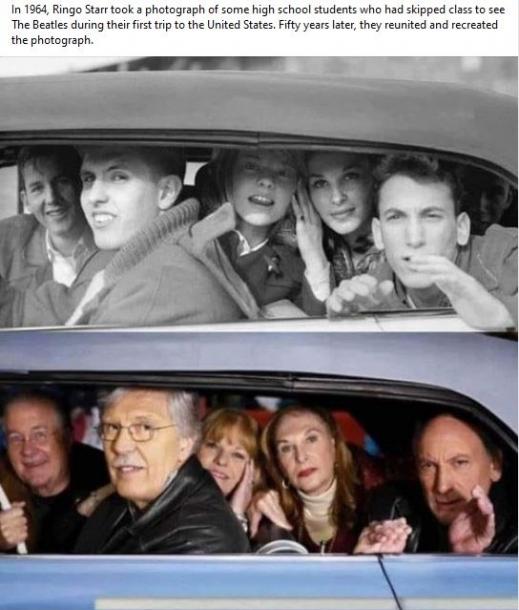
Strangely, the girls are more recognisable to me than the boys. But we are unmistakably old, although inside of us is the same kid we once were all those years ago. And here is the class picture, of those that had shown up.

Which for some reason reminds me of this.
John le Carré was the greatest spy novelist of my generation and may have been the greatest ever. He passed away yesterday and here are three obits if you would like to catch up on the details: this from The Guardian and this from the BBC. This is the one from The Oz. As it happens, I have just finished reading (and given the nature of memory re-reading) some of his greats and am now in the middle of The Russia House and The Honourable Schoolboy, the one in my hands at any moment depending on the place I happen to be at the time.
Spy novels are to boys what romantic novels are to girls. Every literate person reads both, but after you have read all of Jane Austen and Emily Brontë, what comes next? And spy stories set in actual historical settings has been my literature of choice for a long time. And with Le Carré, it is the same as Jane Austen, a fantastically deep writing style, unbelievably descriptive abilities with believable characters each with a personality of their own, even the most minor. And whether it is the middle of the Cold War or the middle of Perestroika, the politics of the moment are just the background to the tale. It may no longer be that “it is a truth universally acknowledged, that a single man in possession of a good fortune, must be in want of a wife”, just as it may never have been true that “the Cold War was over long before it was officially declared dead”. But the stories just carry you along by their own momentum. And the writing is unparalleled. This is from the page I am reading right now (The Russia House p 82):
He had made a base camp at his own end of the room on a stiff school chair as far away from us as he could get. He perched on it sideways to us, stooped over his whisky glass, which he held in both hands, peering into it like a great thinker or at least a lonely one. He spoke not to us but to himself, emphatically and scathingly, not stirring except to take a sip from his glass or duck his head in affirmation of some private and usually abstracted point of narrative. He spoke in the mixture of pedantry and disbelief that people used to reconstruct an episode such as a death or a traffic accident. So I was here and you were there and the other other chap came from over there.
So my first theme here is that if you have not read his novels, you perhaps should. But my second theme, which really comes out of the Russia House, an novel set at the end of the Cold War, is that we may find we in the West are heading into a world of samizdat and a world of dissidents. That we live in a world of madness should not be in doubt, but if you do have some residual reservations about where we are heading, read this by Nick Cater today: Worried about teen gender ‘craze’? You haven’t got a prayer. Here are the central points if you cannot open it up yourself:
The Premier who thought it was OK to handcuff a pregnant woman in her pyjamas for something she posted on Facebook has launched a fresh assault on freedoms hitherto thought sacrosanct.
Legislation before the Victorian parliament will make the act of prayer a criminal offence in some circumstances. Yet in an era when it is cool to self-identify as anything but a Christian, hardly anyone is making a fuss.
The pretext for the bill is transphobia, a contagion for which the Andrews government believes the church is a super spreader. It will be illegal to counsel a person to change or suppress their chosen gender identity. Prohibited actions include “carrying out a religious practice, including but not limited to, a prayer-based practice”….
The legislation cruised through the Victorian Legislative Assembly on Thursday afternoon with barely a murmur. The opposition demand for a period of consultation went the way of all Liberal Party amendments and the bill was on its way to the upper house by 10 past five.
Outside parliament, the response has been equally feeble, save for the interventions of the Australian Christian Lobby, the Catholic Church and the Presbyterians. Melbourne’s Catholic Archbishop, Peter Comensoli, wrote: “No government has an interest in what a person prays for, who they pray to, who they pray with, or what conversations happen between members of a family.”
He is so 2019. And here’s the conclusion which may soon make articles like Nick’s illegal to say in public (or private).
We should be encouraging minors to seek a second, third or fourth opinion from doctors, priests, pastors and other professionals before embarking on a path that could alter their bodies irreversibly with a limited chance of improving their mental health.
Yet the Victorian law will make it illegal to do anything other than pat them on the head. The issue here is not the maturity of minors, but the intellectual immaturity of adults who exploit teenage anxiety for ideological ends.
What do you mean it can’t happen here. It already has.
MORE ON LE CARRÉ: This is a bit more on Le Carré and Jews: ‘A spiritual kinship’: When John Le Carre poured out his soul on Jews and Israel. Here is some, but as the cliché goes, read the whole thing.
This interview with John le Carre, conducted by Douglas Davis for the Jewish World Review, first appeared on January 1, 1998 under the headline “Not quite conventional”. It is republished here by kind permission of the author. Some excerpts.
Not so surprising, perhaps, the most revealing clue to Le Carre’s own somewhat uncertain identity comes in his suggestion about the identity of his celebrated fictional character: “It is a sheer fluke,” says Le Carre, “that Smiley himself is not a Jew.” And then: “Perhaps he is.” …
At age 16, Le Carre finally escaped from the bizarre underworld of his father and the gloomy boarding schools to become what he describes as “a refugee” — again, the outsider — at Bern University in Switzerland and then Oxford, emerging with a degree in German literature.
But it was a visit to the “unbeautified camps” of Belsen and Dachau soon after the war that had a searing impact on the impressionable young novelist-in-the-making and proved to be a defining life experience: “To this day,” he says, “there is no museum and no film, however fine, not even a book, that can compare with the living impact of those places on me.”
One year later, he was back, this time as a young conscript — an intelligence officer — to trawl the “refugee cages” and question those who had been washed up from eastern and central Europe.
“Every day brought its tales of human tragedy,” he says. “Every day brought its reminders that whatever minor inconveniences I had suffered in my own life, they were a joke when set beside the real thing.
“And every day brought its Jews. Broken families with broken suitcases. These people are my business, I thought. There is something between their eyes and mine.” …
The persistence of Jews who insisted on inhabiting his work led inevitably to a fascination with Israel, but it was not until the early 1980s that Le Carre summoned up the courage to tackle a subject that “had long been in my sights, even if it had always scared the wits out of me: the Arab-Israeli conflict.” The result was The Little Drummer Girl.
“I knew nothing of the Middle East, but then I have always seen my novels as opportunities for self-education,” he says. “Investing my ignorance in my central character — a leftist English actress — and making a virtue of her naivety, I set off on a journey of self-enlightenment, living my character, leaning with each breeze — now toward Israel, now away from it — in a series of schizophrenic visits to Amman, Damascus, Beirut, South Lebanon and later Tunis. Then back to Israel, across the Allenby Bridge or by way of Cyprus.”
Israel, he says, “rocked me to my boots. I had arrived expecting whatever European sentimentalists expect — a re-creation of the better quarters of Hampstead [in London]. Or old Danzig, or Vienna or Berlin. The strains of Mendelssohn issuing from open windows of a summer’s evening. Happy kids in seamen’s hats clattering to school with violin cases in their hands…”
Instead, what he found was “the most extraordinary carnival of human variety that I have ever set eyes on, a nation in the process of re-assembling itself from the shards of its past, now Oriental, now Western, now secular, now religious, but always anxiously moralizing about itself, criticizing itself with Maoist ferocity, a nation crackling with debate, rediscovering its past while it fought for its future.”
“No nation on earth,” he says passionately, ” was more deserving of peace — or more condemned to fight for it.”
Or thereabouts. I wandered into a shop today in which they were playing The First Noel and was struck with how there had been no other shop in which I had heard a Christmas carol, and not even on the street either. So to remind you what we are missing and will miss in a secular society if those who would like to crush our traditions are actually able to do it.




In a world of square pegs and round holes, the fact of human unhappiness and dissatisfaction is just the way it is and always will be. The left has been taking aim for more than a century at the two most important forms of refuge in this heartless world: the family and religion. I think of socialist thought as the most hideous of all of the psychological traumas of the modern world. It is a replacement of sorts for religion but offers no consolations that I can think of whatsoever. This has all come to mind having run across this: Trump history and behavior suggest destructive mental processes that put America at risk. I thought it was against the professional ethics of a psychiatrist to be diagnosing without actually knowing the patient, but ethics are for other people. Having read their stuff, I can plainly see they are a couple of screwballs. This is what they said:
Since President Donald Trump’s election, the psychiatric community has debated calling out his illness(es). The American Psychiatric Association says we should remain silent out of fear that we would violate the Goldwater Rule — an APA rule adopted largely to prevent the partisan misuse of psychiatric diagnoses to unduly influence an election. But it is clear what many psychiatrists know privately, and a few have said publicly. The threat to our democracy is too great to remain silent.
They said quite a bit more but you get the idea. Having been reading quite a bit of psychology lately having just run across this ferocious scam – see The Therapeutic State for a previous discussion – it is quite clear that the diagnoses of most psychologist’s is based on the moral and political beliefs of the therapist and has virtually no objective value. These shrinks have even less to contribute to public debate than Keynesian economists, and that really is rock bottom. How much does the conclusion look like psychology rather than a political judgement which, of course, is just what it is?
Whatever President Trump does leading up to Jan. 20 — whether it is reckless actions abroad or lawless and destructive acts of commission or omission at home — it should be clear that these are not normal nor acceptable actions by an American president.
They are miseducated in every known falsehood found across the social sciences. It really is a disgrace but eventually you just have to get used to it.

Dr Samantha Crompvoets (from “Does the ACT have Australia’s most parent-friendly company?”)
The text below is from David Archibald discussing an issue I know nothing about: Afghanistan: The Fevered Imaginations of the REMFs*. This is his final para:
The Federal Police will be given the job of prosecuting the servicemen mentioned in the Brereton report, but the effort will go the way of the McDade prosecutions. They will be dropped for lack of evidence because mostly they are complete fabrications.
I can only say that if these soldiers made up these stories just to tease the people who were interviewing them, they are a pretty stupid lot themselves. As for the photo above, this is the relevance to the story:
In March, 2016 the then head of the army, now chief of defence General Angus Campbell, commissioned a secret report on SAS culture from a Canberra sociologist, Dr Samantha Crompvoets.
Here is the above link once again to get a better sense of who was doing the interviews.
And if you want to know what an REMF is you will have to go to David’s link.
Really, why add to the crush of issues with this one when nothing whatever can be done about any of it? Still, I have only just cottoned onto it so thought I might share. This, however, is even less likely to be seen for what it is than my work on modern economic theory, but such is life.
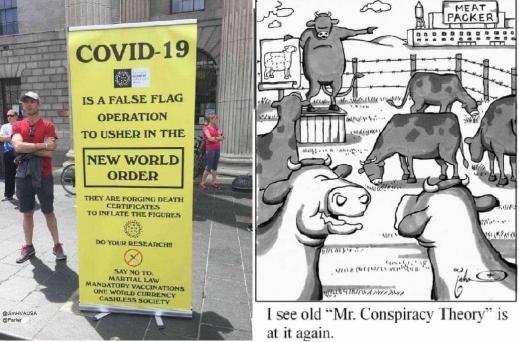
I suppose I ought to have seen this sooner since it has been the elephant in the room since the Covid panic began. If anything is going to terrify us into a totalitarian state, it is the threat of disease, which is more than just the threat of death but includes all the psychological overhang that exists everywhere. This was all discussed by Thomas Szasz even as long ago as when I was at university. This is only a tiny bit of who he is:
Szasz was best known as a social critic of the moral and scientific foundations of psychiatry, as what he saw as the social control aims of medicine in modern society, as well as scientism. His books The Myth of Mental Illness (1961) and The Manufacture of Madness (1970) set out some of the arguments most associated with him.
I have been associating lately with people involved in dealing with the psychological damage that has apparently been visited on people who have been confined to home because of the Covid or who have been terrorised by the media reports. Really, I said to them, is this actually such an issue? Well, you have no idea the size of the industry associated with dealing with our mental health. Having come onto this monster in our midst, there was then this headline in The Oz just yesterday: Productivity Commission’s final report says toddlers should be screened for emotional distress.
Australia’s mental health system is failing the “missing middle” who don’t require hospital care and has a “narrow view of people seeking treatment and support”. The Productivity Commission’s final report into the country’s mental health system, two years in the making, recommends toddlers should be screened for early signs of emotional distress and better support offered to schoolchildren dealing with psychological issues as part of a push for earlier intervention. The commission says the system is “not comprehensive and fails to provide treatment and support that people who need it legitimately expect”. “The clinical care system has gaps, including, but not limited to, the so-called ‘missing middle’,” the report reads.
And then this came today with some material from Medibank:
Finding reliable mental health information and support can be challenging. That’s why Medibank has partnered with specialists in mental health to provide information you can trust, to support you and your family. We also offer eligible members access to mental health services at no extra costΔ~, and no waiting period to claim on psychology and counselling services§.
The symptoms and signs of mental health issues are varied and can come on suddenly or gradually over time. It’s often difficult to differentiate between expected behaviour and behaviours that can indicate a mental health condition. If you or someone you care about are struggling, you can find information on common mental health issues here, including what to do if you notice symptoms or signs.
And when you start looking for these kinds of things they are everywhere. We are beyond mere socialism. If you would like to investigate further, you might have a look at this, also by Szasz, except from 2006, and specifically titled: The Therapeutic State. A long article, worth your time, with this the final para:
Formerly, people rushed to embrace totalitarian states. Now they rush to embrace the therapeutic state. By the time they discover that the therapeutic state is about tyranny, not therapy, it will be too late.
The entire article is so prescient it’s spooky. Perhaps it’s not too late, although perhaps it is.
Watching the economy over the years, the only crisis is the period in which the unemployment rate increases. During the say six months when the rate rises from 5% to 9%, there really is major concern everywhere. Then the rate plateaus and everyone relaxes, or at least among those who still have jobs which is the vast majority.
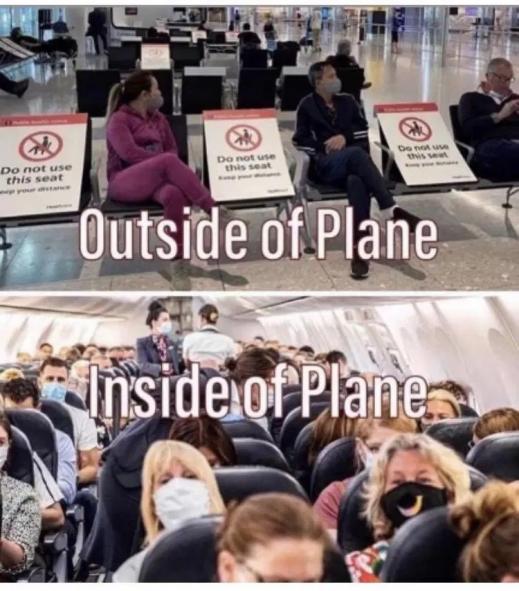
Same about Covid. The “I stand for Dan” types ask only one question, am I still alive? Following that, there is the ancillary question: is the government doing everything it can to protect me? Hardly anyone asks when will business open or when will the lockdown end? And if there is no vaccine till the end of 2021, they will patiently wait till then. And so will the rest of us, whether patiently or not.
 Law of Markets