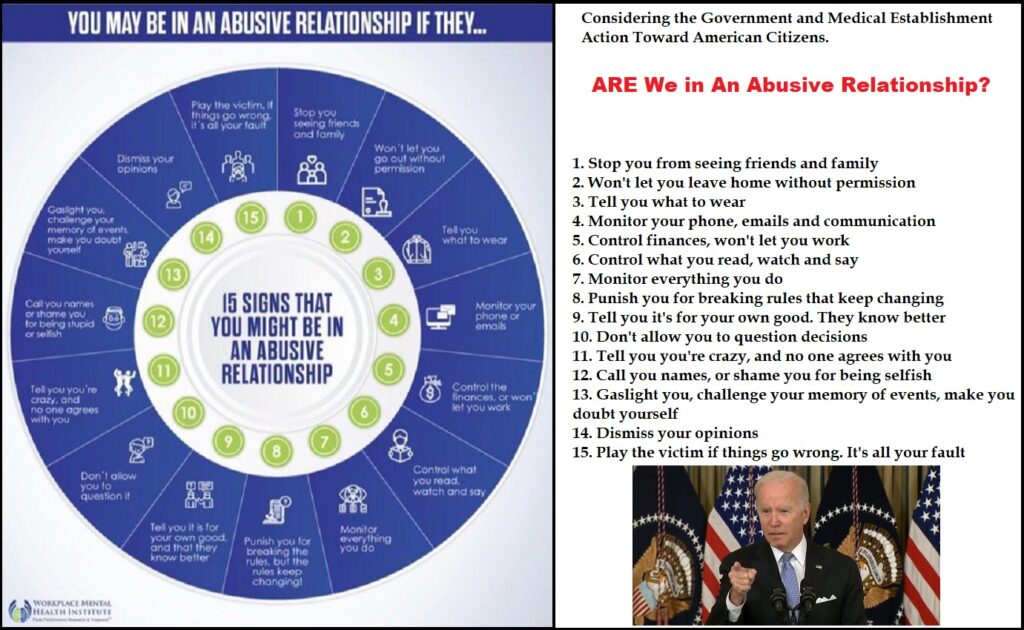
It is frightening just how accurate the parallels are. It says something about the kinds of people who are attracted into politics, especially on the left.

It is frightening just how accurate the parallels are. It says something about the kinds of people who are attracted into politics, especially on the left.
That is the full interview which runs 1 hour and 39 minute. If that’s a bit long, here is the truncated version at a mere 55 minutes.
See the Explosive Highlights from Dr. Peter McCullough’s Bombshell Interview with Joe Rogan. This is from Alex Jones at InfoWars.Dr. Peter A. McCullough joined the Joe Rogan Experience to break down how the coronavirus crisis could have been mitigated had the government researched and administered early treatments.
First below is a tweet with some of the footage.

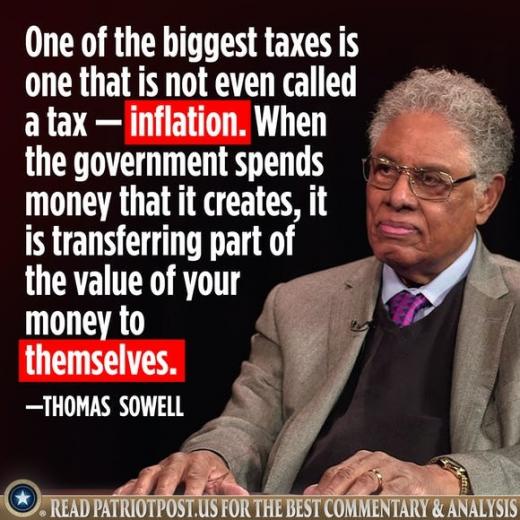

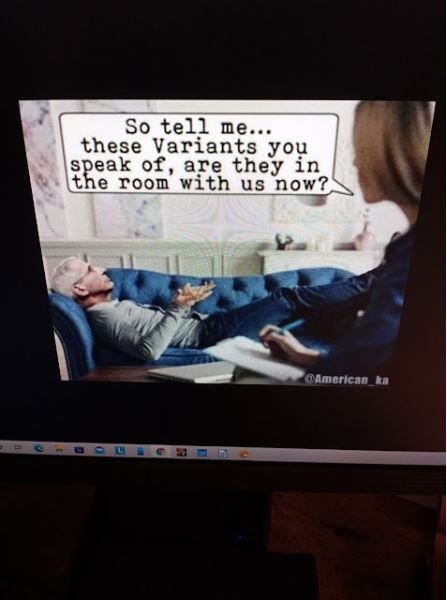
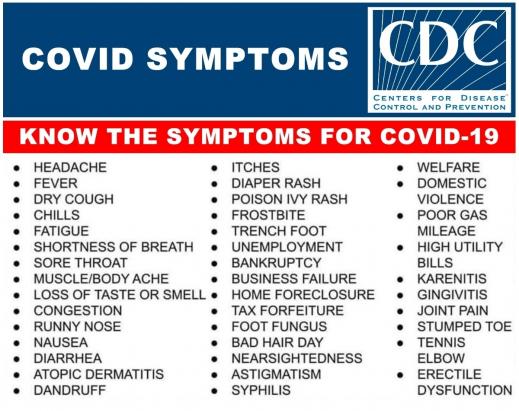


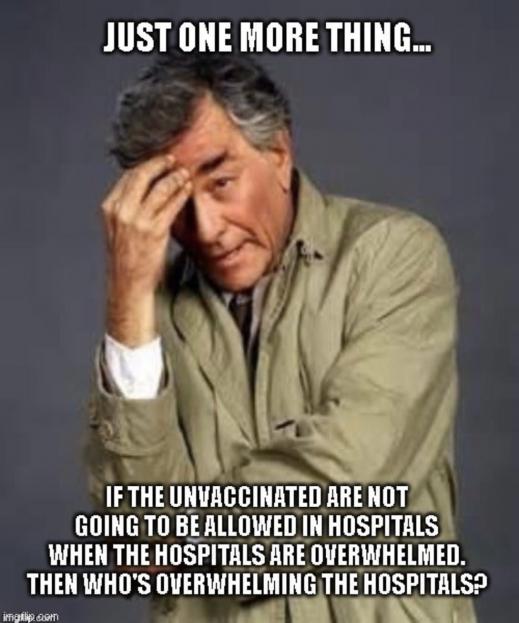

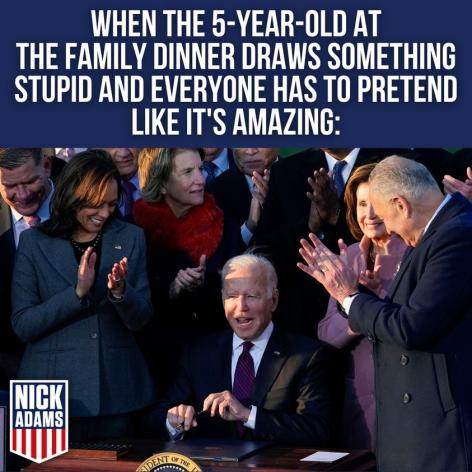

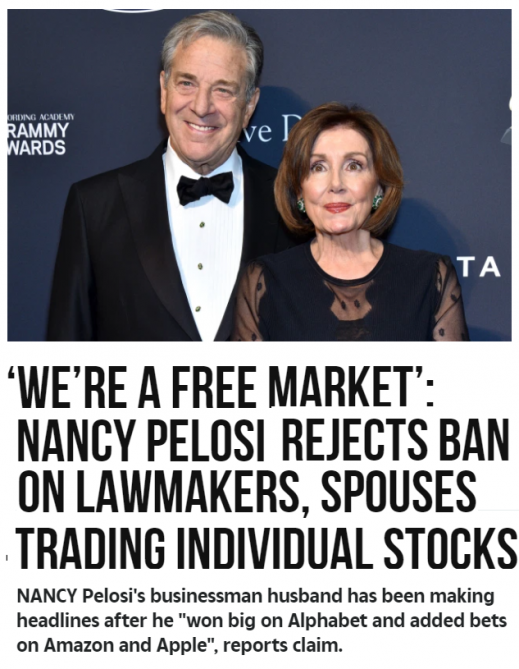






I’ve put the video up before, but thought I would couple it with this article by Ammo Girlll at Powerline: meditating on the MARGINALIZED AND UNDERSERVED. Read the whole thing, but this will give you a sense of what you will find if you go to the link.
A few weeks ago, Ann Coulter did an impressive takedown of the monstrous racist grift that is the Build Back Bigoted Bill. Ann found the definition of “underserved” on page 111 of the Rules Committee summary. The bill itself uses the term “underserved” 99 times and the term “underserved community” 19 times. The summary definition set forth for one of the key sections reads: “This section also defines an ‘underserved community’ as a group of people who have been systematically denied the full opportunity to participate in aspects of economic, social and civic life. Underserved communities include Black, Latino, Indigenous and Native American persons, Asian American and Pacific Islanders, other persons of color, etc.”
Boy, that is a powerful lot of underserving. I don’t know what “other persons of color” entails, not even to mention the “etc.” Is that like a Player To Be Named Later? They have already listed Black, Brown, Red and Yellow. What color is left? Puce? Ecru? For sure, not white. We are read out of the bill, if not the human race. Fine. Who needs to be “served”? Whatever they are serving, I’ll pass.
The most racist people in the world today may be the American left and the focus of their racism is almost entirely on white people, which most of them are themselves. These people are mentally disturbed.
This is about the suppression of Ivermectin and consists of a long conversation. These are the persons involved:
Andrew Hill, PhD, is a senior visiting Research Fellow in Pharmacology at Liverpool University. He is also an advisor for the Bill and Melinda Gates Foundation and the Clinton Foundation. As a researcher for the WHO evaluating ivermectin, Hill wielded enormous influence over international guidance for the drug’s use.
Dr. Tess Lawrie is Director of the Evidence-based Medicine Consultancy in Bath, England, and one of the world’s leading medical research analysts.
This is the recorded conversation between them over the approval of Ivermectin.
Lawrie: Lots of people are in sensitive positions; they’re in hospital, in ICUs dying, and they need this medicine.
Hill: Well …
Lawrie: This is what I don’t get, you know, because you’re not a clinician. You’re not seeing people dying every day. And this medicine prevents deaths by 80 percent. So 80 percent of those people who are dying today don’t need to die because there’s ivermectin.
Hill: There are a lot, as I said, there are a lot of different opinions about this. As I say, some people simply …
Lawrie: We are looking at the data; it doesn’t matter what other people say. We are the ones who are tasked with looking at the data and reassuring everybody that this cheap and effective treatment will save lives. It’s clear. You don’t have to say, well, so-and-so says this, and so-and-so says that. It’s absolutely crystal clear. We can save lives today. If we can get the government to buy ivermectin.
Hill: Well, I don’t think it’s as simple as that, because you’ve got trials …
Lawrie: It is as simple as that. We don’t have to wait for studies … we have enough evidence now that shows that ivermectin saves lives, it prevents hospitalization. It saves the clinical staff going to work every day and being exposed. And frankly, I’m shocked at how you are not taking responsibility for that decision.
And you still haven’t told me who is [influencing you]? Who is giving you that opinion? Because you keep saying you’re in a sensitive position. I appreciate you are in a sensitive position, if you’re being paid for something and you’re being told [to support] a certain narrative … that is a sensitive position.
So, then you kind of have to decide, well, do I take this payment? Because in actual fact, [you] can see [your false] conclusions are going to harm people. So maybe you need to say, I’m not going to be paid for this.
I can see the evidence, and I will join the Cochrane team as a volunteer, like everybody on the Cochrane team is a volunteer. Nobody’s being paid for this work.
Hill: I think fundamentally, we’re reaching the [same] conclusion about the survival benefit. We’re both finding a significant effect on survival.
Lawrie: No, I’m grading my evidence. I’m saying I’m sure of this evidence. I’m saying I’m absolutely sure it prevents deaths. There is nothing as effective as this treatment. What is your reluctance? Whose conclusion is that?
Hill complains again that outsiders are influencing him.
Lawrie: You keep referring to other people. It’s like you don’t trust yourself. If you were to trust yourself, you would know that you have made an error and you need to correct it because you know, in your heart, that this treatment prevents death.
Hill: Well, I know, I know for a fact that the data right now is not going to get the drug approved.
Lawrie: But, Andy — know this will come out. It will come out that there were all these barriers to the truth being told to the public and to the evidence being presented. So please, this is your opportunity just to acknowledge [the truth] in your review, change your conclusions, and come on board with this Cochrane Review, which will be definitive. It will be the review that shows the evidence and gives the proof. This was the consensus on Wednesday night’s meeting with 20 experts.
Hill protests that the U.S. National Institutes of Health will not agree to recommend ivermectin.
Lawrie: Yeah, because the NIH is owned by the vaccine lobby.
Hill: That’s not something I know about.
Lawrie: Well, all I’m saying is this smacks of corruption and you are being played.
Hill: I don’t think so.
Lawrie: Well then, you have no excuse because your work in that review is flawed. It’s rushed. It is not properly put together.
Lawrie points out that Hill’s study ignores a host of clinical outcomes that affect patients. She scolds Hill for ignoring the beneficial effects of ivermectin as prophylaxis, its effect on speed to testing negative for the virus, on the need for mechanical ventilation, on reduced admissions to intensive care, and other outcomes that are clinically meaningful.
This is bad research … bad research. So, at this point, I don’t know … you seem like a nice guy, but I am really, really worried about you.
Hill: Okay. Yeah. I mean, it’s, it’s a difficult situation.
Lawrie: No, you might be in a difficult situation. I’m not, because I have no paymaster. I can tell the truth. How can you deliberately try and mess it up … you know?
Hill: It’s not messing it up. It’s saying that we need, we need a short time to look at some more studies.
Lawrie: So, how long are you going to let people carry on dying unnecessarily – up to you? What is, what is the timeline that you’ve allowed for this, then?
Hill: Well, I think . . . I think that it goes to WHO [World Health Organization]and the NIH [National Institutes of Health]and the FDA [U.S. Food and Drug Administration] and the EMA [European Medicines Agency]. And they’ve got to decide when they think enough’s enough.
Lawrie: How do they decide? Because there’s nobody giving them good evidence synthesis, because yours is certainly not good.
Hill: Well, when yours comes out, which will be in the very near future … at the same time, there’ll be other trials producing results, which will nail it with a bit of luck. And we’ll be there.
Lawrie: It’s already nailed.
Hill: No, that’s, that’s not the view of the WHO and the FDA.
Lawrie: You’d rather risk loads of people’s lives. Do you know if you and I stood together on this, we could present a united front and we could get this thing. We could make it happen. We could save lives; we could prevent [British National Health Service doctors and nurses] people from getting infected. We could prevent the elderly from dying.
These are studies conducted around the world in several different countries. And they’re all saying the same thing. Plus there’s all sorts of other evidence to show that it works. Randomized controlled trials do not need to be the be-all and end-all. But [even] based on the randomized controlled trials, it is clear that ivermectin works. It prevents deaths and it prevents harms and it improves outcomes for people …
I can see we’re getting nowhere because you have an agenda, whether you like it or not, whether you admit to it or not, you have an agenda. And the agenda is to kick this down the road as far as you can. So … we are trying to save lives. That’s what we do.
I’m a doctor and I’m going to save as many lives as I can. And I’m going to do that through getting the message [out] on ivermectin. Okay. Unfortunately, your work is going to impair that, and you seem to be able to bear the burden of many, many deaths, which I cannot do.
Lawrie then asks again: Would you tell me? I would like to know who pays you as a consultant through WHO?
Hill: It’s Unitaid.
Lawrie: All right. So who helped to … Whose conclusions are those on the review that you’ve done? Who is not listed as an author? Who’s actually contributed?
Hill: Well, I mean, I don’t really want to get into, I mean, it … Unitaid …
Lawrie: I think that . . . it needs to be clear. I would like to know who, who are these other voices that are in your paper that are not acknowledged? Does Unitaid have a say? Do they influence what you write?
Hill: Unitaid has a say in the conclusions of the paper. Yeah.
Lawrie: Okay. So, who is it in Unitaid, then? Who is giving you opinions on your evidence?
Hill: Well, it’s just the people there. I don’t …
Lawrie: So they have a say in your conclusions.
Hill: Yeah.
Lawrie: Could you please give me a name of someone in Unitaid I could speak to, so that I can share my evidence and hope to try and persuade them to understand it?
Hill: Oh, I’ll have a think about who to, to offer you with a name … but I mean, this is very difficult because I’m, you know, I’ve, I’ve got this role where I’m supposed to produce this paper and we’re in a very difficult, delicate balance …
Lawrie: Who are these people? Who are these people saying this?
Hill: Yeah … it’s a very strong lobby …
Lawrie: Okay. Look, I think I can see kind of a dead end, because you seem to have a whole lot of excuses, but, um, you know, that to, to justify bad research practice. So I’m really, really sorry about this, Andy.
I really, really wish, and you’ve explained quite clearly to me, in both what you’ve been saying and in your body language that you’re not entirely comfortable with your conclusions, and that you’re in a tricky position because of whatever influence people are having on you, and including the people who have paid you and who have basically written that conclusion for you.
Hill: You’ve just got to understand I’m in a difficult position. I’m trying to steer a middle ground and it’s extremely hard.
Lawrie: Yeah. Middle ground. The middle ground is not a middle ground … You’ve taken a position right to the other extreme calling for further trials that are going to kill people. So this will come out, and you will be culpable.
And I can’t understand why you don’t see that, because the evidence is there and you are not just denying it, but your work’s actually actively obfuscating the truth. And this will come out. So I’m really sorry … As I say, you seem like a nice guy, but I think you’ve just kind of been misled somehow.
Hill promises he will do everything in his power to get ivermectin approved if she will give him six weeks.
Hill: Well, what I hope is that this, this stalemate that we’re in doesn’t last very long. It lasts a matter of weeks. And I guarantee I will push for this to last for as short amount of time as possible.
Lawrie: So, how long do you think the stalemate will go on for? How long do you think you will be paid to [make] the stalemate go on?
Hill: From my side. Okay … I think end of February, we will be there, six weeks.’
Lawrie: How many people die every day?
Hill: Oh, sure. I mean, you know, 15,000 people a day.
Lawrie: Fifteen thousand people a day times six weeks … because at this rate, all other countries are getting ivermectin except the UK and the USA, because the UK and the USA and Europe are owned by the vaccine lobby.
Hill: My goal is to get the drug approved and to do everything I can to get it approved so that it reaches the maximum …
Lawrie: You’re not doing everything you can, because everything you can would involve saying to those people who are paying you, “I can see this prevents deaths. So I’m not going to support this conclusion any more, and I’m going to tell the truth.”
Hill: What, I’ve got to do my responsibilities to get as much support as I can to get this drug approved as quickly as possible.
Lawrie: Well, you’re not going to get it approved the way you’ve written that conclusion. You’ve actually shot yourself in the foot, and you’ve shot us all in the foot. All of … everybody trying to do something good. You have actually completely destroyed it.
Hill: Okay. Well, that’s where we’ll, I guess we’ll have to agree to differ.
Lawrie: Yeah. Well, I don’t know how you sleep at night, honestly.
The incident is recounted in Robert Kennedy Jr’s New York Times Bestseller, The Real Anthony Fauci: Bill Gates, Big Pharma, pages 137-143.
This letter to the editor in The Oz made the point all too well. This was the feature letter as well so was the one the paper wanted you to read the most. If you are wondering why Covidiocy is not about to end any time soon, read this.
Could there be a more woeful time to drop masks, QR sign in, vaccination certificates and allow the unvaccinated to mingle among us?
Rising case numbers in NSW project a considerable spike (“Omicron Christmas case surge fears”, 14/12). Have we learnt nothing from the past 21 months? Are we looking at data from Europe, Britain and the US which all admit they jumped too soon in dropping the most simplest of protection, masks?
We are told we have to live with Covid. Indeed we do. However, to go forth today in NSW without contact tracing is totally reckless and inappropriate
Chief health officer Kerry Chant has repeatedly said contact tracing minimises the spread and allows fast detection of those present at a venue who came in contact with a super spreader.
The next two weeks are by far the heaviest retail and food shopping weeks of the year. The party season is in full swing. We all want out but it may be two weeks of fun and another year of reintroduced restrictions as evidenced in Germany and Britain.
The timing of dropping all protective armour flies in the face of irrefutable evidence coming out of the northern hemisphere.
There is little doubt that the people who make the rules know better. As for example:
Boris Johnson Aide Resigns Over Downing Street Christmas Video — The Outrage Explained.
Allegra Stratton, an adviser to British Prime Minister Boris Johnson, resigned Wednesday following backlash over a video that recently surfaced from December 2020 showing her and other senior staff joking about an alleged Christmas party held at Downing Street during the height of lockdown restrictions.
And then there’s this: Sanna Marin: Finland’s PM sorry for clubbing after Covid contact.
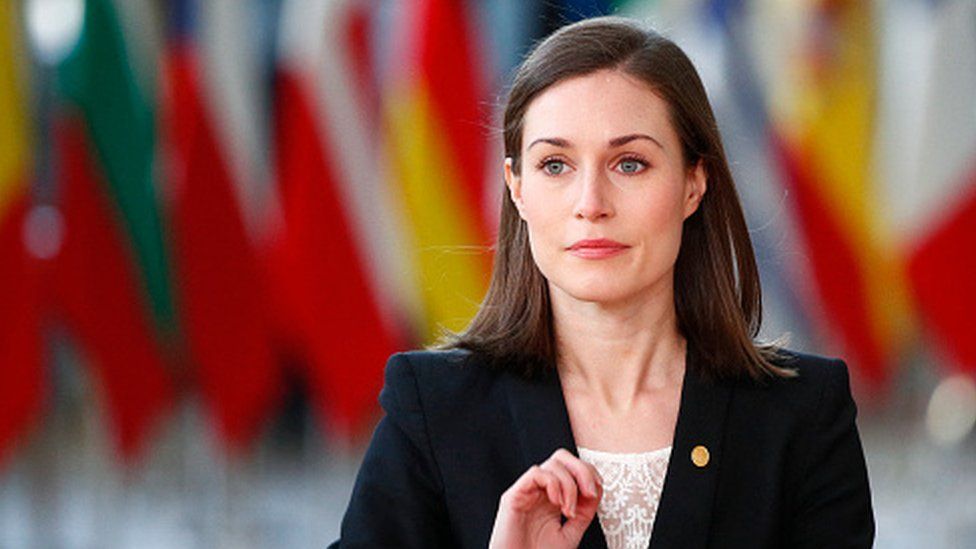
They think the people whom they govern are pathetic idiots, but what choice do they have but to legislate the rules their communities demand?
I have friends who are reading a just-published book about the execution of Ethel Rosenberg for espionage in 1953. On the left, every issue from which more mileage can be driven remains alive forever and is stoked to the fullest extent thereafter. Of course, there is no doubt whatsoever that her husband, Julius, had passed on information on the building of the atomic bomb to the Soviets at a time when the Soviet Union was imposing communist regimes on each of the nations it had overrun at the end of World War II, and that she had assisted in the espionage. This is from Wikipedia which like most other sources of “information” on the net is heavily weighted to the left.
For decades, the Rosenbergs’ sons (Michael and Robert Meeropol) and many other defenders maintained that Julius and Ethel were innocent of spying on their country and were victims of Cold War paranoia. After the fall of the Soviet Union, much information concerning them was declassified, including a trove of decoded Soviet cables (code-name: Venona), which detailed Julius’s role as a courier and recruiter for the Soviets. Ethel’s role was as an accessory who helped recruit her brother David into the spy ring and did clerical tasks such as typing up documents that Julius then passed to the Soviets.
Guilty, guilty, guilty.
So why bring this up? Because of this movie review which I saw in The Age today: Being the Ricardos is near flawless – and Nicole Kidman is magnificent. “Being the Ricardos” is a new film starring Nicole Kidman about Lucille Ball and her husband, Desi Arnaz. And this is the first line of the review:
The idea that Lucille Ball was suspected of being a communist tells us more about America in 1952 than it does about Ball, which is of course why Aaron Sorkin (The West Wing) made this movie.
So in 2021 they made a movie about someone who had been suspected of being a communist almost seventy years ago. And why did they suspect her? Because she had registered as a member of the communist party for the American election of 1936. Here are the facts, but from a different source.
In 1952, HUAC accused Ball of being a Communist. Ball had registered to vote as a Communist in 1936. But Ball explained to the committee that she only did so to placate her dying grandfather, who was fond of Eugene Debs, a labor organizer and Socialist Party candidate for president. The committee subsequently dropped the charges.
Imagine suspecting that someone who had registered to vote for the communist party of being a communist. Did not seem to stop her from achieving lasting success and enduring fame.
The Age article goes on with the usual ignorant discussion which never seems to vary.
This is Sorkin’s handbook for writers interested in comedy or drama. That’s as much its purpose as the politics of McCarthyism….
This movie shines with a beautiful silver light; the kind of movie brilliance we haven’t seen since that other HUAC-kicking masterpiece, Good Night, and Good Luck, in which politics, history and culture entwined.
Senator McCarthy was in the Senate. HUAC stood for the House Un-American Activities Committee. McCarthy was a Republican Senator. HUAC was a committee in the House of Representatives dominated by Democrats. Virtually everything of significance McCarthy ever said has since been demonstrated to have been true. That HUAC was filled with Democrats has been written out of the script in the same way that Lucille Ball actually having voted for the Communist Party in 1936 is passed by.
If you would like to read the absolutely best book available on all this, I cannot recommend more highly Diana West’s astonishingly fascinating and comprehensive American Betrayal.
Meanwhile, inconvenient FACTS, such as that Jussie Smollett faked his supposed attack by Trump supporters has virtually entirely disappeared from the news. We truly do live in an Orwellian world.
Click the link.
Thomas Sowell and I share many views in common but what may matter most to me anyway is both of us have written books on Say’s Law and classical economic theory. These are listed on his wikipedia page.
- 1972. Say’s Law: A Historical Analysis. Princeton University Press.
- 1974. Classical Economics Reconsidered. Princeton University Press.
These were mine:
Say’s Law and the Keynesian Revolution: How Macroeconomic Theory Lost its Way [1998]
I recommend all four books, but you will have to forgive me for being partial to my own. Sadly, however, our economic perspective is shared by only a very small minority of the economics community but at least it is shared with Thomas Sowell. I might add we have also both written introductory economic texts. This is his:
This is mine:
Free Market Economics, Third Edition An Introduction for the General Reader [2017]
I absolutely recommend both, but mine does have more diagrams which I think makes following the text easier.
As for our political perspective, we are on virtually everything absolutely on the same page. There may be differences since there always are, but they would not be that large and only he and I could actually tell what they are since they are so small that you would really have to get into the nitty gritty to isolate where those differences are.
We have even met one time, many years ago, even took him out to lunch. Very memorable (for me). One of the great conservative authors of our time.
Below are a series of quotes from Sowell that have been sent to me by a friend [my thanks to Tony] that I think are worth passing along to everyone else.
 Law of Markets