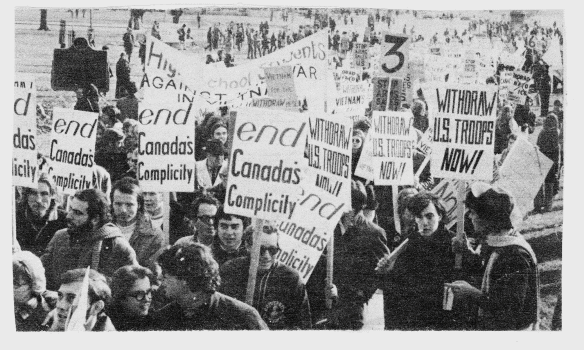
Me – a different me – in 1968

Where was Jordan Peterson then to tell me what I needed to know:

“It’s what I tell 18 year olds. Six years ago you were twelve. What the hell do you know? You’re under the care of the family or the state, you haven’t established an independent existence, you haven’t had children, you haven’t started a business, you haven’t taken responsibility for anything, you don’t have a degree, you haven’t finished your course, you don’t know how to read, you can’t think, you don’t know how to present yourself, well Jesus, it’s not right to tell people in that situation that they should go out and change the world.”

And while this was taken in Toronto well before I came out to Oz, the hat I am wearing was an Australian soldier’s slouch hat which I wore for many years!

Friedrich Nietzsche, Samuel Laing and Jordan Peterson

All three authors – Friedrich Nietzsche (1844-1900), Samuel Laing (1812-1897) and Jordan Peterson (1962- ) – wrote in response to the same issue: the impossibility of literal acceptance of Christian mythology in the wake of the scientific discoveries of the nineteenth century. Both Nietzsche and Laing found a response in turning to the seventh century BC philosophical writings of Zarathustra – Laing literally with Nietzsche only metaphorically – while Laing and Peterson argue that the moral teachings of our Judeo-Christian ethic can be maintained through the careful reading of Biblical literature. Knotting the yarn a bit more, Nietzsche and Peterson argue that without Christian teaching, Western Civilisation will disintegrate. Nietzsche thinks that would be a good outcome, while Peterson (and Laing) believe it would be bad.

Today, whatever the actual historical circumstances may be, we celebrate the memory of the freeing of the Jewish people from slavery in Egypt. Whether any of the events described in the Bible are literally true is unknowable, but almost no one alive today thinks of almost any of it, from Moses in the bulrushes to the ten plagues of Egypt, as anything but stories. But what is undoubted is that the recorded outcome led to the most important moral event in the history of the world, the receiving into the hands of the Jewish people, the Ten Commandments, whose impress for good on world history has been second to none, or at least as seen by Laing and Peterson, while from the perspective of Nietzsche, the consequence has been an unalloyed moral disaster.

Samuel Laing

Samuel Laing wrote the most astonishing book – Modern Science and Modern Thought – which was first published in 1885. He lived at a time when the scientific discoveries during the nineteenth century made it impossible to believe the literal accuracy of any biblical account. To quote:

There is no more room left for the supernatural in the fiercest tropical thunder-storm than there is in turning the handle of an electrical machine, or sending in a tender to light the streets of London by electric light. And the result is absolutely certain. In the contrast between the natural and the supernatural, the latter has not only been repulsed but annihilated. [Laing 1885: 243]

Morally, then, where are we left? Laing again:

The really religious writers of the present day are those who, thoroughly understanding and recognising the facts of science, boldly throw overboard whatever conflicts with them, abandon all theories of inspiration and miraculous interferences with the order of nature, and appeal, in support of religion, to the essential beauty and truth in Christianity underlying the myths and dogmas which have grown up about it; who above all, appeal to the fact that it exists and is a product of the evolution of the human mind, satisfying, as nothing else can do so well, many of the purest emotions and loftiest aspirations, which are equally a necessary and inevitable product of that evolution. [ibid.: 337-38]

And one more, just to see the point as strongly as it can be made. And he had the advantage of living through an era where the literal truth of Biblical accounts had not yet been shattered by scientific discovery.

Darwin’s “Origin of Species” was only published in 1859, and his views as to evolution, development, natural selection, and the prevalence of universal law, have already annexed nearly the whole world of modern thought and become the foundation of all philosophical speculation and scientific inquiry.

Not only has faith been shaken in the supernatural as a direct and immediate agent in the phenomena of the worlds of matter and of life, but the demonstration of the “struggle for life” and “survival of the fittest” has raised anew, and with vastly augmented force, those questions as to the moral constitution of the universe and the origin of evil, which have so long exercised the highest minds. . . .

To such questions there is no answer. We are obliged to admit that as the material universe is not, as we once fancied, measured by our standards and regulated at every turn by an intelligence resembling ours; so neither is the moral universe to be explained by simply magnifying our own moral ideas, and explaining everything by the action of a Being who does what we should have done in his place. [ibid.: 220-221]

We are therefore potentially morally at sea with no solid foundation on which to build a basis for any moral position whatsoever. This was the great question of the latter half of the nineteenth century for which answers had to be found.

Laing, and I shall suggest Peterson, have taken the side of our traditional morality which they believe has been anchored on an oral and written tradition that have descended to us through time. This is, loosely, the view of the political right. There is then a different tradition, found in the Marxist and Nietzschean traditions, that the only answers are those we make up ourselves and enforce through the will of the strong through the power of the state. Marxist ideology provides a false trail for political and economic construction, but it is from Nietzsche that the moral trail descends.

Nietzsche

Nietzsche’s take starts from the same position as Laing. And it does cross my mind that Laing may be an unknown but still major influence on Nietzsche. It is an odd fact that in none of my various approaches to the world in the past have I ever found interest in Nietzsche’s works, and have been perennially left with the impression that he is someone whose writings are themselves a source of evil. But I may not have, until the last two weeks, opened anything of his in at least two decades, but with Laing’s next book having been The Modern Zoroastrians, which he prefigured in his Modern Science and Modern Thought, I was then immediately drawn to see what is inside Nietzsche’s own examination of this same philosophy. As it happens, there is no overlap at that level, but the parallels are nonetheless quite deep.

I began with the obvious, Thus Spake Zarathustra, and from there I continued with On the Genealogy of Morals. And while Zarathustra discusses “God is Dead”, which is more fully explored in The Gay Science, in the Genealogy of Morals we come face to face with his deepest anti-Christian and let me also note, some of the most shocking anti-Semitic writings you may ever find.

But first let me traverse the potential link to Samuel Laing. Both were living in the immediate post-Darwinian era, with Nietzsche providing the most striking phrase, but both reacting to a moral shift from a literal interpretation of Biblical events. For Laing, the Judean-Christian morality nevertheless remained as the bedrock irrespective of the provenance for the stories themselves. Nietzsche finds deep fault with the morality whatever may be its source, and wishes to see it overthrown. The first essay in the Genealogy of Morals  begins with these words:

Those English psychologists, who up to the present are the only philosophers who are to be thanked for any endeavour to get as far as a history of the origin of morality — these men, I say, offer us in their own personalities no paltry problem; — they even have, if I am to be quite frank about it, in their capacity of living riddles, an advantage over their books — they themselves are interesting! These English psychologists — what do they really mean? (Nietzsche [1887] 2013: 13)

My question here is not what do they mean, but who does he mean? And my suggestion is that Nietzsche is referring to Laing, who not only provided, in full, the opposite position with a complete defence of Western morality, but had himself focused on Zarathustra, using the more conventional name Zoroaster. The editor’s footnote to the above para [ibid.: 148-149] provides more than a dozen individuals to whom Nietzsche might have been referring, but the point is that no one knows. Let me therefore add Samuel Laing to the list of potential points of origin, and one with a lot more to recommend it since it is quite straightforward to see Nietzsche as specifically responding to Laing than to anyone else.

Nietzsche argues that the great moral disaster for the previous two thousand years had been the adaptation in the West of the Judaic moral codes as embedded in Christianity. It is these he wishes to seen thrown over and abandoned. The rule of the strong over the weak had been lost for two millennia, with the introduction of the slave morality with its ethic of pity and help for the poor and downtrodden. And here is a passage found in the Penguin edition that could not be found in any of the online editions, which meant it had to be typed out. But what is interesting is what it says and the phrase he uses. I cannot, of course, vouch for the accuracy of the translation, but you can see why others might have avoided it.

The pathos of nobility and distance, as I have said, the continuing and dominating collective instinct, and feeling of superiority of a higher race, a master race, in comparison to a subservient race – this is the origin of the opposition of ‘Good’ and ‘Bad’. . . . It is by virtue of this origin that the word ‘good’ is far from having any necessary connection with selfless acts, in accordance with the superstitious beliefs of these moral philosophers. [ibid.: 15 – my bolding]

The rule of the strong is the way of every civilisation but our own. Only in the Judeo-Christian world have those on the bottom of the pile ever mattered, and then only some of the time. A democratic political order can have no other origins than through a religious perspective that sees value in every human soul, in which each person is an equal, and in which each life counts for one and no life counts for more than one.

The influence of Nietzsche has been entirely sinister. His philosophy has had the most damaging consequences, for Jews looking at his effects narrowly via his well-known influence on the Nazis, and for the entire world since the nineteenth century.

Jordan Peterson

Jordan Peterson, more than a century after Laing, is trying to say exactly the same thing, and with the very same ancillary message.

The Bible stories, fairy tales, ancient myths and other readings from Western civilisation that we have been telling ourselves for thousands of years are chosen because they are reflections on the lived experiences of our ancestors, and provide us with answers and guidance for living in the world as it is, and at a deeper level that goes well beyond the superficial changes occasioned by our technological advances and the proliferation of modern gadgetry.

As an example of what you will find in Peterson’s book, here’s the opening para that leads off the discussion of Rule 7: “Pursue what is Meaningful (Not What is Expedient)”:

“Life is suffering. That’s clear. There is no more basic, irrefutable truth. It’s basically what God tells Adam and Eve, immediately before he kicks them out of Paradise.

“The simplest, most obvious, and most direct answer? Pursue pleasure. Follow your impulses. Live for the moment. Do what’s expedient.”

The obvious answer, perhaps, but the wrong answer. And what our biblical stories, along with so much of our mythology and philosophical reflection, represent are sets of instructions based on the observed successful life choices made by countless individuals over countless generations. The traditions are entirely based on lived experience as our human ancestors attempted to deal with the challenges they faced:

“Then we started to tell stories. We coded our observations of our own drama in these stories. In this manner, the information that was first only embedded in our behaviour became embedded in our stories.”

These stories delineate the straight and narrow, deviations from which are invitations to disastrous outcomes, not necessarily immediately but over time, and not necessarily for any individual but for societies as a whole. The book is a reminder that there is profound wisdom available to us all that will guide us through life.

And these stories began with the adventures of our own ancestors as they told the story of The Exodus. Whether the events themselves ever actually occurred or not, whether the Children of Israel ever did camp beneath Mt Sinai, the reality is that at some time the Ten Commandments were written down as the basis for the moral law of the Jews. And from the handing down of The Ten Commandments, that were themselves embedded within stories found in the various Biblical accounts describing how these rules might be applied, and which have been told and retold, and their meanings mined for messages about how to behave and how we are to live in moral communities with each other, we have absorbed our morality, even among those who insist they are complete atheists and will have no truck with deities and supernatural beings of any kind.

These powerful stories have given direction and guidance to the lives of hundreds of millions who have used Biblical accounts as a means to orient themselves through the various moral dilemmas served up by life.

The Seder

That is what the Seder is, a retelling of events within a moral setting. Whether God did tell Pharaoh to let his people go, the message that slavery is wrong has been passed through into the cultural DNA of the West. It has passed onto us, the belief that freedom is a paramount value. It has passed on a moral code that we have maintained for 3500 years, adapting it as circumstances have required, but based on the same values we have today.

And because of the spread of Christianity, it is these same values that have become the moral foundation for the richest and freest societies which have ever existed. What Nietzsche calls the “herd mentality” is literally what we think of as freedom. You personally matter. You personally count. Might is not right. The powerful do not have the moral right to do with us, who are less powerful, what they wish.

But these values are always in danger so it is during the Seder each year that we remind ourselves about the moral nature of the world we are in. And it is world we will only continue to inhabit if we listen to the stories of our own past and do what each of us can to defend these personal rights against those who would without any doubt take them from us, as the followers of Marx and Nietzsche would surely do if they could.

And Finally Peterson and Laing on Facing Life

Returning to 12 Rules for Life, the message is mainly for young men, where he instructs young males to get on with life by taking responsibility for those parts of their own lives they can actually make a positive contribution towards. This is a Peterson rant of some deep insight taken from one of his video interviews. As funny though it may be, and even though it is addressed to their teachers and not the young, the point is well directed towards anyone starting out in life, male or female:

“It’s what I tell 18 year olds. Six years ago you were twelve. What the hell do you know? You’re under the care of the family or the state, you haven’t established an independent existence, you haven’t had children, you haven’t started a business, you haven’t taken responsibility for anything, you don’t have a degree, you haven’t finished your course, you don’t know how to read, you can’t think, you don’t know how to present yourself, well Jesus, it’s not right to tell people in that situation that they should go out and change the world.”

Instead, his advice is to find something they can be personally responsible for and then show some responsibility. Grow up. Become mature. Be an adult! As it happens, but it is no coincidence, Laing’s final chapter is titled “Practical Life”. I will repeat the final para of the chapter, which is also the final para of the book, with the parallels and overlap unmistakeable.

And the conclusion I come to is, not that of the Preacher, ‘Vanity of vanities, all is vanity,’ but rather that life, with all its drawbacks, is worth living, and that to have been born in a civilised country in the nineteenth century is a boon for which a man can never be sufficiently thankful. Some may find it otherwise from no fault of their own; more by their own fault; but the majority of men and women may lead useful, honourable, and on the whole fairly happy lives, if they will act on the maxim which I have always endeavoured, however imperfectly, to follow –

FEAR NOTHING; MAKE THE BEST OF EVERYTHING.

And this is just as true in the twenty-first century as well. We will always be fortunate to have been born in a civilised country, and where we are so blessed, we will have a duty placed on our shoulders to ensure that we do what we can to keep the places we inhabit civilised. And the final line was printed just as you see it, in the middle of the page, on its own, and all in caps.

They are not only inside the gates, they are the gatekeepers

no hate antifa

A very brave David Solway: On Campus, the Barbarians Are Inside the Gates. Here are some bits but do read it all.

Just the other day and not for the first time, I experienced this feeling of helpless rage and moral incredulity when my wife Janice Fiamengo was invited by a newly formed undergraduate group, the University of Ottawa Students for Free Speech, to give a lecture titled “Is the University about the Pursuit of Truth or about Protecting Approved Ideologies” at the Ottawa Public Library. When we arrived, we found the doors blocked by a crowd of Antifa offshoots calling themselves, variously, the Revolutionary Student Movement and Ottawa against Fascism, pre-programmed automatons wearing masks, carrying placards and blaring slogans through bullhorns. One of these slogans was paradoxically apt: No Platform for Hate. No Debate. . . .

When I pointed out to the officers that the protesters were in violation of the law — Bill C-309 which makes it a criminal offense to wear masks in public and the Trespass to Property Act which likewise establishes penalties in the Criminal Code for obstructing access to public venues — and that immediate arrest of the lawbreakers was in order, I received a non-committal shrug in response. I should say that I do not blame most of these officers; they are acting under strict orders from higher up. . . .

Another thing that strikes me about these protesting hordes — apart from their proclivity to break the law with customary impunity — is the monumental ignorance they exhibit. . . .

They do not even know their own origins, having never cracked the spine of Das Kapital or heard of Antonio Gramsci and “the long march through the institutions,” his colleague Goerg Lukacs, or the Frankfurt School kingpins like Theodore Adorno, Max Horkheimer, and Erich Fromm. They are ignorant even of Herbert Marcuse whose theories they are aggressively putting into practice. Like a contemporary, ideologically primed version of the Star Trek Borg, they march in lockstep, spout slogans and commit acts of violence, regarding themselves as heroes of the coming Utopia. (Obviously, they have never heard of Thomas More either.) We have seen this commitment to mindless violence in the service of a presumed higher good before in Hitler Youth and Sixties-inspired groups like the Red Brigades in Italy and Baader Meinhoff In Germany. . .

All this is bad enough, but what is even more alarming is that the Borg enjoys the support, whether tacit or explicit, of university administrators, a politicized professoriate, a suborned media network and the police establishment whose officers, as I have mentioned, are instructed to tread lightly. Although in this case one protester was arrested for mischief — a rarity — generally the police will nab those who fight back as if they were the instigators of public disturbances. Thus, the bureaucratic echelon that represents the law effectively breaks the law by refusing to enforce it. Authority is complicit with the violators. The phrase “law enforcement” becomes another misnomer.

It will not continue this way forever. But it is likely to get worse before it gets better. How it gets better is something else again. That the seventy-year-old David Solway had to put his own body on the line to defend his wife is a terrifying thought about how far things have come.

“It’s what I tell 18 year olds”

Try it out, he tells his students: “Identify one thing you can fix and fix it and then document what happens?”

“If you can’t make your bed quit waving placards at corporations.”

“Most people will make a complex system worse if they try to fix it.”

“It’s what I tell 18 year olds. Six years ago you were twelve. What the hell do you know? You’re under the care of the family or the state, you haven’t established an independent existence, you haven’t had children, you haven’t started a business, you haven’t taken responsibility for anything, you don’t have a degree, you haven’t finished your course, you don’t know how to read, you can’t think, you don’t know how to present yourself, well Jesus, it’s not right to tell people in that situation that they should go out and change the world.”

“I’m not worried so much about the students but about the professors who have corrupted the humanities, which is the core area of the universities, and by corrupting the humanities they are corrupting the fundamental structure of our civilisation and spreading it out into the general culture.”

Is this a sign of things to come?

FURTHER UPDATE:

 
Now back to where we began:

And if you go to the first link, this is what it says:

Roseanne Conner Has Become a
Trump Supporter. Just Like Her Creator.
After 21 years, “Roseanne” returns to ABC, and Roseanne
Barr’s portrait of working-class Americans is as topical as ever.

As for a sign of the future, the media are throwing away half of the American audience who somehow get Trump, when most of the over-educated nitwit class cannot see what is right before their eyes.

WITH THIS JUST ADDED AT DRUDGE:

Show’s liberal writers on their struggle: ‘Lets not be mouthpieces’…  

Obviously need to curb my enthusiasm.

How did it develop that Roseanne was a Trump supporter?
When one of my agents called me to bring up me going back on the show, the way he pitched it was “Roseanne in the time of Trump.” Originally I thought, like everybody else, that she would not be a supporter of Trump. But the moment we got in the writers’ room with Roseanne, she really wanted to be a supporter of Trump, not because she is one herself, but there are a lot of people in the Midwest who voted for him. We had debates and discussions. [Writer] Dave Kaplan and I were two of the people who had least understood that there are people who voted for him who aren’t misogynists or racists and who felt betrayed by other administrations. They really believed Trump was going to do something for them. It made sense when we really talked about it.

Are you saying a majority of the other writers didn’t agree?
Most writers, including me, are more liberal than we are conservative for sure. I’m no fan of Trump at all. Some people were new to the show. We had to keep reminding people that this is not how we feel. It’s how the Conners as real people would react to what they perceive as somebody who might help them out. We are all pretty liberal people so you have to step back and say, let’s not be mouthpieces for what we believe. Let’s deal with who these characters are as people, whether we agree with who she voted for or not.

What else can they say if they ever wish to work in Hollywood again?

Václav Klaus discusses mass migration

Migration is the biggest issue of our time and may well be about to put an end to Western Civilisation. Here below is part of an instructive interview of Václav Klaus by Grégoire Canlorbe who gets to the heart of the issue: “Supply and Demand” in Mass Migration.

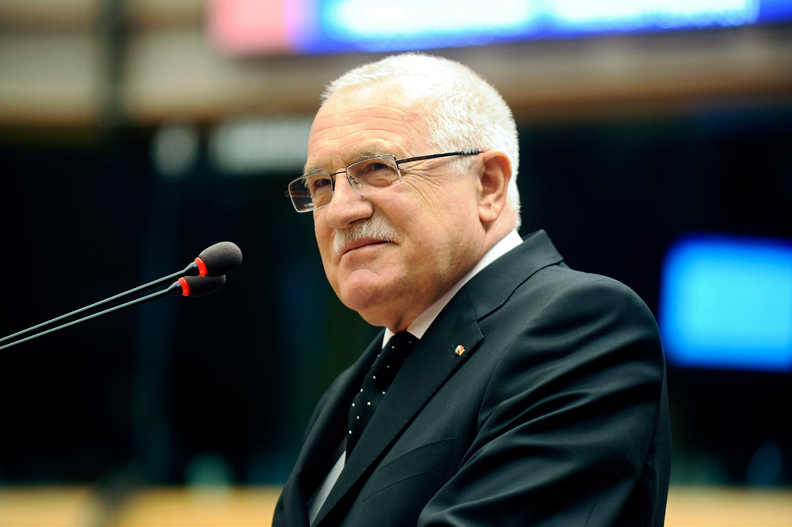
Václav Klaus, former President of the Czech Republic. (Image source: European Parliament / Pietro Naj-Oleari)

Grégoire Canlorbe: People are often defined by a common worldview rather than by genetics or where they live. In view of the situation in the Czech Republic, do you agree?

Václav Klaus: I would return the issue to the defense of the Nation-State. I truly believe in the Nation-State, therefore I am so critical of the continental ambitions of many European officials. I do not believe in the European Union or the European integration. This is for me the starting point.

For me, the Nation-State is the only possible way to have democracy. Democracy simply cannot exist at a higher level, as in continents, let alone global democracy in the world. So, my starting point is the Nation-State, the defense of the Nation-State, and the fighting continental integration.

In this respect, I am in favor of Trump. Donald Trump is not my cup of tea personally, intellectually, but his position on many issues is a positive one. I especially think of his refusal to sign the Paris Agreement, his important speeches like that in Warsaw in the summer or that in the United Nations in September, defending the Nation-States, culture, traditions, habits, mores and behaviors, lifestyles. It is something that I feel is with Trump, something that Hillary Clinton would never, never say.

Canlorbe: It is sometimes argued that mass immigration in the West is slowly changing class struggle into race struggle, substituting race consciousness for class consciousness. In addition, the dominant form of the class struggle would not be anymore that between “labor and capital” within each nation, but that between the “cosmopolitan” elites of the EU and the European peoples.[1] Your thoughts?

Klaus: For me, the “race struggle” is not the issue, and especially the “class struggle” is a term non-existent in my thinking. We were educated in terms of discussing the class struggle, because our teaching was based on the Marxist political economy. We finally understood how wrong the whole ideology is. I believe that after the fall of communism, I never used the word “class.” Maybe it is an overstatement, but the term “class” is for me intellectually forbidden and non-existent. For the same reason, I would never speak of the “race struggle.”

I am, however, absolutely critical of the mass migration in Europe. It is clearly not a spontaneous process. It is something which is organized by the European Union’s political elites. If you have read my book Migration of Peoples (not yet translated into English), you will probably have realized that I stress a distinction between mass migration and individual migration. Mass migration creates cultural, social and political conflicts, shocks and tensions. It undermines the structure of society that has been gradually developed over centuries, maybe even millennia.

Individual migration is evidence of considerable individual courage and of a certain taste for adventure. Usually, it is an act prepared in the long term and the product of an individual or family will. It means, for an individual, that he would like to get out of a cultural, civilizational, religious, geographical, or climatic entity with the full consciousness of a migrant who leaves for another world, an environment that will be foreign to him, to which he will have to adapt, and in which he will have to integrate and evolve.

Mass migration is a totally different phenomenon. The gregarious nature of mass migration makes decision making much less important than it is during individual migration. Mass migration remains a risky act, but mass migration increases the courage in an individual that is necessary for any migration. Mass migration also has the effect of changing the objectives of migrants. The goal is no longer to be assimilated into the new world, but to strengthen one’s old way of life.

What is new with mass migration, is the willingness of migrants to benefit only from the advantages available to them. Also at work often is the will to extend one’s home world to one’s host country and to transform it gradually according to one’s own tradition. Such a transformation is not the primary intention of every migrant. But this intention encourages political or religious activists.

The mass migration that we are witnessing today in Europe does not involve the individual, but the crowd, the collective, the group. Mercy towards the migrant’s individual suffering makes sense only with individual migration. Crowd, mass behavior does not deserve the same consideration. Though, I should remind that I am not fighting the migrants. I am fighting the European political elites, starting with Jean-Claude Juncker and Angela Merkel. Those are my opponents, my enemies.

The poor man coming from Somalia or Syria is not my enemy. He is a victim, and not just a victim of the tragic situation in his own country, but the victim of the wrong assumptions of the multiculturalist European elites who are organizing the mass immigration into Europe. As an economist, I always endeavor to analyze a given situation in terms of supply and demand. The demand for mass migration does not come from the ordinary citizens, but from the European officials. The supply in mass migration, which comes from the migrants, exists only as a result of this policy intended to change the structure of the European society.

The goal of the European elites is not to favor the propagation of Islam or the rise of Islamic terrorism. It is to create a new European man. They have understood that they will not be able to do it out of the material at their disposal. People like you and me are not the right persons to become the new European man. When I want to provoke the European elites, I say that they want to create a Homo Bruxellarum. This is, I believe, a strong term. [Laughs.]

Hangars pour hommes

The Women’s Collective decide that it is time for a woman to head a major French company and the film explains how they go about it. And then from Australia, Bettina Arndt on Men’s Sheds:

She writes:

Women are everywhere now. We’ve forced our way into all the workplaces, into the army’s fighting forces, into all men’s organisations, into the pubs. Everywhere you look there are women.

But there was one place that men were safe and that was in men’s sheds. Traditionally in Australia many men had sheds up in their backyard where they could retreat to do their own thing. It led to a Men’s Shed movement across Australia – over 1000 sheds now, particularly attracting older, retired men who come together and support each other. A vital mental health measure given that these older men are the group most at risk of suicide in the country.

But guess what? Women are pushing our way into the sheds too. There are sheds across the country coming under pressure to allow women members and amazingly some have caved in. I recently spent a few days talking to men in sheds for a YouTube video, finding out what’s going on here.

It turns out women are being allowed in the door due to a bunch of virtue-signalling men who willingly sell out other males in order to win brownie points from the ladies. They don’t believe in what men’s sheds are supposed to be all about – that special male companionship that comes from men doing things together, working on projects and enjoying banter and secret men’s talk. They don’t believe men are more likely to share their problems when with other men who get where they are coming from, who know what it’s like to face a broken marriage or prostate cancer.

There’s a good bloke up at Kur-ring-gai called Kevin Callinan who is chairman of the peak body representing men’s sheds, The Australian Men’s Sheds Association. He worked for seven years to set up his local shed but Kevin comes from a background in equity in the workplace. He believes in “inclusiveness” and hence calls his thriving shed simply “The Shed” and women are welcome.

Kevin is a man who doesn’t believe there’s anything special about male culture. “There is to a certain extent but it’s not the be all and end all. I would more prefer a broader mix of society.” When asked whether it changes male culture to include women he said. “It does change male culture – for the good.”

Yet you hear something very different if you talk to most blokes in the Men’s Sheds movement.

“What do you think of women in men’s sheds?” I asked a man from the Kincumber Shed, on the NSW Central Coast. “Ugly!” was his response.

“If women ever came into this shed I would be out the door,” said another.

Many believe the men allowing women into their sheds for cosy “inclusive” little craft sessions are selling out other men – and they are part of a far bigger problem.

There are many men in leadership positions see it in their interests to brown-nose to the ladies rather than stick up for men. Prime Minister Malcolm Turnbull lies about women’s role in family violence blaming the whole problem on men. Men running corporations, our bureaucracies are falling over themselves to institute policies favouring women. Our laws are tilted to favour women victims. The men running our universities promote a fake rape crisis and ignore the increasingly failure rates for male students. And so it goes on.

Men involved in the Men’s Shed movement need to take action to protect these male sanctuaries that enrich the spirit and even save the lives of some men. Come on men – grow a pair and stand up for men!