
What fools we are

If you read M. Stanton Evan’s historical investigation into Joe McCarthy, Blacklisted by History, you will come away recognising how one of the bravest men in our history was taken down by the left and his name turned into the very essence of political wickedness. Which is worse in our day and age: McCarthyist tactics or Stalinist tactics? At best they might come out equal to anyone – left or right – who thinks about politics today, but of the two – again whether left of right – there would be a fair proportion who would think McCarthy did more damage. And what are the lessons that McCarthy has for us today? It is to keep one’s head down and under no circumstances try to take on the left because they will use every technique under the sun to do you in.

I have no answer to the question why McCarthy remains the villain he is portrayed as having been by the right. That the left villifies him is par for the course. They will never stop since it is a supposed weak point for the conservative side of politics so long as McCarthyism remains the epitome of political evil. But on the right there ought to be, you would think, some effort made to resurrect his memory, especially since virtually everything he said proved not only to be true, but largely understated. I wrote about the latest episode of the right using McCarthy once again as the arch villain here. Now, Diana West, who has also found herself on the outside looking in for writing the most extraordinary book on communist infiltration of the Roosevelt White House, American Betrayal, has taken up this theme by looking at the post I wrote.

She has written The Problem Isn’t “McCarthyism,” It’s McCarthymania. When I looked at the original article in the Weekly Standard attacking McCarthy for having used his influence to have one of his assistants receive a commission (which he didn’t get, by the way) as a parallel instance of Joe Biden’s son being thrown out of the army for cocaine use having received his own commission in the first place because his father is Vice President, I could say no more than this is not an issue that should be used as a form of self-flagellation on the right. Why allow this minor scandal to be shared in such a stupid way, to write as if we are just as bad as them, and to use McCarthy as the vehicle? But the fact is, I didn’t know any of the details of this particular instance, but Diana West does. And when you read these details, the supposed equivalence is more obtuse than you could possibly imagine. Here is what I found to be the crucial point:

Ironically, at one point in the proceedings, as Evans relates in his definitive McCarthy study, Blacklisted by History, famed Army lawyer Welch, thinking to discredit Cohn, moved to introduce into the record one of the many Army-transcribed conversations on the matter, in this case between Army Secretary Stevens and Sen. McCarthy. It was a conversation “in which McCarthy downplayed the importance of Schine [as an investigator on his staff], said he didn’t want any favors for him, and said Cohn was `completely unreasonable’ on the topic.”

There is no parallel. McCarthy once again comes across as a man of exemplary character. Others may then wish to toss this around, and do the left’s work for them by contesting West and Stanton Evans, but to what end? If they are the enemy what is Obama? My greater question is, where is our McCarthy today, someone who can take the fight up to the left who are ruining our civilisation in so many ways that it is almost impossible to see how this can ever be turned round. The institutions have been marched through to such an extent that even when you find someone like Diana West who writes a book that exposes the perfidy of the left, it is our side that does the trouncing while the left merely stands by and laughs at what fools we are.
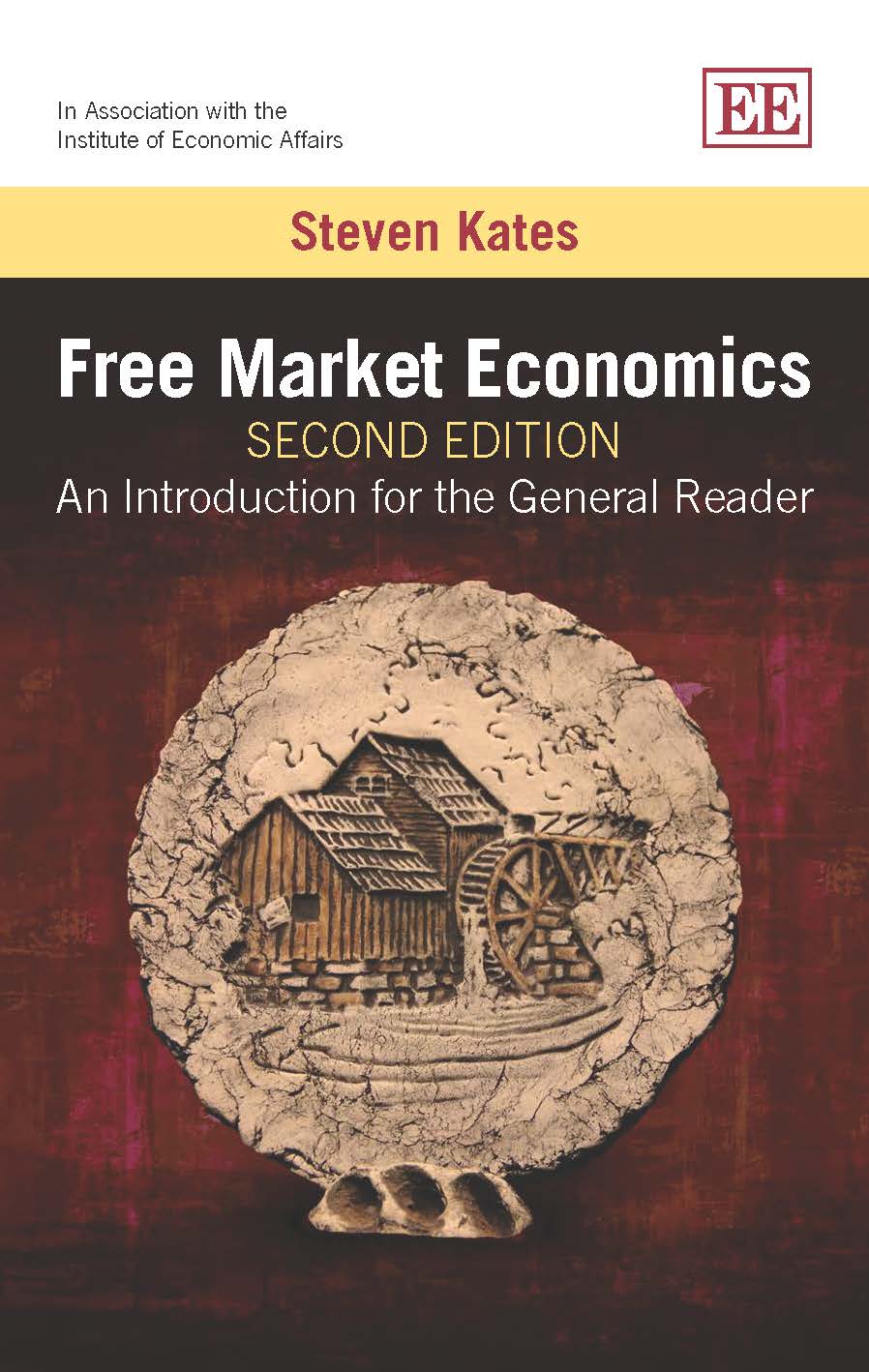
Free Market Economics and Say’s Law

This post is the second of a series I am writing on the second edition of my Free Market Economics that has been published in association with the Institute of Economic Affairs in London. This post focuses on the single most important principle in economics which now goes under the name Say’s Law. But it is a principle that was deliberately eliminated from within mainstream economic theory by Keynes in his General Theory and has disappeared from virtually all economic discourse since that time.

The book was itself written because there is literally no economics text of any kind anywhere that discusses Say’s Law. Yet it was this principle that made it perfectly obvious that the stimulus being applied across the world from the end of 2008 would lead to an economic stagnation that would last years on end. That is why I immediately began to write the book then and there, but it is also why I had published in February 2009, just as the stimulus was getting under way, an article with the title, “The Dangerous Return to Keynesian Economics”. The article specifically discussed the crucial disappearance of Say’s Law and included this forecast:

“Just as the causes of this downturn cannot be charted through a Keynesian demand-deficiency model, neither can the solution. The world’s economies are not suffering from a lack of demand, and the right policy response is not a demand stimulus. Increased public sector spending will only add to the market confusions that already exist.

“What is potentially catastrophic would be to try to spend our way to recovery. The recession that will follow will be deep, prolonged and potentially take years to overcome.”

While virtually the whole of the economics profession remains flummoxed by what has happened since the stimulus, neither my students nor myself have been in any doubt. It has been as obvious as the noonday sun, but invisible to anyone brought up on modern macroeconomics which has embedded the theory of aggregate demand, Keynes’s disastrous contribution to economic theory.

Say’s Law specifically stated that demand deficiency, that is, a deficiency of aggregate demand, could never be the cause of a recession (or in the archaic language of the classics, “there is no such thing as a general glut”). It then specifically told governments that while some additional public expenditure during recessions might do some small good, such a stimulus would never restore an economy to robust health but would, instead, do serious damage, and the larger the stimulus the more damage it would do.

The book explains the nature of Keynesian economics but also explains why a stimulus could not possibly have returned our economies to rapid rates of growth and low unemployment. The experience of the past six years ought to have made all this supremely evident in practice. But without an understanding of Say’s Law, there is not a chance in the world anyone will understand why the stimulus has been the colossal failure it has been.

Although named Say’s Law after the early nineteenth century French economist J.-B. Say, it was a principle that was part of the bedrock foundation of economic theory right up until 1936. But what will never be told to you by any Keynesian economist (in large part because they don’t even know themselves) is that the term Say’s Law was invented in the twentieth century by an American economist who thought it was absolutely essential for clear thinking in economics and brought into active use only in the 1920s.

If for no other reason, I commend my book to you because it is the only place where one can have Say’s Law explained in a way that makes you understand what economic theory has lost. It will also explain why the stimulus did not work and what must be done instead, reasons enough to buy the book I would hope. But there are also others which I will come back to in later posts.

My favourite movies

Having written that Crimes and Misdemeanors is my favourite film of all time, I thought I would try writing down my all time list of favourites. Here it is, which has a number of notable features, the first one being that I don’t think I have seen any of these more recently than 1999. And no matter how much I like a film, I never see them twice (although I did see Topsy-Turvy twice within the week so that I could bring my children to see it as well). We go to the films a lot, and see near everything, so either I have become jaded or they don’t make ’em like they used to. [OK, The Concert was from 2009]. I can also see that I don’t necessarily have the most sophisticated tastes. I also do not believe one ever learns anything by watching a movie although documentaries are different. Unlike with reading, you only take back out of the theatre what you first brought in. Movies are just for entertainment. No particular ordering here other than the order in which they occurred to me.

Crimes and Misdemeanors
The Graduate
The Terminator (the first one)
Star Wars (the first one again)
Planet of the Apes (and once again the first one)
Raiders of the Lost Ark
Casablanca
Ben Hur
The General
Barry MacKenzie (the second one)
The Gold Rush
Topsy-Turvy
Tom Jones
War and Peace (the Russian version)
The Godfather
Annie Hall
Singing in the Rain
Amadeus
The Good, the Bad and the Ugly
A Clockwork Orange
Fantasia
The Manchurian Candidate
From Russia with Love
The Concert
The Ten Commandments

I will stop with this now that I’ve reached 25. The thing about each of the films, and some I saw fifty years ago or more, is that I remember not just the film but where I saw it and who I was with.

An instructive parallel

There is, for some reason, a desire on the right to continuously play into the hands of the left on Joe McCarthy. Joe Biden’s son was brought into the army at age 43 and then, within a month, has been booted out because he has tested positive for cocaine. Obviously a minor scandal for this administration and representative of the moral laxity of the left. Not so fast. This is from The Weekly Standard and comes with the title, Biden Cocaine Scandal Mirrors Joe McCarthy Scandal just so you cannot miss the core point that the story is absolutely not about Biden but McCarthy. The final paras bring up this supposed parallel from the 1950s.

A more instructive parallel, however, might be to Sen. Joseph McCarthy, of all people. When one of McCarthy’s Senate aides, G. David Schine, was drafted into the Army and sent to basic training at Ft. Monmouth, N.J., Roy Cohn, another McCarthy aide and reputedly Schine’s lover, intervened persistently to obtain an officer’s commission for Schine. When the Army protested about repeated threats and interference from the senator’s office, McCarthy charged that the Army was attempting to retaliate against his investigations into communist subversion in the armed forces. The televised hearings that were held during April-June 1954 to investigate the matter — the famous Army-McCarthy hearings — not only revealed that McCarthy and his staff had repeatedly wielded their influence on behalf of Schine, but had done so despite Schine’s complete lack of qualifications for an officer’s commission.

The differences between Joseph McCarthy and Joseph Biden are self-evident, of course. But just as the effort to make G. David Schine an Army officer taught the country something about Senator McCarthy, so the brief, inglorious naval career of Hunter Biden tells us something about Vice President Biden — and the culture of entitlement in political Washington that has tarnished the Navy.

And why did I find it? Because it is one of the picks on Powerline who must themselves think this is one of the major issues of our time to give it such prominence. They don’t get it, do they? The lessons McCarthy should have taught us is how easy it is for our enemies to penetrate to the highest ranks of an Administration, which you can read about in Diana West’s American Betrayal. Harry Hopkins (who?) ought to be a lesson we can learn from but apparently the only lesson is that McCarthy may or may not have used influence to get one of his assistants an officer’s commission.

If we are looking for instructive parallels today, what McCarthy did sixty years ago would be the last last place you should look but with some people it’s never a bad time to kick a good man when he’s down.

My favourite Woody Allen film is 25 years old

Crimes and Misdemeanors was released a quarter of a century ago. The link tells the story right through so if you haven’t seen the film don’t read the review until you have watched it yourself. But the quote from Allen at the start of the article is worth thinking about and gets to the essence of the film’s storyline:

I firmly believe . . . that life is meaningless. I’m not alone in thinking this – there have been many great minds far, far superior to mine, that have come to that conclusion. And unless somebody can come up with some proof or some example where it’s not, I think it is. I think it’s just a lot of sound and fury, signifying nothing. I’m not saying that one should opt to kill oneself. But the truth of the matter is, when you think of it, every 100 years, there’s a big flush, and everybody in the world is gone. And there’s a new group of people. And this goes on interminably towards no particular end, no rhyme or reason. And the universe, as you know from the best of physicists, is coming apart, and eventually there will be nothing, absolutely nothing. All the great works of Shakespeare, and Beethoven, and Da Vinci, all that will be gone. Now, not for a long time, but shorter than you think because the sun is going to burn out much earlier than the universe vanishes . . . So all these plays and these symphonies, the height of human achievement, will be gone completely. There’ll be no time, no space, nothing at all, just zero.

All plausible, but the universe we live in seems too perfectly structured to have just been randomly constructed by a series of molecules that happened to cohere in particular ways that led to life. The moment that does shine through to me is the Seder scene (which the non-Jewish reviewer saw as a dinner party!) where Woody Allen’s movie grandfather sees morality in the universe because he chooses to. It is difficult to believe with any kind of certainty that there is, with ISIS running around who also believe they represent justice at its highest level. I believe I share Allen’s own perspective which makes everything possible with a blank empty universe of pain and suffering as likely as anything else. He would like evidence that it isn’t so, but you can see that even if he doesn’t believe there is more because he is unable to prove it to himself, there is that spark of hope that makes him keep looking. And being my favourite Woody Allen film, it is also my favourite film of all time.

Saving and investment as understood in 1886

This is from a note I have just written discussing the 2nd ed of my Free Market Economics. What is most interesting perhaps is the question that was found at the back of a chapter in an economics text published in 1886. Note the assumption that higher saving leads to higher growth, and more mysteriously, that money placed in a bank is not what savings really consist of. All very routine in 1886, now near incomprehensible.

The book being so far from the standard, even people who are potentially sympathetic to what it is trying to explain will be puzzled because of the way in which economic theory is currently taught. I have had the experience now for the past ten semesters in seeing students who don’t get it at the start, specially if they have done economics before, suddenly catching on. What now establishes the course material is that everyone is perfectly aware that neither the stimulus nor the low interest rate regime have brought recovery with it but cannot understand why. So I point out that if you were a classical economist, the economics you would have been taught would have explained all that already, and then I explain what every good classical economist would have known. The question below is one of my favourite questions for this part of the course.

What did Simon Newcomb mean when he asked this question in his 1886 Principles of Political Economy text:

“Trace the economic effect of the frugal New England population putting their money into savings banks. What do such savings really consist of?”

a) for a community the amount of money in banks is not what is meant by saving
b) the economic effect is that a larger proportion of its resources are made available for investment
c) high saving would mean high unemployment
d) money facilitates exchange but resources are what matters
e) the New England economy would be expected to grow only very slowly

It’s useful to me since I try to emphasise that I didn’t make this up but that there is a long pedigree to what I teach. It’s only that since 1936 there has been such a discontinuity in economics that the kind of question found at the end of an introductory text in 1886 would be virtually unanswerable using modern theory. “What do such savings really consist of?” is near on incomprehensible to anyone who has only learned modern macro.

Economics a wasteland

The front page story in The Australian today comes with the title, Economics course is ‘beyond redraft’. The story begins:

THE national economics curriculum is unsalvageable, with ­errors in key definitions and omissions of fundamental concepts that make it “misleading, unbalanced, too imprecise to be useful and … beyond redrafting”, experts have concluded.

Griffith University economics professor Tony Makin and lecturer Alex Robson, in their advice to the federal government’s ­curriculum review, say the cur­riculum incorrectly defines some fundamental concepts including gross domestic product, ­effici­ency and productivity.

They argue that the curriculum omits key concepts, such as the difference between micro­economics and macroeconomics or between recessions and booms.

It also fails to include the great economic thinkers, including the father of economics Adam Smith and his coinage of the term “invisible hand” to describe the forces of the free market.

What can I say, and if you ask me, they may be a little light in their criticism. It is for this reason that I built my own economics course and wrote my own text to go with it, Free Market Economics, now in its second edition. You may think of this as an ad for my book (and my course), but really I am only about to point out the ways in which my own text exactly matches what Makin and Robson are looking for. There is more in the book than just this:

Definitions: The opening is a chapter with the very title “Definitions”. And rather than being at the end of the book as most glossaries are, it is the first thing you come to. Moreover, it is not alphabetic but thematic. If you go through the definitions in order, you are provided with an overview of everything the rest of the book will say but in a condensed form (and not all that condensed since it goes on for 24 pages).

Micro­economics and macroeconomics: I am surprised to find that other texts leave out the micro/macro division, but whatever others may do, I do not. It lays the foundation of the macro side by starting from the most micro of micro concepts, the role of the entrepreneur, a category, I might add, found in virtually no text on economics I am aware of other than perhaps for a sentence or two. If you want a reason to disqualify most courses on economics, leaving out the role of the entrepreneur would be high on my list.

Recessions and booms: My text is the only text anywhere in the world that discusses the classical theory of the cycle. And by being about the cycle, it’s not like that junk Keynesian rubbish which only discusses recessions and what causes them, it discusses why the cycle is actually cyclical. Downturns reach a trough and then economies turn up. Everyone once knew that, but it has been more than three quarters of a century since these have been discussed at any level, never mind within an economics text.

The great economic thinkers: There are two entire chapters on the history of economics which take you from the earliest times through until the Keynesian Revolution. I have written an entire book on how essential studying the history of economic thought is for an economist. It is, but virtually no one does it any more which makes economists less able to think through economic issues. Without a grasp of history, economics has no anchor in anything that truly matters.

The Invisible Hand: In studying Adam Smith, there is, of course, a discussion on the invisible hand. But the book is itself a discussion on the very essence of what a free market is based around the notions of an invisible hand. No economics book that I know of teaches the way a market economy works. The most you get is a bit on supply and demand and from that moment on it is all about how market failures of one kind or another are there at every turn. It is the nature of the way economic theory is presented. To take just one example, I go on myself about how inane calling the one form of market that by definition cannot exist “perfect” competition and how everything after that is described as “imperfect” competition. Not really all that subtle, but the basic point is there is much work for governments and economists to fix.

I am therefore pleased that Tony and Alex have taken on this monster. The failures of the Keynesian stimulus might, you would have thought, started some kind of soul searching within the profession about how badly served we are with the economic theory we now teach. But a billion dollars or more now tied up in textbooks which carry received economic theory into every classroom, wrong though they may be, misleading page after page, they will nevertheless continue onwards. I will merely mention the first of the quotes on the back of my book:

Free Market Economics is virtually a must read for serious economists. . . . Highly recommended.

The book is a synthesis of the economics that existed prior to the Keynesian Revolution. It is where economic theory must go if we are to salvage the study of economics.

“In the hands of a system whose reach is unlimited but whose safeguards are not”

There is some controversy over the damage Snowden did but given how easily he was able to pull off what he was able to do, every spy agency in the world had been there before. The American intelligence networks are as open as a pubic library. The rest of the world taps into anything they want. Secrecy to our enemies is nil. The only people this vast network of domestic espionage was unknown to were we citizens of the West. The startling part about the entire story was how someone like Snowden could penetrate the system in the way he did and download what he was able. If you think the Russians, the Chinese and the Iranians had not been there before, you are as blind to the incompetence of the American bureaucratic establishment as it is possible to be.

To be released on October 24.

Free Market Economics 2nd ed

fme2 cover_Page_1

When I wrote the first edition of my Free Market Economics in 2009, I thought of it even then as the best introduction to economic theory anywhere. It combined five features that were unique to this book: an uncompromising anti-Keynesian core, a microeconomics that rejected the notion of an equilibrium, a focus on the role of the entrepreneur, a discussion of the classical theory of the cycle and the installation of uncertainty as the crucial element in any serious discussion of how an economy runs.

I also had no idea how much more I wanted to say until I came to write the second edition which to my eyes has transcended the first, having been fashioned out of what I learned by teaching the first edition for five years while watching how economic events unfolded following the stimulus. You may only have the author’s word for it here, but there is no book like it. If you want to understand how an economy works based on the English tradition in economic theorising that goes from Adam Smith to John Stuart Mill, there is literally only a single place you can go. The book reverses two “revolutions” in economics, not just the Keynesian of the 1930s, but the marginalist revolution of the 1870s as well. It is a companion volume to David Simpson’s wonderful The Rediscovery of Classical Economics, also co-published by the IEA. Reading the two will provide you with an understanding of just what is wrong with economic theory today. That traditional policy based on standard economic theory is ruining our economies is beyond any doubt, but the reason why that is so will nevertheless remain incomprehensible to anyone who continues to believe that aggregate demand is a valid concept in trying to make sense of economic events or that equilibrium has much if anything to do with how an economy works.

My Free Market text was written in a kind of white heat over twelve weeks as the text for the course I was giving during the first months of the worldwide introduction of stimulus packages pretty well everywhere. The absolute dead certainty I had was that public sector spending whose only aim was to create jobs would end in disaster, as it most assuredly has. Our economies are sinking under the weight of massive levels of unproductive public spending and debt levels that continuously subvert every attempt to wind them back. Yet you cannot go to any standard economics text even for an inkling of why that is.

To understand any of this you must first understand Say’s Law. Say’s Law was the bedrock principle of economic theory from the earliest years of the nineteenth century until swept away in a fit of distraction by the publication of Keynes’s General Theory in 1936. It is founded on recognising that only value adding production can create economic growth and add to the number of jobs. The most central chapter in the book is the chapter on Value Added, a chapter found in no other text that I know of. Yet without understanding value added, understanding that every form of production not just creates more goods and services but also at the same time uses up existing goods and services during the production process, it is impossible to think about public spending and economic policy correctly. Only if what is produced has greater value than the resources used up can an economy grow. Government spending seldom creates value. The stimulus was therefore doomed to fail as is so much of the policy matrix found today.

The strangest part about the book, however, was for me to discover my own beliefs on the nature of economic theory. There is not a chapter in it that would fit into a standard economics text. All of it takes you back to an earlier time and a different theoretical matrix. Space is too short to tell you much more but let me draw you to the cover which shows a water mill on a plaque made of clay. This is because the two most important influences on my own way of thinking have been two of the greatest economists England has ever produced, John Stuart Mill and Henry Clay.

I can do no more than encourage you to read this book. It is a defence of the market economy published at a time when there may never been a greater need for such a defence.