Suppose the planet is cooling and not warming

You can find at Quadrant Online a review, taken from the magazine, of Twilight of Abundance by an Australian, David Archibald, that for me was one of the most devastating critiques of the global warming hysteria I have ever read. What made it so extraordinary is not that it began from the premise that global warming is a con and that the planet is not warming and whatever temperature changes there may be are only to a very slight degree affected by human industrial activity. Lots of people say that so there would be nothing new if all he did was add his name to the chorus. Making the book somewhat more remarkable is that he began from the premise that the planet may be cooling and not warming at all which while still unusual is not all that unusual any longer since the evidence of potentially falling temperatures is all around us (did you see, for example, the level of ice cover on Lake Superior in June?).

What, in fact, made the book extraordinary is that he combines the possibility of global cooling with every other green scare I have ever come across, but does it in a way that I find plausible. What he argues is that if we end up with falling temperatures, contracted growing seasons, resource depletion, energy shortages and an over-populated planet, the result is the kind of catastrophe once forecast by Paul Ehrlich which he described as the population bomb. Here is Ehrlich’s famous first sentence, published in 1968, that has kept his name before the public ever since:

The battle to feed all of humanity is over. In the 1970s hundreds of millions of people will starve to death in spite of any crash programs embarked upon now. At this late date nothing can prevent a substantial increase in the world death rate.

None of this happened, of course, so that I along with many others have become inured to the arguments of catastrophists of every kind. And every one of these has been wrong, including the global warming crowd, for whom the only evidence they ever had has evaporated over the years since around 1999. The planet is not warming even though greenhouse gases continue to pour into the atmosphere. So what exactly are Archibald’s credentials to be discussing any of this:

David Archibald is a Perth, Australia-based scientist working in the fields of oil exploration, climate science, energy and geostrategy. After graduating from Queensland University in geology in 1979, he worked in coal and oil shale exploration in Queensland and then in oil exploration with Exxon in Sydney. A long period in stockbroking in Sydney as an analyst was followed by moving to Perth in 1999 to work for a private investor. He subsequently started the oil exploration company Oilex in 2003 and then joined a Canadian-listed oil exploration company in 2006. Also at that time, he was CEO of the mineral explorer Westgold Resources.

What intrigued me about Twilight of Abundance is that it has proposed an equal and opposite future to everything that the greens have come up with that, if true, is something that is truly frightening. And given that there is as much if not more plausibility in what he has written than in the entire green-AGW campaign which has been discredited at every turn, one wonders why this is not now being thought about as one possible future that needs to be taken on board.

I have been astonished myself that during my lifetime, the population of the world has gone up from around two billion to seven billion. If this has been a consequence of an abnormally warmer climate, the Green Revolution and the abundance of cheap energy, then we should be thinking about what might happen if the warm weather disappears while the cheap energy provided by carbon-based fuels are depleted.

The Greens as well as other parties to the left have grabbed hold of global warming as one more vehicle to attack market economies and give them political power. If Archibald is anywhere near right, it will only be those economies that are capable of adjusting in the face of new circumstances that will avoid the disasters that would follow. I therefore invite you to read the review, and then the book after that. Since none of us know what is really happening, this is one conjecture that ought to be put on everyone’s watch list since things could turn very nasty more quickly and in ways quite different from what most people at the present time are prepared to believe.

A farrago of vacuous ideas and empty nonsense

I came across a book in one of the still remaining second hand book shops I frequent by two Nobel Prize winners, George Akerlof and Robert Shiller. It’s title was Animal Spirits with the basic premise stated on the cover, that “human psychology drives the economy and why it matters for global capitalism”. So far, so ordinary but since this is all part of the new direction in economics, I thought I would give it a go.

Well, what a farrago of vacuous ideas and empty nonsense. I had always thought it was ridiculous that Keynes had made such a fetish about “animal spirits” himself, seeing as how every classical economist was perfectly aware of how crucial business confidence is to economic outcomes. If nothing else, Frank Knight had published his Risk, Uncertainty and Profit in 1921, a book I am pretty certain Keynes raided in writing the General Theory published in 1936. That Akerlof and Shiller write as if they have introduced some new conceptions into economics was astonishing, but given the low level of historical knowledge within the profession, you can just about get away with anything.

But what really did get to me was this book, published in 2009 at the height of the GFC and as the stimulus programs were getting into full swing, were not just advocating such public spending but made it clear how much economists had learned from Keynes and how fortunate we lot were that economists such as themselves were now on the watch and in control of policy.

A repeat of the Great Depression is now a possibility because economists, the government and the general public have in recent years grown complacent. They have forgotten the lessons of the 1930s. In those hard times we learned how the economy really works. . . .

In the middle of the Great Depression John Maynard Keynes published The General Theory of Employment, Interest and Money. In this 1936 masterwork, Keynes described how creditworthy governments like those of the United States and Great Britain could borrow and spend, and thus put the unemployed back to work. [My bolding]

I have an article on this book at Quadrant Online, Phlogiston with a Keynsian Twist. I think of it as a contender for the worst book on economics ever written. Lots of bad books on the subject, of course, but you don’t normally find two people at the highest level of the profession conspiring to write such stuff. Read the review, but spare yourself the trouble of reading the book, unless you would like to see just how empty economics can be in this day and age.

Is this the dumbest book on economics ever written?

There will have to be a wall of shame for economists who endorsed Keynesian solutions back in 2009 who will need to have their beliefs brought back to haunt them. Picked up in a secondhand bookshop a particularly pathetic version of what had been quite common back in those heady days of the stimulus, this being a book titled, Animal Spirits, written by two Nobel Prize winners, George Akerlof and Robert Shiller. If these types were ever capable of shame they would be buying up every copy in print and have them consigned to the flames. Instead and no doubt, they continue in the delusion that we have been saved from far worse by the timely actions taken to stimulate demand.

Mind you, I had been just as certain that the entire attempt to diminish the impact of the recession and return us to reasonable rates of growth would turn out the disaster it has been. But for myself, I can now run the told-you-so as much and as far as I like. There is not a shred of evidence, outside their own nonsense-Keynesian models, that the stimulus did anything but harm. But since they are incapable of even having a glimmer of a notion that the economic models they have devoted their lives to understanding are about as useful as the theory of phlogiston was in physics, they just carry on. It is only we critics who go back to those books and try to remind others that Keynesian economic policy has been an unmitigated disaster. So far are we now from a robust recovery, a ten year pause will turn out to be the best we can hope for. This is from the Preface, and recall that this is from 2009 just as the stimulus programs were getting under way:

“A repeat of the Great Depression is now a possibility because economists, the government and the general public have in recent years grown complacent. They have forgotten the lessons of the 1930s. In those hard times we learned how the economy really works. . . .

“In the middle of the Great Depression John Maynard Keynes published The General Theory of Employment, Interest and Money. In this 1936 masterwork, Keynes described how creditworthy governments like those of the United States and Great Britain could borrow and spend, and thus put the unemployed back to work.”

That was 2009. Is the world in 2014 the one they expected, the outcome they foresaw? I suspect not. Yet there is hardly another ripple of any other kind they could blame the deeply depressed nature of the American economy on other than the policies of the past five years. The one certainty is that no one is any longer telling us now about the great “masterwork” written by Keynes.

Almost as nonsensical is the potted history of economic thought they provide. Can they actually be as ignorant of pre-Keynesian economic thought as they suggest by these words:

“According to traditional economics, free market capitalism will be essentially perfect and stable. There is little, if any, need for government interference. On the contrary, the only risk of major depression today, or in the future, comes from government intervention.

“This line of reasoning goes back to Adam Smith.” (p. 2)

The notion that Adam Smith, or any other economist of the classical tradition, expected a ripple-free economy with no depressions and that no government interference was ever necessary is so lacking in historical accuracy that I would barely accept such ignorance from a first year student. That they could believe and commit to print such obviously untrue statements – obvious, that is, to anyone who has taken the trouble to learn even the rudiments of the classical theory of the cycle or what Adam Smith had actually written – is a disgrace.

But if I have to choose the least sensible statement they made in this startling superficial and inane book, it is their attribution of the cause of the Global Financial Crisis to an excess of saving, the precise issue raised by Keynes:

“In the short run, an exogenous increase in the demand for desired saving rate of just a couple of percentage points may be enough to tip the economy into recession, as indeed seems to be happening in the current financial crisis.” (p. 116)

The entire financial world held its breath as the banking system teetered on the edge of collapse, with every lender profoundly unsure of the safety of lending to others, and this is reduced to decisions to save. It is embarrassing to have to read such thoughts from two of the most respected economists in the world. This is more of the Keynes the master, but though no one any longer would write any such thing given how events have turned out, it makes one despair whether economic theory can ever again provide serious guidance to those who make economic policy. It is a frightening book lacking even the rudiments of depth or common sense.

Kate Millett’s sister discusses her sister

From Mallory Millett who is described as a CFO for several corporation living in New York:

It was 1969. Kate invited me to join her for a gathering at the home of her friend, Lila Karp. They called the assemblage a “consciousness-raising-group,” a typical communist exercise, something practiced in Maoist China. We gathered at a large table as the chairperson opened the meeting with a back-and-forth recitation, like a Litany, a type of prayer done in Catholic Church. But now it was Marxism, the Church of the Left, mimicking religious practice:

“Why are we here today?” she asked.
“To make revolution,” they answered.
“What kind of revolution?” she replied.
“The Cultural Revolution,” they chanted.
“And how do we make Cultural Revolution?” she demanded.
“By destroying the American family!” they answered.
“How do we destroy the family?” she came back.
“By destroying the American Patriarch,” they cried exuberantly.
“And how do we destroy the American Patriarch?” she replied.
“By taking away his power!”
“How do we do that?”
“By destroying monogamy!” they shouted.
“How can we destroy monogamy?”

Their answer left me dumbstruck, breathless, disbelieving my ears. Was I on planet earth? Who were these people?

“By promoting promiscuity, eroticism, prostitution and homosexuality!” they resounded.

A very sober article, not to be missed. And as one of those who read Sexual Politics in its first edition, I all too well know just how strong a message it had for its time. Nowadays its ideas are utterly mainstream.

The bloodiest story in history

I remember coming across Will Durant’s quote as noted below in utter astonishment. Durant is amongst the finest writers of history I have ever read. I never did get through the eleven volumes but I did come across his description of the Moghul invasion of India as the bloodiest in history, with a depiction of raw barbarity that was hard to fathom. Reading about the events in Iraq and Syria fills me with dread since nothing seems to have changed in a thousand years. This is taken from a comment on a Daniel Pipes article in 2006:

The ruthlessness of muslim invaders continued for a thousand years.

Will Durant, the famous historian summed it up like this:

“The Islamic conquest of India is probably the bloodiest story in history. It is a discouraging tale, for its evident moral is that civilization is a precious good, whose delicate complex of order and freedom, culture and peace, can at any moment be overthrown by barbarians invading from without or multiplying within.”

Koenraad Elst , the german historian writes in “Negation in India”

The Muslim conquests, down to the 16th century, were for the Hindus a pure struggle of life and death. Entire cities were burnt down and the populations massacred, with hundreds of thousands killed in every campaign, and similar numbers deported as slaves. Every new invader made (often literally) his hills of Hindus skulls. Thus, the conquest of Afghanistan in the year 1000 was followed by the annihilation of the Hindu population; the region is still called the Hindu Kush, i.e. Hindu slaughter. The Bahmani sultans (1347-1480) in central India made it a rule to kill 100,000 captives in a single day, and many more on other occasions. The conquest of the Vijayanagar empire in 1564 left the capital plus large areas of Karnataka depopulated. And so on.

As a contribution to research on the quantity of the Islamic crimes against humanity, we may mention that the Indian (subcontinent) population decreased by 80 million between 1000 (conquest of Afghanistan) and 1525 (end of Delhi Sultanate)..

But the Indian Pagans were far too numerous and never fully surrendered. What some call the Muslim period in Indian history, was in reality a continuous war of occupiers against resisters, in which the Muslim rulers were finally defeated in the 18th century. Against these rebellious Pagans the Muslim rulers preferred to avoid total confrontation, and to accept the compromise which the (in India dominant) Hanifite school of Islamic law made possible. Alone among the four Islamic law schools, the school of Hanifa gave Muslim rulers the right not to offer the Pagans the sole choice between death and conversion, but to allow them toleration as zimmis (protected ones) living under 20 humiliating conditions, and to collect the jizya (toleration tax) from them. Normally the zimmi status was only open to Jews and Christians (and even that concession was condemned by jurists of the Hanbalite school like lbn Taymiya), which explains why these communities have survived in Muslim countries while most other religions have not. On these conditions some of the higher Hindu castes could be found willing to collaborate, so that a more or less stable polity could be set up. Even then, the collaboration of the Rajputs with the Moghul rulers, or of the Kayasthas with the Nawab dynasty, one became a smooth arrangement when enlightened rulers like Akbar (whom orthodox Muslims consider an apostate) cancelled these humiliating conditions and the jizya tax.

It is because of Hanifite law that many Muslim rulers in India considered themselves exempted from the duty to continue the genocide on the Hindus (self-exemption for which they were persistently reprimanded by their mullahs). Moreover, the Turkish and Afghan invaders also fought each other, so they often had to ally themselves with accursed unbelievers against fellow Muslims. After the conquests, Islamic occupation gradually lost its character of a total campaign to destroy the Pagans. Many Muslim rulers preferred to enjoy the revenue from stable and prosperous kingdoms, and were content to extract the jizya tax, and to limit their conversion effort to material incentives and support to the missionary campaigns of sufis and mullahs (in fact, for less zealous rulers, the jizya was an incentive to discourage conversions, as these would mean a loss of revenue).

How’s it different now?

A Say’s Law moment

There are three events coming to a head at the moment that relate to my work on Say’s Law.

There is, firstly, the publication of the 2nd ed. of Free Market Economics which will be co-published by the Institute of Economic Affairs in London. On my involvement with the IEA in the publication of this book, I have written:

Let me also add how delighted I am that this second edition is being published in association with the Institute of Economic Affairs. There has been no organisation more influential on my way of thinking about economic issues than the IEA which almost alone stood up for free markets and free enterprise in those dark days of the 1970s and early 1980s. It was the IEA which brought to wider public attention authors such as Milton Friedman, Friedrich Hayek and James Buchanan. The points they made have to be continually re-iterated as ideas with a less impressive academic provenance, not to mention frequently disastrous economic results, continually take hold in public policy debates

Then, second, if it can be arranged, I will be off to the First Congress on Jean-Baptiste Say and the Entrepreneur in Auchy on the north coast of France. This is the letter of invitation I received last night.

Dear Colleague,

I am honored to invite you to participate in the 1st International Congress Jean-Baptiste Say- RNI Summer School 2014, organized by the Research Network on Innovation and the International Society Jean-Baptiste Say (SAYS) from the 27th to 30th August 2014 at Universite du Littoral Cote d’Opale, Boulogne-sur-Mer and at Auchy-les-Hesdin (Nord-Pas­ de-Calais, France):

The conference is composed of various conferences, workshops and cultural activities (Cf. the program of the conference http://says.univ-littoral.fr/?page id= 102). Your contribution to the academic debates and your participation in different activities during will be highly appreciated.

I am looking forward to meeting you this summer.

I wish I were ten years younger. I didn’t think it would come to this, but travel has a lot of wear and tear. But for this one I am definitely ready to make the effort. Say is returning, and even though they focus on his work on the entrepreneur, they only leave out Say’s Law because it is too contentious.

And last but definitely not least, there is the movie being made that has, at its very centre, a series of principles of economic management based on Say’s Law. If you would like to read the book from which the movie is being made from, it’s called Waffle Street. It is premised on an understanding of Say’s Law so you’d hardly think it’s movie material but the world is stranger than you can sometimes believe. But if you get the book, you will see nine principles at the end, the first one being, “production is the source of all consumption”, that is, demand is constituted by supply. I am told there is a cameo of my Say’s Law and the Keynesian Revolution that has been filmed. But whether or not it makes it past the cutting room floor, this is strangely the first movie ever made based on an economic principle. It also has an incredible story line that has the potential to make it the movie of the year. If you don’t believe me, read the book, and if you do, make sure you get to the list of nine “Articles of Economic Faith” at the end.

Pierre Ryckmans (1935-2014)

Before I arrived on this continent these many years ago, the image of Australia to me as depicted in Private Eye was the comic strip Barry McKenzie written by the brilliant Barry Humphries. In fact, the first movie I saw in Australia was the second of the Barry McKenzie films. It more or less fixed the image that had commenced with Monty Python’s Australian Philosophy Department. What then radically changed my view of Australia was to discover that Simon Leys, the author of Chinese Shadows, lived in Canberra and taught at the ANU. He has now passed away, on August 11. I would not have known except for the notice in The Australian today written by Theordore Darlrymple, a writer I have almost as much affection for as Leys, whose real name was Pierre Ryckmans. This is from the notice. The first sentence below can only ever be stated once in this day of the internet. It is incredible, but not misguided, that Darlrymple says what he says here:

I admired Simon Leys more than any other contemporary writer. He was, in fact, my hero, in so far as I have ever had one. ­Although he had previously written discerningly about Chinese art, I first read his books about the Cultural Revolution. Leys, of Belgian origin, was a passionate lover and connoisseur of Chinese culture and viewed its barbarous destruction with horror during the Revolution; he abominated Maoism at least two decades before it became obligatory for all right-thinking persons to do so. From the very first page — no, from the very first sentence — of all his books and essays it is obvious that Simon Leys always knew what he was talking about.

Leys’ guiding star was cultivation (in a broad sense) and his betes noires barbarism, stupidity and humbug. There was no better sniffer out of humbug, the besetting sin of intellectuals, anywhere in the world.

The final line of the notice reads, “Australians should be proud that he chose Australia as his home for the last 44 years of his life.” I feel exactly the same.

FME2 cover

fme2 cover_Page_1

fme2 cover_Page_2

The cover of the second edition. I’d forgotten about the first of the cover endorsements. It was provided by a reviewer at Choice which is the magazine subscribed to by libraries to help them choose which books to buy.

Free Market Economics is virtually a must read for serious economists…. Highly recommended.

The second edition should be available in about a month.

Economie du Libre Marché

Astonishing to come across this, my work on Say noted in French in France. To find others who think about Say in the same way as I do, is astonishing. Say along with JS Mill, are odd as it may seem, part of the road that must be travelled to put economic theory onto a solid foundation.

Steven KATES est professeur au Département « Economie, Finance et Marketing » de l’Université RMIT de Melbourne (Australie). Avant d’évoquer deux de ses récents ouvrages, citons quelques extraits de son analyse du livre d’Evert SCHOORL ci-dessus :

« C’est le genre de livre qui devrait faire de l’histoire de la pensée économique une part essentielle de l’éducation de tout économiste…
..le livre… présente donc la vie de l’un des économistes les plus influents qui ait jamais vécu et dont l’oeuvre a encore beaucoup à apporter à la fois aux économistes et aux historiens de la pensée…
… l’épisode de son affrontement à un Napoléon à l’apogée de sa puissance fait de la propre intégrité personnelle de SAY un réel sujet d’étonnement…Cela a quelque chose de surhumain…
…Le personnage mis à l’honneur est la même personne décrite par John Stuart Mill (penseur philosophe britannique de grande influence qui rencontra J-B SAY) :
« un homme réellement honnête, courageux, éclairé »
Le même John Stuart Mill a également écrit de J-B SAY :
« c’est un bel exemple du meilleur type de républicain français »

S. KATES a publié en 1998 (réédition en 2009 ) :
« La Loi de SAY et la Révolution Keynésienne »
[ Dans ce livre fascinant et bien documenté, KATES contredit l’interprétation bien connue de Keynes de la « Loi des Marchés de Say… ».
Ce livre est une critique des positions de Keynes hostiles à la « Loi des Marchés de SAY » ; il oeuvre donc en faveur d’une réhabilitation de cette dernière.]

S. KATES a également publié en 2011 :
« Economie du Libre Marché…. »
« Free Market Economics – An Introduction for the General Reader »
[Une contre-attaque théorique rafraîchissante face à la conception Keynésienne bien établie….
Le Professeur KATES a brillamment remis à l’honneur la Loi des Marchés

The entrepreneur and Say’s Law

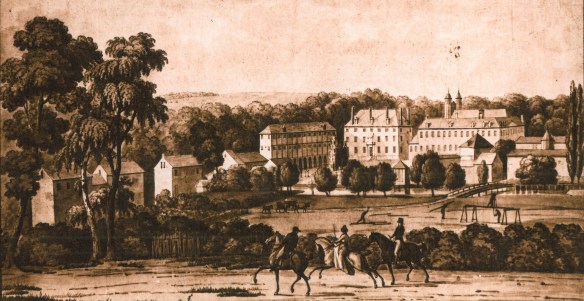
SKMBT_C45211070110270- filature-château vers 1825

I have just on Friday night at 11:27 sent off to the publisher the corrected proofs of the 2nd ed of my Free Market Economics. And while I think of the book as a modern version of John Stuart Mill’s Principles of Political Economy, I received an email that has made me think that there is possibly a different and deeper source for the book I wrote. There is about to be The First International Congress on Jean-Baptiste Say to be held in village in near Lille called Auchy-lès-Hesdin. And why there? Because that’s where J.-B. Say lived and built his business.

But the core issue of this conference is not about Say’s Law but about the entrepreneur. That, too, is what my text is about: the entrepreneur, Say’s Law (i.e. the law of markets) and the market economy. This is from the Elgar posting on the first edition of which the second is the same only much more:

The book does more than recast macroeconomics in its classical form. The microeconomic sections of the book also provide a different perspective on the nature of the market, the role of the entrepreneur and the unparalleled importance of uncertainty whose significance in economic analysis cannot be exaggerated.

That is exactly what this conference is about. These are the abstracts of the first set of papers listed in the 48-page conference program which is part of the opening round table on “J.-B. Say and the liberation of productive forces”:

It should be remembered, first of all, that under his training as a young merchant, Jean-Baptiste Say spent two years with his younger brother Horace, near London in Croydon. In 1786, he moved to Britain to learn the practice of English commercial business. This happened in the midst of the development of manufacturing in the UK when the introduction of mechanical looms gave a great boost to the whole industrial activity. It is clear that this first experiment in an expanding industrial environment, which lasted two years, deeply influenced the young J.-B Say who was gifted with an inquisitive mind and a talent of observation. Another element that makes J.-B. Say a competent expert to analyze the economic situation in England and identify the strengths and lessons for France lies in his experience as an entrepreneur in the creation of the spinning company in Auchy (France) in 1805.

In the Traité d’Economie Politique and in the Cours Complet d’Economie Politique, Jean-Baptiste Say develops a criticism of corporations and other industrial regulations. According to him, these regulations are barriers to the entrepreneurial freedom and to the progress of arts. They are almost always tools of individual and collective oppression and at the origin of various economic, social and political ills. In this paper, we detail Say’s argumentation against corporations and show that it is part of more general framework based on the influence of institutions on the economy and of machines on commerce. His critical analysis leads us to present his conception of a necessary liberation of the forces of production, which requires the creation of a general framework favorable to the freedom to undertake and a blossoming of the forces of production (machines). These elements also constitute the foundations of his political economy.

In Jean-Baptiste Say’s economic thought, a productive fund of industrial capabilities generates the emergence of entrepreneurs, workers and scholars. However, success only ensues from the exercise of entrepreneurial capabilities. This article analyzes several classifications of capabilities formulated by J-B. Say. Our first result highlights the fact that these capabilities go beyond the scope of the enterprise and concern the development of nations. Within the enterprise, there is a clear distinction between management and administration in J.-B. Say’s analysis ― the former is connected to the capacity of reasoning, whereas the latter demands qualities connected to control and supervision. Therefore, the entrepreneurial functions relative to uncertainty, innovation or inefficiency are linked to success but are not necessary conditions for the productive activity. We conclude that J-B. Say does not share the idea of an economic convergence between nations in a spontaneous way. A policy of economic development based on industrial education and the reinforcement of entrepreneurial capabilities is a necessary condition.

In his writings devoted to monetary questions, Say studies in details monetary, financial and bank innovations which he designates by the expression “representative signs of money”. Say’s analysis on money and its representation signs is very important since it takes place in a context of major change in the monetary field. The aim of this paper is to show how, in Says’ analysis, these representative signs of money are innovations of major importance. The paper begins with an analysis of the position of the representative signs of money compared to money itself. Then it studies promissory notes, bills of exchange and banknotes. Finally, the consequences of their circulation in the economy are presented, especially on the activity of producers.

Since Schumpeter, there has been a tradition in the history of the economic thought that has placed Say’s entrepreneur in a filiation Cantillon-Turgot. The aim of this article is to show that this filiation does not exist, even if certain themes such as risk, knowledge or organization of production appear in the works of these three authors. More precisely, it is possible to find a double break between Say and his predecessors. The first one lies in the analysis of the production and the division of labor, which shows that the entrepreneur in Say’s writings has not the same role as in Turgot’s ones. The second one concerns their conceptions of uncertainty and profit, which shows that the place of the entrepreneur in the distribution of income in the writings of Say is not the same that in Cantillon or Turgot’s ones. The implications of this double break are specified in the conclusion.

Jean-Baptiste Say and Joseph Aloïs Schumpeter are two key-economists in the theory of the entrepreneur. Both assigned to the entrepreneur the role of an economic engine, moved by innovation. Moreover, both lived in periods characterized by a flow of economic and political new ideas (Say: the French Revolution, the Empire of Napoléon, the Bourbon Restoration, the first industrial revolution; Schumpeter: the two World Wars, the Bolshevik Revolution, the 1929 crisis, the second industrial revolution). Their theories, embedded in troubled times; define an individual who constantly avoids being locked in (economic, social, political and technical) routines. Nevertheless, an important point distinguishes their approaches: Say describes a real entrepreneur, while Schumpeter reduces him to an ideal type.

You can see from this that the world is turning away from Keynes and towards Say. The conference papers, if the abstracts are anything to go by are all of this depth and quality. That a serious revival of Say should happen in France is not as obvious as all that although where else. But you could learn more about the nature of an economy and good policy from Say’s Treatise, I’m afraid, than from most of the textbooks found across the world today. But there is the second edition of my own which will be available in about a month.

UPDATE: Overnight I have received an extremely kind and fascinating note which included the above picture. I hope M. Tilliette will not mind my reproducing his note:

Dear Professor Kates,

Please permit me to send you this mail.

I was born in 1930 at Auchy-lès-Hesdin in the north of France where Jean-Baptiste SAY founded a cotton mill about two hundred years ago, and 200 meters from the place where he lived with his family during 8 years (1804/1805 – 1812/1813 ).

Very probably my grand–grand father met him for building matters !

Mrs. Michelle Lapierre informed me that you will meet her son Florian very soon. It is a sympathetic information for us because here we are very much interested in the revival of the memory of Jean-Baptiste SAY.

We hope other opportunities to contact you. To-day, please find here attached :

– the translation in french of your positive review about the recent book of Professor Evert Schoorl. Pr. Schoorl was happy to send me your review and I translated it for people here.

– a view of the cotton mill of Auchy around 1820 / 1825, practically as J-B SAY knew it; before it was a benedictine abbey with a water mill.

– a view of this cotton mill about fifty years later, rebuilt after a big fire in 1834. This factory was operated during almost two centuries, till 1990.

It would be a pleasure for us to send you other details about the J-B SAY time at Auchy-lès-Hesdin.

Dear Professor, I thank for your attention.

Yours truly,

Z. Tilliette