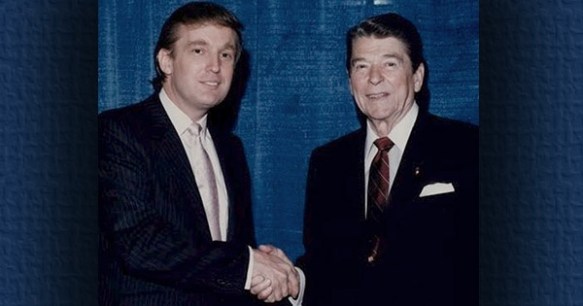
And here is the difference that matters:
YEAR END POP: TRUMP STANDS AT 46% APPROVAL
http://www.rasmussenreports…STUDY: MAIN MEDIA COVERAGE JUST 5% POSITIVE FOR TRUMP…
http://www.washingtonexamin…

And here is the difference that matters:
YEAR END POP: TRUMP STANDS AT 46% APPROVAL
http://www.rasmussenreports…STUDY: MAIN MEDIA COVERAGE JUST 5% POSITIVE FOR TRUMP…
http://www.washingtonexamin…
From Steve Hayward’s The Year in Pictures.
Compare and contrast the response of the American president to protests in Iran, with PDT’s response first.
US President Donald Trump has warned Iran that the “world is watching” after two days of protests against the country’s religious rulers.
Hundreds of people took to the streets in Mashhad, Iran’s second-largest city and one of the holiest places in Shia Islam, on Thursday.
The protests spread to Tehran and other cities on Friday, with police using water cannons in some cases to disperse the crowds.
Initially aimed against high prices, the anti-government protests quickly turned against the Islamic regime as a whole.
Police arrested 52 people. On Saturday, tens of thousands of government supporters marched in cities across Iran in a show of strength for the regime.
Many of the marchers carried banners in support of Supreme Leader Ayatollah Ali Khamenei.
Many reports of peaceful protests by Iranian citizens fed up with regime’s corruption & its squandering of the nation’s wealth to fund terrorism abroad. Iranian govt should respect their people’s rights, including right to express themselves. The world is watching! #IranProtests
Mr Trump tweeted in support of the anti-government protests.
“Many reports of peaceful protests by Iranian citizens fed up with regime’s corruption and its squandering of the nation’s wealth to fund terrorism abroad,” he wrote.
“Iranian govt should respect their people’s rights, including right to express themselves. The world is watching!”
And the US State Department condemned the arrest of peaceful protesters and urged “all nations to publicly support the Iranian people and their demands for basic rights and an end to corruption”.
Mr Trump has refused to re-certify a 2015 deal between Tehran and world powers that curbed Iran’s disputed nuclear programme in return for a lifting of most international sanctions.
The deal was one of the biggest achievements by President Hassan Rouhani, but has yet to bring the broad economic benefits.
State television said pro-government rallies were scheduled to be held in more than 1,200 cities and towns on Saturday.
This was Obama’s: Obama Stands Firm on Restrained Response to Iran Protests.
Obama said nothing about the crisis in public on Sunday, although a spokesman said he discussed Iran with foreign policy advisers in the Oval Office for more than 30 minutes. He later went golfing in Virginia. On Monday, the president had two public events, but was not expected to comment on Iran during at least one of them.
Restrained as in do absolutely nothing in any way to assist those who are trying to free themselves from an Islamist theocracy.
AND THIS FROM POWERLINE:
Senator Tom Cotton urged support for the protesters:
Referring to the “billions in sanctions relief the Islamic republic secured through the nuclear deal”, Arkansas Republican senator Tom Cotton wrote on his Twitter account, the ayatollahs still can’t provide for the basic needs of their own people-perhaps because they’ve funneled so much of that money into their campaign of regional aggression in Syria, Lebanon, Iraq, and Yemen”.
Senator Cotton has also insisted, “The protests in Mashhad show that a regime driven by such a hateful ideology cannot maintain broad popular support forever, and we should support the Iranian people who are willing to risk their lives to speak out against it.”
We certainly should, and the Trump administration has. Via InstaPundit, this is the strong statement released by the State Department’s spokeswoman:
We remember 2009, when Barack Obama, hell-bent on a fanciful alliance with the mullahs, shamefully betrayed the Iranians who rose up, expecting to be supported by us. The Trump administration’s response is of course a welcome contrast. But one wonders: why are Iranians rebelling now? Certainly they have economic grievances, but are these really new? What has happened, recently, to explain the current uprising?
I wonder whether the Iranian rebellion has been incited, at least in part, by a conviction that there finally is an administration in Washington prepared to support them, at least morally and perhaps materially. Why would Iranians think that? No doubt they have paid close attention to President Trump’s willingness to stand up to their oppressors. And perhaps Trump’s recognition of Jerusalem as Israel’s capital sent a signal that there has been a changing of the guard in Washington.
This is pure speculation, but maybe the fact that we now have a president who is pro-United States and pro-freedom, instead of anti-United States and pro-mullahs/Muslim Brotherhood, etc., has inspired Iranians to march for liberation. It will be interesting to see how events play out in the days to come.
Now updated with the above video from 1977.
I fear we are looking at a breath of sanity in the midst of madness, but enjoy it while you can.
And for interest, you can follow the entire twitter conversation here. It’s an astonishing thread.
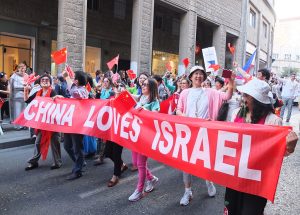
We visited the Jewish district of Shanghai when we were in China last year. My most indelible memory was of the refugee who arrived penniless, had to sell his shoes to earn enough to eat and then sat at home until spring when he could go out to work so that he could buy a new pair of shoes. But he lived to tell the tale, unlike millions of others. A tour of the Shanghai Old Jewish Quarter is worth a visit although almost certainly of most interest to Jewish people:
Old Jewish Quarter in Shanghai is often called the Noah’s Ark of Orient since it had once been the refuge for the Jewish. 30,000 Jews had fled during the Second World War and had come to Shanghai. The locals helped the displaced people and they soon create a distinct community of their own with sports leagues, cemeteries, synagogues, stores, cafes, bakeries and theaters. Some of these older Jewish sites are kept in good condition even today.
As for the picture above, it comes from this: Trump’s Recognition of Jerusalem: The View from Beijing. Here’s the wash up:
Trump’s recognition of Jerusalem as Israel’s capital will have little impact on Israeli-Chinese relations. The official Chinese view is that Israel is not, after all, at fault for what happened – Trump is. In addition, the Chinese president, who stated during the last conference of the ruling party as well as on other occasions that China must focus on development and modernization, sees Israel as a primary source of innovation that could aid his country. The large Chinese investments in the Israeli high-tech industry indicate that Xi and the rest of the Chinese leadership will not abandon their relations with Israel so easily.
The bit in black is translated above, I hope accurately, by Google Translator.
A very classical distinction that is lost on most economists today.
There is this grand distinction between an individual borrower and a borrowing government, that, in general, the former borrows capital for the purpose of beneficial employment, the latter for the purpose of barren consumption and expenditure.
— J. B. Say
From his Treatise on Political Economy dealing with “Of the Consumption of Wealth”.
From Steve Hayward at Powerline.
There is something ironic about the fact that a grand White House Magnolia tree planted during Andrew Jackson’s administration is going to come down during the administration of the most Jacksonian president since Old Hickory. (By the way, if Jackson was “Old Hickory,” maybe we should call Trump “Old Spice”? It fits in some ways, if you think about it. . .) Rim-shot!
Anyway, what isn’t ironic at all is the many news headlines what convey the impression that Cruella de Ville Melania Trump has ordered the felling of the mighty Magnolia in a fit of forrecidal rage, when in fact arborists have concluded that the tree is fatally weakened and in danger of falling at any moment. But here’s now Newsweek represented it:

Not to be left behind, for some reason CNN thinks they have an “exclusive” on this totally non-exclusive story:

The Hill jumped on the Mean-Melania bandwagon, too:

What—is Melania herself going to wield the ax? Please put that on pay-per-view.
Even the usually reliable Daily Mail goes with demagoguery:

You have to read way down in the (often corrected or amended) stories to learn that this has been on the minds of White House arborists for some time, such that they have been cultivating cuttings from the tree—some of them already 10 feet tall—that will replace the old one.
And people wonder why Trump repairs to “fake news” so often.
Memo to Newsweek—take your own advice:

Yeah, after all it’s not like Melania or Donald Trump are William Gladstone or something.
From the great Canadian blog Small Dead Animals: Y2Kyoto: Blunder Down Under
Let’s take a visit to clean, green Australia where they gave up coal…
In Australia, peak summer is about to hit in a post-Hazelwood-electricity-grid. There’s a suite of committee reports as summer ramps up. Everyday there’s another Grid story in the press, and a major effort going on to avoid a meltdown. Minister Josh Frydenberg announced today that “we’ve done everything possible to prevent mass blackouts”. Or as he calls it, a repeat of the South Australian Horror Show. Politicians are so afraid of another SA-style-system-black that they are throwing money: The “Snowy Hydro Battery” will be another $2 billion. Whatever. It’s other people’s money.
… to move to diesel.
Homes and businesses are so afraid of blackouts in Australia that some retailers are selling four times as many generators as normal. Mygenerator.com.au reports a 425% increase year on year. The strongest growth has been in South Australia, Victoria and western Sydney.
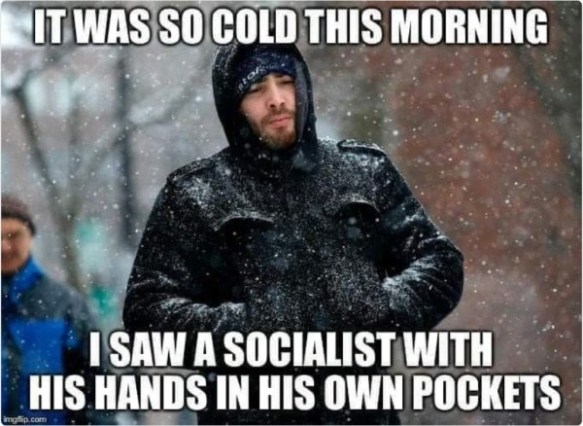
It’s probably nothing.
AN UPDATE ON THE LATEST EVIDENCE OF GLOBAL WARMING: From Drudge today:
Record -36° in Minnesota...
NEW YEAR'S EVE IN NYC COLDEST IN HISTORY?
Temps 30° BELOW normal...
Some of most extreme cold 'ever observed' in central Missouri...
Arctic Blast: Canada...
Siberia, Antarctica Warmer Than NH...
Frosty weather closes Maine ski areas...
'Pancake ice' on Lake Michigan...
UPDATE: Erie, PA pummeled by record 5 feet of snow...
NATIONAL GUARD MOBILIZED...
LIVE CHILL MAP...
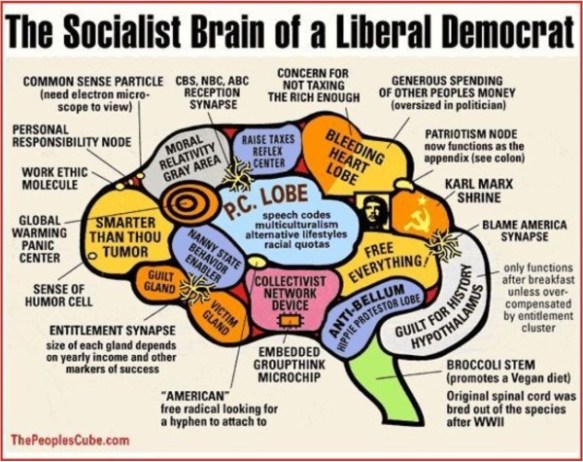
Not exactly the right question since everyone supports government solutions to some things, but the question is still a genuine one: Why Do Intellectuals Support Government Solutions?. I found the link at Instapundit where, not for the first time, the wisdom came from the comments. Let me put up some of it:


 Law of Markets
