PLUS THIS: I was going to add that I thought this was the best speech Donald Trump has ever given, but thought I would see what others said first. I am not alone on this. You might have a look at this comments thread at Instapundit. These are the first four under the heading of “best”.
Trump gave them Hell tonight. I honestly have been depressed by all the COVID crap and antifa crap and the inevitablity of the enemies of freedom. Trump removed all that with a speech and I feel better. Wow, what a president.
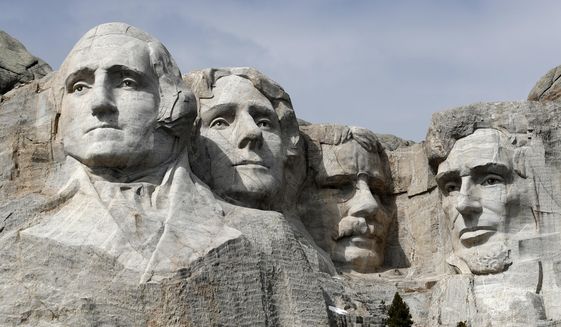
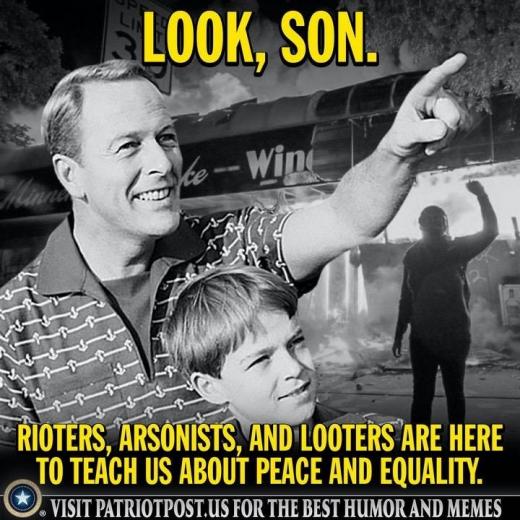
In theory, Presidential elections are about competing visions of what America is and what America can or ought to be, as well the personalities of the candidates. Tonight at Mount Rushmore Trump made the 2020 campaign about the idea of America itself. America versus whatever the Democrats think comes after America, because they’ve made it clear they’ve rejected America. And it was the Democrat’s own rioting, pillaging, looting, iconoclastic, BLM/antifa stormtroopers that made that possible.
Well I’ll be damned! I feel a little hope!
Absolutely pitch perfect and immensely inspiring. Really gives me a boost of enthusiasm. And we are going to hear more from Kristi Noem. It’s not inconceivable that she gets elected in 2024 as our first female President.
‘In Classical Economic Theory and the Modern Economy, Kates seeks to correct this dangerous intellectual detour economists took due to Keynes and finally get modern economists to practice economics beyond the shadow of Keynes. It is a Herculean task, but armed with J.B. Say and especially J.S. Mill, Steven Kates makes as strong an effort for resurrection of classical economy theory as can be marshaled. This will be a must read for all students of economics, and a compelling contribution to the history of economic doctrine.’
– Peter Boettke, George Mason University, US
‘This book delivers hard blows to the tenets of modern economics, retells its history and evolution, and pokes holes at our misperceptions of classical economic theory. The result is as much a burial of the macroeconomics of Keynes as it is a resuscitation of the classical economics of J.S. Mill.’
– Per Bylund, Oklahoma State University, US
For a change, we have two people commenting on a book who actually seem to have read it and know what it says.
If the United States wants to survive the onslaught of socialism, if we are to continue to enjoy self-government and the liberty of our hard-fought freedoms, we have to understand there are two opposing forces: One is the “children of light” and the other is the “children of darkness.”
As I recently wrote, the art and exercise of self-governance require active participation by every American. I wasn’t kidding! And voting is only part of that active participation. Time and again, the silent majority have been overwhelmed by the “audacity and resolve” of small, well-organized, passionate groups. It’s now time for us, the silent majority (the indifferent), to demonstrate both.
A long article which you should read. He continues:
I believe the attacks being presented to us today are part of a well-orchestrated and well-funded effort that uses racism as its sword to aggravate our battlefield dispositions. This weapon is used to leverage and legitimize violence and crime, not to seek or serve the truth.
The dark forces’ weapons formed against us serve one purpose: to promote radical social change through power and control. Socialism and the creation of a socialist society are their ultimate goals.
He ends with this:
To the silent and currently indifferent majority: Wake up. America [Western Civilisation] is at risk of being lost in the dustbin of history to socialism. The very heart and soul of [our Western way of life] is at stake.
In war, as in life, most failure comes from inaction. We face a pivotal moment that can change the course of history.
We the people must challenge every politician at every level….
Now is the time to act.
No one can believe it. Mr DeBlasio is such a nice man. Daniel Andrews too. But there are barbarians at every turn and in every generation. How much did Lenin really care about anyone else? Same for Castro? Same for Mao (and Xi if it comes to that). Same for them all.
One of my two all-time most favorite economists — Thomas Sowell — turns 90 tomorrow, he was born on June 30, 1930. Here is Thomas Sowell’s webpage and here is his Wikipedia entry. Milton Friedman (my other all-time favorite economist) once said, “The word ‘genius’ is thrown around so much that it’s becoming meaningless, but nevertheless I think Tom Sowell is close to being one.”
In my opinion, there is no economist alive today who has done more to eloquently, articulately, and persuasively advance the principles of economic freedom, limited government, individual liberty, and a free society than Thomas Sowell. In terms of both his quantity of work (49 books and several thousand newspaper columns) and the consistently excellent and crystal-clear quality of his writing, I don’t think any living free-market economist even comes close to matching Sowell’s prolific record of writing about economics.
And while no one else unfortunately understands how he was able to become the economist he became, let me point out that his PhD was on Say’s Law and two of his earliest books were on Say’s Law and Classical Economic Theory. Nor was that just an early part of his career, but he came back to Classical Theory again in 2006.
Sowell, Thomas (1972), Say’s Law: A Historical Analysis, Princeton University Press, ISBN 978-0-691-04166-7.
——— (1974). Classical Economics Reconsidered. Princeton University Press. ISBN 978-0691003580.
——— (2006). On Classical Economics. New Haven, CT: Yale University Press. ISBN 978-0-300-12606-8.
And on this, let me add to what Currency Lad has already written on it’s always our money, via Adam Creighton. Money is a metaphor – probably actually a synecdoche – for the word resources. If you use the word “money” you can be deceived by government spending since a government can always print more of the stuff. Resources, actual labour and capital, are much harder to come by. Here is the point made by Adam Smith in 1776:
Great nations are never impoverished by private, though they sometimes are by public prodigality and misconduct. The whole, or almost the whole public revenue, is in most countries employed in maintaining unproductive hands.
That, by the way, is from the chapter “On the Accumulation of Capital, or of Productive and Unproductive Labour”. There is more sense in that chapter than in the whole of a modern economics text. It is Thomas Sowell amongst a very few others who is keeping that tradition alive.
If you are looking for a modern discussion of classical economic theory, and amongst other things a discussion of productive and unproductive labour, might I recommend my own Classical Economic Theory and the Modern Economy which has just been published.
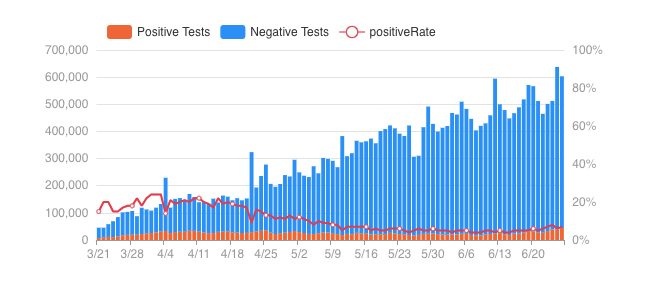
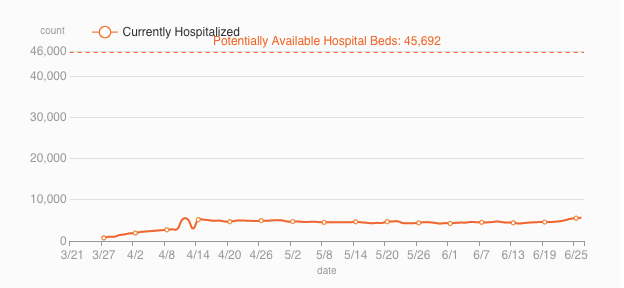
Although the article starts with these two charts, it is not about the Chinese Flu but about why people believe things in spite of all the evidence to show they are utterly untrue. The title is Why Facts Don’t Matter to People. That is, why it is near impossible to get those who seem able to believe ten impossible things before breakfast to change their minds. It is like dealing with members of a cult, except they are now the mainstream.
Here’s his point. “Engage them in conversation”, he suggests, meaning getting others – you know, like people who want to blow up power stations and defund the police – to explain their views while listening sympathetically to yours.
If you’re wondering why so many people don’t see the world the way you do, engage them in conversation. You will find they are as well-intentioned as you are, but they are looking in a different direction. Beneath their opinions and fears, beliefs are shaping how they see the world.
Because of different beliefs, your villains may be their heroes. They may look at the world of effects while you are looking at causes. They’re hoping a better leader comes to power, while you’re considering how the presidency became so powerful and destructive.
Until their beliefs change, they will never consider how politicians and experts with too much power turned a pandemic into a catastrophe. As Einstein put it, “Whether you can observe a thing or not depends on the theory which you use. It is theory which decides what can be observed.”
The “clear guidance” politicians claim to dispense and “the truth” my friend wants to learn are not rooted in the principles of human flourishing. My friend is waiting for a government official to blow the all-clear whistle. My friend doesn’t want to believe experts are as fallible as he is, and that the prevailing scientific consensus may be false. For me to explain to him why “defining risk is an exercise in power” would bring a blank stare of disbelief.
I don’t think the author has an answer. He adds this at the end which only emphasises how deep the problem is.
Read Hayek’s famous observation about order, replacing the words “that in complex conditions” with the words “during a pandemic:” “To the naive mind that conceives of order only as the product of deliberate arrangement, it may seem absurd that in complex conditions [during a pandemic], order and adaptation to the unknown can be achieved more effectively by decentralizing decisions.”
With that simple substitution, we expose a core belief shared by many Americans. They believe centralizing decision-making is effective in unknown, complex conditions and they want their politicians to do something.
Well, that’s the problem right there. No one any longer wants governments to do nothing, even if that really would be the best thing to do. We are therefore falling towards a totalitarian state. One day no one may even notice our freedoms have gone, since those who grow up in this new world may never have known what freedom is.
And there is this comment I really liked:
People like that exist because reality doesn’t kick them in the teeth hard enough.
Imagine how life has been through most of human history. Life was hard. Being wrong could get you dead, and in a hurry. People who were prone to believing nonsense got that tendency beaten out of them.
Today the consequences for being wrong are extraordinarily mild, if they ever arrive at all. People can believe all sorts of false and ridiculous things without ever having to worry that they’ll pay a price for doing so, or that they will suffer as a result.
Early Friday morning, hundreds of Antifa attacked police and the North Precinct in Portland. They tried to set up another autonomous zone around the precinct with fencing and dumpsters, tried to lock police in the precinct and light it on fire, and pelted the police outside with objects like glass bottles.
See what happened then.
.@PortlandPolice rushed in after #antifa rioters began trying to barricade the Central Precinct (they did that last night to North Precinct & set it in fire). Police knock rioters to the ground, angering their comrades. #BlackLivesMatterpic.twitter.com/NEdF2elcry
“A whopping 500,000 users [including Legal Insurrection] signed up for social-media platform Parler after Twitter shut down two conservative accounts this week”
And from the post:
There have been many attempts to create a Twitter alternative, but in the wake of Twitter’s decision to censor a tweet by President Trump and its permanent bans on prominent right-leaning accounts like that of meme master CarpeDonktum, Parler is attracting users at a startling rate.
So startling is the growth of Parler, a free speech-friendly Twitter alternative, that the leftstream and #NeverTrump media are attempting to vilify it as the refuge of racists and white supremacists and fascists. Oh my!
The headlines are hilarious:
Newsweek: “Who Owns Parler? Social Media Platform Offers Safe Space for the Far Right”
The Bulwark: “The Far Right Establishes Autonomous Zone Safe Space App Parler: ‘Free Speech!’ cry the snowflakes seeking a place to vent about their triggered feelings.”
Hollywood Reporter: “‘I’m Done’: Right-Wing Personalities Ditching Twitter for Parler Over Claims of Censorship”
Fast Company: “I joined Parler, the right-wing echo chamber’s new favorite alt-Twitter”
Forbes: “As Twitter Labels Trump Tweets, Some Republicans Flock To New Social Media Site”
Yahoo News: “Parler, a right-wing social media site, lures conservatives, but Trump sticks with Twitter — so far”
And why shouldn’t the President use both, at least for now?
The statue, erected on April 14, 1876, stands in Lincoln Park and built with “contributions from hundreds of former slaves who wanted to pay tribute to the man who had proclaimed their freedom in 1863,” The Washington Post reported. “Just after Lincoln’s death, the [Western Sanitary Commission, which aided Civil War victims] had received an intriguing request from a former slave, who sent the commission $5 — her first earnings as a free woman — to help build a monument to Lincoln, ‘the best friend the colored people ever had.’ The commission began a fund-raising campaign and invited former slaves to contribute.”
Famed orator and author Frederick Douglass spoke at the unveiling of the memorial in Washington, D.C., saying, “The sentiment that brings us here to-day is one of the noblest that can stir and thrill the human heart.
“It has crowned and made glorious the high places of all civilized nations with the grandest and most enduring works of art, designed to illustrate the characters and perpetuate the memories of great public men,” Douglass continued. “It is the sentiment which from year to year adorns with fragrant and beautiful flowers the graves of our loyal, brave, and patriotic soldiers who fell in defence of the Union and liberty. It is the sentiment of gratitude and appreciation, which often, in presence of many who hear me, has filled yonder heights of Arlington with the eloquence of eulogy and the sublime enthusiasm of poetry and song; a sentiment which can never die while the Republic lives.”
Douglass later added, “We, the colored people, newly emancipated and rejoicing in our blood-bought freedom, near the close of the first century in the life of this Republic, have now and here unveiled, set apart, and dedicated a monument of enduring granite and bronze, in every line, feature, and figure of which the men of this generation may read, and those of after-coming generations may read, something of the exalted character and great works of Abraham Lincoln, the first martyr President of the United States.”







 Law of Markets