If it’s not illegal to say it then it should be illegal to prevent it from being said

The post below is from August 29, 2018. I said it again a year later here. And now I will say it again. This is the problem. The people who run Facebook, Twitter and Google are some of the most powerful people I know, although there is no doubt about their sincerity in trying to make a ton of money, but more to the point, in also doing all they can to suppress opinions on the right they do not agree with. It would not make any difference which side of the political divide they happened to be on in seeing a fault in their program, but in this case they happen to be on the left. As in every institution of the left, if you disagree with what they think, they will prevent you from putting your views into the public arena if they can stop you. I am at a loss that anyone who believes in free speech should not see this point. If the point is instead some form of misguided right to private property, then I cannot even begin to see your point, since property is regulated at every turn. These platforms arose as a promise to connect people up with each other so millions across the world signed on. And once millions sign on, it’s like the phone company. The service is then not private and individual, but the promise to connect each customer up to their friends and associates. Now they tell us that they will only connect some people, and if they don’t like what you say – legal though it is – they won’t make the connection. They have thus first broken the law by running a platform and then second, by lying to their customers by misrepresenting the product they offered. If you want to leave them without government intervention, you will need a much much stronger case than any I have seen so far. The rest is from a year ago.
_____

TRUMP WARNS FACEBOOKGOOGLETWITTER
BIAS, CENSORSHIP FIRESTORM

Trying to find a positive story about PDT that is a week old on Google is often impossible. Sometime Duck Duck Go will allow me to access what I know is there, but sometime not. Google is virtually a certainty to be a dry well. Saying things on Facebook and Twitter that offend the left can get you shut down. From the above story, taken from Drudge:

Trump: Facebook, Twitter, Google are ‘treading on very, very troubled territory and they have to be careful’

  • Trump said in a tweet that Google’s search engine had “rigged” news story search results to show mostly “bad” stories about him and other conservatives. He later criticized Facebook and Twitter.
  • He says Google is prioritizing left-leaning outlets and warns that the situation “will be addressed.”
  • The president’s comments come a week before Google, Facebook and Twitter testify before Congress.
  • Larry Kudlow, Trump’s economic advisor, says the White House is “looking into” whether Google suppresses positive articles about the president.

News stories about Australia are usually findable since Google probably doesn’t care what we read. But they do care about what Americans read and prevent what they can from showing up in those narrow corridors inhabited by the wilfully ignorant. Try this story: China reportedly hacked Hillary Clinton’s home server and read all her emails, FBI agent Peter Strzok yawned. It begins:

This is from the Daily Caller because the mainstream media won’t pick up on it until they can figure out a way to say that China only did this at the behest of Russia and Trump.

Now simply routine for stories not to appear in the mainstream media and to disappear from various search engines in no time flat.

What to do is a hard issue since it is clear that an unbiased media would wipe the left out. The truth may set you free, but where will you find it if bias, distortion and fake news are your bread and butter?

AND NOW THIS: Facebook blocks ad for upcoming Diamond and Silk ‘Dummycrats’ movie ridiculing Pelosi, Waters.

FB&T must reckon they are beyond any chance of being made to play by the rules of being an open platform available to anyone. And they may be right, but they might also be wrong. They are certainly tempting fate.
The best airplane book ever

The economists' book is slated to hit store shelves Tuesday.

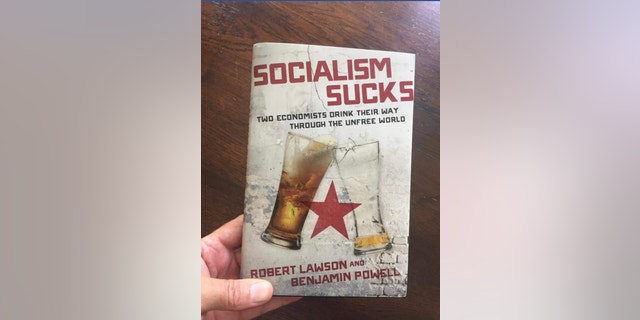
Bought a pre-publication copy at Freedomfest, even had it signed, and then read it all the way home. But that wasn’t what was so extraordinary. No matter who I sat next to, so soon as they had seen the title, they immediately stopped talking to me. From now on, I am going to take the wrapper of the book and put it on whatever I am reading on the plane. If they stop talking; I don’t want to talk to them anyway. If they do continue the conversation, then I am all-in myself.

And that’s not to mention what a fantastic book it is. It’s what you know about socialist countries already, in a vague and distant kind of way. But the book has such gripping and terrifying detail, it is bound to bring a good deal to life that is really only normally just statistical and dry-as-dust. Sure they throw their enemies into jail. Sure they shoot their political prisoners in the back of the head. But how many places can you discover how hard it is, even for tourists, to find a good restaurant, even if it’s cheap.

Here’s the book discussed: Economists use beer as measure to document failures of socialism in new book. Then when you’ve bought and read it, take the dustcover along with you for all subsequent flights. With the right sort of people it’s a great way to start a conversation. For everyone else, it shut’s them up completely. A miracle cure, even for short flights.

Can one of these really become president?

Couldn’t bear to watch myself, either today or yesterday. Sounds like a train wreck, but Democrats are pretty rancid.

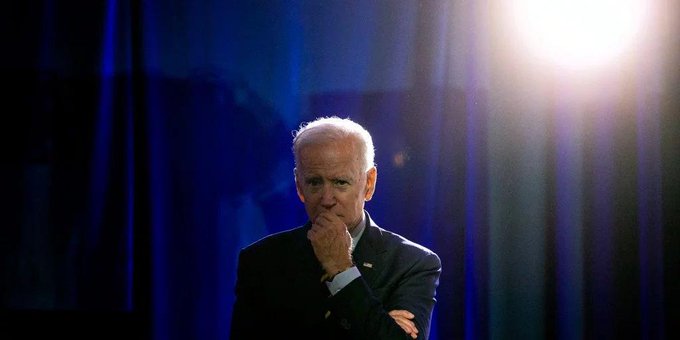
ALARM: Biden repeatedly stumbles over words and stats...
'Is he running for president of space?'
AXELROD: THIS MAY BE BEST HE CAN DO...
PROTESTORS INTERRUPT DEBATE...
Early tech and mic problems plague...
Kamala calls Joe 'senator' after he addressed her as 'kid'...
Gabbard vs. Harris: You Kept Prisoners Locked Up For Labor...
Booker Torches Biden: You Destroyed Communities Like Mine...


CLASHES AND CRASHES
DEMS ATTACK TRUMP OBAMA

That’s from Drudge. These are from Instapundit.

AS ZHOU ENLAI NEVER SAID ABOUT THE IMPACT OF THE FRENCH REVOLUTION, “TOO EARLY TO SAY:”  The biggest loser of tonight’s Dem debate? Barack Obama.

Plus.

DEMOCRATIC HATE FOR MARIANNE WILLIAMSON: The self-help guru’s supposedly empowering rhetoric masks a mean-spirited individualism that would lead to harmful policies if she were somehow elected. So is this blue-on-blue internecine violence — or is it a clever effort to make people on the right like her more?

Every member of the Klan was a Democrat

Every member of the Ku Klux Klan was a Democrat, with only the very occasional exception, as may be seen from this list. And as offensive as I find the text below, which is taken from the list taken from Wikipedia. The efforts by the Democrats to ignore their own history is understandable, but is nevertheless built on a series of lies.

Robert Byrd

Senator Robert Byrd was a Kleagle, a Klan recruiter, in his 20s and 30s.

Robert C. Byrd, was a recruiter for the Klan while in his 20s and 30s, rising to the title of Kleagle and Exalted Cyclops of his local chapter. After leaving the group, Byrd spoke in favor of the Klan during his early political career. Though he claimed to have left the organization in 1943, Byrd, wrote a letter in 1946 to the group’s Imperial Wizard stating “The Klan is needed today as never before, and I am anxious to see its rebirth here in West Virginia.” Byrd attempted to explain or defend his former membership in the Klan in his 1958 U.S. Senate campaign when he was 41 years old.[1] Byrd, a Democrat, eventually became his party leader in the Senate. Byrd later said joining the Klan was his “greatest mistake.”


Hayek and the market economy

My approach to the free market economy is probably closer to the political economy of Friedrich Hayek than to anyone else who had written during the twentieth century (other than the incomparable Henry Clay). Let me therefore draw your attention to this article, just published at the Claremont Review of Books, HAYEK’S TRAGIC CAPITALISM. The opening paras:

Best known for his anti-socialist polemic The Road to Serfdom (1944), the economist and political philosopher Friedrich A. Hayek is often thought by foe and friend alike to have offered a plain and striking argument for capitalism: the least deviation from laissez-faire is the first falling domino that will inevitably lead to totalitarianism. The foes and friends draw different lessons from the fact that decades of regulation and welfare policy have never actually had this result. For the foes, it shows that Hayek was obviously wrong and his analysis unserious. For the friends, it shows that the dreaded socialist dictatorship must now be imminent rather than far-off—no doubt finally to arrive with whoever the next Democratic president turns out to be.

But in fact, Hayek never gave so silly an argument. Nor will one find in his work the chirpy optimism with which many libertarians and Reaganite conservatives ritualistically defend the market economy. Hayek’s case for free enterprise doesn’t fit any of the usual simplistic stereotypes. He not only explicitly and persistently rejected laissez-faire, but could write as eloquently about the moral downside of capitalism and the emotional attractions of socialism as any left-winger. In an era in which—young socialist chic notwithstanding—global capitalism appears to have swept all before it, it is the triumphalist defenders of the free market rather than its critics who have the most to learn from Hayek’s cautious, nuanced apologia.

Classical economists were not laissez-faire. Economies must be meliorated by political judgement. Knowing how to do it right is the issue, not acting as if doing nothing at all is optimal. It is acting as if the free market is all one needs that plays into the hands of socialists and will ensure the end of free market economies. Read my text for a modern discussion not only about how a market economy works, but also the role of government policy in keeping an economy on course. It also explains what governments should never do as well, but that is only one part of the story, and not necessarily the most important part of the story.

If you’d like to buy a copy of Free Market Economics

FMD.
$499.34 for Kates book

That’s from Chris, at the comments on Told Ya So. It’s the kind of pricing that seems, to me, aimed at discouraging anyone from buying a copy. On the other hand, it is a copy of the first edition which is no longer being published so perhaps it has now become a classic and the price reflects its scarcity. It is also the hardback. The third edition is only $254.17, but that too is the hardback. However…

Free Market Economics by Steven Kates (author) (9781786431400)
$69.02

Blackwell’s

Free delivery

And then from the Elgar website.

Free Market Economics, Third Edition

Free Market Economics, Third Edition

An Introduction for the General Reader

Steven Kates, Associate Professor of Economics, School of Economics, Finance and Marketing, RMIT University, Melbourne, Australia

If you are genuinely interested in what is wrong with modern economics, this is where you can find out. If you would like to understand the flaws in Keynesian macro, this is the book you must read. If you are interested in marginal analysis properly explained, you again need to read this book. Based on the classical principles of John Stuart Mill, it is what is missing today; a text based on explaining how an economy works from a supply-side perspective.
In Association with the Institute of Economic Affairs
Extent: 480 pp
Hardback Price: £115.00 Web: £103.50
Publication Date: 2017
ISBN: 978 1 78643 138 7
Availability: In Stock
Paperback Price: £35.00 Web: £28.00
Publication Date: 2017
ISBN: 978 1 78643 140 0
Availability: In Stock


So before I go on, let me quote Samuel Johnson:

“No man but a blockhead ever wrote, except for money.

I have published around a dozen books but I doubt I have ever made more than a pittance on the lot of them. But whatever I have made on the books, it is more than I have made from this blogging. There is just the pleasure of it.

So let me give you the opening from the Preface to the second edition which will help explain the purpose of the book.

I wrote my Free Market Economics: An Introduction for the General Reader in early 2009, just as the various stimulus programmes were being put into place across the world to deal with the economic consequences of the Global Financial Crisis; it was written in white heat between February and May as the text for the course I was teaching in Economic Analysis for Business. What drove the book to completion was my dismay at the return of Keynesian theory and policy as the guide to recovery. My assumption at the time was that my book would be one of many such texts written in response to the devastation that would inevitably be brought on by the stimulus. What is to me quite astonishing is that this book, even in this second edition, remains the only book of its kind. I fear that, given the years of teaching nothing other than Keynesian theory, most economists can no longer see what the problem with modern macroeconomics is and why a Keynesian demand-side stimulus could not possibly have worked.

What makes this book different is that the macroeconomics is not just pre-Keynesian and not just un-Keynesian but actively anti-Keynesian. The book also explains Keynesian theory, of course, since it is impossible to teach economics without discussing modern macroeconomics as it is currently taught. Nevertheless, anyone interested in understanding the classical pre-Keynesian theory of the cycle, which focused on a very different explanation for recessions and an equally different path to return an economy to rapid rates of growth and low unemployment, will find no other introductory book to guide them in what I think is the right direction. Let me merely note that free market does not mean laissez-faire.

I wrote the book in twelve weeks during the first semester in 2009 because I was so disgusted at the return of Keynesian economics to front and centre following the GFC. It remains, so far as I know, the only anti-Keynesian economics text in the world. It is therefore, in my view, as Art Laffer wrote, the only economics text in the world that will explain how an economy actually works.