Value added – a Q&A

I received this query from a student:

I was thinking about value added, the other day, and started thinking about second hand books.

Now, the process to get to a new book, has added value, from resources such as trees, ink etc, throughout the chain, to be sold brand new in a book store (for example). A person enters the store, purchases the book, with the intention to read the book.

They buy it for 10 dollars, then read it, fully consuming the value that they have purchased it for.

Then, they later choose to sell it again, at a price of 5 dollars. Is this value added? I mean… they have already consumed the full 10 dollars of value that they initially purchased the book for the purpose of. Now they are making an additional 5 dollars.

OR

Is it the creation of a new product, from new resources? Ie. In reading the book/consuming the book, the person has realised it’s value. What is left is now just a resource. They then sell this resource in the market for a new price.

OR

Is it value reduction, as they sell it for a lower price than they buy it for?

To which I replied:

Nice.

Adding value means moving resources into a position or into some form so that they can better add to someone’s utility. When you bought the book, there was no value added by you, although there had been by the bookseller in doing whatever was required to make the book available. Reading the book gave you whatever pleasure it might have done and when you had finished it, there it lay. However to earn that later return, the book had to be shifted from your bedside where you left it when it was finished and moved to a position where it could be bought by someone else. So taking the book to the bookseller to resell was your contribution to the value adding process for which you received $5. Upon resale again, the bookseller again gets the $10 you originally paid, indicating that another $5 of value has been added to the process. Had you left the book undisturbed by the side of your bed, it could not have provided this additional $10’s worth of additional value, which was split between you and the bookseller.

Note that the original production costs of the book at no stage fit into the story.

Classical economics is just so clear headed.

The rising price of houses

The RBA is worried about rising house prices in Australia. But at the end of the article, Kelly O’Dwyer MHR, the chair of a parliamentary inquiry into foreign investment in residential real estate, put her finger right on the problem:

There was evidence to suggest current foreign investment restrictions were not being enforced by the Foreign Investment Review Board (FIRB), she said.

We used to pay for our balance of payments deficits through increased investment and the revenues that previous investments had caused. Now we pay for our imports by selling off the farm. The first could go on for ever and made us prosperous. The second will be a disaster but no one is willing to stop the inbound flow of funds.

Ideology makes young men dangerous

This is very well stated, from Theodore Dalrymple:

Youth, as everyone knows who has passed through it some time ago, is the age not of idealism but of self-importance, uncertainty masked by certitude and moral grandiosity untouched by experience of life — or, of course, the age of total insouciance. It is not surprising that ideology makes young men dangerous, for it is in the nature of ideology to answer all the difficult questions of human existence while giving believers the illusion of special understanding and destiny not available to others.

With the downfall of the Soviet Union, Marxism lost almost all of its appeal for hormonally disaffected young men of the West, leaving them bereft of significance and purpose. Except for one group among them, they now had only a potpourri of causes (sexism, racism, the environment, etc.), none of which quite met the need or filled the gap.

To find out what filled the gap, you need to go the article. And then there is this from an article by David Gelernter on Free Speech at Yale:

We all know that true free speech means freedom to shut up, especially if you disagree with your betters. And true free thought means freedom to stop thinking as soon as the official truth is announced by the proper Authorities — and freedom to wait patiently until then.

Now take this Ayaan Hirsi Ali. First of all, she’s a black woman, and they’re not quite ready for prime time, know what I mean? And she’s against the systematic abuse of women in Muslim societies. What about people who are for the systematic abuse of women in Muslim societies? Furthermore, she lacks “representative scholarly qualifications.” Want the whole campus flooded with quacks expressing their so-called opinions based on “experience” and “knowledge” instead of academic authority? And she’s Dutch. More or less. Enough said.

You can read the entire article as well along with this background piece.

Confound it

sea ice stats

Climate scientists are possibly the only people more surprised by how the world is unfolding than Keynesian economists:

ANTARCTIC sea ice has expan­ded to its greatest coverage since records began in 1978, continuing to confound climate scien­tists and proving even more hazardous than usual for shipping in the Southern Ocean.

Yet there is no one politically more dangerous than someone who has been shown to be wrong. Saving a billion or two makes no difference since nothing related to the real world will get these people to change their minds. There was then this the other day:

NOAA – 246 Low Max Records Broken or Tied From Sept 1 to Sept 10. Some records broken by 16F.

I’m sure that confounded a few people as well. The “I’m a Global Warmist and I Vote” crowd are doing an awful lot of harm but how do you stop it?

The Versailles of Economics

Auchy-lès-Hesdin

say filature

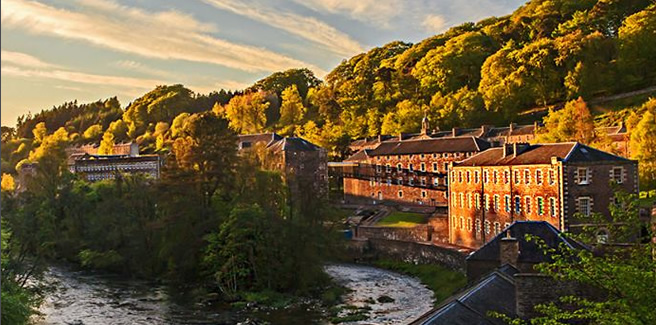
New Lanark

new lanark

I fear, based on the thread of commentary that followed my earlier posting on the Societies for the History of Economics discussion thread, that the astonishing uniqueness and historical significance of J.-B. Say’s textile mill at Auchy-lès-Hesdin is not fully appreciated. I have now therefore put up a follow-up posting. I fear from the comments there may not be an appreciation of what is found at the site nor the will to see it preserved if it can be done. J.-B. Say was one of the greatest economists of all time, mentioned in virtually every history of economics text ever written. He was not only amongst the first economists to insist on the importance of the entrepreneur in the study of economics, he was himself an entrepreneur and we have almost intact the remains of the factory he commenced. The textile mill he built at Auchy-lès-Hesdin in 1805 remains along with the house he had commissioned. It was while he was living at Auchy that he completed the second edition of his Treatise and it was there that he provided the first ever textbook treatment of what we now call Say’s Law. There is nothing like it on the face of the earth. The nearest approximation are the buildings at New Lanark, where Robert Owen, who was not an economist, tried his own experiments in entrepreneurship, and the Thünen Museum in Germany.

These three sites are exceptional in their interest, but only one at the moment remains unattended and in near ruins. Please do look at the three websites below to see the comparison:

Jean-Baptiste Say

Robert Owen

Johann Heinrich von Thünen

This is the note I have received from M. Zéphyr Tiliette, the archivist at Auchy, based on my posting:

We have to remain modest but we agree with you : Auchy-lès-Hesdin is a very special place given its history and particularly the association of the presence of Jean-Baptiste Say, an already great figure and a famous economist, and the industrial revolution he introduced in this remote place of the north of France. Strictly speaking, he went not there into exile but he certainly enjoyed more freedom there about 200 km away from Paris and distant from the Napoleon’s government. He also prepared in Auchy the 2d edition of his « Traité d’Economie Politique » published in 1814 ; as he wrote, he had some time for that in 1811 / 1812.

Locally, it is still easy to imagine how was the site 200 years ago when Jean-Baptiste Say lived there with his family : the abbey church, park limits, surrounding walls, river, waterfall, are practically unchanged. Most of the industrial buildings have been rebuilt, their equipment continually modernized and the hydraulic power device has been rearranged in order to continue to generate some electric power additional to the main steam and electric power systems. It is under maintenance presently.

The massive « Château Blanc » was built shortly after the Jean-Baptiste Say‘s departure by the Grivel family. Our economist lived right in the same area, probably in the best abbey’s appartments, likely as his partner Grivel. Auchy « a kind of Versailles for economists » as you say !! Thank you very much for Auchy !! But a lot of things would be to be done to approach this designation. Nevertheless, the presence and the work of J-B Say there corresponds to an event very significant by many aspects related to an example of industrial revolution in a rustic place at that time. This would deserve an historical research including regional human consequences and may be the other factory of the « Say C° » in Abbeville (35 km away ) ( of the brother Louis Say ), also in relation with other industrial developments nearby.

The future of the existing industrial buildings of Auchy is a concern, of course. But I entirely agree with you : the site deserves a significant place of memory devoted to J-B Say, to his history, his work, the economy science and so on, a kind of « museum for the history of economic thought » as you write. May be such a concept could collect a part of « archives » related to studies on J-B Say carried out at the Lyon 2 University as Pr. André Tiran, the Say expert, mentioned at Auchy on August 30th. It also could be combined with a valuable, historical documentation about the regional history and with antique library pieces for instance concerning « The Âge of Enlightenment », the XVIIIth century, J-B Say being a heir of it. We also could emphasize the great interest of J-B Say in the people’s education.

Such a project has to be discussed ; it is not yet finalized. Cognizant people and officials should be met. Auchy needs money for that.

Surely it would be an attractive place to visit « midway between Azincourt and Crécy » !! as you say.

This is not some graveside or an office in an economics department of some other flotsam and jetsam from the vast history of economics. This is a living, existing embodiment on a vast grounds within an industrial estate that was the work of one of the greatest economists who ever lived who also built a factory at the very start of the industrial revolution. This is not, moreover, a pin factory. This was a cotton mill built at the very dawn of a new age. You can stand on the site and see across the last two centuries.

This is something that historians of economics should be interested in. It is something that all economists should be interested in. It is something anyone with an interest in history should be interested in. It is here now, and there are many possibilities for the site including demolition in some fit of distraction. As M. Tiliette states, the restoration is in need of money, but it is not a vast ocean of money. And until you wander the park surrounding the buildings you will not see why I have described this place as the Versailles of Economics. If you are close, you should go and look. There is nothing else like it and it will be to our shame if we let this place go to ruins when it could just as easily become a World Heritage site in the same way as New Lanark.

The arc of insanity

A bit of projection here from the chief Democrat in the House of Reps:

PELOSI: REPUBLICANS ENDANGER CIVILIZATION

It’s only 13 years after Osama bin Laden declared his own private war on the West and think how well he’s done since 2001. This is from The Diplomad:

One did not have to be Nostradamus to see that Obama’s sneering disregard for American and Western interests, and the institutions and principles which maintained those, would have dire consequences for the West and the world. We see those consequences in the arc of insanity that runs from Mauritania to Iran; in Putin’s gleeful mocking of the West and in his drive to rebuild the empire of the Tsars; in China’s growing aggressiveness; in the collapse of our foreign policy in Central and South America epitomized by the wave of illegals blatantly crossing our southern border and the increasingly bizarre politics of Argentina, Venezuela, Bolivia, Ecuador, and Brazil. Everywhere we look around the world, the interests of the West–not just of America–are in retreat or collapse.

All driven along by our fools on the left who have been nurtured on their own hatreds of the West and of our religious base. The freest, most open, most prosperous civisilation in history is threatened by some of the most barbaric people who have ever been seen on the face of the earth and not only is there no serious response, you cannot find within the media much of any demand for such a response. This is the description of the American president but in many ways it seems to fit large parts of the left in general:

When discussing Obama and his foreign policy, the range of options are that he is stupid, uninterested, or an evil little worm out to destroy the West. I think, others might disagree, that he is, in fact, all three.

Given the leadership we now have from America, and with the stong possibility of eight years of Hillary after two more from Obama, just where do you think we will be 13 years from now?

Auchy-lès-Hedin and the History of Economic Thought

This is a note I put up on the Societies for the History of Economics website last night.

So far as I can tell, aside from Robert Owen’s New Lanark – which is now a World Heritage Site – there are no historic sites that one would associate with the study of economics. Yet there is, in fact, one that ought to be preserved in just the same way, both because of its association with one the greatest economists of all time and also because of its on-site interest as a place in which, even now, one can trace out the contours of the industrial revolution from the earliest years of the nineteenth century almost right down to the present. I refer here to the textile mill that was set up by Jean-Baptiste Say following his exile from Paris in 1805 at the hands of Napoleon.

Auchy-lès-Hesdin is a small village, and to be quite technical about it, is found in the Pas-de-Calais department and Nord-Pas-de-Calais region of France. Say, who had been a journalist and writer, having refused to alter the text of his Treatise to suit Napoleon’s statist demands, went off to Auchy to start a textile mill. He went there because by the river sat an old abbey that had one specific feature, a waterfall which could be harnessed to run the machinery of the mill. The waterfall is still there, as are most of the buildings that were subsequently built on the site (but not the original abbey). These include the power plant that used to generate the steam when steam replaced water, and even more remarkably, an electric generator that was used even later that was driven by diverting the river past a water wheel.

There is also the “Château Blanc”, a massive three-storey house that Say commissioned to be built but which he never lived in since by 1813 he was able to return to Paris. There are also worker’s cottages nearby which are still lived in. So what we find, if you will excuse my enthusiasm, is a kind of Versailles for economists. The buildings are falling apart but are still intact. There is restoration work going on and there seems to be a determination to save this site for posterity if it can be done. But having just been there myself, I cannot tell you just how extraordinary it is. We on this discussion thread have an interest in history, and this is a kind of living history of the industrial revolution that is also a place of great interest because of its association with J.-B. Say.

At the moment, and I cannot tell you why, there is a collection of antique fire trucks housed in one of the buildings. But other possibilities are latent in how this site may be developed, including a museum for the history of economic thought. At the moment, there are some scattered artefacts associated with Say in place but things are at an early stage in thinking this through. I am off here in Australia but this is something that the European Society along with the UK Society should consider becoming closely involved with. And while it may not be politic to say it about a destination in France, as was pointed out by M. Zephyr Tilliette – who has written the history of Auchy and is an authority on all of this – the town lies midway between Azincourt and Crécy. It is also is a short drive from the Calais and Chunnel crossing points.

If I may be allowed to say so, this is a place you should visit if you get the chance. The website I am told is coming, but in the meantime you can make arrangements to visit the site by phoning this number in Auchy: 06.45.49.59.29. You will not be disappointed.

For some idea what you will find if you go, see this, which is an invitation to join J.-B. Say’s Nexus, which is something you might also consider:

http://says.univ-littoral.fr/?page_id=112

And I would go one more step and also suggest that you might join the International Society Jean-Baptiste Say:

http://says.univ-littoral.fr/

I would emphasise here that in participating in both, neither is in any way an endorsement of Say’s Law. This is about Say and his pioneering work on entrepreneurship and the entrepreneur. It is also about one of the great early works on economics which is still worth reading today. It is thus one more reminder how studying the history of economic thought is of benefit in making sense of how an economy works.

The trick to picking winners is not to pick losers – how easy is that!

It is a big part of what I try to teach – that the future is unknown and all decisions are made before the consequences of those decisions can be known. So people take inferences wherever they can, and in this case the inference is that McDonald’s tells us why the market will collapse. It seems to tell us more than just what is happening to the market:

We had, essentially, very poor sales from McDonald’s. Now, McDonald’s is a very good indicator of the global economy. If McDonald’s doesn’t increase its sales, it tells you that the monetary policies have largely failed in the sense that prices are going up more than disposable income, and so people have less purchasing power.”

Faber has long argued that the policies of the Federal Reserve and other central banks simply increase asset prices and create inflation rather than actually stimulating the economy. But while the long-predicted inflation has not come to pass, Faber says that the McDonald’s results reflect the fact that inflation is rising faster than income, reducing the amount that individuals can spend.

Who can be in any doubt that the cost of living is rising around us? But whatever else, very few of us are able to maintain our living standards, with plenty of shifts in expenditure patterns to accommodate the harder going. I was reading The Senior the other day and its front page was on “Living in ‘energy poverty'” with the subhead, “Disconnections up: more seeking hardship plans”. The example given was of a 77-year old woman who received a $1500 gas bill. Not that long ago such a notion would have been impossible. Now we are all being careful of this and so many other things.

Our living standards are being chiselled at in countless ways, only some of which show up as a rise in the price level. It’s not just monetary policies that are failing but the entire range of policies which divert resources away from value adding production and into the usual low-productivity nonsense aimed at by governments. The wonderfully whimsical headline in this morning’s AFR captured it all:

Abbott to pick winners not losers

No doubt this will appeal to everyone, a political winner. One can only hope that those who are promoting the policy understand it can never do anything but waste money so will be very restrained in following up on this:

Federal cabinet has approved a “competitiveness agenda” that will lead to government support for parts of the economy where Australia is strongest and require greater collaboration between businesses, schools, universities and training colleges.

Mercantilists all.

Ted Cruz defends Israel

This is quite an incredible story. In answer to some booing from the audience when he spoke about Israel and the Jewish people, Cruz stood up to the audience as reported here:

“Tonight, in Washington, should have been a night of unity as we came together for the inaugural event for a group that calls itself ‘In Defense of Christians.’ Instead, it unfortunately deteriorated into a shameful display of bigotry and hatred,” Cruz said in a statement provided to Breitbart News. “When I spoke in strong support of Israel and the Jewish people, who are being persecuted and murdered by the same vicious terrorists who are also slaughtering Christians, many Christians in the audience applauded. But, sadly, a vocal and angry minority of attendees at the conference tried to shout down my expression of solidarity with Israel.”

Cruz continued in his statement by noting that detractors “cannot shout down the truth,” and the American people “should not shy away from expressing the truth, even in the face of–especially in the face of–ignorance and bigotry.”

“I told the attendees that those who hate Israel also hate America,” Cruz said. “That those who hate Jews also hate Christians. And that anyone who hates Israel and the Jewish people is not following the teachings of Christ. These statements were met with angry boos. I went on to tell the crowd that Christians in the Middle East have no better friend than Israel. That Christians can practice their faith free of persecution in Israel. And that ISIS, al Qaeda, Hamas, and Hezbollah, along with their state sponsors in Syria and Iran, are all part of the same cancer, murdering Christians and Jews alike. Hate is hate, and murder is murder.”

This is one very unusual politician. A conviction politician on the right, with most of his instincts intact and admirable. We shall see.