Cannot think of a single thing. Socialist ideas have never, not in a single instance, not at any time in the whole of history, improved the lives of the communities they ruled. Socialism has only caused misery for anyone who has been trapped inside a socialist regime.
This is a reminder of a fact that cannot be denied other than by liars or those with not a shred of historical memory, written in memoriam of the no longer celebrated October Revolution which was once the centre of a worldwide faith in a glorious future, once the tens of millions of regime opponents had been eliminated, placed within the gulag, or terrified into silence.
October Revolution, also called Bolshevik Revolution, (Oct. 24–25 [Nov. 6–7, New Style], 1917), the second and last major phase of the Russian Revolution of 1917, in which the Bolshevik Party seized power in Russia, inaugurating the Soviet regime.
Socialists seek political power by pretending to fix real problems but only make such problems infinitely worse. We will never be rid of problems, nor will we ever be free from people who will tell you that if they are put in charge, they will make our problems go away. Any community in which the majority of its population are unaware of this massive danger to the future lives is perennially in danger of falling into the abyss of a socialist governing clique taking power.
Here is the reality. The socialist left is filled with people whose lives are driven by envy and hatred for the productive, contended and self-reliant. Ruining their lives makes no one better off but ruins the lives of everyone involved other than those who take power. No one can any longer by unaware that every single socialist non-solution to our existential and economic problems has been disastrous for everyone but those who seize power. Every socialist is a Stasi agent lying in wait.
I have written another children’s book as my two youngest grandchildren turned one. This is the note I therefore wrote to the artist who did the pictures for Economics for infants.
If I haven’t told you this already, what I liked most about your artistry for Economics for Infants is that you got the point exactly right in each of the drawings. There were no end of concepts I have a serious problem explaining to students who study economics with me. But you, who only read the primitive text with no outside explanation, got it exactly right. I now use some of your drawings in my class.
So now I am attaching another children’s book, which I have titled, My First Book of Economics. And while it’s also designed as a “children’s” book, it is as much for adults as anyone. It is about the basics of how a modern economy works, with people exchanging what they produce – such as a series of drawings – for money, and then how the money is used to buy things the artist wants for himself – such as a ticket to the movies. We are all both producers and buyers, and the only reason most of us can become buyers is we were producers first. That is the story, and the book is attached which I am hoping you will also illustrate as you did the first.
I will also add this which you may not appreciate since you are still young but I only too well understand since I am no longer young. And that is you never know what will eventually have made your life extraordinary to yourself when you yourself are old. But the fact that you have this amazing artistic talent is something that ought to give you pleasure in itself, but also is something for which others will recognise you for, and from which you can gain an infinite amount of life satisfaction. There are people whose names are only known today because they illustrated children’s books a hundred years ago. You should look up the name John Tenniel as an example of what I mean. I am not Lewis Carroll but you might well be a modern Tenniel. I can only hope you take up this commission and find the time to illustrate this book, and I can only hope you are as inspired this time as you were last time.
BTW Economics for Infants would make a very good Christmas present for like-minded friends not to mention for those who are not. And it’s not really for the children anyway. But you will have to wait till next year for My First Book of Economics and that will depend on whether I can get someone to do the pictures.
Broaddrick did not remember the date of the rape, though she did supply the name of the hotel (Camelot) and the reason she was visiting Little Rock (a nursing home seminar). She also says that Clinton pointed to a ramshackle prison outside the hotel room window before he raped her and said he planned to renovate it. NBC News found a date when a nursing home seminar was held in the Camelot Hotel and records show that Broaddrick attended. Newspaper reports suggest that Clinton was in the area and had no official commitments in the early morning, when the rape is supposed to have occurred. There was a prison outside the hotel window.
Clinton Is Innocent: It is hard to believe that a raped woman would forget the date. The fact that Clinton was in Little Rock is hardly remarkable.
Clinton is Guilty: The detail about wanting to spruce up the prison sounds “very, very much like our Bill” (Kelly).
Hillary Clinton, who received campaign funding from Weinstein, called rape and sexual assault allegations facing the movie mogul ‘heartbreaking’
Clinton was apparently referring to the tape leaked during the campaign where Donald Trump was heard boasting about ‘grabbing women by the p****y’
In fact he has never ‘admitted’ a sexual assault and apologized for ‘locker room talk’
She told the BBC’s Andrew Marr: ‘I really commend the women who have been willing to step forward now and tell their stories’
In another interview with Channel 4 she said her campaign would hand back donations from Weinstein but had still to do so
That changed her first claim that she would give from her personal income – which would have earned her a tax break
There is a deep and repellant moral sickness across the entire Democratic Party where they will deny any evil in their pursuit of personal political power. And not only at the top, but throughout their ranks who go beyond arguing that Clinton is a flawed human being, but must deny even to themselves that he is the person he so obviously is.
Although forty-plus years an Australian, Canadian born and North American to the last so spent the first part of my life next to the US. And while one of those extremely nice Canadians, I have an enormous admiration for the US and its way of life. Been there often and always feel I am perfectly at home, no matter where I am. Once on the left – I actually attended the very first gay marriage in San Francisco sometime in 1972 – now on the other side but that is merely because the left has gone insane. I’m not sure that I have changed my political views on most things since JFK. I’m not even sure I was ever actually against the Vietnam War; I even remember mentioning to a draft dodger friend that if I had been an American I would have gone off and been drafted. And I remember the conversation so well because it astonished me when I realised that I had said just what I believed. But I was a Canadian so who really knows?
I don’t agree with liberals often, because I’m not an idiot and because I love America, but when they once again say, “We must have a conversation about guns!” I still couldn’t agree more. And, since all we’ve heard is you leftists shrieking at us all week, I’ll start it off.
You don’t ever get to disarm us. Not ever.
And here is the thing. I have been to the US often, from when I was under ten and then again in July, and even spent much of the time in Las Vegas. It has never crossed my mind on any trip to the US that I was ever in the slightest danger of being shot. Didn’t like being in New York in the pre-Giuliani years, but that aside I have been in approximately 40 of the 50 states with never a thought on my mind about the American constitutional right to bear arms. It’s how they do things, and it is how the US is. And it is part of what has made the US the astonishingly great country that it is. Different from every other country on earth.
But this I do think about, and in the US more than anywhere, and that is the trouble and hassle it takes to get on an airplane. And why all this trouble and hassle? Because there are people in the world who would, for their own insane political ends, blow up any planes they could. I wish someone would do something about that, but even if they can’t, I wish they would put up in large print on every airport metal detector across the world, signs that explain just why it is being done. Never mind the American constitutional right to bear arms. How about the human right not to be blown up by religious fanatics?
Watching the dismal story coming out of Las Vegas does bring many thoughts to mind, not least because we had just been there in July. In no particular order:
Whether or not they are responsible, ISIS is happy to say it was their doing. Ethical rules of war are not exactly their longest suit. They are just murderous swine whose only war aims, if we could can use the term, are essentially unknown. Psychopathic killers with no discernible outcome in mind other than to become modern versions of Tamerlaine and create their own piles of skulls.
The first item of news we heard about the killer is that he was someone who had lost a tonne of money at the casinos and had perhaps gone round the bend. But we have now heard he had just sent $100,000 to the Philippines the day before. Not exactly bankrupt, was he? Where did the money come from? There is a story there but will we ever find out?
Most importantly, was he really a one-man show, able to get such a complex logistical process exactly right on his very first attempt with no outside help? It’s possible, but so are alternative versions of how it happened.
He cannot have been a registered Republican because if he were we would have known already, and then some. We shall see whether this can be attached to the right, and then we will never hear the end of it, or attached to the left – like the shooting of Steve Scalise (who?) – and it will disappear into the mists of time like everything else of its kind.
Donald Trump’s response was on a human level, describing these killings as evil. Hillary, along with the left in general, responded on a political level – not willing to let any crisis go to waste – immediately associating these deaths with the need for gun control.
Tribalism is the darkest most unrelenting province of the left. On the right we actually like the idea of an open society where anyone can come live among us by following the rules: tolerance, hard work, self-direction, independence. The left are filled with envy and hatreds that only every so often come to the surface in a way that normal people on this side of the fence can recognise for themselves. The left’s chosen enemy is the Judeo-Christian culture of the West. We are barely able to understand how truly foreign their views are because we don’t think that way at all.
I came from an era in which casual sex never happened. The pill changed it all, but so too did “The Playboy Philosophy”. Written in the early 1960s, it is Hugh Hefner’s contribution to the decadence of our own time. It has been the twentieth century’s most important contribution to philosophy and culture. The one and only rule about sexual relations is that other than monitoring the ages of those who are involved, there are no rules. There was a time when people knew what was wrong with the Playboy Philosophy – we read it in the same spirit that we read Abbie Hoffman’s Steal this Book – but those times are long gone. Sex without responsibility and attachment is a kind of adolescent boy’s dream come true. But as we have since discovered, sexual anarchy is the worst of all possible worlds. So to the song:
As the story goes, it was first offered to Johnny Mathis; Columbia Records boss Mitch Miller is said to have blackballed the song, claiming it was immoral. Dawn Eden might think ol’ Mitch may have been on to something:
Like many songs from that more innocent era, “Will You Love Me Tomorrow” expresses feelings that most people would be too embarrassed to verbalize. There’s something painful about the way its vulnerable narrator leaves herself wide open. Yet, even though her asking the song’s title question implies a certain amount of courage, it’s clear that she’s ready to accept a positive answer without questioning it — which is not surprising, given the lyrics’ description of how the evening has progressed. By the time one is worrying about how the other person will feel tomorrow, it is usually too late.
For most unattached single women in New York City, and I would imagine much of the rest of the country as well, casual sex is the norm. It’s encouraged by all the women’s magazines and television shows from “Oprah” on down, as well as films, music, and the culture in general. And while “love” is celebrated, women are told that they should not demand to be loved tomorrow — only respected.
If it’s encouraged for women, it’s almost mandatory for men; a woman who is not sexually active is pitied, while a man who is not sexually active is mocked and ridiculed. (Which may be one reason why very few men — Frankie Valli is one who did — ever recorded this song.) “Tell me now, and I won’t ask again” turns out to be a variation on a theme by Scarlett O’Hara: “I’ll think about that tomorrow.”
This is a song from the 1960s written by Carole King but is the lament of many a woman of our own times. The way the song is presented in the video above by the Shirelles, who sang it originally, you would not know it is the saddest imaginable song with a sadder still message. Perhaps the Amy Winehouse version is truer to its meaning if for no other reason than that she herself had the saddest life. Here are the words with a message that can hardly even be registered by many inside our own decaying culture.
“Will You Love Me Tomorrow”
Tonight you’re mine completely
You give your love so sweetly
Tonight the light of love is in your eyes
But will you love me tomorrow
Is this a lasting treasure
Or just a moment’s pleasure
Can I believe the magic of your sighs
Will you still love me tomorrow
Tonight with words unspoken
You say that I’m the only one
But will my heart be broken
When the night meets the morning sun
I’d like to know that your love
Is love I can be sure of
So tell me now and I won’t ask again
Will you still love me tomorrow
Will you still love me tomorrow
Will you still love me tomorrow
Will you still love me tomorrow
Pick-up artists and the hook-up culture are the way of the world. A friend of mine’s nineteen year old daughter just put Tinder onto her phone. My friend is hopeful that it will be all right, but if it will be, it will only be by the greatest good fortune since the culture will no longer look after her daughter nor give her sound advice. The best that can be hoped for is to get through your twenties with no major disasters. How it can be done today is to me an unknown.
Hugh Hefner has now gone to God at age 91. Of most interest to me is that although surrounded by the most beautiful women through the whole of his adult life, he lamented at the end that though surrounded by “playmates”, he never found a soulmate. His question was the opposite from that found in the song, his question was will I still love you tomorrow, and that, my friend, is the only question worth asking.
[The basic theme is from The Other McCain where the link is found.]
And now, on July 23, 2020, I am adding in this which was a link at the end of the post by The Other McCain: A moment’s pleasure.
About twice a year, someone has the temerity to ask me why I would think any of the pop songs I grew up with could possibly have any relevance today. And my answer is always the same: I turn to the shelf, pull down Scepter 1211, then start the turntable. An opening perilously close to lounge music, and then Shirley Owens, somewhere between wistful and wanton:
Tonight you’re mine completely
You give your love so sweetly
Tonight the light of love is in your eyes
But will you love me tomorrow?
This was the first composition for Brill Building publisher Don Kirshner by Carole King (music) and Gerry Goffin (lyrics), and as the story goes, it was first offered to Johnny Mathis; Columbia Records boss Mitch Miller is said to have blackballed the song, claiming it was immoral.
Dawn Eden might think ol’ Mitch may have been on to something:
Like many songs from that more innocent era, “Will You Love Me Tomorrow” expresses feelings that most people would be too embarrassed to verbalize. There’s something painful about the way its vulnerable narrator leaves herself wide open. Yet, even though her asking the song’s title question implies a certain amount of courage, it’s clear that she’s ready to accept a positive answer without questioning it — which is not surprising, given the lyrics’ description of how the evening has progressed. By the time one is worrying about how the other person will feel tomorrow, it is usually too late.
For most unattached single women in New York City, and I would imagine much of the rest of the country as well, casual sex is the norm. It’s encouraged by all the women’s magazines and television shows from “Oprah” on down, as well as films, music, and the culture in general. And while “love” is celebrated, women are told that they should not demand to be loved tomorrow — only respected.
If it’s encouraged for women, it’s almost mandatory for men; a woman who is not sexually active is pitied, while a man who is not sexually active is mocked and ridiculed. (Which may be one reason why very few men — Frankie Valli is one who did — ever recorded this song.) “Tell me now, and I won’t ask again” turns out to be a variation on a theme by Scarlett O’Hara: “I’ll think about that tomorrow.”
And, says Dawn, “if you have to ask someone if they’ll still love you tomorrow, they don’t love you tonight.”
I still love this song, and always will. But if you thought it was just an innocuous pop tune from forty years ago, you might want to think again. “Will You Love Me Tomorrow” contains the seeds of the sexual revolution — and, perhaps inevitably, the counterrevolution as well.
Posted at 7:49 AM to Table for One , Tongue and Groove
TrackBack: 3:17 PM, 14 April 2004
» West Hollywood — where Carnivals rule! from Classical Values
The Carnival of the Vanities just keeps getting better and better! Boi from Troy hosts it this week, with a genuinely West Hollywood theme — because he’s right there in the thick of things. What’s more, he was nice enough……[read more]
— If it’s encouraged for women, it’s almost mandatory for men; a woman who is not sexually active is pitied, while a man who is not sexually active is mocked and ridiculed. —
I think you’ll find that that varies considerably, according to the locale, and even more according to the person under the microscope.
Here on Long Island, we partake in considerable degree of the New York City culture and ethos. Still, the reaction of one’s acquaintances to the discovery that one is celibate can be quite laudatory…if one has the right sort of acquaintances, from the right sort of circle, or if one is forthright and fearless about one’s convictions and standards.
At least, I don’t think my buds ever laughed at me for the nine arid years when I was “between wives.” And the fact that I’m the most heavily armed private citizen in New York had, well, only something to do with it.
The twentieth century’s most influential philosopher has passed away at 91. I remember when The Playboy Philosophy was being serialised in the magazine. I especially recall passing one of the many episodes around maths class, all of us thinking if only a world like this could come to pass. And you know what, it did come to pass and more comprehensively than anyone could have imagined, but by then I was no longer 14 years old. It has done endless harm to both men and women, making the stability of the family now all but unachievable, and added a new dimension to human unhappiness. It has now come down to where the only freedom for many is sexual freedom, but that apparently is good enough for them.
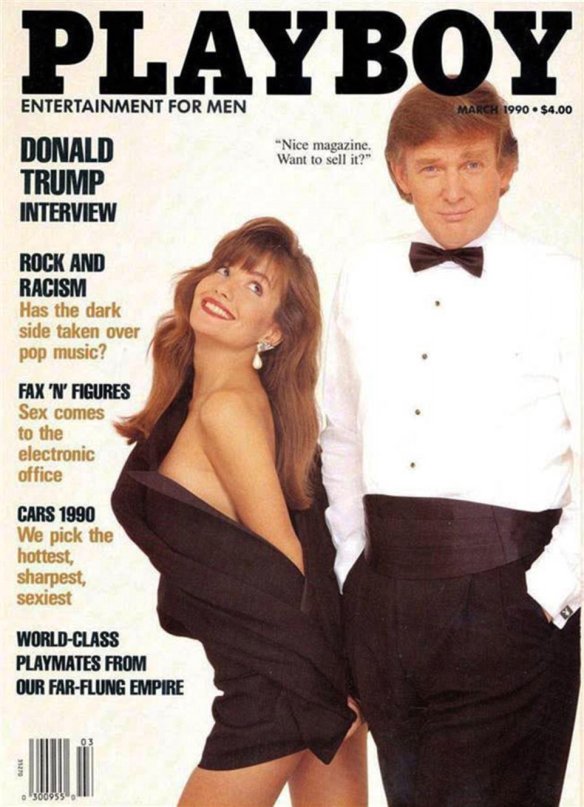
For those of us who only read the mag for the articles, let me bring this to your attention if you haven’t read it before: Donald Trump’s Playboy Interview. You can see why he’s president while also seeing that he, too, is from that era long ago before the Playboy Philosophy became the foundation and point of origin for Third Wave Feminism.
In How big a deal was the Industrial Revolution?, I looked for measures (or proxy measures) of human well-being / empowerment for which we have “decent” scholarly estimates of the global average going back thousands of years. For reasons elaborated at some length in the full report, I ended up going with:
Physical health, as measured by life expectancy at birth.
Economic well-being, as measured by GDP per capita (PPP) and percent of people living in extreme poverty.
Energy capture, in kilocalories per person per day.
Technological empowerment, as measured by war-making capacity.
Political freedom to live the kind of life one wants to live, as measured by percent of people living in a democracy.
Two million years of “human” history where the only tools were made of stone, and then a bronze age, iron age, industrial revolution and now us.
We now have morons [who call themselves “progressives”!] trying to take us back in time to just where I don’t know, perhaps 1890, maybe 1920, but certainly to a time of greater poverty and fewer chances in life. The diagram is only for us because most of those trying to kill off our carbon-based energy sources would be too thick to understand any of it since the basis for their entire ideological view of the world is a hatred for the capitalist system that has transformed the human race.
John Cochrane is to me one of the modern superstars of economics, a deep thinker with a genuine ability to see things that others miss. He is also about as well known as anyone in the profession, which is why I was surprised to find he is amongst the mortals when trying to get his papers published. This is from A paper, and publishing which is about his own trials in getting things through the publications mill.
Even at my point in life, the moment of publishing an academic paper is a one to celebrate, and a moment to reflect. . . .
Today’s thoughts, though, are about the state of academic publication.
I wrote the paper in the spring and summer of 2013, posted it to the internet, and started giving talks. Here’s the story of its publication:
September 2013. Submitted to AER; NBER and SSRN working papers issued. Blog post.
June 2014. Rejected from AER. 3 good referee reports and thoughtful editor report.
October 2014. Submit revision to QJE.
December 2014. Rejected from QJE. 3 more thoughtful referee reports and editor report.
January 2015. Submit revision to JME.
April 2016. Revise and resubmit from JME. 3 detailed referee reports and long and thoughtful editor report.
June 2016. Send revision to JME
July 2017. Accept with minor revisions from JME. Many (good) comments from editor
August 2017. Final revision to JME
September 2017. Proofs, publication online.
December 2017. Published.
This is about typical. Most of my papers are rejected at 2-3 journals before they find a home, and 3-5 years from first submission to publication is also typical. It’s typical for academic publishing in general. . . .
Once accepted, my paper sped through the JME. Another year or two in the pipeline between acceptance and publication is typical.
His conclusion is that the paper is better today than it originally was – it has now been “perfected” – but the reason for having even started the paper four years ago has disappeared. It also eats into one’s time like nothing on earth.
Such perfection comes at a big cost, in the time of editors and referees, my time, and most of all the cost that the conversation has now moved on.
The sum length of nine referee reports, four reports by three editors, is much longer than the paper. Each one did a serious job, and clearly spent at least a day or two reading the paper and writing thoughtful comments. Moreover, though the reports were excellent, past the first three they by and large made the same points. Was all this effort really worthwhile? I think below on how to economize on referee time.
What a fantastic waste of effort by so many over so long for so little. But I do like this particular suggestion because it creates an incentive structure for both the referee and the author of the original paper.
Journals should be the forum where competing views are hashed out.
They should be part of the “process of formalizing well argued different points of views — not refereeing “the truth.” We dont know the truth. But hopefully get closer to it by arguing. [In public, and in the journals] The neverending refereeing [and editing and publishing] process is shutting down the conversation.”
When I read well argued papers that I disagree with, I tend to write “I disagree with just about everything in this paper. But it’s a well-argued case for a common point of view. If my devastating report does not convince the author, the paper should be published, and I should write up my objections as a response paper.”
I take the pain of referees’ reports as just the way it is. But maybe it doesn’t have to be the way it is after all.
BTW if you are interested, here is the paper John has just published which will be online till November 9: The new-Keynesian liquidity trap. What an amazing effort for a paper I would never read under any circumstances – I could barely read the abstract. But then we would have to go into the value of most articles in most journals, and that is a very different story indeed. And if you don’t believe me, here is the abstract:
Many new-Keynesian models produce a deep recession with deflation at the zero bound. These models also make unusual policy predictions: Useless government spending, technical regress, capital destruction, and forward guidance can raise output. Moreover, these predictions are larger as prices become less sticky and as changes are expected further in the future. I show that these predictions are strongly affected by equilibrium selection. For the same interest-rate path, equilibria that bound initial jumps predict mild inflation, small output variation, negative multipliers, small effects of far-off expectations and a smooth frictionless limit. Fiscal policy considerations suggest the latter equilibria.
And now, according to John, none of it matters in the slightest anyway at all.
My friends, I’m not much of a theologian. I have my faith in God, but I struggle with it as any man might. One truth, however, I believe in totally and absolutely. Our world is a fallen world. While it is full of good things, good people, and pleasant times, such are always bounded by suffering, evil tyrants, and pain. There will be no utopia of man. Protesters out in the streets holding their signs “love wins” are delusional fools, or worse. Only God could ever make such a thing come to pass, and God is the one thing they hate the most. . . .
I don’t care what social “scientists” say about the falseness of free will. They will tell us all day that free will doesn’t exist; that choice is an illusion, that all is predetermined in probabilistic or even fatalistic fashion. We are passengers in our bodies, mere observers. No. I don’t believe this. Even if their data was true, even if every experiment they’ve conducted was accurate, they are making an assumption as to the nature of man. They assume that the flesh is all there is, and all that ever will be. That no part of us is greater; that there is no divine. . . .
Do you know why I believe the free market is superior to a command economy? Because in a command economy, those doing the commanding think they have all the answers, and they damn well don’t. In a capitalist economy, it’s every man trying to figure out his own little corner of things, trying and often failing. Some eventually figure out what people want, what they need, and deliver it. It’s trial and error as much as anything, but that’s a branch of human knowledge that is given too little attention those days. . . .
Competitive victimization is now a thing, where people compete for social status by claiming they’ve suffered more than another. People in First World countries who do this need to be committed. While some RadFem is complaining that a man whistled at her on the subway, people die in job lots all over the world. Slavery proliferates. War rages on. Genocide is a fact of life for millions.
It is proof that such people can never be made happy. Even at the pinnacle of technological society, in the richest, most peaceful places in all of human history, they complain about perceived imperfections because even still, their utopia is not here. And idiots everywhere cater to their delusional fantasies in an effort to be seen as nice. In so doing, they are throwing away everything our forebears labored, fought, and died to create for us. Look at Venezuela for a glimpse at the future that might await us, should they hold on to the levers of culture, media, and political power. . . .
One thing I know is true: since we live in a fallen world, the idea that we can nice-guy our way out of every problem is a category error. It cannot be. Anyone who demands this of us is either a tyrant, or one of their stooges, and deserves our contempt.



 Law of Markets