“Everything is what it is, and not another thing”

And what is everything about at this time and in America? It’s All About November 3. The point of the article, by Roger Kimball, whose premise I have believed since the start:

I do not believe I am violating the principle of Bishop Butler’s argument when I say that almost everything happening in our society—all the craziness, all the posturing, all the distracting noise, exaggeration, and downright mendacity—all of it is not about itself but about something else, and that something else is Donald Trump….

The unremitting, monolithic wall of noise that has been crashing against Donald Trump since election day 2016 has gotten louder and louder, more cacophonous, more furious, more irrational. Everything is what it is, and not another thing. But the one thing that takes precedence over everything now is defeating Trump, which means defeating not only Trump himself but what he stands for—those 63 million voters who put him in office, for starters.

Do enough of us get it? Will we beat back the tide? That is what is at stake and only time will tell. Read the entire article through and think about what part you ought to take yourself. It’s not long. This is how it ends.

Everything that is happening between now and November 3 is about November 3. But the fundamental choice is not really Donald Trump or Joe Biden. It is civilization and America on one side, anarchy and woke tyranny on the other. The Democrats thought they could ride the tiger to victory. Instead, they will be consumed by the monster they created but could not control.

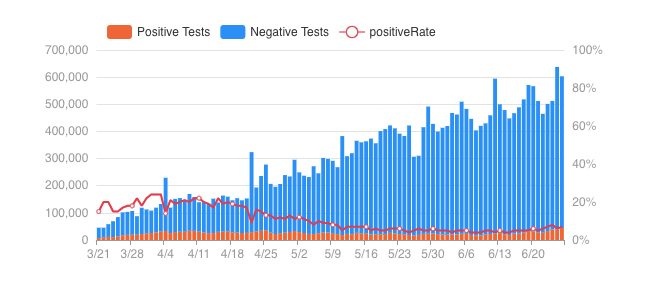
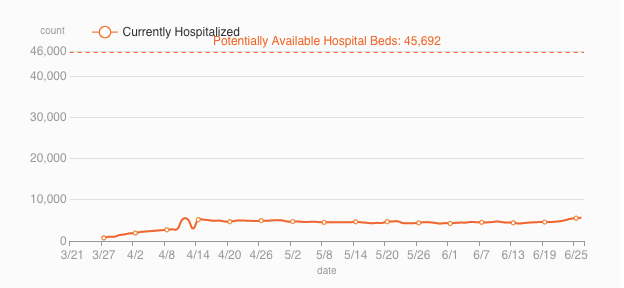
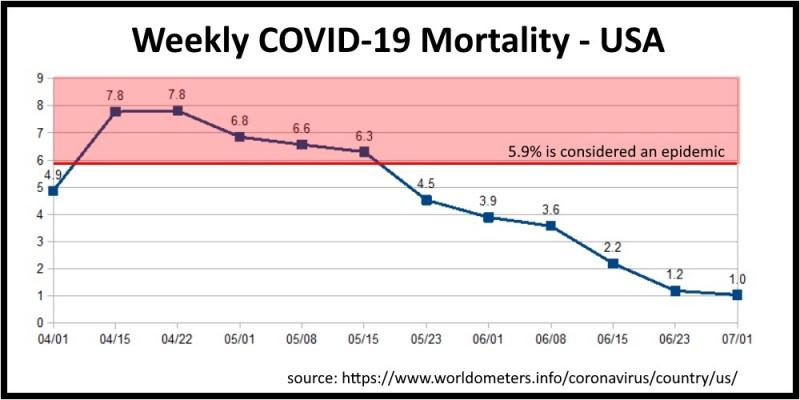
And after you read the article read the comments where you will find these charts.
Thumbnail

Thumbnail

And let me pair the above with this, via Instapundit.

WHY I SIGNED THE HARPER’S LETTER:

In 1996, the late great Iranian filmmaker Abbas Kiarostami was on stage taking questions at the Lincoln Center in New York City after the premiere of his film Through the Olive Trees, when someone asked why he had used classical music (a piece from Concerto for Oboe and Strings by Domenico Cimarosa) in a movie that was set in a small village in northern Iran? Kiarostami turned to me, his translator for the hour, and said, in his soft voice and even softer manner, “Tell him classical music has long ceased to belong to the West. It belongs to the world now.”

That exchange, the way Kiarostami disabused the audience of the notion that music knew borders or that great ideas, once invented, remained the “property” of one nation or region, was on my mind when I signed the “Letter on Justice and Open Debate,” which ran in Harper’s Magazine last Tuesday. What I saw at the heart of the text was a defense of American democracy, which no longer belongs solely to America. For every activist on the streets of Hong Kong, every feminist in the prisons of Saudi Arabia, and every interned Uighur in China, America and its democracy remain, for better or worse, the last hope. Are they naïve and misguided? Right or wrong? It does not matter. Those who are suffering under tyrannies around the world, who are trying to imagine a different future for themselves and their fellow citizens, do not dream of Moscow, Beijing, or any nation in Europe. Just as little girls in the far corners of the world who do not even speak English want to dance like Beyoncé, and just as the youth living under prohibition in the Middle East huddle together to secretly watch bootlegged copies of Hollywood films, activists everywhere look to America, and dream of this democracy.
We need a statue for George Floyd, model citizen of the left

“His legacy is the rich promise of social reform.”

And this is what we should put on the monument, all taken from Wikipedia.

Between 1997 and 2005, he was convicted of eight crimes; in 2009, he accepted a plea bargain for a 2007 aggravated robbery, serving four years in prison. In 2014, he moved to the Minneapolis area, finding work as a truck driver and a bouncer. In 2020, he lost his security job during the COVID-19 pandemic.

Floyd had five children, including two daughters (ages 6 and 22) in Houston and an adult son in Bryan, Texas. [No mention of a wife.] A former partner lives in Houston with his youngest daughter. He also had two grandchildren. GoFundMe account to defray Floyd’s funeral costs and benefit his family broke the site’s record for number of individual donations.

On May 25, 2020, Floyd was arrested after allegedly passing a counterfeit $20 bill at a grocery store in the Powderhorn Park neighborhood of Minneapolis. He died after Derek Chauvin, a white police officer, pressed his knee to Floyd’s neck for nearly eight minutes during the arrest.

The Economist, which made Floyd its June 13 cover story, said that “His legacy is the rich promise of social reform.”

AND FOR CONTRAST YOU MIGHT READ THIS: Do all black lives matter to BLM? with this as the subhead.

‘That was my son’

What bravery looks like in the modern age

It seems but only for a moment that Catallaxy has gone over to the History of Economics. And while I was contemplating all this in that little discussion on Schumpeter here and here, which had followed my own postings on Mill and MMT, this arrived in my email inbox:

The undersigned officers of the HES condemn the deaths of Black people in police custody and the systemic racism that permits political, economic, social and physical violence. We acknowledge our special responsibility, as historians of economics, to educate ourselves and others about the roles played by racism, colonialism and other forms of bias in shaping the concepts, practices, agendas and professional institutions of economists and social scientists throughout history.

The pursuit of historical knowledge leaves no room for the silencing or marginalization of any individuals or communities. Therefore, we commit ourselves to taking concrete steps to foster diversity and inclusion in our Society and its activities. We pledge to support and encourage scholarship that brings new frames of reference to the history of economics. We will listen respectfully, engage honestly and amplify the voices of those who draw our attention to the ways that biases are perpetuated in our Society and our discipline. We will build on efforts to diversify our program and awards committees and the editorial board of the Journal of the History of Economic Thought, and we will encourage journal submissions that bring new perspectives to the past.

We commit to using our journal, conferences and other resources to further these important lines of inquiry. We will encourage critical conversations about our methods and practices that open our discipline to histories that have so far been ignored. We pledge to educate ourselves and to curate critical reading lists that support inclusive curricula, and we ask other historians of economics to make a similar commitment. We look forward to the development of richer and more comprehensive histories of economics.

Marcel Boumans, HES President plus eleven others.

I would never sign such a document, but then I am off in Australia and my career is done and dusted. But just now there is this rejoinder from Stephen Meardon, who is young, in mid-career and the immediate past editor of the Journal of the History of Economic Thought. This is truly brave:

I am sure the HES Executive Committee makes this statement with no intention of taking a side in the US culture war. But that is what it does. And it does no good for the HES.

People have been killed in the custody of US police, some of them egregiously. What the killings signify in some cases is not largely contested. In others it is. What they signify on the whole is contested very much.

Systemic racism? One can make an argument. I can see it. Why is the History of Economics Society, whose mission is to advance inquiry into the named subject, advancing this extraneous and contested argument?

We have a good thing going in our society. An uncommon thing. Scholars with different ideological, methodological, and other convictions communicate openly, learn from one another, and take pleasure in each other’s company and conversation despite their disagreements. Indeed because of them. It works because the HES does not suffer from the we- all-agree syndrome that plagues other scholarly societies and US academia at large. Which happens in good part because the HES sticks to its mission.

You and I just might have an interesting conversation about systemic racism in the United States — why you think it is the salient problem, why I think not. The kind of conversation that has been commonplace in HES coffee breaks and serendipitous hallway encounters for the couple decades and more that I’ve been involved. That conversation will be less common after the HES has decided which of us is right. Try thinking how frequently and freely you’ve heard such a conversation on any US university campus of late.

The scope of permissible conversation in US academic life is narrowing. If there is a salient social problem in the United States that relates to the mission of the HES, that’s it.

The HES has been an academic oasis where the range of values and scope of conversation is great. I hope the HES Exec. will take care in the future to preserve it.

Stephen Meardon
Bowdoin College

A brave brave statement which I could not agree with more.

I HAVE NOW WRITTEN TO THE SOCIETY TO SUPPORT STEVE MEARDON: This is what I wrote:

I would just like to add my own words of support to Stephen Meardon’s comment.

In the modern world as it now is, these are astonishingly brave words.

I agree with everything he has said.

Steve Kates
RMIT University
Melbourne Australia

Kristi Noem for president (in 2024)

And Tom Cotton for VP. Watch it through. If you start, you will get to the end, and it is half an hour long.

She gets it in a way almost no one else does, other than Donald Trump. And the “it” that she gets are the principles of both political freedom and economic freedom and how these should be melded into dealing with the Covid-1984, What’s more, with her you get Donald and Melania all in a single package.

Watch the vid and then check out its source: POSTED ON JULY 8, 2020 BY JOHN HINDERAKER IN CONSERVATISM, CORONAVIRUS, REPUBLICANS CHECK OUT ONE OF THE GOP’S BRIGHTEST STARS.

Copy to Scott Morrison, Daniel Andrews and especially Michael O’Brien (who?). O’Brien especially needs to learn the principles necessary to make the case against Dangerous Dan. As for Scott, see CL on Speak for Yourself.

Dealing with mainstream cults

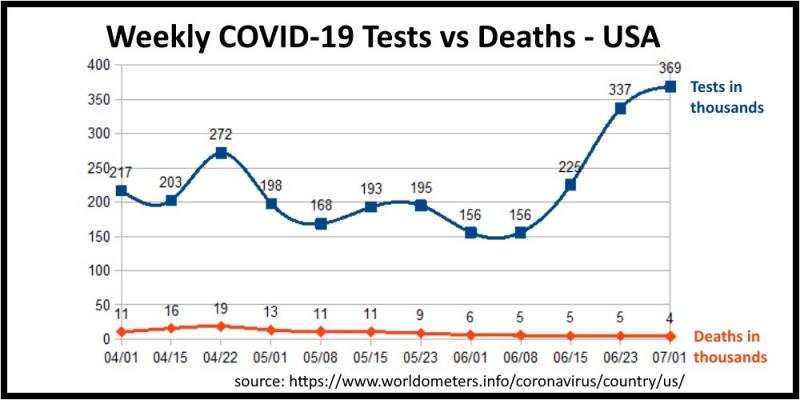
Although the article starts with these two charts, it is not about the Chinese Flu but about why people believe things in spite of all the evidence to show they are utterly untrue. The title is Why Facts Don’t Matter to People. That is, why it is near impossible to get those who seem able to believe ten impossible things before breakfast to change their minds. It is like dealing with members of a cult, except they are now the mainstream.

Here’s his point. “Engage them in conversation”, he suggests, meaning getting others – you know, like people who want to blow up power stations and defund the police – to explain their views while listening sympathetically to yours.

If you’re wondering why so many people don’t see the world the way you do, engage them in conversation. You will find they are as well-intentioned as you are, but they are looking in a different direction. Beneath their opinions and fears, beliefs are shaping how they see the world.

Because of different beliefs, your villains may be their heroes. They may look at the world of effects while you are looking at causes. They’re hoping a better leader comes to power, while you’re considering how the presidency became so powerful and destructive.

Until their beliefs change, they will never consider how politicians and experts with too much power turned a pandemic into a catastrophe. As Einstein put it, “Whether you can observe a thing or not depends on the theory which you use. It is theory which decides what can be observed.”

The “clear guidance” politicians claim to dispense and “the truth” my friend wants to learn are not rooted in the principles of human flourishing. My friend is waiting for a government official to blow the all-clear whistle. My friend doesn’t want to believe experts are as fallible as he is, and that the prevailing scientific consensus may be false. For me to explain to him why “defining risk is an exercise in power” would bring a blank stare of disbelief.

I don’t think the author has an answer. He adds this at the end which only emphasises how deep the problem is.

Read Hayek’s famous observation about order, replacing the words “that in complex conditions” with the words “during a pandemic:” “To the naive mind that conceives of order only as the product of deliberate arrangement, it may seem absurd that in complex conditions [during a pandemic], order and adaptation to the unknown can be achieved more effectively by decentralizing decisions.”

With that simple substitution, we expose a core belief shared by many Americans. They believe centralizing decision-making is effective in unknown, complex conditions and they want their politicians to do something.

Well, that’s the problem right there. No one any longer wants governments to do nothing, even if that really would be the best thing to do. We are therefore falling towards a totalitarian state. One day no one may even notice our freedoms have gone, since those who grow up in this new world may never have known what freedom is.

And there is this comment I really liked:

People like that exist because reality doesn’t kick them in the teeth hard enough.

Imagine how life has been through most of human history. Life was hard. Being wrong could get you dead, and in a hurry. People who were prone to believing nonsense got that tendency beaten out of them.

Today the consequences for being wrong are extraordinarily mild, if they ever arrive at all. People can believe all sorts of false and ridiculous things without ever having to worry that they’ll pay a price for doing so, or that they will suffer as a result.

That’s where leftists come from.

And this is where they end up.

Welcome to Idiocracy

There are 6.5 million people living in Victoria.

If 10% of the population had the CV-19, that would be 650,000 people.

If 1% of the population had the CV-19, that would be 65,000 people.

If 0.1% of the population had the CV-19, that would be 6,500 people. That is one person in 1000.

If 0.01% of the population had the CV-19, that would be 650 people. That is one person in 10,000.

The actual number of people in Victoria who now have the CV-19 is now 121. That is 0.002% of the population, one person in 50,000.

The trouble is we may be living in an Idiocracy which is why Daniel Andrews is premier. What is an idiocracy?

A dystopian world where mankind has embraced anti-intellectualism, and society is devoid of traits such as intellectual curiosity, social responsibility, justice, and human rights.

And that’s apparently just how we like it. See the trailer for Idiocracy and then think about modern Seattle. Or perhaps we could just look around at our own willingness to lock ourselves up in our own self-constructed modern penal colony (if you will pardon the expression).

And it may not just be us. This is from the US: The blind continuing panic over COVID-19.

With totalitarian Democratically-controlled cities and states across the nation now imposing odious rules requiring the wearing of masks at all times, based entirely on emotion and symbolism with absolutely no reliance on the actual science that says masks are not only useless against a virus like COVID-19, they could be medically harmful to the user, I think it is time to do a little science journalism and illustrate again the absurdity of this situation.

First, the Wuhan flu epidemic is clearly ending, as shown by the graph above. This graph, based on numbers from this site, shows that the disease reached its peak sometime near the start of May. Since then its threat has been declining steadily, until it reached today the lowest number of deaths since March, only 285.

Right now the chances of you catching COVID-19 and dying from it are practically nil, even if you live in densely populated states like New York, where only 14 people died yesterday from the virus.

Second, as predicted by some scientists, the lockdowns, social distancing, and silly symbolic mask use did nothing to stretch out the epidemic or flatten the curve. These scientists, ignored by politicians and the mainstream press, had predicted it would be a seasonal flu, dying out come summer, and that it would last from six to eight weeks, as it has done in every country where it has arrived, regardless of any government action.

That is exactly what the Wuhan flu has done. After eight weeks it is now fading away, like all such seasonal diseases.

Third, the numbers on this graph are certainly inflated. The total deaths in the U.S. assigned to the Wuhan flu as of today is just over 114,000. Based on numerous reports (hereherehereherehereherehere, and here), we can estimate that this number is inflated from 25% o 50%.

Personally, it’s nice to know that the Middle Ages have not gone away and we are only moments away from burning our first witches. Of course, we have better lighting and heating, but really, given everything you see around you, how long do you think any of that is going to last?

Conversations with Stephen Hicks on Postmodernism and the Nazis

Conversations with Stephen Hicks on Postmodernism and Nazism. This is the note that came with the video.

It was a great pleasure to facilitate this Conversations (below) between Prof. Stephen Hicks and John Anderson AO back in March. I was in earshot during filming but didn’t hear a thing due to dealing with the wu-flu conundrum. It’s rather exceptional!

Please also read and share my latest article: Don’t Mention This Article on Your Smartphone

Don’t forget to register your interest in Climate & Change: Cooling the climate chaos with Dr. Patrick Moore by filling in this very short RSVP form and please help spread the word of this important event. Dates still a work in progress.

Hope everyone is doing well and managing to press on!

A warm regards from a chilly Melbourne,

Sam McClelland

Director

Parsing “Black Lives Matter”

We have heard the phrase for quite some time, but to tell the truth I still don’t know what the words mean, although I may be the only one who has this difficulty.

I don’t wish to be ultra-metaphysical about it, but while I can understand each of the words on their own, in combination very little comes clear.

What, for example, is a “black life”? I can see that “black” may be referring to a skin colour, but I don’t see how that works in combination with the word “lives”. Do lives come in colours? Are there any other colours in which lives come? What specifically is a black life? How does a black life differ from a life of another colour? Comes to that, what other colours do lives come in?

OK, so suppose we can find a definition of this entity described as “black lives” how do we interpret the word “matter”? What does it mean to matter? As a verb, “matter” is defined as “to be important or significant”. Fair enough, but in what way is that so? A life which is coloured black is said to be “important or significant”. To whom is it important or significant? To whom should it be important or significant? Not instantaneously clear. To an individual? Which individual? To anyone else? To whom? In what way should it matter?

According to wikipedia:

Black Lives Matter (BLM) is an international activist movement, originating in the African-American community, that campaigns against violence and systemic racism towards black people.

Turns out that the words should not be divided but only read together and as such it is an “activist movement”. So we have this:

Activism consists of efforts to promote, impede, direct, or intervene in social, political, economic, or environmental reform with the desire to make changes in society.

Let us therefore bring “movement” into play.

A political movement is a collective attempt by a group of people to change government policy or society with mainly political goals. Political movements are usually in opposition to an element of the status quo and are often associated with a certain ideology.

Black Lives Matter is therefore an attempt by a group of people (and not necessarily just black people) to change government policy or society with mainly political goals. It is thus a lobby group.

What is its program? What are its aim? What does it seek from others? What legislation is sought? How would the world be different if they achieved their goals?