The return of the Eureka Stockade

I don’t know if anyone else has commented on this, but I find it interesting that this protest was to be in Ballarat, the same city as The Eureka Stockade. I no longer expect the same result if it goes to court as the first time round, nor the same reaction of the people of Victoria, since we no longer seem to have the same kind of reaction to oppressive authority we were once famous for.

Thousands of Melbourne residents celebrated the acquittal of the rebels, and paraded them through the streets upon their release from the Victorian Supreme Court.

Of course, the miners were part of a tax revolt. The Covid adventure has been presented as a freebie to save us from a virtually non-existent death threat. You want to see what’s coming. This was the lead story at the Oz today: Josh Frydenberg’s plan to fight back from Covid collapse. The first para should strike terror into the hearts of everyone, but it won’t:

Josh Frydenberg is preparing a five-year plan to create millions of jobs and reignite business investment, to anchor Australia’s recovery from the most severe recession since World War II.

Has the Dan Andrews economy gone national? Hope not, but maybe.

The chicken little virus

New CDC report says 94% of COVID deaths had underlying conditions, only 6% died from COVID alone. Here is the entire article although you can find more data at the link.

The Centers for Disease Control and Prevention has issued a new report detailing how many COVID-19 deaths in America also involved other underlying health conditions.

According to the report, only 6% of the COVID-19 deaths in the U.S. list COVID-19 as the only cause of death. 94% of COVID-19 deaths involved at least one other underlying health condition, and on average involved “2.6 additional conditions or causes of death.”

The new report on the CDC’s website states:

Table 3 shows the types of health conditions and contributing causes mentioned in conjunction with deaths involving coronavirus disease 2019 (COVID-19). For 6% of the deaths, COVID-19 was the only cause mentioned. For deaths with conditions or causes in addition to COVID-19, on average, there were 2.6 additional conditions or causes per death. The number of deaths with each condition or cause is shown for all deaths and by age groups.

The CDC listed the top underlying medical conditions linked to coronavirus deaths as:

  • Influenza and pneumonia
  • Respiratory failure
  • Hypertensive disease
  • Diabetes
  • Vascular and unspecified dementia
  • Cardiac Arrest
  • Heart failure
  • Renal failure
  • Intentional and unintentional injury, poisoning and other adverse events
  • Other medical conditions

According to the CDC, 9,683 people have died in the United States having only COVID-19 listed on their death certificate as cause of death. At the time the CDC report was released, 161,392 deaths had been attributed to COVID-19 in the U.S.


You can also read more on this here: SHOCK REPORT: This Week CDC Quietly Updated COVID-19 Numbers – Only 9,210 Americans Died From COVID-19 Alone – Rest Had Different Other Serious Illnesses, and here: Remember that thing called the Covid Pandemic? You just won’t read it in The Age or see it mentioned on our ABC.

Sutton death

Let’s begin with the obvious: a well-known side effect of Covid is death. So what are we to make of this: Careful, medicines can also be poisons?

Hydroxychloroquine has the well-known side effects of heart arrhythmias and the risk of blindness with prolonged use.

And to whom do we owe this useless bit of knowledge. No one seems to want to take full responsibility.

This opinion was written by Alastair Stewart, director of the ARC Centre for Personalised Therapeutics Technologies, in collaboration with his University of Melbourne colleagues Phillip Reece, honorary senior fellow, department of pharmacology and therapeutics; David Story, deputy director, Centre for Integrated Critical Care; and Megan Munsie, deputy director, Centre for Stem Cell Systems.

So here is the first of the comments listed according to best liked:

IS HYDROXCHLOROQUINE EFFECTIVE FOR TREATING COVID ?

Listen to Dr. Harvey Risch Professor of Epidemiology in the Department of Epidemiology and Public Health at Yale ……

‘’I conclude the evidence is overwhelming, there is no question that for the people who need to be treated and are treated early, it has a very substantial benefit in reducing risk of hospitalisation or mortality.

‘’And there’s been a massive disinformation campaign that stretches from government to the media that’s either suppressing this message or id countering it with a false message.

‘’I’m not an expert in the reasons why that’s happening other than just observing it. But I am an expert in the science, and I can tell you the science is all one-side sided. ‘’In fact the science is so one-sided in supporting this result that it’s stronger than anything else I’ve ever studied in my entire career.

‘’The evidence in favour of Hydroxychloroquine benefit in high risk patients treated early as out-patients is stronger than anything else I’ve ever studied. So scientifically there is no question whatsoever ever.’’

But what would this Professor know ?

Here’s his Education & Training;
PhD : University of Chicago (1980)
MD : University of California, San Diego (1976)
BS : California Institute of Technology (1972)
Postdoctoral Fellow : School of Public Health and Community Medicine, University of Washington

Suppose we just ask those elderly folks lying sick in hospital whether they would like to try the HCQ procedure.

Meanwhile it has occurred to me that too much focus has been put on the rank incompetence of Daniel Andrews. He is after all a man with limited intelligence and no expertise in virtually everything he legislates about. It is this cypher Brett Sutton. What expertise does he have in creating such massive damage to the people of Victoria? He needs to take more of the blame for the idiotic policies of Victoria. There are lots of considerations that go into making a policy and focusing only on the disease and ignoring everything else is idiocy on stilts.

“Give me your four year olds and in a generation I will build a socialist state”

An oldie but a baddie.

Brought to mind by this: The Challenge of Marxism. It is about the kinds of people I meet all the time who are taken in by the many radicals who reach positions of political power by playing on the juvenile sense of injustice that is promoted everywhere. One child drowns and Europe opens its borders to millions of illegal migrants with an entirely different cultural background. We have a mild epidemic and we throw away our rights and personal freedoms. People resent that some people become wealthier than others so we concede this is a moral failing of society and try to reduce such inequalities. And since the left reflexively lies in every instance in which it believes there is some advantage in lying, they gain political ground year by year. And where he ends is in arguing that the liberal left – the ones who are not totalitarians at heart, end up siding with the Marxists because they have spent years in conflict with conservatives, who in fact are the last group who remain attached to “liberal” values. Their attitude of no enemies to the left will do us all over.

I think he is right in much of what he says. He may even be right in identifying the only solution. But if he is right about the nature of the solution, then we are heading for the deluge, and it won’t be far off. The inane inability for so many to recognise the evil at the core of Marxism, whether in Venezuela or Seattle, will be the death of us. The article opens with this which I have slightly edited so that it applies more universally than just to the US of the present moment.

For a generation after the fall of the Berlin Wall in 1989, most Americans and Europeans regarded Marxism as an enemy that had been defeated once and for all. But they were wrong. A mere 30 years later, Marxism is back, and making an astonishingly successful bid to seize control of the most important … media companies, universities and schools, major corporations and philanthropic organizations, and even the courts, the government bureaucracy, and some churches…. It appears as though the liberal custodians of many of these institutions—from the New York Times to Princeton University—have despaired of regaining control of them, and are instead adopting a policy of accommodation. That is, they are attempting to appease their Marxist employees by giving in to some of their demands in the hope of not being swept away entirely.

We don’t know what will happen for certain. But based on the experience of recent years, we can venture a pretty good guess. Institutional liberalism lacks the resources to contend with this threat. Liberalism is being expelled from its former strongholds, and the hegemony of liberal ideas, as we have known it since the 1960s, will end. Anti-Marxist liberals are about to find themselves in much the same situation that has characterized conservatives, nationalists, and Christians for some time now: They are about to find themselves in the opposition.

This means that some brave liberals will soon be waging war on the very institutions they so recently controlled. They will try to build up alternative educational and media platforms in the shadow of the prestigious, wealthy, powerful institutions they have lost. Meanwhile, others will continue to work in the mainstream media, universities, tech companies, philanthropies, and government bureaucracy, learning to keep their liberalism to themselves and to let their colleagues believe that they too are Marxists—just as many conservatives learned long ago how to keep their conservatism to themselves and let their colleagues believe they are liberals.

You should read it all, but I will sketch out through a series of quotes what’s there so you can see where the argument is going.

Marx’s principal insight is the recognition that the categories liberals use to construct their theory of political reality (liberty, equality, rights, and consent) are insufficient for understanding the political domain. They are insufficient because the liberal picture of the political world leaves out two phenomena that are, according to Marx, absolutely central to human political experience: The fact that people invariably form cohesive classes or groups; and the fact that these classes or groups invariably oppress or exploit one another, with the state itself functioning as an instrument of the oppressor class….

This is the principal reason that Marxist ideas are so attractive. In every society, there will always be plenty of people who have reason to feel they’ve been oppressed or exploited. Some of these claims will be worthy of remedy and some less so. But virtually all of them are susceptible to a Marxist interpretation, which shows how they result from systematic oppression by the dominant classes, and justifies responding with outrage and violence. And those who are troubled by such apparent oppression will frequently find themselves at home among the Marxists….

Liberalism creates Marxists. Like the sorcerer’s apprentice, it constantly calls into being individuals who exercise reason, identify instances of unfreedom and inequality in society, and conclude from this that they (or others) are oppressed and that a revolutionary reconstitution of society is necessary to eliminate the oppression….

The conflict between liberalism and its Marxist critics is one between a dominant class or group wishing to conserve its traditions (liberals), and a revolutionary group (Marxists) combining criticial reasoning with a willingness to jettison all inherited constraints to overthrow these traditions….

Simply put, the Marxist framework and democratic political theory are opposed to one another in principle. A Marxist cannot grant legitimacy to liberal or conservative points of view without giving up the heart of Marxist theory, which is that these points of view are inextricably bound up with systematic injustice and must be overthrown, by violence if necessary….

The Marxists who have seized control of the means of producing and disseminating ideas cannot, without betraying their cause, confer legitimacy on any conservative government. And they cannot grant legitimacy to any form of liberalism that is not supine before them. This “resistance” is not going to end. It is just beginning….

I know that many liberals are confused, and that they still suppose there are various alternatives before them. But it isn’t true. At this point, most of the alternatives that existed a few years ago are gone. Liberals will have to choose between two alternatives: either they will submit to the Marxists, and help them bring democracy in America to an end. Or they will assemble a pro-democracy alliance with conservatives. There aren’t any other choices.

There is no one more deaf to the views of the conservative centre than the useful idiots which are only growing in number, and if anything becoming more idiotic by the year.

HCQ – an immorality tale

A fascinating discussion of the politicisation of HCQ with this as part of a very long story told here: Hydroxychloroquine: A Morality Tale by Dr Norman Doige.

No one wants to enter cancel-culture territory but this brings him close. He nevertheless describes what happens after Trump stated that HCQ might be beneficial in treating Covid.

Trump’s political base cheered for HCQ and his opponents booed and accused him of practicing medicine without a license—and began dredging up any evidence, or “experts,” they could find, who might emphasize that HCQ was dangerous, or useless, or both, and thus they responded to his hyperbole with their own, and then some. As Risch observed in Newsweek, for many HCQ became “viewed as a marker of political identity, on both sides of the political spectrum.”

CNN began a nonstop campaign criticizing the safety of the drug, holding Trump responsible for three people who overdosed on it in Nigeria. Rivals went after Raoult, now tainted because Trump had mentioned his work. A New York Times profile depicted the scholar-physician as a Trump doppelganger, with his, “funny hair” and, being a man “who thinks almost everyone else is stupid,” who “is beloved by the angry and the conspiracy-minded.” Headlines such as, “Why does Trump call an 86-year-old unproven drug a game-changer against coronavirus?” were common. Stories began equating HCQ with Trump (“Trump’s drug”) and emphasized not only that it was dangerous, but that HCQ was old. And old was definitely not good. The implication was that far better than old was some new drug—that wasn’t yet invented, never mind tested—that might be in the utopian “pipeline” to the always better medical future.

What the media, and public health officials, did not report at the time was how poor people’s chances were should they go to hospital and need intensive care for the illness. Hospitals were finding that 80% of people put on mechanical ventilators died. All the commentators who railed that HCQ was “unproven” because there had been no randomized control trials (RCTs) didn’t mention that standard ventilation treatment for COVID-19, which had become treatment-as-usual overnight for severe cases, had no RCTs supporting it either. There was a double standard as far as HCQ was concerned.

Our poor protagonist, HCQ, could now go nowhere in a hyperpoliticized America without being hectored and called “Trump’s drug.” In the media, HCQ was now “touted,” “hyped,” and not “recommended” or “prescribed,” by the physicians who advocated for it. If someone took the do-it-yourself approach, as in the sad story of the Arizona man who, terrified out of his wits of the coronavirus, along with his wife, drank fish tank cleaner mixed with soda, because she had noticed it had among its ingredients, “chloroquine phosphate.” His death was blamed on “a chemical that has been hailed recently by President Trump …”

This was all happening at a moment when clinicians working 12- to 15-hour shifts, seven days a week with COVID patients, probably had more knowledge of the disease and its treatment than any studies could yet provide. During this first-wave HCQ-chastisement by the American media, a survey study of 6,200 frontline physicians in 30 countries showed that, worldwide, HCQ was chosen by the physicians, from among 15 options, as what they thought was the most effective treatment for patients (37% chose HCQ). The other drug the physicians thought highly of was azithromycin.

But in the United States, HCQ was embroiled in the Republican-Democratic rivalry. On March 12, Michigan State Representative Karen Whitsett, a Democrat representing the 9th Michigan House District in Detroit, went into quarantine for cornavirus symptoms, and by March 31 got her test results and was diagnosed with such a serious case of COVID-19 that she thought she was dying. She and her physician, Dr. Mohammed Arsiwala, sought permission to use HCQ but could not get it, because the Michigan Department of Licensing and Regulatory Affairs, under Democratic Governor Gretchen Whitmer, had issued an order prohibiting the use of HCQ for COVID-19.

The politics of HCQ are a tale of such sordid malevolence (see Daniel Andrews for a local example). Read the article if you have the time. As I say, it’s long, but this is what you find at the end.

A public health establishment, showing extraordinary risk aversion to medications and treatments that are extremely well-known, and had been used by billions, suddenly throwing caution to the wind and endorsing the roll-out of treatments that are entirely novel—and about which we literally can’t possibly know anything, as regards to their long-term effects. Their manufacturers know this well themselves, which is why they have aimed for, insisted on, and have already been granted indemnification—guaranteed, by those same public health officials and government that they will not be held legally accountable should their product cause injury.

From unheard of extremes of caution and “unwishful thinking,” to unheard of extremes of risk-taking, and recklessly wishful thinking, this double standard, this about-face, is not happening because this issue of public safety is really so complex a problem that only our experts can understand it; it is happening because there is, right now, a much bigger problem: with our experts, and with the institutions that we had trusted to help solve our most pressing scientific and medical problems. Unless these are attended to, HCQ won’t be remembered simply as that major medical issue that no one could agree on, and which left overwhelming controversy, confusion, and possibly unnecessary deaths of tens of thousands in its wake; it will be one of many in a chain of such disasters.

You do know it’s almost entirely about Trump and about almost nothing else.

Jack Cashill is an author you must read

The interview is with Jack Cashill, an author I read everything that he writes, both his books and every post he puts together, usually at The American Thinker. This is his website: cashill.com. Let me here discuss his latest book. Turns out that Obama is no better at writing than he was at governing. A fantastic fraud in every way, which the left insisted on electing and then re-electing. The same effort is now being made with another fraud, Kamala Harris, this time hopefully with less success. Choosing political leaders according to the colour of their skin is a very very stupid idea.

And that Obama could not write is no minor issue since he was elected more or less on his autobiography, supposedly personally detailed in his Dreams from My Father. The man who exposed all of this was Jack Cashill in his Deconstructing Obama.

How did Barack Obama, a man who had previously written little else, suddenly pen what Time magazine calls “the best-written memoir ever produced by an American politician”? Here, in Deconstructing Obama, political scholar and author Jack Cashill analyzes and pieces together Obama’s statements about his life to get at the truth behind the man.

Cashill’s “eureka” moment came when he realized that the structure of Dreams of My Father loosely mirrors that of Homer’s Odyssey. From the moment of that revelation, Cashill researched, read, and examined interviews, writings, and statements about the President’s life story, focusing especially on a poem written when Obama was nineteen. According to the facts, in conjunction with Obama’s statements and writings, Cashill’s conclusion is that the stories don’t add up—and for the nearly 2 million people who read and accepted the story about Obama’s life—the truth is that it may be more myth than history.

That is putting it mildly. With Obama, there is no there there. Cashill has returned to the scene of Obama’s literary crime of the century discussing the memoir Obama is owed to his publisher, now at least three years late. This one even involves Donald Trump who apparently had seen through Obama’s literary pretensions right from the start: Why the Media Chose Not to Hear When Trump Called Obama a Literary Fraud. Here are the last paras, but read it all since it’s short.

The media wanted nothing to do with the idea that Ayers was Obama’s muse, no matter who made the claim.  At least fifty publications reviewed [Donald Trump’s] book, and not a one mentioned the six pages he spent on the book’s most newsworthy revelation.

Relentless Obama-defender Chris Matthews interviewed Andersen on MSNBC’s Hardball and did not address the authorship issue. Said Matthews at the end of the interview, “You’re amazing, successful guy.  You have a winning streak here.”  If Matthews did not read the book, which is likely, someone on his staff surely must have but chose not to notice the damning Ayers revelation.

To accuse Obama of being a literary fraud opens one up to the charge of racism. This I can verify from experience. There is only one reason, then, that the mainstream media passed on the opportunity to call out Trump: the deep-seated fear that he was right.

Trump was right. If you count on the media to understand what is going on, you will hardly know a thing about the times in which you live.

I also wrote to Cashill in 2012 in which I discusses something else I learned from reading his book:

For what it’s worth, your Deconstructing Obama was the only book I ever read on Kindle which cured me for life since you cannot go back to find annotated passages the way you can with a book.

But in which every way you can, I could not recommend reading Jack Cashill more. He gets to the heart of so much that others just leave behind and provides insights you will find nowhere else.

It is what it is

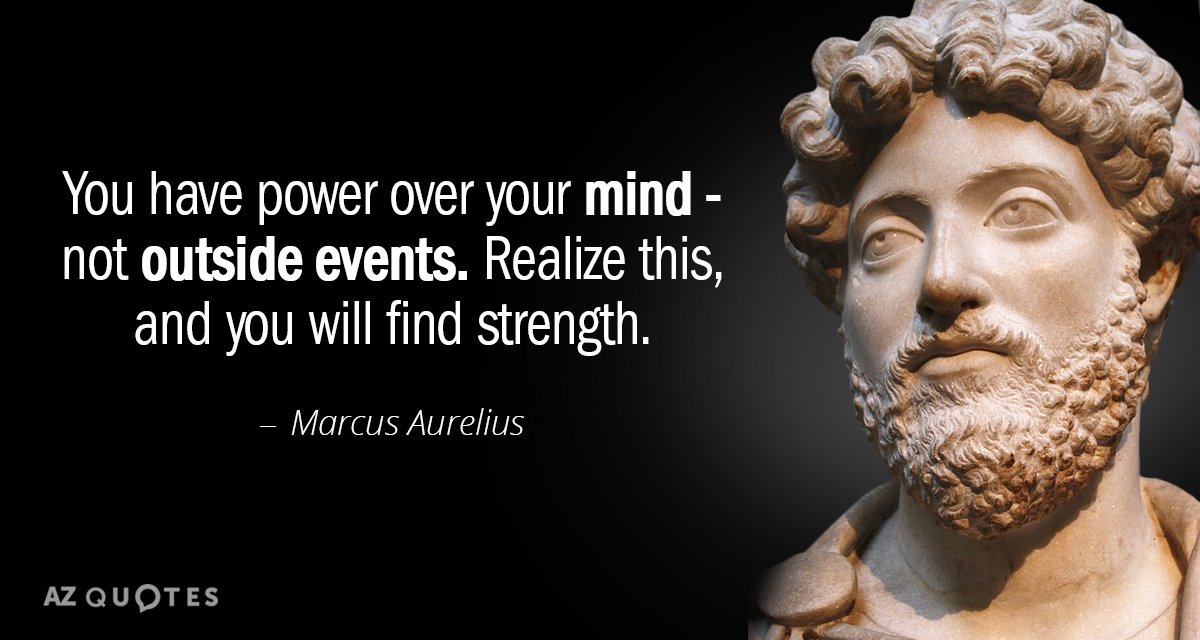
TOP 25 QUOTES BY MARCUS AURELIUS (of 777) | A-Z Quotes

A comment in response to my post on The Australian is now the print version of the ABC.

I disagree Steve. The Australian is by the far the most balanced newspaper in Australia. And I saw the Swan interview of Trump – I think Trump looked like an idiot. He really has lost the plot; moreover he has destroyed the Republican brand and therefore has really been the Manchurian Candidate – the Democrat sleeper agent to tear the GOP apart. This he has done an amazing job – basically he will lead to a left wing Democratic Presidency with a Democrat majority in both the HoR and the Senate. I can’t believe you can support this man. The response to Covid has been appalling and the data shows clearly the excess deaths due to the incompetence of the Trump administration. We have had four years of idiocy and he has achieved none of the promises, which is not surprising since he stood for nothing and has no substance. All those people who wanted to take down the elites in Washington have only managed to cement them in more power thanks to their support of Trump.

You may take this comment as you find it. So far as The Oz being the most balanced of the papers, let me note that this article was in The Age: The economic crisis is still to come, and was written by our very own Sinclair Davidson. As for the C&P, this is the most “cutting edge” of the comments:

When asked, Donald ducked:

Trump: Well what’s your definition of control? Under the circumstances, right now, I think it’s under control.

Swan: How? A thousand Americans are dying a day.

Trump: They are dying, that’s true. And it is what it is.

The Tonight Show’s Jimmy Fallon:

It is what it is? You’re the President of the United States. You’re not Paulie Walnuts delivering bad news to Tony Soprano! “Sorry T, things got a little messy and, uh, it is what it is, capiche?”

I suppose what these fools were looking for is an approach along the lines taken by Daniel Andrews, such as by the Governor of New York, who sent individuals who were diagnosed with the coronavirus back into their nursing homes. But the real point is first, no one is arguing against what Trump did do, since he was early on the scene and attempted against all the opposition the Democrats could muster, to stop everything he tried to do. They were the ones inviting people to come along to Chinese New Year celebrations in February or to BLM marches just last month.

But the second part I am astonished about is that Trump actually said this:

“They are dying, that’s true. And it is what it is.”

This is a comment worthy of Marcus Aurelius. Stoicism in the face of adversity is all that can sustain us.

AND LET ME CONTINUE: I wish to continue with a bit of further research since posting. On Wikipedia, I confess, but since none of this offends modern political agendas, we can probably rely on what I found.

Marcus Aurelius was a Roman emperor from 161 to 180 which happened to coincide with the Antonine Plague.

The Antonine Plague of 165 to 180 AD, also known as the Plague of Galen (after Galen, the physician who described it), was an ancient pandemic brought to the Roman Empire by troops who were returning from campaigns in the Near East. Scholars have suspected it to have been either smallpox  or measles. The plague may have claimed the life of a Roman emperorLucius Verus, who died in 169 and was the co-regent of Marcus Aurelius Antoninus, whose family name, Antoninus, has become associated with the pandemic.

Ancient sources agree that the plague appeared first during the Roman siege of the Mesopotamian city Seleucia in the winter of 165–166. Ammianus Marcellinus reported that the plague spread to Gaul and to the legions along the RhineEutropius stated that a large population died throughout the empire. According to the contemporary Roman historian Cassius Dio, the disease broke out again nine years later in 189 AD and caused up to 2,000 deaths a day in Rome, one quarter of those who were affected. The total death count has been estimated at 5 million, and the disease killed as much as one third of the population in some areas and devastated the Roman army.

Australian sinologist and historian Rafe de Crespigny speculates that the plague may have also broken out in Eastern Han China before 166 because of notices of plagues in Chinese records. The plague affected Roman culture and literature and may have severely affected Indo-Roman trade relations in the Indian Ocean.

A number of interesting parallels there, I’m afraid. There is then this on Stoicism:

Stoicism is a school of Hellenistic philosophy founded by Zeno of Citium in Athens in the early 3rd century BC…. According to its teachings, as social beings, the path to eudaimonia (happiness, or blessedness) is found in accepting the moment as it presents itself, by not allowing oneself to be controlled by the desire for pleasure or fear of pain, by using one’s mind to understand the world and to do one’s part in nature’s plan, and by working together and treating others fairly and justly.

But beyond that, there is Modern Stoicism where we find this:

 “Following nature means following the facts. It means getting the facts about the physical and social world we inhabit, and the facts about our situation in it […] before we deliberate about normative matters. It means facing those facts – accepting them for exactly what they are, no more and no less – before we draw normative conclusions from them. It means doing ethics from the facts constructing normative propositions a posteriori. It means adjusting those normative propositions to fit changes in the facts, and accepting those adjustments for exactly what they are, no more and no less. And it means living within the facts – within the realm of actual rather than hypothetical norm.” Ethical reasoning of a Stoic “cannot begin until all relevant description, representation, and prediction are in hand, […] – until, let us say, the empirical work is done.”

Or to quote another modern political philosopher, “It is as it is”, which will be the only approach for people such as ourselves for getting on with life should Joe Biden become President.

Say what you like 2+2 really is 4

It is as much a puzzle as an irritation that no one on the left ever wishes to discuss any of their absolute conclusions about the world, whether it is socialism, open borders, global warming or the deadly potential of the CoronaV. Since each of these seems empty and without merit, there is no doubt that in entering any of these topics it is the start of a discussion about the relative merits of our different points of view. Since all of these issues seem clear as a bell to me, as they also seem to be to them, you would think that it might at least lead to each of us clarifying our own points of view for ourselves. At least I might learn something, and you never know – actually you do know – I might change my mind. Still, there was a time when discussion was just interesting in and for itself.

The reality now is and has been for some time that no one is interested in engaging. The last time I had such a discussion was over why this woman, who was a guest in our house, was voting for Obama over Romney (ie 2012). We have virtually not spoken to each other since, nor to her husband. And all she would say is that since she is not an American, she doesn’t vote in the American election which was insulting and stupid and of course, since neither do I, was of no relevance to the question why she would prefer Obama to Romney. Since then, there is no one who has been open to what used to be part of life’s entertainment. Discussing with others our particular political points of view.

So perhaps this article by James Lindsay will provide the answer: No, the Woke Won’t Debate You. Here’s Why. All should be read, but here is a part of it.

I often get asked specifically if there’s some paper or book out there in the Critical Social Justice literature that prohibits or discourages debate and conversation with people who don’t already agree with them. I honestly don’t know. I’ve looked in a cursory fashion and haven’t found one, but, then, Critical Social Justice scholars are also rather incredibly prolific (an undeniable benefit of having no rigorous standards to meet and a surplus of ideological zeal, as it happens). That is to say, there’s a lot of Woke literature out there, and maybe someone has explained it very clearly and at length with a lot of specificity, but if so, I haven’t seen it. So far as I know, there’s not some specific piece of scholarship that closes the Woke off to debate, like a single paper or book explaining why they don’t do it. It’s just part of the Woke mindset not to do it, and the view of the world that informs that mindset can be read throughout their scholarship.

To me, the answer is that the modern left has abandoned argument because they cannot find one that will even begin to convince anyone else. They might end up winning the political wars within our own societies but they will only surrender the gates to others who will enslave them.

Lindsay’s argument is also summarised here by John Sexton. I will merely repeat two quotes from Lindsay which are well selected. First

There are a number of points within Critical Social Justice Theory that would see having a debate or conversation with people of opposing views as unacceptable, and they all combine to create a mindset where that wouldn’t be something that adherents to the Theory are likely or even willing to do in general. This reticence, if not unwillingness, to converse with anyone who disagrees actually has a few pretty deep reasons behind it, and they’re interrelated but not quite the same. They combine, however, to produce the first thing everyone needs to understand about this ideology: it is a complete worldview with its own ethics, epistemology, and morality, and theirs is not the same worldview the rest of us use. Theirs is, very much in particular, not liberal. In fact, theirs advances itself rather parasitically or virally by depending upon us to play the liberal game while taking advantage of its openings. That’s not the same thing as being willing to play the liberal game themselves, however, including to have thoughtful dialogue with people who oppose them and their view of the world. Conversation and debate are part of our game, and they are not part of their game.

And then there’s this.

Debate and conversation, especially when they rely upon reason, rationality, science, evidence, epistemic adequacy, and other Enlightenment-based tools of persuasion are the very thing they think produced injustice in the world in the first place. Those are not their methods and they reject them. Their methods are, instead, storytelling and counter-storytelling, appealing to emotions and subjectively interpreted lived experience, and problematizing arguments morally, on their moral terms.

I don’t take any of this seriously since the people who spout such nonsense are the least worldly, knowledgeable people around. They know nothing that adds value to a conversation. If all you know, surrounded by modern technology is that sometimes what people have believed has turned out to be untrue then you know nothing worth knowing at all.

Also by Lindsay is this: The Complex Relationship between Marxism and Wokeness.

And another by Sexton on Lindsay is found here: Does 2+2=4? Woke Academics Say Not Necessarily.

Amazingly for some, 2+2=4 is an open question. The absolute certainty is there is nothing to learn from these people whatsoever, other than to do what you can not to allow these people to make the political rules where you live.