Economists and the stimulus – a five years after review

The Global Financial Crisis ended in the middle of 2009 at the very latest. A big explosion followed by the TARP and then nothing. Wherever your economy was by June that year, that was all there was. Not good but also not the Great Depression either. But also around the end of 2008 and then into 2009 there were the various Keynesian demand programs put in place that are the actual problem we face today. Credit is available and can be had and at relatively low rates. No one is in fear of some financial explosion, at least not in any serious way. Everyone is wary but no one is desperate.

The problem now is debt and deficits. Every economy is very quiet. Nowhere is there robust growth and a rapid return to full employment. Our economies are struggling to rebuild with no exception of any importance that I can think of although there is, as always, a range of outcomes. So we come to this survey on government policy conducted in the US. First there was this:

Question A: Because of the American Recovery and Reinvestment Act of 2009, the U.S. unemployment rate was lower at the end of 2010 than it would have been without the stimulus bill.

For me, an unbending Strongly Disagree. That our economies would go flat and the labour market would stop dead were straightforward, but I don’t use a Keynesian model. These were the actual results:

Strongly agree             39%
Agree                          43%
Uncertain                      0%
Disagree                       2%
Strongly disagree          0%

But then they asked this:

Question B: Taking into account all of the ARRA’s economic consequences — including the economic costs of raising taxes to pay for the spending, its effects on future spending, and any other likely future effects — the benefits of the stimulus will end up exceeding its costs.

You might perhaps argue that the net effect on jobs was positive even if the cost to the economy was massive. This is the true test of economic idiocy and on this they abysmally failed. These were the expert opinions:

Strongly agree             20%
Agree                          36%
Uncertain                      23%
Disagree                       5%
Strongly disagree          0%

Only one in twenty disagreed and that was only mildly. There is no understanding these results other than the impossibility of even understanding why there might be a problem trying to encourage economic growth from the demand side.

The entrepreneur and Say’s Law

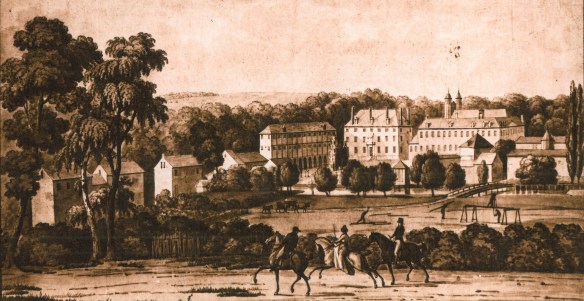
SKMBT_C45211070110270- filature-château vers 1825

I have just on Friday night at 11:27 sent off to the publisher the corrected proofs of the 2nd ed of my Free Market Economics. And while I think of the book as a modern version of John Stuart Mill’s Principles of Political Economy, I received an email that has made me think that there is possibly a different and deeper source for the book I wrote. There is about to be The First International Congress on Jean-Baptiste Say to be held in village in near Lille called Auchy-lès-Hesdin. And why there? Because that’s where J.-B. Say lived and built his business.

But the core issue of this conference is not about Say’s Law but about the entrepreneur. That, too, is what my text is about: the entrepreneur, Say’s Law (i.e. the law of markets) and the market economy. This is from the Elgar posting on the first edition of which the second is the same only much more:

The book does more than recast macroeconomics in its classical form. The microeconomic sections of the book also provide a different perspective on the nature of the market, the role of the entrepreneur and the unparalleled importance of uncertainty whose significance in economic analysis cannot be exaggerated.

That is exactly what this conference is about. These are the abstracts of the first set of papers listed in the 48-page conference program which is part of the opening round table on “J.-B. Say and the liberation of productive forces”:

It should be remembered, first of all, that under his training as a young merchant, Jean-Baptiste Say spent two years with his younger brother Horace, near London in Croydon. In 1786, he moved to Britain to learn the practice of English commercial business. This happened in the midst of the development of manufacturing in the UK when the introduction of mechanical looms gave a great boost to the whole industrial activity. It is clear that this first experiment in an expanding industrial environment, which lasted two years, deeply influenced the young J.-B Say who was gifted with an inquisitive mind and a talent of observation. Another element that makes J.-B. Say a competent expert to analyze the economic situation in England and identify the strengths and lessons for France lies in his experience as an entrepreneur in the creation of the spinning company in Auchy (France) in 1805.

In the Traité d’Economie Politique and in the Cours Complet d’Economie Politique, Jean-Baptiste Say develops a criticism of corporations and other industrial regulations. According to him, these regulations are barriers to the entrepreneurial freedom and to the progress of arts. They are almost always tools of individual and collective oppression and at the origin of various economic, social and political ills. In this paper, we detail Say’s argumentation against corporations and show that it is part of more general framework based on the influence of institutions on the economy and of machines on commerce. His critical analysis leads us to present his conception of a necessary liberation of the forces of production, which requires the creation of a general framework favorable to the freedom to undertake and a blossoming of the forces of production (machines). These elements also constitute the foundations of his political economy.

In Jean-Baptiste Say’s economic thought, a productive fund of industrial capabilities generates the emergence of entrepreneurs, workers and scholars. However, success only ensues from the exercise of entrepreneurial capabilities. This article analyzes several classifications of capabilities formulated by J-B. Say. Our first result highlights the fact that these capabilities go beyond the scope of the enterprise and concern the development of nations. Within the enterprise, there is a clear distinction between management and administration in J.-B. Say’s analysis ― the former is connected to the capacity of reasoning, whereas the latter demands qualities connected to control and supervision. Therefore, the entrepreneurial functions relative to uncertainty, innovation or inefficiency are linked to success but are not necessary conditions for the productive activity. We conclude that J-B. Say does not share the idea of an economic convergence between nations in a spontaneous way. A policy of economic development based on industrial education and the reinforcement of entrepreneurial capabilities is a necessary condition.

In his writings devoted to monetary questions, Say studies in details monetary, financial and bank innovations which he designates by the expression “representative signs of money”. Say’s analysis on money and its representation signs is very important since it takes place in a context of major change in the monetary field. The aim of this paper is to show how, in Says’ analysis, these representative signs of money are innovations of major importance. The paper begins with an analysis of the position of the representative signs of money compared to money itself. Then it studies promissory notes, bills of exchange and banknotes. Finally, the consequences of their circulation in the economy are presented, especially on the activity of producers.

Since Schumpeter, there has been a tradition in the history of the economic thought that has placed Say’s entrepreneur in a filiation Cantillon-Turgot. The aim of this article is to show that this filiation does not exist, even if certain themes such as risk, knowledge or organization of production appear in the works of these three authors. More precisely, it is possible to find a double break between Say and his predecessors. The first one lies in the analysis of the production and the division of labor, which shows that the entrepreneur in Say’s writings has not the same role as in Turgot’s ones. The second one concerns their conceptions of uncertainty and profit, which shows that the place of the entrepreneur in the distribution of income in the writings of Say is not the same that in Cantillon or Turgot’s ones. The implications of this double break are specified in the conclusion.

Jean-Baptiste Say and Joseph Aloïs Schumpeter are two key-economists in the theory of the entrepreneur. Both assigned to the entrepreneur the role of an economic engine, moved by innovation. Moreover, both lived in periods characterized by a flow of economic and political new ideas (Say: the French Revolution, the Empire of Napoléon, the Bourbon Restoration, the first industrial revolution; Schumpeter: the two World Wars, the Bolshevik Revolution, the 1929 crisis, the second industrial revolution). Their theories, embedded in troubled times; define an individual who constantly avoids being locked in (economic, social, political and technical) routines. Nevertheless, an important point distinguishes their approaches: Say describes a real entrepreneur, while Schumpeter reduces him to an ideal type.

You can see from this that the world is turning away from Keynes and towards Say. The conference papers, if the abstracts are anything to go by are all of this depth and quality. That a serious revival of Say should happen in France is not as obvious as all that although where else. But you could learn more about the nature of an economy and good policy from Say’s Treatise, I’m afraid, than from most of the textbooks found across the world today. But there is the second edition of my own which will be available in about a month.

UPDATE: Overnight I have received an extremely kind and fascinating note which included the above picture. I hope M. Tilliette will not mind my reproducing his note:

Dear Professor Kates,

Please permit me to send you this mail.

I was born in 1930 at Auchy-lès-Hesdin in the north of France where Jean-Baptiste SAY founded a cotton mill about two hundred years ago, and 200 meters from the place where he lived with his family during 8 years (1804/1805 – 1812/1813 ).

Very probably my grand–grand father met him for building matters !

Mrs. Michelle Lapierre informed me that you will meet her son Florian very soon. It is a sympathetic information for us because here we are very much interested in the revival of the memory of Jean-Baptiste SAY.

We hope other opportunities to contact you. To-day, please find here attached :

– the translation in french of your positive review about the recent book of Professor Evert Schoorl. Pr. Schoorl was happy to send me your review and I translated it for people here.

– a view of the cotton mill of Auchy around 1820 / 1825, practically as J-B SAY knew it; before it was a benedictine abbey with a water mill.

– a view of this cotton mill about fifty years later, rebuilt after a big fire in 1834. This factory was operated during almost two centuries, till 1990.

It would be a pleasure for us to send you other details about the J-B SAY time at Auchy-lès-Hesdin.

Dear Professor, I thank for your attention.

Yours truly,

Z. Tilliette

A political economy unconcerned with the facts of the real world

These were a sequence of posts on the History of Economics discussion thread.

An economics professor told my daughter, whose B.A. was in economics, that grad school in economics was essentially mathematics.

Your daughter’s professor was and is surely correct. Indeed, it is
probably not an exaggeration to argue that a mathematics undergraduate has
an easier time of it at economics graduate level than their economics
counterpart. This is why we need more history of thought – and I don’t
mean history of mathematics!

I would go further:

Some argue that the culture of mathematics departments has overtaken graduate economics to the extent that realism is of lesser concern than elegance. I saw this culture first hand and when I took graduate mathematics classes as part of my graduate education.

Indeed.

I wonder how long it will be before economics ‘departments’ are housed in
the mathematics faculty. Perhaps it has already happened somewhere.

“I am appalled … by the extent to which there has been a tendency for economics to become a purely abstract branch of mathematics, no longer to be a political economy concerned with the facts of the real world but an intellectual exercise” (Milton Friedman 1985).

You must not encourage governments to believe they can pick winners

The front page story in the AFR today is Sims asks BCA to please explain picking winners and the first line of the story, before it goes behind the paywall is, “ACCC chairman Rod Sims has asked to meet with Business Council of Australia president ­Catherine Livingstone to explain governments that ‘pick winners’ from industry usually fail.” I mean, seriously, would any self-respecting economy really want their political leaders to shift massive amounts of taxpayer funds in particular directions because politicians think that’s where economic activity will now be heading. I don’t say governments never get it right, but their return on funds invested is massively negative, ten cents in the dollar.

Governments are clueless about where the next major advance in economic output is going to come from. In fact, so too is the business community in general. No one has any idea of the sectors in which Australian economic growth in 2016 and beyond will be based on. Anyone in the private sector, who thinks they do know, is welcome to put their own money up since the return on such certain knowledge would be very high. Governments never should since their track records are so poor. They will only lower our standard of living, not raise it by blowing our productivity on useless projects that pay less than they cost.

And even when introducing an industry policy, governments should never do anything business- or industry-specific. What governments should do is ensure to the greatest extent they can that an economy can adjust as rapidly as possible to take advantage of new opportunities. They should, for example, do what they can to ensure that the education and training structures of the economy are responsive to such adjustments and that industrial relations mechanisms allow new projects to get off the ground quickly and efficiently. But nothing governments ever do should be designed with any specific firm or industry in mind.

If there is money to be made in running a business in Australia, governments are the last people to know in advance where those opportunities are. No individual firm or industry should be directly assisted by governments. And more importantly governments should never be encouraged to think that they can make these decisions. They will only misdirect our resources and lower our potential growth rate.

Balanced budgets make economies stronger – the latest episode

A story on how balanced budgets have caused the Canadian economy to boom. From which this:

We have a lot of cases available to us to test the proposition that we will increasingly be hearing that balancing the books is over-rated. If the all-stimulus-all-the-time Keynesians are correct, for example, France should be the strong man of Europe, for its Socialist president came to power rejecting “austerity” and preaching the virtues of stimulus. Britain, which pursued a course of fiscal discipline under the coalition government of David Cameron, should be in steep decline.

Instead the head of the International Monetary Fund, Christine Lagarde, recently had to apologise to Britain’s Chancellor of the Exchequer for having wrongly warned that his austerity policies would provoke disaster, as Britain turns in one of the strongest economic performances in the EU. Overtaxed and tapped out France, by contrast, continues to be the sick man of Europe. Interviewed on British television Ms Lagarde acknowledged that Britain’s growth seems “pretty sustainable” because it depends on private sector investment and consumer spending.

Economic theory of the Y=C+I+G variety has a lot to answer for. Balanced budgets accompanied by limited growth in public spending are the key to prosperity. The opposite can be seen everywhere in the misery and harm that are caused (see the US for exhibit A). Canada and the UK are now examples of how private sector growth along with what others choose to call “austerity” actually do create the foundations for economic growth.

Economic definitions

I start the 2nd ed. of my Free Market Economics with a set of definitions of the common words that are brought across into economics and then used as technical terms. But while technical in economics (e.g. neither “demand” nor “supply” are, for example, specific amounts) their slithery meanings create an imprecision that makes discussion sometimes difficult. The book therefore starts with a set of definitions that try to nail down what each term means in the context in which they are used. But the definitions are also ordered so that they present the entire argument of the book, which is an explanation of why only a market-based economy can create economic prosperity. And here a market based economy is defined as one in which private entrepreneurs, who are unknown and unrelated to anyone in government (except by chance), make most of the economic decisions in an economy and personally carry the responsibility for the success or failure of the enterprises they run.

Each term should therefore be seen as itself carrying part of the weight of the argument. They are each discussed because they provide an important part of the story. You cannot understand how an economy works unless you understand supply and demand in a particular way, which you are very unlikely to have thought of unless you have formally studied economics.

But it is also necessary to fit each of these concepts into a larger framework representing the economy as a whole. The parts are then seen in relation to some fuller context. In this I am following Aristotle as discussed by Mary Midgley* who was looking at biology when she wrote:

[Aristotle] starts from the basic, primitive question about each particular, “What’s this for?” and proceeds by looking for whatever outcomes can, in the particular context, be intelligibly seen as advantages. By doing this systematically it begins to understand these various functions as parts of larger wholes, systems within which the relations between the various parts continually makes better sense of them.

The productive apparatus of a community, the aspects that contribute to the production and distribution of both goods and services and of incomes, works in some way. These definitions are the words necessary to understand both how these outcomes are explained as well as being able to follow the theories that are used. Theory is a representation of reality. These words used as they are properly defined are the necessary elements in making sense of the theory. And I might add, it is necessary to understand the theories to make sense of the words as they are used. The fusion of the words within properly specified theories is what an education in economics is about.

* Mary Midgley. 2014. Are You an Illusion? Durham UK. Acumen.

When it comes to the capital stock size matters

A third world economy is not one in which everyone is poor, only most of the people with the elites still managing to do all right. The US is not there yet, but it is trying. This is an astonishing story, from The New York Times even, titled, The Typical Household, Now Worth a Third Less.

Economic inequality in the United States has been receiving a lot of attention. But it’s not merely an issue of the rich getting richer. The typical American household has been getting poorer, too.

The inflation-adjusted net worth for the typical household was $87,992 in 2003. Ten years later, it was only $56,335, or a 36 percent decline, according to a study financed by the Russell Sage Foundation. Those are the figures for a household at the median point in the wealth distribution — the level at which there are an equal number of households whose worth is higher and lower. But during the same period, the net worth of wealthy households increased substantially.

To understand all this, you need to understand the nature of economies from a classical perspective. A modern textbook will leave you almost incapable of seeing what’s happening, in the same way that knowing one economy had 6% growth and another had 3% will tell you nothing about the relative standards of living.

But this much is clear. The US is heading into an astonishing level of poverty across a wide expanse of what had not that long ago been the world’s most productive nation.

Missing the point perhaps

John Cochrane published an article a few weeks back on The Failure of Macroeconomics which you tend not to see much of even though its failures are manifest and undeniable. Here is the first para of his article which refers to the US but the story is hardly better anywhere else:

Output per capita fell almost 10 percentage points below trend in the 2008 recession. It has since grown at less than 1.5%, and lost more ground relative to trend. Cumulative losses are many trillions of dollars, and growing. And the latest GDP report disappoints again, declining in the first quarter.

He is down on Keynes and Keynesian theory but his analogy is sus to me. If I read him right, he is saying that climate science is all right because it is using modern evidence unlike macroeconomics. Anyway, he writes:

The climate policy establishment also wants to spend trillions of dollars, and cites scientific literature, imperfect and contentious as that literature may be. Imagine how much less persuasive they would be if they instead denied published climate science since 1975 and bemoaned climate models’ “haze of equations”; if they told us to go back to the complex writings of a weather guru from the 1930s Dustbowl, as they interpret his writings. That’s the current argument for fiscal stimulus.

I take it that the “guru from the 1930s Dustbowl” is Keynes. I suppose then that Cochrane wouldn’t like to go back to my own set of authorities which are the economists of the mid-nineteenth century, John Stuart Mill in particular. But whether he knows it or not, that is what he’s doing in pushing structural reforms while abandoning attempts to increase aggregate demand:

These views are a lot less sexy than a unicausal “demand,” fixable by simple, magic-bullet policies. They require us to do the hard work of fixing the things we all agree need fixing: our tax code, our cronyist regulatory state, our welter of anticompetitive and anti-innovative protections, education, immigration, social program disincentives, and so on. They require “structural reform,” not “stimulus,” in policy lingo.

Economists once knew this, since that was the core element of what an economist knew that had been passed down through the first century of economic thinking, starting from Adam Smith in 1776. Yet even though Cochrane can see there are problems with a stimulus, I don’t myself think he really gets it himself since it never occurs to him to suggest that cutting the level of public spending might actually do some good.

[My thanks to J.B. for sending this article along.]

The fiscal policy of Warren Harding

Warren Harding succeeded Wilson in 1921 as the American economy fell into a post-World War I inflationary recession. Although almost never mentioned, he turned an incipient Great Depression into the Roaring Twenties. I use this story in class as the last example of a classical economic policy ever put into play. Here is how his approach is described:

Harding’s pledge to restore America to a condition of “normalcy” led to his landslide victory in November 1920. In office, he cut government spending to the bone and reduced federal income tax rates across the board. As he said to Congress, the government acted during the war as if “it counted the Treasury inexhaustible”; if that pattern continued, it would result in “inevitable disaster.” To get government spending under control, Harding established the nation’s first Budget Bureau (the forerunner of today’s Office of Management and Budget) in the Treasury Department. As a result, federal spending dropped from $6.3 billion in 1920 to $5 billion in 1921 and then $3.3 billion in 1922. He supported the Revenue Act of 1921, which eliminated the wartime excess-profits tax, lowered the top marginal income tax rate from 73 to 58 percent, decreased surtaxes on incomes above $5,000, and increased exemptions for families. . . .

Many people, he noted, benefited from the gains made “as a result of the economic measures he implemented.” Unemployment fell from 15.6 percent to 9 percent. The industrial side of the economy revived at a rapid pace. A boom took place in construction, clothing, food, and automobile sectors. From 1921 to 1923, the volume of manufacturing climbed 54 percent.

Cut public spending, cut taxes and balance the budget. A radical idea even then and today beyond the pale.

The manifest ignorance of Joe Stiglitz

I have just caught up with the article written by Joe Stiglitz on the Australian economy, American Delusions Down Under. I have had serious doubts whether he understands his own economy given his Keynesian orientation, but that he has no idea about Australia is manifest.

What matters more for long-term growth are investments in the future – including crucial public investments in education, technology, and infrastructure. Such investments ensure that all citizens, no matter how poor their parents, can live up to their potential. . . .

To be sure, given its abundance of natural resources, Australia should have far greater equality than it does. After all, a country’s natural resources should belong to all of its people, and the “rents” that they generate provide a source of revenue that could be used to reduce inequality. And taxing natural-resource rents at high rates does not cause the adverse consequences that follow from taxing savings or work (reserves of iron ore and natural gas cannot move to another country to avoid taxation). But Australia’s Gini coefficient, a standard measure of inequality, is one-third higher than that of Norway, a resource-rich country that has done a particularly good job of managing its wealth for the benefit of all citizens.

Well I see fit to comment on the American economy although I live here, so he is welcome to comment on ours even though he is out of his depth on everything he says. But it is a wonder that he doesn’t stop to think about his own empty rhetoric when we find in between the above two paras these two paras:

There is something deeply ironic about Abbott’s reverence for the American model in defending many of his government’s proposed “reforms.” After all, America’s economic model has not been working for most Americans. Median income in the US is lower today than it was a quarter-century ago – not because productivity has been stagnating, but because wages have.

The Australian model has performed far better. Indeed, Australia is one of the few commodity-based economies that has not suffered from the natural-resource curse. Prosperity has been relatively widely shared. Median household income has grown at an average annual rate above 3% in the last decades – almost twice the OECD average.

Most of that growth he discusses was under a Coalition government that made it a matter of policy to balance the budget and contain its spending. That is the Australian model from which the US, and Joe Stiglitz, might learn something he is apparently clueless about.