An outline of my economic beliefs in an email to an American colleague

A letter I sent to an American economist who had sent me two books to read. This is my reply.

I read the books you sent with great interest, one which I thought was part of the problem as I see it and the other of sublime excellence, better even than the authors know. But to help you understand where I am at, I will put in the cover note for this next book of mine that I have written but not yet submitted to the publisher [ie the book’s been submitted but not my version of the cover text]. I have highlighted the part of what I do that puts me outside the norm even among we on the free market side of things.

‘Classical Economic Theory and the Modern Economy’

The book starts with two premises: First, that economic theory reached its deepest level of understanding in the writings of John Stuart Mill and the classical economists of his time, and then, secondly, the author of this book has understood Mill and has accurately explained what the classical school of the late nineteenth century wrote. From these premises, this then follows.

If you are to have any hope of understanding how an economy works, and how modern economic theory became the dead end it has become, you will need to read this book.

The classical economists, and John Stuart Mill in particular, lived through the Industrial Revolution, saw its astonishing economic transformation before their eyes, and explained, so others could understand for themselves, how their prosperity had been created through the emergence of the market economy.

Mill, the greatest utilitarian philosopher of his age, refused to use utility as part of his theory of value. Mill explicitly and emphatically denied any role for aggregate demand in the creation of employment. In reaching these conclusions, there was no disagreement among the entire mainstream economics community of his time.

First through the Marginal Revolution of the 1870s, and then through the Keynesian Revolution of the 1930s, the entire edifice of classical theory has been obliterated. From a classical perspective, modern economic theory is Mercantilist trash. If you are interested in how economic theory became the wasteland it has become, and wish to understand the classical theory no one any longer has the slightest clue about, this is the book you must read.

I think of the Marginal Revolution in much the same way I think of the Keynesian Revolution. It shifted focus to the demand side of the economy, lost touch with actual measurable quantities, and replaced an utterly meaningless concept – utility – for what had mattered to the classicals, production costs relative to demand. They have rendered much of economics into a series of abstraction with little concrete to examine. So to the books.

The one I didn’t especially like was Economics and Free Markets which I won’t go much into. Starts with marginal analysis and then goes through supply and demand omitting the single most important element, which everyone else omits as well: no seller ever knows the position or shape of the demand curve for any product they are selling. Demand curves are not concrete entities but are nevertheless treated as if they represent known matters. In reality, everyone in an economy travels blind and has to guess their way into profitability. Some parts of the book were all right, but really, to my mind part of the problem.

On the other hand, I thought Applied Mainline Economics was excellent and even better than the authors themselves understood, which I hope they will forgive me for saying. And what they have done is put together a classical text without knowing it which they describe as “mainline economic thinking”. I wrote a blog post to myself on it which I hope will be sufficiently clear to see what I’m saying.

This is an astonishingly excellent text which understands a great deal but misses the most important part. This is the text: Applied Mainline Economics: Bridging the Gap between Theory and Public Policy by Matthew D. Mitchell and Peter Boettke. And there we find (pp. 2-3):

And though mainline concepts are constantly evolving, they draw their inspiration from, and are intimately connected with the enduring lessons of early economic thinkers. A line connects the contemporary variants of these ideas to insightes of Thomas Aquinas of the 13th century; the Scottish Enlightenment thinkers, such as Adam Smith of the 18th century; and the Neoclassical school of the early 20th century. Thinkers in the last few decades have extended this line of inquiry, including Nobel laureates F.A Hayek, James Buchanan, Ronald Coase, Douglass North, Vernon Smith, and Elinor Ostrom.

Let’s see who’s included which adds in those mentioned in ftn 5 of Chapter 2:

  • Thomas Aquinas of the 13th century;
  • fifteenth and sixteenth century scholastics;
  • the Scottish Enlightenment thinkers, such as Adam Smith of the 18th century;
  • 19th century French liberals Jean Baptiste Say and Frédéric Bastiat;
  • the Neoclassical school of the early 20th century
  • thinkers in the last few decades, including Carl Menger, Ludwig von Mises, F.A Hayek, James Buchanan, Ronald Coase, Douglass North, Vernon Smith, and Elinor Ostrom

Now let’s see who is missing? Who is missing in particular is the English Classical School of the mid-19th century and especially John Stuart Mill.

And then there is a list of characteristics that have been suggested over the years that breed strong economies which include everything discussed by Mill and the his contemporary classical economists:

  • specialisation and the division of labour
  • institutional structures
  • natural endowments
  • geographical advantages
  • capital accumulation and growth
  • cultural inheritance
  • personal traits such as attitudes to thrift and hard work
  • technological sensibilities
  • individual liberty
  • social attitudes to commercial activity

And yet it is Mill and the Classical School whose perspective is the perspective most congruous with these characteristics which is left out. And you know why that is? Because no one has any idea what they said. There is a gap between Ricardo, who died in 1821 and the coming of the Marginal Revolution in 1870 that is almost entirely unknown to economists today.

My specialty is that gap. That is what my books are about and especially my textbook which is Mill’s Principles for the twenty-first century. I will leave you with the bits that I included in my Christmas letters to friends who are economists; no one else would be even slightly interested while my economist friends are slightly interested, mainly to see just how absurd my economic views have become, although I am happy to say some of my friends even agree with me. Hopefully you will also see my point.

I have finally submitted the full text of my next book in the proper format which is very nice but took a month of fiddling to get it exactly right and ready for publication, and that was after the two years it took to write. This is what it’s about via the blurb they put together:

“Economic theory reached its highest level of analytical power and depth of understanding in the middle of the nineteenth century among John Stuart Mill and his contemporaries. This book explains what took place in the ensuing Marginal Revolution and Keynesian Revolution that left economists less able to understand how economies operate. It explores the false mythology that has obscured the arguments of classical economists, providing a pathway into the theory they developed.”

There is also the second book I have been finishing off which I finally completed today. It is a near-definitive collection of all of the anti-Keynesian articles and excerpts from every anti-Keynesian book of any importance ever written.

Not entirely best-seller material, but fascinating to me. Since the basis for everything I believe about an economy is based on John Stuart Mill’s Principles of Political Economy which was the most used text in English from 1848 till around 1890 and remained as a major text used everywhere until around 1920 I am following along after someone who ought to have a few street creds you might think. But then classical theory went out of fashion and then there was the Keynesian Revolution and then economics became mathematical and then diagrams infested economic texts page after page and then economic students became illiterate and beyond that, reading nineteenth century prose became impossible to almost everyone, specially economists and even then Mill is beyond just trying to read Trollope and Dickens and even then Mill, who wrote his 1000-page text in around 18 months so his is not exactly a polished account filled as it is with 100-150 word sentences and worse, often going off on tangents to explain what he is getting at using examples that can go on for five pages where if you don’t already know what he is getting at cannot be followed. But I love what he says and how he says it. It is pure common sense to me – highest IQ of the nineteenth century; fifth highest of all times if you take these things seriously – and since nothing about how an economy works has changed all that much at a theoretical level since around 1776, I remain possibly the only economist, even among historians of economics, who understands not just what Mill was getting at, but also agree with virtually everything he says. So while my projections and forecasts have never been wrong, no one pays any attention to me because my reasoning is so foreign to everything an economist thinks, or is supposed to think. Since in my books it is not just Keynesian macro but also marginalist micro that I throw onto the dust bin of history, there is not much of “that modernist stuff gone sour and silly” left around by the time I am through with it – the quote, btw, is from Keynes in 1946 looking at what had become of The General Theory by the time it got into the hands of Joan Robinson.

If you are still with me, I will leave you this which was published this year as a tenth anniversary reminiscence following an article I wrote in 2009:

It starts with a quote from an Australian Senator who was querying me during some Committee meeting in 2009 about my opposition to the stimulus which really does capture where I am:

Why have the IMF, the OECD, the ILO, the treasuries of every advanced economy, the Treasury in Australia, the business economists around the world, why have they got it so wrong and yet you in your ivory tower at RMIT have got it so right?
—Question to Steven Kates from Senator Doug Cameron, Senate Economic References Committee, September 21, 2009

Funny to me but no one pays any attention. To be right too soon makes everyone think you are wrong in principle. All they remember is that they disagreed with you about something, but what it was they never remember.

My aim is that eventually, around fifty years from now, when economics returns to where it once was, that someone will discover my book and say, look, this guy Steve Kates, he got it nearly right fifty years ago. “Nearly” because everything is always a little off centre and no two economists ever think about anything in exactly the same way. On the other hand, by then every economy in the world may be like Venezuela is today and no one will even be able to understand a word, just as no one can understand Mill today.

How to describe my next book

This was the outline of my next book that has been proposed to me by the publisher.

‘Classical Economic Theory and the Modern Economy’

Exposing the zenith of analytical power and depth of understanding that economic theory reached in the middle of the nineteenth century, this book discusses the importance of John Stuart Mill and his contemporaries. Steven Kates explains what took place in the ensuing Marginal and Keynesian Revolutions that hindered economists’ understanding of how economies truly operate.

Chapters explore the false mythology that has obscured the arguments of classical economists, providing a route into the theory they developed. Kates offers a theoretical understanding of the operation of an economy within classical economic theory by classical economists, providing a new perspective for viewing modern economic theory from the outside. This provocative book also not only explains the meaning of Say’s Law in an accessible way, but also the origins of the Keynesian revolution and Keynes’ pathway in writing The General Theory.

A crucial read for economic policy-makers seeking to better understand the key policies needed to generate economic recovery, this book will also be of keen interest to economics and economic history scholars. It offers an alternative theory to modern macroeconomics for those studying economic theory and policy.

OK, but not what I think is needed. This is what’s needed.

‘Classical Economic Theory and the Modern Economy’

The book starts with two premises: First, that economic theory reached its deepest level of understanding in the writings of John Stuart Mill and the classical economists of his time, and then, secondly, the author of this book has understood Mill and has accurately explained what the classical school of the late nineteenth century wrote. From these premises, this then follows.

If you are to have any hope of understanding how an economy works, and how modern economic theory became the dead end it has become, you will need to read this book.

The classical economists, and John Stuart Mill in particular, lived through the Industrial Revolution, saw its astonishing economic transformation before their eyes, and explained, so others could understand for themselves, how their prosperity had been created through the emergence of the market economy.

Mill, the greatest utilitarian philosopher of his age, refused to use utility as part of his theory of value. Mill explicitly and emphatically denied any role for aggregate demand in the creation of employment. In reaching these conclusions, there was no disagreement among the entire mainstream economics community of his time.

First through the Marginal Revolution of the 1870s, and then through the Keynesian Revolution of the 1930s, the entire edifice of classical theory has been obliterated. From a classical perspective, modern economic theory is Mercantilist trash. If you are interested in how economic theory became the wasteland it has become, and wish to understand the classical theory no one any longer has the slightest clue about, this is the book you must read.

If that’s your interest, then you should certainly read this book.

The most depraved movie I may have ever seen

If you are intending to see Knives Out and want no plot spoilers, stop here.

On the other hand, let me tell you about a movie that is as disgusting in its baseline plot as any film I have ever seen. Also 96% from the media critics at Rotten Tomatoes which in itself might give you a clue. And while we normally shy away from Hollywood because of its messaging, this seemed like an Agatha Christie plot-line knock-off, so how bad could it be?

Turned out to be the most far-left looney politically-driven plot I have seen in years, whose underlying thread actually came up quite early on, when the family are sitting around after the death of this wealthy millionaire author whose will they are expecting to benefit from. There they are discussing open borders and migration. And while it was astonishing to see any such thing in the midst of a Murder-She-Wrote kind of plot, it turned out to be what the entire film was metaphorically about. Here’s one of the trailers for a bit of background before I go on. Keep an eye out for a young and pretty girl with an Hispanic look. Her name in the film is Marta Cabrera played by a Cuban actress named Ana Celia de Armas Caso. It is she that the plot ultimately revolves around.

Might just mention this although you needn’t bother going to the link: REVIEW: Ana de Armas’s Character in ‘Knives Out’ Is the Latina Heroine We Need in the Trump Era. Get the message? In bare bones, this is the story as related by the film producers:

Acclaimed writer and director Rian Johnson (Brick, Looper, The Last Jedi) pays tribute to mystery mastermind Agatha Christie in KNIVES OUT, a fun, modern-day murder mystery where everyone is a suspect. When renowned crime novelist Harlan Thrombey (Christopher Plummer) is found dead at his estate just after his 85th birthday, the inquisitive and debonair Detective Benoit Blanc (Daniel Craig) is mysteriously enlisted to investigate. From Harlan’s dysfunctional family to his devoted staff, Blanc sifts through a web of red herrings and self-serving lies to uncover the truth behind Harlan’s untimely death. With an all-star ensemble cast including Chris Evans, Ana De Armas, Jamie Lee Curtis, Don Johnson, Michael Shannon, Toni Collette, LaKeith Stanfield, Katherine Langford and Jaeden Martell, KNIVES OUT is a witty and stylish whodunit guaranteed to keep audiences guessing until the very end.

So here is the metaphorical meaning of the story, this time by me.

When renowned crime novelist Harlan Thrombey (Christopher Plummer) is found dead at his estate just after his 85th birthday, we get to see what a bunch of rotten persons his family really are, so that when the will is eventually read, we are not at all dismayed to find all of the money he had earned from his novels has been given in its entirety to his sweet young Hispanic nurse, who is shown by Benoit Blanc (Daniel Craig) to be the worthy inheritor of all of the family’s accumulated wealth in spite of the work many in the family had put in to assist this renowned crime novelist over the years. The nurse, Marta, however has a loving heart. At the end she stands on the upstairs verandah of the house she has just been given as part of the will, as the author’s family stand below in the driveway about to drive off pennyless and disinherited. Her coffee cup reads “My House, my land, my something or other.”

From the Wikepedia entry for the film here are some of the critics’ responses.

Critical response

On the review aggregation website Rotten Tomatoes, the film holds an approval rating of 96% based on 136 reviews, with an average rating of 8.53/10. The website’s critics’ consensus reads: “Knives Out sharpens old murder-mystery tropes with a keenly assembled suspense outing that makes brilliant use of writer-director Rian Johnson’s stellar ensemble.” Metacritic, which uses a weighted average, assigned the film a score of 85 out of 100, based on reviews from 26 critics, indicating “universal acclaim”.

David Rooney, writing for The Hollywood Reporter, described the film as an “ingeniously plotted, tremendously entertaining and deviously irreverent crowd-pleaser” and “a treat from start to finish”, praising the film’s script, the throwbacks to the murder mysteries of the 1970s, and the actors’ performances.

Am I reading too much into the film? I do not think so. But the very invisibility of the point the film obviously in spades is making is a major problem in itself. If no one can see it here, I fear they cannot see it anywhere else.

Being on the left is merely a vanity project

I am off to the first ever Heterodox Academy meeting in New York which almost overlaps with the meeting of the American History of Economics Society meeting which is also in New York. When I’m in New York I always go here, which I like even more now that I understand the entrepreneurial vision of its owner. She must be the last of her kind among the Democrats.

Chaser: New York City Landmarks Historic Bookstore The Strand Over Owner’s Objections.

New York City’s Landmarks Preservation Committee (LPC) just wouldn’t take no for an answer. The group has conferred landmark status on the 119-year-old building at 826 Broadway, which has housed The Strand Bookstore since 1956. The owners of The Strandbought the building in the late 1990s and the third-generation owner of the store, Nancy Bass Wyden, opposed the action, telling Reason earlier this year:

The Strand is not going anywhere. There’s no need to protect it. Our family’s been a great steward of the building. Landmarking would add another component of government. You add bureaucracy, you add committees, you add people having opinions about what we should do inside the store as well as outside the store. And that does not allow me the flexibility to change with the retail book environment and to serve our customers.

Bass Wyden (who is married to Sen. Ron Wyden, the Democrat from Oregon) presented 11,000 signatures to the LPC in hopes of dissuading landmark status. Such popular support for what is generally considered New York’s best bookstore cut no mustard.

Being on the left is merely a vanity project. How what they do affects everyone else hardly matters at all, to them.

Corruption and criminality

A fantastic series of posts from today that outline not just the corruption but outright criminality among the left in the United States in which they have used the levers of the Federal Government to attack their enemies and benefit themselves. Start here with a story found nowhere else I could see: True the Vote Wins Stunning Court Ruling Against IRS in Lois Lerner Scandal.

The True the Vote v. IRS lawsuit has finally come to a close with a stunning ruling by U.S. District Court Judge Reggie Walton ruling in favor of True the Vote; penalizing the IRS with maximum attorneys fees due to their unconstitutional discrimination against the group and their unethical behavior in the case.

This decision marks the end of a nearly decade long battle that first began in 2010, when federal government agencies including the IRS, DOJ, FBI, ATF, OSHA weaponized against True the Vote and its founder, Catherine Engelbrecht. Under Obama Administration leadership, the agencies leveled a barrage of attacks, including twenty-three audits, investigations, and inquiries, against the group in an attempt to stop their work in election integrity. “

At one point the IRS got Child Services to try to take Ms. Engelbrechts’ children from her—this is how vicious Lerner and the crowd became, to stop honest elections. To stop those exposing the corruption of elections.

There is then this: Investigation finds Ilhan Omar illegally used campaign funds to pay lawyers related to allegations that she married her brother.

Rep. Ilhan Omar, D-Minn., is facing financial penalties for campaign finance violations following a Thursday ruling from the Minnesota Campaign Finance and Public Disclosure Board.

Which may be supplemented by this: WHEN THE CAT HAS OMAR’S TONGUE. Which gets into her fraudulent marriages and tax fraud.

She held out Ahmed Hirsi as her husband on her campaign site and elsewhere. We found that Omar had legally married Elmi in 2009 and wondered if he was her brother. Omar remained married to him from 2009 to 2017. Although Omar has three children with Hirsi, Omar never did marry him until last year….

Although she didn’t marry Hirsi until last year, Omar has held Hirsi out as her husband at all times since she became a public figure. Over what period of time did Omar and Hirsi file joint tax returns? My guess is that it runs back to 2002. We know she filed joint tax returns with Hirsi while she was still married to Elmi. In addition to the IRS issues, the questions intersect with those arising from Omar’s marriage to Elmi.

Then there’s this: Profiles in Treason Bruce and Nellie Ohr.

The latest emails and memos uncovered shows clearly that Fusion GPS, hired by Hillary Clinton and the DNC in an attempt to destroy the Trump candidacy was assisted in its agenda by the FBI the DOJ and the intelligence agencies of the Obama administration. The notes, some of which are from Associate Deputy District Attorney Bruce Ohr, whose contact was Deputy AG Sally Yates. Bruce Ohr was demoted four times since the investigation began, at least twice for failing to disclose his involvement with figures associated with the unverified dossier from Fusion GPS. Sally Yates was fired for insubordination and refusing to implement a legal order from the President. Both are members of the Deep State Resistance doing everything they can to usurp the power of President Trump.

Finally, in the midst of actual criminality and fraud, there is this question over possibly the most-investigated political leader of modern times, A Serious Question For Democrats: What Exactly Was Trump’s Crime?.

Democrats need to answer the question. Impeach Trump for what?

Specifically, what law did our President violate?

If you asked any one of them, really pressed them, they wouldn’t be able to come up with an actual crime. Trump is so vile and we are so virtuous and enlightened will no longer cut it.

And a reminder we are this week celebrating the 70th anniversary of the publication of Orwell’s 1984: George Orwell’s prescient novel 1984 is turning 70 and only growing more relevant with age. To add to how fantastic this is, truly space age incredible, the article is from our ABC.

Inventing the individual has a long history

Here’s a book you might consider if you are interested in seeing the world in a different way: Inventing the Individual.

Here, in a grand narrative spanning 1,800 years of European history, a distinguished political philosopher firmly rejects Western liberalism’s usual account of itself: its emergence in opposition to religion in the early modern era. Larry Siedentop argues instead that liberal thought is, in its underlying assumptions, the offspring of the Church. Beginning with a moral revolution in the first centuries CE, when notions about equality and human agency were first formulated by St. Paul, Siedentop follows these concepts in Christianity from Augustine to the philosophers and canon lawyers of the fourteenth and early fifteenth centuries, and ends with their reemergence in secularism―another of Christianity’s gifts to the West.

Inventing the Individual tells how a new, equal social role, the individual, arose and gradually displaced the claims of family, tribe, and caste as the basis of social organization. Asking us to rethink the evolution of ideas on which Western societies and government are built, Siedentop contends that the core of what is now the West’s system of beliefs emerged earlier than we commonly think. The roots of liberalism―belief in individual freedom, in the fundamental moral equality of individuals, in a legal system based on equality, and in a representative form of government befitting a society of free people―all these were pioneered by Christian thinkers of the Middle Ages who drew on the moral revolution carried out by the early Church. These philosophers and canon lawyers, not the Renaissance humanists, laid the foundation for liberal democracy in the West.

And there is more here as well.

Henry Arthur Jones

Henry Arthur Jones (1851-1929) has not entirely faded into history as is attested to by the existence of his Wikipedia entry. A prolific playwright from the end of the nineteenth century and into the twentieth, about whom Oscar Wilde said this:

“There are three rules for writing plays. The first rule is not to write like Henry Arthur Jones; the second and third rules are the same.”

My acquaintance with Mr Jones has come through my just having finished reading his wondrous 1921 political tract, My Dear Wells: A Manual for the Haters of England, whose perspective is perhaps better displayed by its subtitle, “Being a Series of Letters Upon Bolshevism, Collectivism, Internationalism, and the Distribution of Wealth Addressed to Mr H.G. Wells”. So whatever rules there may be about writing plays, the three rules for writing political tracts might be summarised as: the first rule is to write like Henry Arthur Jones; the second and third rules would then be the same.

What is particularly wondrous is that the book could have come off the press this morning, how up-to-date he is in singling out the fools on the left who seem not to have learned a thing in the hundred years since then. Mr Jones was infuriated by Wells’s support for Lenin and the Revolution which had just then taken place in Russia. I had not been aware that the horrors that were visited upon the Russian people had been immediately recognised for what they were and discussed across the world. Jones’ replies to Wells’s own writings highlights the cruel indifference typically shown by the left, seen today in how the horrors in Venezuela are being downplayed by the media and the socialists amongst us. Other people’s tragedies must never be allowed to impede progressives in their will to visit the same tragedies on us as well. The left were vile then and are equally vile now. Here is a bit to see just how contemporary it all is:

Make a list of the richest and most powerful men in Western European and American civilization. Quite a large number of them are men who have made themselves rich and powerful, not by intercepting the wealth and influence that other men have created for mankind, but by their own conspicuous ability, by severe self-denial, by thrift, by constant strain of hard thought and hard work. By these means many of them have created vast quantities of wealth for others, and have eased the conditions of living for large populations of workers, and have otherwise conferred lasting benefits on their fellows. I do not say that some of these rich and powerful men may not have received larger rewards than were justly their due, I do not say that some of them may not have gained some of their wealth by dishonest means. There is no possible way of adjusting any scale of measurement. The thing for you to notice is that in your Collectivist State you are not likely to have many of these benefactors, for in denying them the rewards of money, power, honour and influence, you take away from them all incentive to train their natural ability, to practise thrift and self-denial, to scorn base trivial delights, and to spend themselves in constant thought and labour. Notice the result in Russia of suppressing and persecuting out of existence this enterprising type. (Jones 1921: 183)

Socialists never change. Grasping, greedy and envious to the end, ignorant even of the basics on how wealth is created so that what is produced may be shared out amongst us. These socialists are the curse of the earth.

LET ME ADD THIS: Via Instapundit this morning: Your Socialism Is Bad and You Should Feel Bad. The promise of free stuff plus “equality” has a powerful attraction many find hard to resist. Now we also add in containing climate change as one more part of the socialist magic act. Just vote us in and we will tax and spend our way to stopping the seas from rising.

They look just like us because they were just like us

From Ace of Spades

They Shall Not Grow Old is a remarkable documentary on the experiences of trench soldiers during World War I. It takes no stance on the causes of the war, the running of the war, or its closure. It is focused, laser like, on what the individual soldier went through from the run up to the war to going home.

Directed by Peter Jackson, who has a particular interest in the war based on his family’s history (his grandfather served in an English regiment) that had extended to collecting paraphernalia of the war from uniforms to infantry weapons to actual artillery. When the Imperial War Museum reached out to him about doing something for the armistice’s 100th anniversary, Jackson jumped in with both feet. Using footage solely from the IWM’s archives, he had his team of special effects technicians clean up the 100 year old images, colorize them, and provide a third dimension. The technical effects really are remarkable. Clear, bright images of a world long lost to time, the soldiers look as present today as they must have in newsreels back then. Over all of these images lay the voices of actual soldiers recounting their stories in snippets (recorded in the 50s).

The movie’s story follows a generic path through the war. It’s really the story of every English infantryman from the heady days of excitement that lead to war breaking out, through the early days of movement, to settling into trench life, a battle (which is accomplished visually through contemporary illustrated images), and the wind-down of war and going home. We never learn a single soldier’s name, and we rarely see the same soldier’s face twice. This, to me, had the makings of creating distance between audience and subject. It’s my problem with Battleship Potemkin. However, in They Shall Not Grow Old, the use of the voices of the soldiers themselves is what bridges that gap. We begin to recognize voices, and hear the pain, joy, elation, and reflections on the mundane from the men who experienced it themselves. Matched with that is the extremely respectful tone that the movie takes.

One scene has stayed with me more than any other in the months since I’ve seen the movie. We see some soldiers hiding down a slope from a raging battle above. They are waiting for the call to move up and contribute. As they wait, they talk, they smoke, and they look directly at the camera. In some of them, it seems as though they know they are about to die, which, we know, they are.

Jackson did a great thing by bringing this film to screen. They Shall Not Grow Old is a great achievement in special effects, but also in making a century old war immediate and emotional in a way that I’ve never seen before. There are World War I movies that I love (Paths of Glory in particular), but none of what I’ve seen has made the experiences of the individual soldier so understandable in such vivid terms as what Jackson has accomplished.

The movie is available to stream now, and I highly recommend it.

Herodotus was right once again

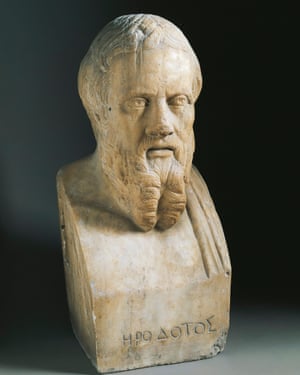
Bust of Herodotus

My favourite book of all time is Herodotus’s Histories. The first ever book of history, it tells the story of the war between the Greeks and the Persians in the fifth century BC for the survival of Western Civilisation before it had even commenced its journey. A storyteller who travelled everywhere to gather personal accounts of what others had witnessed, but with so much ancillary information and irrelevant tales about everything under the sun – including about the first people ever to have sailed around Africa which you know was true because they had observed that the sun eventually was no longer to their south but at some stage was found to their north. Lots and lots and lots like that, including some of the most astute philosophical, political and historical reflections you will ever read. Amazing book, but I can imagine not to everyone’s tastes. It’s also a reminder that you should get your reading in early since as you get older, you don’t have the patience you had when you were young.

Ah but this is merely prelude to: Nile shipwreck discovery proves Herodotus right – after 2,469 years.

In the fifth century BC, the Greek historian Herodotus visited Egypt and wrote of unusual river boats on the Nile. Twenty-three lines of his Historia, the ancient world’s first great narrative history, are devoted to the intricate description of the construction of a “baris”.

For centuries, scholars have argued over his account because there was no archaeological evidence that such ships ever existed. Now there is. A “fabulously preserved” wreck in the waters around the sunken port city of Thonis-Heracleion has revealed just how accurate the historian was.

“It wasn’t until we discovered this wreck that we realised Herodotus was right,” said Dr Damian Robinson, director of Oxford University’s centre for maritime archaeology, which is publishing the excavation’s findings. “What Herodotus described was what we were looking at.”

Known as The Father of Lies (as well as the Father of History) because of his many fantastical tales, but appears that this one has turned out to be true. As for the book itself, it tells the story of the preservation of Western Civilisation that might have been snuffed out before it had even begun.