How do we know that PDT is the best president in 25 years: Media Give Trump Most Negative Presidential Coverage in 25 Years. To which they add as a subhead: “Only 5 percent of news reports are positive, according to Pew Research Center”. As much as five percent! I must have missed that story somehow. Meanwhile there is much to keep under wraps:
And then there’s the other news of the moment. The more it looks like there is more to it than gun rights the less of it we hear on the news. A bit of a sample:
Specially love the accidental suicide bit which must happen all the time. The trail is cold, and even with ISIS sending signed certificates of complicity, why should we pay any attention to a thing they say? And where did all that money come from? Of course, you can’t entirely discount this one either: Was the Las Vegas massacre an FBI terror plot that accidentally went live?.
No one is suggesting the FBI would intentionally plot the murder of Americans . . . but is it possible they staged all this, recruited the shooter, gave him the plans and then accidentally dropped the ball and allowed it all to unintentionally go into “live” status?
As good a theory as any. Meanwhile, what’s happening with North Korea?
From Tim Blair who titled his post This Doesn’t Happen. I’m merely posting it as a public service message since this is the sort of thing that must come to a stop immediately.
And it is an absolute protocol in Australia, which I have never seen violated, that in getting in and out of a lift, it is women and children first.
I wonder whether this is related to Tim’s other story about Julie Bishop.
Ms Bishop told the Women’s Weekly event in Sydney that when other women joined cabinet, they made “a little deal”.
“It didn’t matter what the other woman said, the rest of us would say, ‘oh, that is brilliant!'” she said.
Although forty-plus years an Australian, Canadian born and North American to the last so spent the first part of my life next to the US. And while one of those extremely nice Canadians, I have an enormous admiration for the US and its way of life. Been there often and always feel I am perfectly at home, no matter where I am. Once on the left – I actually attended the very first gay marriage in San Francisco sometime in 1972 – now on the other side but that is merely because the left has gone insane. I’m not sure that I have changed my political views on most things since JFK. I’m not even sure I was ever actually against the Vietnam War; I even remember mentioning to a draft dodger friend that if I had been an American I would have gone off and been drafted. And I remember the conversation so well because it astonished me when I realised that I had said just what I believed. But I was a Canadian so who really knows?
I don’t agree with liberals often, because I’m not an idiot and because I love America, but when they once again say, “We must have a conversation about guns!” I still couldn’t agree more. And, since all we’ve heard is you leftists shrieking at us all week, I’ll start it off.
You don’t ever get to disarm us. Not ever.
And here is the thing. I have been to the US often, from when I was under ten and then again in July, and even spent much of the time in Las Vegas. It has never crossed my mind on any trip to the US that I was ever in the slightest danger of being shot. Didn’t like being in New York in the pre-Giuliani years, but that aside I have been in approximately 40 of the 50 states with never a thought on my mind about the American constitutional right to bear arms. It’s how they do things, and it is how the US is. And it is part of what has made the US the astonishingly great country that it is. Different from every other country on earth.
But this I do think about, and in the US more than anywhere, and that is the trouble and hassle it takes to get on an airplane. And why all this trouble and hassle? Because there are people in the world who would, for their own insane political ends, blow up any planes they could. I wish someone would do something about that, but even if they can’t, I wish they would put up in large print on every airport metal detector across the world, signs that explain just why it is being done. Never mind the American constitutional right to bear arms. How about the human right not to be blown up by religious fanatics?
Having taught modern policy just this week, about inflation targeting and the natural rate of interest, and again while doing it wondering whether such gross stupidity can still persist when it has caused nothing but grief, it was nice to see this in The Australian today, by David Uren, that all is still wrong with the world and economics remains stuck in the same rut it’s been in for thirty years. This is from his article, Stubbornly low inflation tests even RBA’s patience:
When Philip Lowe took up the governorship of the Reserve Bank of Australia a year ago, financial markets were betting he would be cutting rates within six months. Today they are betting he’ll be raising them by May next year.
After Tuesday’s RBA board meeting, Lowe said there would be no change in rates, as he has after every meeting since his first as governor in October last year. . . .
It is as if the economy were stuck in first gear, and the Reserve Bank keeping its foot to the floor is neither making it go any faster nor lifting inflation. Central banking the world over is in ferment as top officials wrestle with the risks created by a decade of ultra-low rates and with their failure to generate the modest inflation required by their formal targets.
The inflation targeting framework that has governed the world of central banking for the past two decades, and that seemed to work so well at taming runaway inflation, is now struggling to deal with price rises chronically undershooting the mandated goals.
The Reserve Bank has been pursuing a target of keeping inflation between 2 per cent and 3 per cent since the early 1990s. The underlying rate of inflation (which strips out volatile movements such as petrol price jumps) has been below 2 per cent since the beginning of last year and the RBA’s projections suggest it doesn’t expect a return to the desired 2.5 per cent until the middle of the next decade. The same is true the world over, and it is leading central bankers to question whether their explanation of the economy and their impact on it is correct.
In a speech last week, US Federal Reserve chairwoman Janet Yellen pondered whether there was a “risk that our framework for understanding inflation dynamics could be misspecified in some fundamental way”. A week earlier, Bank of England governor Mark Carney had claimed globalisation was responsible for weak inflation but said he was not ready to ditch his bank’s inflation target.
The Bank for International Settlements, which is a kind of central bank to the world’s central banks, warns that the inflation targeting framework is fostering a dangerous build-up of risk. Head of its monetary and economic department Claudio Borio says central banks must “feel like they have stepped through a mirror”. Having spent their lives struggling to bring inflation down, they now toil to push it up. Where once they feared wage increases, now they urge them on.
Borio challenges the intellectual underpinnings of central banking. For the past century it has been assumed that there is a “natural” (or “neutral”) rate of interest that balances the needs of savers and investors. If a central bank sets its policy interest rate below this natural rate, it will encourage people to run down their savings and lift spending, pushing inflation higher. If the policy rate is higher than the natural rate, people will save more of their income to take advantage of the higher rates, spending less, and inflation will fall.
The theory runs that while central banks set the short-term rate of interest, long-term bond rates trend towards the “natural rate”. But this natural rate of interest is an economists’ hypothesis — it can’t be seen or measured, except by economists’ models. Borio calls it an “abstract, unobservable, model-dependent concept”.
Low interest rates are one of economic theory’s worst ideas ever, a notion once universally understood by all and now understood by none. Economic theory will have to relearn the lessons of the nineteenth century. It is quite quite astonishing to see these errors compound and the undoing of this mess won’t be pleasant. So to the article’s end:
The RBA slashed its cash rate from 4.75 per cent to 1.5 per cent between late 2011 and late last year, triggering a house price boom that pushed up household debts by an average of almost 7 per cent a year.
This week the International Monetary Fund said household debts much above 60 per cent of GDP were a threat to growth and financial stability. The RBA’s measure of the household balance sheet shows debts have soared from 120 per cent of GDP to 137 per cent since 2011, putting them among the highest in the world.
Lowe worries that a small shock could turn into a much larger downturn as households seek to repair their balance sheets. The danger is that debts are already so high that any rise in rates would crunch household spending, while rates are still low enough to make further borrowing attractive. With no path forward, the Reserve Bank is stuck where it is.
As for the theory that explains it all, you could go to Keynes, not The General Theory where he abandoned it all, but to his very orthodox 1930 Treatise on Money where he discussed the natural rate of interest in just the way it had been discussed since the end of the nineteenth century. Or you could go to the last two chapters of my Free Market Economics, whether editions one, two or three, since it is the same message in each.
Excerpts from a comment on Keynesian economics. Everything about this annoys me and is demonstrably wrong. The full comment is found at the end of this post
1) “Keynes’ mistake was not in his solution to a savings glut, since there is nothing wrong with the notion of using public works to absorb a savings glut”
2) “the distortions created by excessive government intervention are likely to do far more damage than they solve over time”
3) “neither Keynesian nor neoclassical synthesis are used by mainstream economists today”
4) “both were well and truly discredited by the new classical revolution sparked by the Lucas critique, Friedman, Schwartz and others”
5) “unfortunately, new classical economics failed to explain the real world which enabled new Keynesian economics to emerge.”
6) “there are also a few very dopey economists who go the other way and persist with discredited ideas from the right, such as the Austrian school.”
So my comment on this comment.
1) A “savings glut” is a misinterpretation of the effect on business confidence after a financial crisis. That everyone goes into a shell for a few months is hardly surprising, whose effects are compounded by a reluctance of those with money to lend to others since no one really knows who is and is not solvent.
2) I absolutely do go along with the concern about governments misdirecting resources but the qualifier at the end, “over time”, makes me very suspicious. The damage caused by the distortions are immediate although it may take a while before the effects of misdirected production begin to show up, and here we are talking about even 3-4 years.
3) If I was told that the phrase “aggregate demand” had been purged from economic theory I might just be willing to go along with the idea that Keynes is dead and gone. But once you recognise that the Keynesian innovation was “aggregate demand”, the notion that Keynesian economics is dead is absolute nonsense. Until that goes, macro will only cause harm and almost never do a single thing right, other than by chance.
4) “New classical” economics is so absurd that it never fails to astonish me that it ever gathered a following, other than it pretended to be the refutation of Keynesian theory. This is what it really is. Keynes set up a strawman version of classical theory in The General Theory which he said was based on the supposedly classical assumption that there could never be involuntary unemployment. No actual pre-Keynesian classical economist believed any such thing, but New Classicals actually do. They have attempted to refute Keynesian theory by actually promoting Keynes’s strawman as the real thing!
5) New Classical theory gave up all pretence of being able to understand an actual recession after the GFC. Since it said no such things could occur – that all unemployment was voluntary! – they had nothing in their kit bag to explain the situation or to devise policies to deal with a set of circumstances they argued could never actually occur.
6) Not an Austrian myself – “JSM Classical” – but you can get a lot more sense in Mises than from just about anyone since he actually incorporates the role of entrepreneurs in how economies work, as do all other Austrians. They discuss markets and relative price adjustments. They see an active role for competition. I have my differences, but most of Austrian theory is as sound as you can find in the modern world.
Economic theory is at such a low level of insight that it fills me with a kind of despair, since as it is currently structured, it is part of the process helping to push the freest and most prosperous civilisation in history over the cliff.
As for the comment in full, here it is in all its irrelevance.
Keynes believed there was a diminishing return to capital and so there was a risk of a savings glut and hence lower consumption. His prescription was for public works spending to absorb this savings glut and and so maintain production. Keynes never suggested redistribution of either wealth or income which is what your anecdote implies. Indeed, Keynes was very much opposed to governments running cyclical deficits on recurrent expenditure, which is why he suggested that any temporary increase in spending to address a savings glut should be managed through public works.
The common misunderstanding of Keynesian economics stems largely from the fact that John Hicks wrote a book to interpret the General Theory in terms of neoclassical economics. As a result, the view of Keynesian economics shared by most people today is of Hicks’ neoclassical synthesis rather than Keynesian.
Keynes’ mistake was not in his solution to a savings glut, since there is nothing wrong with the notion of using public works to absorb a savings glut. The problem is that such savings gluts are exceedingly rare and transient at best which means that they will almost inevitably be over before any government can respond. In fact, the distortions created by excessive government intervention are likely to do far more damage than they solve over time.
Of course, neither Keynesian nor neoclassical synthesis are used by mainstream economists today. Both were well and truly discredited by the new classical revolution sparked by the Lucas critique, Friedman, Schwartz and others.
Unfortunately, new classical economics failed to explain the real world which enabled new Keynesian economics to emerge. This new Keynesian economics had little foundation in economic theory and so the two branches merged to give us the new neoclassical synthesis which is the mainstream of modern economics.
Whilst there may be much in the new neoclassical synthesis that is wrong, there is nothing in the theory which supports the redistribution of ether wealth or income. What this means, is that many economists may believe in redistribution but the economics itself does not support this, at least as far as the mainstream is concerned.
Naturally there remain a number of heterodox economists out there who support outlandish ideologies, such as a few Marxists, Sraffians and New Keynsians etc. There are also a few very dopey economists who go the other way and persist with discredited ideas from the right, such as the Austrian school. However, orthodox economics, and this includes Keynes, new classical and the latest new neoclassical synthesis does not support redistribution.
Thus we may chuckle at such amusing anecdotes, but this does not represent the problem and never did.
Watching the dismal story coming out of Las Vegas does bring many thoughts to mind, not least because we had just been there in July. In no particular order:
Whether or not they are responsible, ISIS is happy to say it was their doing. Ethical rules of war are not exactly their longest suit. They are just murderous swine whose only war aims, if we could can use the term, are essentially unknown. Psychopathic killers with no discernible outcome in mind other than to become modern versions of Tamerlaine and create their own piles of skulls.
The first item of news we heard about the killer is that he was someone who had lost a tonne of money at the casinos and had perhaps gone round the bend. But we have now heard he had just sent $100,000 to the Philippines the day before. Not exactly bankrupt, was he? Where did the money come from? There is a story there but will we ever find out?
Most importantly, was he really a one-man show, able to get such a complex logistical process exactly right on his very first attempt with no outside help? It’s possible, but so are alternative versions of how it happened.
He cannot have been a registered Republican because if he were we would have known already, and then some. We shall see whether this can be attached to the right, and then we will never hear the end of it, or attached to the left – like the shooting of Steve Scalise (who?) – and it will disappear into the mists of time like everything else of its kind.
Donald Trump’s response was on a human level, describing these killings as evil. Hillary, along with the left in general, responded on a political level – not willing to let any crisis go to waste – immediately associating these deaths with the need for gun control.
Tribalism is the darkest most unrelenting province of the left. On the right we actually like the idea of an open society where anyone can come live among us by following the rules: tolerance, hard work, self-direction, independence. The left are filled with envy and hatreds that only every so often come to the surface in a way that normal people on this side of the fence can recognise for themselves. The left’s chosen enemy is the Judeo-Christian culture of the West. We are barely able to understand how truly foreign their views are because we don’t think that way at all.
Every time I think we are making progress on getting rid of Keynesian macro, I come across something like this from The Financial Times in the UK: Donald Trump’s trickle-down delusion on tax.
Today, debt is 77 per cent of GDP, productivity is flat and, not only have the major gains from female participation in the labour force been realised, but birth rates are lower, and the president is doing the best he can to limit immigration. Growth equals productivity plus demographics. Game over, unless something in that equation changes. . . .
But if you survey the economic landscape, it’s not like there isn’t plenty of money sloshing around. Dealmaking, asset values and corporate debt are at record highs. The money is there. The jobs are not.
I would argue that this is because there is not enough consumer demand. . . .
Sure, we can cut taxes. But it will not change the fact that we have a private sector market system that no longer serves the real economy. Business leaders who care about long-term growth and competitiveness need to think hard about how to fix that, and stop kidding themselves that a trickle-down tax plan is the answer.
They don’t want the US to cut business taxes but do want it to increase consumer demand! As dumb as FILL IN YOUR OWN and then some.
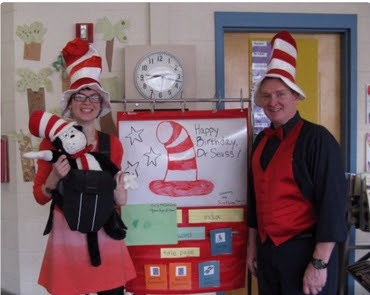
Earlier this month, the first lady sent out collections of 10 Dr. Seuss books to one school in each state to mark National Read a Book Day.
In a letter published on the Horn Book’s Family Reading blog, Cambridgeport Elementary School librarian Liz Phipps Soeiro said that her school wasn’t in need of the books, which included famous titles such as “The Cat in the Hat.”
“I work in a district that has plenty of resources, which contributes directly to ‘excellence,’” she wrote. “My students have access to a school library with over nine thousand volumes and a librarian with a graduate degree in library science.”
Instead, she wrote, the White House should worry more about providing support to schools that are underfunded and subject to government neglect.
“Why not go out of your way to gift books to underfunded and underprivileged communities that continue to be marginalized and maligned by policies put in place by Secretary of Education Betsy DeVos?” she wrote.
A moron of the most typical kind, but now an icon of the left because of her vacuous hatreds based on nothing at all other than the emptiness in her life. But let us also recall this small touch at the end at the link:
Soeiro did not note that former President Barack Obama and First Lady Michelle Obama both read Dr. Seuss books to children several times during their eight years in the White House.
There’s even more. She has even been photographed displaying The Cat in the Hat! which I have taken from Mark Steyn.
It’s not even hypocrisy. She is just a stupid woman with nothing else in her life other than the useless partisanship of her comrades on the left.
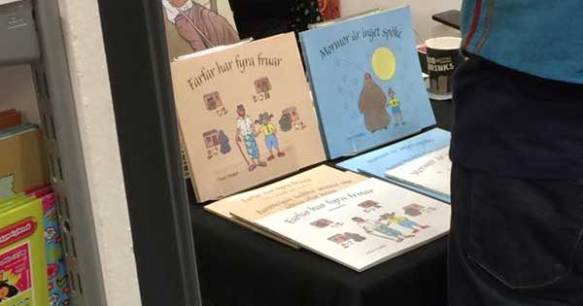
There’s a new world coming. In the meantime, if you are looking for some children’s literature, let me recommend Economics for Infants. I doubt it would make it past the librarian at Cambridgeport Elementary School even though she is in need of it more than most.
Blogging is for people who are sick of shouting at the TV set. Not much more satisfaction but at least you get to share it with others. I went back and looked at the first three posts I put up and I can see a certain kind of stability in my frustrations that trigger a post. The first one was titled, Cranks and crazies everywhere about government spending:
Here in Australia the Government pretends that it has some kind of strategy for getting the budget back into surplus of which two things may be said. The first is that – although in its words alone and not be its actions – by making the commitments they have made Gillard and Swan have at least recognised getting the budget into surplus is actually something that ought to be done. If there are therefore any cranks and crazies around in the US, it is the people who have been complicit in allowing the level of debt to rise to $US16 trillion with not a strategy in sight to bring it back down or, indeed, even to reverse its upwards course. What do our PM and Treasurer think of an Obama administration that has not presented a budget to Congress in three years? For Republicans to try to get some kind of fiscal action out of a Democrat Senate is just what anyone with sense would want them to do. If there are cranks and crazies around in the US, they are almost entirely found on the Democrat side of the aisle.
But the second matter shown by our leadership team is to see just how badly these people have mangled the one economy that has been in their charge. Handed not just a deficit free economy but an economy entirely free of debt, handed on a plate a mining boom designed to feed into a Chinese boom, they have managed in just five years to create massive debt and are about to oversee this forecast fall in living standards which is anyway evident in the shrinking of the private sector at the present time.
The second oldest post was about the American election, which have fascinated me all my life. My policy consistency is remarkable to myself, since from Kennedy to Reagan to Trump I have sought the same thing. This one was on Romney had already written about the 47% in his book published in 2010.
There has been quite a bit of focus on Mitt Romney’s having mentioned that 47% of the American population do not pay income taxes. And much of the commentary has been that he made the comment behind closed doors and out of hearing of most of the population. But the fact is that Romney had made the same comment and had made the same point in his book, No Apology, which was published in 2010.
Not that it mattered to anyone, least of all his fellow Republicans who were quite content, even then, to be a pretend opposition. Trump has exposed it all but most people in politics aren’t actually interested in policy. And the third of those early posts I will bring back is about Keynesian theory versus the classics, an old theme. Interesting, though, that this was a revelation to me even as recent as five years ago, put under the heading: Saving and Investment.
The deficits and debts we see around us everywhere are a consequence of a Keynesian model which has been fashioned on the belief that there is some means to conjure goods and services into existence merely by spending money to buy them. It is such a hopelessly false idea, but since something like 95% of the world’s economists believe this stuff, or at least have never stopped to think about it, on they go, advising governments to take actions to create demand for 105% of everything available for sale.
And because governments get first dibs at what’s available since they get to print the money they are buying things with, they don’t notice that there are no savings to back up the demands they make. It is the private sector that finds itself unable to grow and employ since the inputs they would normally have put to use have been already taken up by governments. But since economic theory tells governments this is the right thing to do even when common sense should tell them that it’s not, on they go, creating a wreck of any economy where this Keynesian stuff is being tried.
I’m afraid there is no helping it. We are going to have to abandon this demand side Keynesian view of things and return to the classics.
Anyway, progress does get made. Trump is president and Keynesian theory is rotting on the vine.
But this is still in large part a blog for me to communicate with family: Hi Joshi. And hi to the rest of you as well.
I came from an era in which casual sex never happened. The pill changed it all, but so too did “The Playboy Philosophy”. Written in the early 1960s, it is Hugh Hefner’s contribution to the decadence of our own time. It has been the twentieth century’s most important contribution to philosophy and culture. The one and only rule about sexual relations is that other than monitoring the ages of those who are involved, there are no rules. There was a time when people knew what was wrong with the Playboy Philosophy – we read it in the same spirit that we read Abbie Hoffman’s Steal this Book – but those times are long gone. Sex without responsibility and attachment is a kind of adolescent boy’s dream come true. But as we have since discovered, sexual anarchy is the worst of all possible worlds. So to the song:
As the story goes, it was first offered to Johnny Mathis; Columbia Records boss Mitch Miller is said to have blackballed the song, claiming it was immoral. Dawn Eden might think ol’ Mitch may have been on to something:
Like many songs from that more innocent era, “Will You Love Me Tomorrow” expresses feelings that most people would be too embarrassed to verbalize. There’s something painful about the way its vulnerable narrator leaves herself wide open. Yet, even though her asking the song’s title question implies a certain amount of courage, it’s clear that she’s ready to accept a positive answer without questioning it — which is not surprising, given the lyrics’ description of how the evening has progressed. By the time one is worrying about how the other person will feel tomorrow, it is usually too late.
For most unattached single women in New York City, and I would imagine much of the rest of the country as well, casual sex is the norm. It’s encouraged by all the women’s magazines and television shows from “Oprah” on down, as well as films, music, and the culture in general. And while “love” is celebrated, women are told that they should not demand to be loved tomorrow — only respected.
If it’s encouraged for women, it’s almost mandatory for men; a woman who is not sexually active is pitied, while a man who is not sexually active is mocked and ridiculed. (Which may be one reason why very few men — Frankie Valli is one who did — ever recorded this song.) “Tell me now, and I won’t ask again” turns out to be a variation on a theme by Scarlett O’Hara: “I’ll think about that tomorrow.”
This is a song from the 1960s written by Carole King but is the lament of many a woman of our own times. The way the song is presented in the video above by the Shirelles, who sang it originally, you would not know it is the saddest imaginable song with a sadder still message. Perhaps the Amy Winehouse version is truer to its meaning if for no other reason than that she herself had the saddest life. Here are the words with a message that can hardly even be registered by many inside our own decaying culture.
“Will You Love Me Tomorrow”
Tonight you’re mine completely
You give your love so sweetly
Tonight the light of love is in your eyes
But will you love me tomorrow
Is this a lasting treasure
Or just a moment’s pleasure
Can I believe the magic of your sighs
Will you still love me tomorrow
Tonight with words unspoken
You say that I’m the only one
But will my heart be broken
When the night meets the morning sun
I’d like to know that your love
Is love I can be sure of
So tell me now and I won’t ask again
Will you still love me tomorrow
Will you still love me tomorrow
Will you still love me tomorrow
Will you still love me tomorrow
Pick-up artists and the hook-up culture are the way of the world. A friend of mine’s nineteen year old daughter just put Tinder onto her phone. My friend is hopeful that it will be all right, but if it will be, it will only be by the greatest good fortune since the culture will no longer look after her daughter nor give her sound advice. The best that can be hoped for is to get through your twenties with no major disasters. How it can be done today is to me an unknown.
Hugh Hefner has now gone to God at age 91. Of most interest to me is that although surrounded by the most beautiful women through the whole of his adult life, he lamented at the end that though surrounded by “playmates”, he never found a soulmate. His question was the opposite from that found in the song, his question was will I still love you tomorrow, and that, my friend, is the only question worth asking.
[The basic theme is from The Other McCain where the link is found.]
And now, on July 23, 2020, I am adding in this which was a link at the end of the post by The Other McCain: A moment’s pleasure.
About twice a year, someone has the temerity to ask me why I would think any of the pop songs I grew up with could possibly have any relevance today. And my answer is always the same: I turn to the shelf, pull down Scepter 1211, then start the turntable. An opening perilously close to lounge music, and then Shirley Owens, somewhere between wistful and wanton:
Tonight you’re mine completely
You give your love so sweetly
Tonight the light of love is in your eyes
But will you love me tomorrow?
This was the first composition for Brill Building publisher Don Kirshner by Carole King (music) and Gerry Goffin (lyrics), and as the story goes, it was first offered to Johnny Mathis; Columbia Records boss Mitch Miller is said to have blackballed the song, claiming it was immoral.
Dawn Eden might think ol’ Mitch may have been on to something:
Like many songs from that more innocent era, “Will You Love Me Tomorrow” expresses feelings that most people would be too embarrassed to verbalize. There’s something painful about the way its vulnerable narrator leaves herself wide open. Yet, even though her asking the song’s title question implies a certain amount of courage, it’s clear that she’s ready to accept a positive answer without questioning it — which is not surprising, given the lyrics’ description of how the evening has progressed. By the time one is worrying about how the other person will feel tomorrow, it is usually too late.
For most unattached single women in New York City, and I would imagine much of the rest of the country as well, casual sex is the norm. It’s encouraged by all the women’s magazines and television shows from “Oprah” on down, as well as films, music, and the culture in general. And while “love” is celebrated, women are told that they should not demand to be loved tomorrow — only respected.
If it’s encouraged for women, it’s almost mandatory for men; a woman who is not sexually active is pitied, while a man who is not sexually active is mocked and ridiculed. (Which may be one reason why very few men — Frankie Valli is one who did — ever recorded this song.) “Tell me now, and I won’t ask again” turns out to be a variation on a theme by Scarlett O’Hara: “I’ll think about that tomorrow.”
And, says Dawn, “if you have to ask someone if they’ll still love you tomorrow, they don’t love you tonight.”
I still love this song, and always will. But if you thought it was just an innocuous pop tune from forty years ago, you might want to think again. “Will You Love Me Tomorrow” contains the seeds of the sexual revolution — and, perhaps inevitably, the counterrevolution as well.
Posted at 7:49 AM to Table for One , Tongue and Groove
TrackBack: 3:17 PM, 14 April 2004
» West Hollywood — where Carnivals rule! from Classical Values
The Carnival of the Vanities just keeps getting better and better! Boi from Troy hosts it this week, with a genuinely West Hollywood theme — because he’s right there in the thick of things. What’s more, he was nice enough……[read more]
— If it’s encouraged for women, it’s almost mandatory for men; a woman who is not sexually active is pitied, while a man who is not sexually active is mocked and ridiculed. —
I think you’ll find that that varies considerably, according to the locale, and even more according to the person under the microscope.
Here on Long Island, we partake in considerable degree of the New York City culture and ethos. Still, the reaction of one’s acquaintances to the discovery that one is celibate can be quite laudatory…if one has the right sort of acquaintances, from the right sort of circle, or if one is forthright and fearless about one’s convictions and standards.
At least, I don’t think my buds ever laughed at me for the nine arid years when I was “between wives.” And the fact that I’m the most heavily armed private citizen in New York had, well, only something to do with it.

 Law of Markets