
Following the path of most resistance

Whenever I worry about the Government only getting it right about three-quarters of the time, I am reminded of just how bad things could be if the other mob took over again. As is said, for every problem there is a solution that is neat, plausible and wrong. Labor seems to have a lock on every one of these solutions as does its cheer squad in the media.

GDP rises more rapidly than expected. Good news, yes? Don’t you worry about that, there’s always a leaden cloud around on even the sunniest days. The first para from the Business Editor of the SMH:

The imbalance in the Australian economy was highlighted further on Wednesday, with the mining industry contributing around 80 per cent of the jump in growth.

Well if it’s imbalances you’re after, let me then suggest this:

The new national minimum will be $640.90 per week, or $16.87 per hour. It amounts to a 50 cents per hour increase to the hourly rate.

The 50 cents per hour is there no doubt to trivialise the amount. I-spit-on-your-50-cents-an-hour kind of thing. Really, why mention it unless you are trying to show how minimal the increase actually was. But 50 cents an hour or not, it comes to $33,333 per year. Do you see that? No one in this country, no matter how minimal their skills and experience, may by law be paid less that $33,333 per year. And then try to employ someone for the weekend or nights. Don’t forget the super and workers’ comp. We are a high wage economy trying to deal with low productivity growth.

This is a hard row to hoe for business. It’s not easy to find that kind of money. If you are running a coffee shop, you need to sell 9523 cups of coffee over the course of a year at $3.50 and that’s before the on-costs get counted in. What a good idea it must also have been to raise the cost of energy as well through the carbon tax.

Labor, and its Labor-lite supporters you can find in the oddest places, love the populist bits. But the reason Labor is not the permanent government of this country, in spite of all of the populist stuff they peddle, is because they drain the country of its economic energy. Tony and company are doing what they can in the face of massive resistance since in each person’s own world, there is no reason they can see why they can’t have more of what’s going for less effort in actually helping to produce.

I can only say I wish them well in trying to fix things up, because there really is a lot to fix.

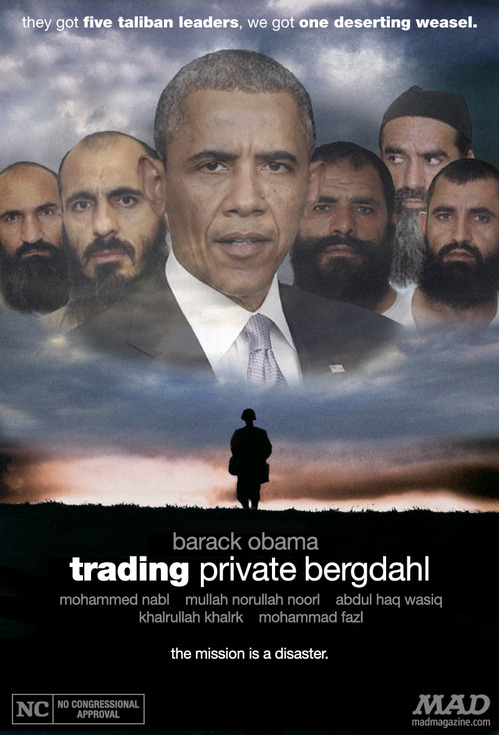
How many dumbbells in these pictures?

It is actually the second of these that has high significance. It comes from Mad Magazine which has always been mildly centre-left. It comes out of New York, not prime acreage for conservatives and aimed at 12-14 year old boys who are seldom by then on the right side of politics. For Mad to buy into this is a sign of some very strong shifts going on. People even amongst these elites must be starting to feel the damage caused of Obama stupidity and incompetence having an effect. Interesting to see even if too late.

obama pumping iron

obama mad magazine

Defending the History of Economic Thought on e-books

You can get my Defending the History of Economic Thought as an e-book at this link. It is the first ever book length defence of HET and was written because the History of Economic Thought was, and still is, under threat of exile from amongst economists to the History and Philosophy of Science. It thus is not just an examination of why economists must study HET to become better economists, but why economists must preserve HET if economics is itself to become a better study of how economies work. This is from the link to the e-book:

This book explains the importance of the history of economic thought in the curriculum of economists, whereas most discussions of this kind are devoted only to explaining why such study is of value simply to the individual economist. Steven Kates reaches out past the individual to explain the crucial importance of the history of economic thought in the study of economics itself; without its history at the core of the curriculum, he contends, economics is a lesser subject, less penetrating, less interesting and of much less social value.

The book has had a number of reviews which reminded me just how useful this book is, not because they agreed with me, but because they didn’t. Not that any of them disagreed with me over the importance of the subject itself, only about whether my approach to teaching HET was a sensible one or whether I had overstated the opposition to HET amongst the profession in general. But twice in five years, major societies were faced by attempts to remove HET from within the economics classification and only rearguard action by a handful of historians of economics was able to reverse these already taken decisions.

I will be speaking about the book at the History of Economic Society meeting in Montreal in June and then, at the Australian Society meeting in Auckland, there will be a symposium on the book and its message. Economists have shifted away from being part of the humanities into becoming, not just a social science but social-physics. It is mathematics and pseudo-rigour that now drive the way in which economic theory is designed. Economics cannot be mathematical since there are no data for most of the important questions economics tries to answer. One of the reasons Keynesian economics will not die is that there is a belief that you can measure the things that need to be measured since the national accounts – a set of identities, for heaven’s sake – can be used as a proxy for economic relations. The History of Economic Thought at least reminds economists that their subject once was part of the humanities and some even begin to realise it still needs to be if it is to be any use to society.

Say’s Law and Austrian economics

I have for the first time come across an article that invokes Say’s Law exactly right. It has come up on the Mises Daily website, is by an economist by name of Patrick Barron and titled, Why Central Bank Stimulus Cannot Bring Economic Recovery. It has surprised me to see it since even though Say’s Law is at the heart of the classical theory of the cycle, Austrian economists have tended to ignore the single most important theorem in economics, I think because it is hardly mentioned by either Mises or Hayek. It is also a principle that predates what is Austrian about Austrian economics, going back to the earliest days of economics, first having been discussed by James Mill in 1808 and definitively stated in no uncertain terms by John Stuart Mill in 1848 following the general glut debate (1820-1848). So what does Barron say is the problem with the central bank stimulus?

They are following Keynesian dogma that increasing aggregate demand will spur an increase in employment and production.

Exactly so! The number of economists across the world who understand this is infinitesimal. Aggregate demand is so ingrained it is almost ineradicable. Even Austrian economists of the most pedigreed kind get this wrong. Not this time. And what’s more, he reminds us that this error is a product of Keynes and The General Theory. Say’s Law understood correctly states demand is constituted by supply. Here Barron points out just this very thing:

Keynes tried to prove that production followed demand and not the other way around. He famously stated that governments should pay people to dig holes and then fill them back up in order to put money into the hands of the unemployed, who then would spend it and stimulate production. But notice that the hole diggers did not produce a good or service that was demanded by the market. Keynesian aggregate demand theory is nothing more than a justification for counterfeiting. It is a theory of capital consumption and ignores the irrefutable fact that production is required prior to consumption.

I only wish it were all that irrefutable. In real life, it is refuted every time a Keynesian stimulus is tried. Amongst economists it is the most immovable of dogmas. But let us continue.

Central bank credit expansion is the best example of the Keynesian disregard for the inevitable consequences of violating Say’s Law. Money certificates are cheap to produce. Book entry credit is manufactured at the click of a computer mouse and is, therefore, essentially costless. So, receivers of new money get something for nothing. The consequence of this violation of Say’s Law is capital malinvestment, the opposite of the central bank’s goal of economic stimulus. Central bank economists make the crucial error of confusing GDP spending frenzy with sustainable economic activity. They are measuring capital consumption, not production.

Highlighted here is the difference between the market rate of interest (money) and the natural rate (things). Very nineteenth century but universally accepted by economists right through to 1936. Even Keynes made it central to his Treatise on Money, but that was in 1930 before he came across Malthus. Keeping the monetary side of the economy separate from the real side is crucial to even the most rudimentary understanding of how an economy works.

We must remember that the very purpose of central bank credit expansion is to trigger an increase in lending in order to stimulate the economy to a self-sustaining recovery. But this is impossible. At any one time there is only so much real capital available in society, and real capital cannot be produced by the click of a central bank computer mouse. As my friend Robert Blumen says, a central bank can print money but it cannot print software engineers or even cups of Starbucks coffee to keep them awake and working.

Me and his friend Robert should get together. I harangue my classes holding a $5 bill in one hand and a cup of coffee in the other and ask if they can see the difference. And you would be amazed how hard it is to see the difference, not then and there, but when it counts. Economists are forever pointing out how much money various businesses have stashed away in banks as if the existence of such money stocks is equivalent to a stock of unemployed labour or capital goods available for investment.

So we come to his conclusion, where he discusses not just the wasted effort through trying to stimulate demand by printing money, but the actual wilful ruining of economies by their sensationally misguided attempts to increase the level of spending:

The governments and central banks of the world are engaged in a futile effort to stimulate economic recovery through an expansion of fiat money credit. They will fail due to their ignorance or purposeful blindness to Say’s Law that tells us that money is the agent for exchanging goods that must already exist. New fiat money cannot conjure goods out of thin air, the way central banks conjure money out of thin air. . . . In fact rather than stimulate the economy to greater output, bank credit expansion causes capital destruction and a lower standard of living in the future than would have been the case otherwise.

It’s all insane, really, but what may be more demented than anything is the refusal of the mainstream to perhaps think about this standard macroeconomic theory of theirs. You know, insanity as in doing the same thing over and over again and expecting different results. As in thinking an increase in aggregate demand will lead to an increase in anything before there has been an increase in production.

Not for the first time do I suggest that anyone interested in Say’s Law and much else should pick up a copy of my Free Market Economics, although I would hold off at the moment for a couple of months. The copyedited manuscript of the second edition arrived via email just today so I will have a very intense week in front of me in going through it with a fine tooth comb. It will be out in September when you can then pick up the new improved edition for yourself.

The scandal-a-day approach to politics

The Obama scandal-a-day approach to politics is beyond clever. Rather than each scandal building upwards into one large fortissimo of outrage, each succeeding scandal makes people forget about the scandal from the day before, especially with the media on hand to play down everything if it’s done by a party of the left. Look at this. Disgusting beyond all measures, but as part of a far-left administration of such startling incompetence willing to lie about everything, everyone is just weary of pointing out the obvious.

Qatar allowing released Taliban men to move freely in country…
Reintegration: Military hides Bergdahl from public view…
FLASHBACK: ‘Converted to Islam And Taught Captors Bomb Making Skills’…
NYT: Left note explaining desertion before going AWOL…
REPORT: Wanted to Renounce Citizenship…
Team Leader: ‘A lot more to story than soldier walking away’…
Death sentence ‘in the realm of possibilities’…
Pentagon knew whereabouts but didn’t risk rescue…
14 SOLDIERS WERE LOST Searching for Bergdahl…
Never Officially Listed as POW…
White House apologizes for ‘oversight’ in notification failure…
FATHER: ‘I am still working to free all Guantanamo prisoners’…
MAG: White House Overrode Internal Objections To Terrorist Release…
‘Suck it up and salute’…
Rubio: Obama ‘Believes He’s Become Monarch Or Emperor’…
Anger explodes…

And by this time tomorrow or at the latest the day after there will be something else. But this is a policy that works only on the left. If you are a right -of-centre party, a scandal-a-day is a technique I wouldn’t try. For parties of the right, even if there is nothing going on, the media will be sure to find something even if there’s nothing much there to be found.

Whose side do you think he’s on?

The list of referred articles from Drudge and not one mentions the likely point:

Qatar allowing released Taliban men to move freely in country…
Reintegration: Military hides Bergdahl from public view…
FLASHBACK: ‘Converted to Islam And Taught Captors Bomb Making Skills’…
NYT: Left note explaining desertion before going AWOL…
REPORT: Wanted to Renounce Citizenship…
Team Leader: ‘A lot more to story than soldier walking away’…
Death sentence ‘in the realm of possibilities’…
Pentagon knew whereabouts but didn’t risk rescue…
14 SOLDIERS WERE LOST Searching for Bergdahl…
Never Officially Listed as POW…
White House apologizes for ‘oversight’ in notification failure…
FATHER: ‘I am still working to free all Guantanamo prisoners’…
MAG: White House Overrode Internal Objections To Terrorist Release…
‘Suck it up and salute’…
Rubio: Obama ‘Believes He’s Become Monarch Or Emperor’…
Anger explodes…

Obama is on the other side.

Piketty is an economic illiterate

I have finally put my hands on a copy of Thomas Piketty’s Capital in the Twenty-First Century. And what do I find, that this world famous book, this book that is going to set our economic world on its head, in its introductory chapter makes a fundamental error in basic economic theory I would fail any first year student for making. Forget about fraudulent data. He has confused a shift in demand (ie a movement of the demand curve) with a change in quantity demanded (the effect on the number of units bought caused by a change in the price). For an economist, you cannot be more wrong than that. Here is the passage in which, of all things, he is discussing Ricardian land rents in a section he titles, “Ricardo: the principle of scarcity”:

“To be sure, there exists in principle a quite simple economic mechanism that should restore equilibrium to the process: the mechanism of supply and demand. If the supply of any good is insufficient, and its price is too high, then demand for that good should decrease, which should lead to a decline in its price.” (p.6 – my bolding)

He has here basically stated that insufficient supply (a shortage) will lead to a fall in price which you can see from the bits in bolding. An economist should immediately see the flaw, but for those not trained in the dark arts, let me explain.

1) The phrase, “if the supply of any good is insufficient” means, suppose there is more being demanded at the price than is being supplied. That is, suppose the price is below its equilibrium level so that there is upwards pressure on the price. He doesn’t say it quite that way, but only that “its price is too high” which, in theory terms, is a nonsense statement. But since he is talking about the pressure of demand on supply, he can only mean that the increase in demand is pushing the price up which is driving some people out of the market. As economists like to put it, the demand curve has moved to the right and prices have therefore gone up.

2) But because “its price is too high,” he writes, “then demand for that good should decrease.” Big, big mistake. He has shifted his meaning of “demand” from representing a movement of the entire demand curve to a movement along the demand curve. Higher prices, he is saying, cause the quantity demanded to fall. The demand curve stays put but with a higher price some people are leaving the market. That is why demand curves are downward sloping.

3) Then he writes that “demand for that good should decrease, which should lead to a decline in its price”. He has now mistaken a fall in quantity demanded, a movement along the curve, for a fall in demand, a movement of the entire curve to the left. He has confused a fall in the quantity demanded caused by a rising price with a fall in the level of demand, which is a shift of the entire curve.

This is one of the things I harangue my students about to stop them from making such elementary mistakes. Compare what Piketty wrote with the text of my Free Market Economics where I warn my students against making this absurd but common enough error, at least common enough amongst economic illiterates. From page 100:

Demand versus Quantity Demanded

People often do talk about demand as if it is a specific amount and it is therefore important to make sure that when someone is talking about “demand”, that one is aware of which meaning they have in mind.

Compare these two statements:

(1) if the price goes up demand goes down (and who would deny this is so?)

(2) if demand goes down the price goes down (and similarly, who would deny this?)

This becomes the following conclusion if the two statements are run together:

(3) if the price goes up [demand goes down; if demand goes down] the price goes down.

That is, if the price goes up the price goes down. A higher price is the cause of a lower price. Obvious nonsense, but it comes from using the word “demand” in its two different meanings.

In (1), this is using the word demand to mean a movement along the demand curve when the price happens to rise. In (2), this is using the word demand to mean a shift of the entire demand curve when one of the underlying factors has changed.

It is therefore essential to always make sure which meaning of demand is intended. You can usually tell from the context of what is being said, but the words here are slippery and can lead you into trouble.

This is trouble, all right. I find it absurd that Piketty cannot tell the difference between a shift of the demand curve and a movement along the demand curve.

To trust anyone’s economic judgment on serious economic matters who makes such a fundamental error would be ridiculous. He has 650 pages of stats and data but almost literally doesn’t know the first thing about economic theory?

The sentiment of a large majority of the active business community

Reading classical economics for me is to be in the company of economists who understood how economies worked. I have of late been reading Simon Newcomb’s “The Problem of Economic Education” which was published in The Quarterly Journal of Economics in July 1893. And what he does is go through the kinds of economic illiteracy that was all too common in the general population of his time, with a decidedly pessimistic view of whether these ideas can ever be eradicated amongst the population in general. And this was even though there was then universal understanding amongst economists about how fallacious these fallacious ideas were. An example:

From the economic point of view, the value of an industry is measured by the utility and cheapness of its products. From the popular point of view, utility is nearly lost sight of. . . . The benefit is supposed to be measured by the number of laborers and the sum total of wages which can be gained by pursuing the industry. . . . Here legislation only reflects the sentiment of a large majority of the active business community. A man’s economic usefulness to society is supposed to be measured by his expenditure of money and consumption of goods. He who spends freely is pointed out as a benefactor; while the miser, who invests his income, is looked upon as a selfish being, mindful only of his own aggrandizement. (p. 7)

Well, that was in 1893 for goodness sake. Who today would think spending is good and saving bad? From The Australian today:

CLIVE Palmer wants the age at which Australians can access their superannuation lowered, saying it will boost domestic demand for goods and services and increase economic growth. . . .

“I think we should be allowing people to access their super at 50 if they want to.

“It’s up to them, it’s their savings … we want to get that money released from the super funds.”

On this, Newcomb wasn’t even close to being pessimistic enough. Now, and since 1936, even economists think saving is a bad thing and spending is good.

Media report media bias

So if you read in the media that media bias is seen by 48% of the population as a worse problem than political donations, what would the outcome have been if the media had not been as biased as it is?

More Americans believe that biased media coverage is a bigger problem in politics than donations from fat cats, according to a new poll.

Rasmussen Reports found that when given a choice, 48 percent of voters believe media bias is the No. 1 villain while 44 blamed big campaign contributions.

And among Tea Party members, 77 percent said media bias and reports against the movement are the top problem in politics.

The poll found that voters clearly despise the money from special interests pouring into politics, but their opinion of the media is even harsher, fed by a general perception that the press goes out of its way to help Democrats, including President Obama, not Republicans.

It is a problem without a solution.

Democratic principles and the people be damned

Let us begin with Peter Hitchens’ reflections on the democratic principle as seen by the people the people elect:

Democracy is very well-defended against public opinion. Political parties, especially, are immune to almost everything that the majority actually desires, and are much less interested in mass tastes than shopkeepers, broadcasters, or industrial corporations. Modern politicians employ battalions of professional deceivers and manipulators, whose main job is to persuade the electorate to want what they are already being given, or what they are going to get. Our democratic leaders much prefer this to giving the people what they actually want.

So it is quite funny to watch men and women who are publicly dedicated to government for, by, and of the people, getting angry and exasperated when the people actually speak.

Events in Britain over the last few days have reminded me strongly of Berthold Brecht’s embittered sneer at his East German Communist comrades who, faced with a revolt by the workers they claimed to represent, ordered those workers to do penance for this outrage.

As Brecht sarcastically enquired, “Wouldn’t it be simpler if the Government just dissolved the people and elected another?”

And what has brought on these reflections on politicians and democratic principles?

Here, the very large vote for the United Kingdom Independence Party (UKIP), a fourth party which incoherently but emphatically defies the consensus, has been treated by politicians and their media toadies as a problem with the voters which has somehow to be contained.

The idea that all these voters have broken the loyalties of a lifetime for good reason, and that leaving the European Union and restoring control of the national borders are good ideas (which they are), is never considered for a second. Instead, having been dismissed as ignorant bigots for the past six weeks, the insurgent voters are now the object of a campaign to bamboozle them with fake sympathy, combined with an utter refusal to do what they want.

Quite unaware of how this sounds, my country’s political and media elite simply cannot stop themselves treating legitimate discontent as some sort of pathology. They, the governing class, cannot possibly be the problem. It must the voters who are mistaken, misguided, or in some way mentally ill.

Our elites wish for world government while people like myself wish to preserve those tiny enclaves of sanity in the midst of a quite mad world. It won’t happen and so 2114 will be as unimaginably different from 2014 as this year is from the world a century ago. But a one-world horror with an international elite is the aim right now amongst our progressives irrespective of what anyone might wish for and desire. I remember border crossings and national money and much else about which I wish we could turn back the clock. So I am with Peter Hitchens on this and much else besides.