Free speech and racist abuse

I think of myself as a free speech absolutist. There is no point of view that is not open for debate and all perspectives are invited to join. Jews are descended from apes and pigs. Well, that’s one way of looking at things. Jews are murderers of Gazan children and use their blood to make matzohs. Speak the truth as you see it. There was no holocaust but if there were one we would do it right this time round. Interesting, please tell me more.

In its way, I am outraged by each of these but the principle is more important than the abuse that some make of the principle. Public discourse is very dangerous, but hidden beliefs are perhaps more dangerous than those made in public. Bring them out into the light. Go on, discredit yourself, because if there comes a time when saying such things in public does not make you a social leper, then things have already gone too far. It is genuinely useful information. It’s good to know what can and cannot be said in public without consequence, but there should be nothing to stop you from saying what you want.

But racist rants in public amongst total strangers, people abused on the streets by others they do not know, are out of bounds in a civilised community. It is just not on, rightly illegal.

Ordinary people are not political philosophers. They are not social theorists who have read, absorbed and contemplated the arguments of John Start Mill. They are not people who are immune to abuse for their religion, skin colour, gender or anything else. Most people are prepared to debate all issues but they are not prepared to have to deal with some idiot shouting abuse at them on the street.

If the government cannot distinguish between free speech in a civilised community and a racist rant individually one-on-one in a public place, then it should not have gotten into this debate in the first place. And had they made this distinction, they could have presented their aim in terms of stopping racists and not protecting the rights of bigots. What a loser argument that was! Why didn’t the government show they were providing something that will aid comity in the community, not taking something useful away. They have damaged the cause of free speech in this country.

Reflections on World War I

When I was young I would go to the Armistice parade which were just around the corner from where I lived, and there I would see the elderly veterans from the first World War. And as I grew up, I would meet the same elderly veterans, except they were by then from the second World War. And now I meet the same elderly veterans but this time from the War in Vietnam who are, of course, my own contemporaries. No reason to mention it other than that sense of personal connection to the war that began this month a hundred years ago.

But what is remarkable is that the country each of these defended was a different country, and each of these was very different from the country we live in now and no doubt very different from the country as it will be thirty years or more hence. Amongst the many things that I read as a university student very few have stuck with me as active memories, but one was the statement made somewhere by someone that every social theorist and revolutionary, had they returned to earth a hundred years after they had written, would have hated the world they had helped to create. Maybe part of getting old is that sense of alienation from the present. Things look crazy, and I speak as someone who was not only contemporary with the hippies and the new left but was actually one amongst them. No one since has been as crazy as we were and I continue to feel my generation has a very great deal to answer for. But perhaps I am just one more of those theorists who would find the world they helped to create more awful than they could possibly have imagined, but there are still fifty more years before the hundred years has gone by. But it will not surprise me that I would not like the world I will never see but have helped to create. It was perhaps ever thus.

My contribution to the mass of discussion on the outbreak of WWI is to mention my own favourite book on the war which is Frank Furedi’s World War One: Still No End in Sight. He makes the point that The Great War presented one of the great discontinuities in history from which the world we are in is still experiencing major aftershocks. But he reviewed the way things evolved decade by decade so that there is almost a geological stratification of the various periods. My hippy/era-of-the-new-left foundation period has its own ways of marking individuals. And if you see the 1960s against the 1950s, the 1940s, the 1930s and of course back through to the 1920s, you cannot help noticing how different each period was from each other, and of course from the present. Part of it is the technology but there is something else too. The mood shifts and the temper of the times changes. The only time I ever remember my mother being outraged by something I said – and she was a woman of the left – was when I quoted a friend of mine who said, “better a sexual revolution than no revolution at all”. I see my mother’s point, but to tell the truth, the 1960s were as puritanical compared with today, as Edwardians were in comparison with we 1960s types. Such sweet innocence but it was very heaven to be young. I suppose it always is.

That World War I broke up ancient empires and created new ones is not in doubt. That we would be as different as different could be had WWI been somehow prevented I have no doubt. But such is the way of the world. Major historical events happen as they will continue to do. What the book does is remind you that things change, nothing stays as it is, there is no permanence, and that everything you think really matters, down to the core values that you set your moral compass by, are but windblown ephemera whose existence a century from now cannot be even remotely guaranteed. We all live in the present, but the present keeps moving along into that unknown future which holds horrors one cannot even begin to imagine. And great pleasures too, of course, so we must just battle on.

The slow death of the American economy

ageing us businesses

The descent of the United States is taking so many different forms but economically it is heading down towards the middle of the pack and will fall lower before it even begins to turn around. This story from the Wall Street Journal looks at one aspect of this demise: Why It’s Worrying That U.S. Companies Are Getting Older. The effect of public spending and low rates of interest are not just inflation but also come in the form of a crumbling capital stock. In fact, this decay of capital is more insidious since it is harder to identify but eventually there is no doubting that the process is in place and that it is having a devastating effect.

Meanwhile there is this fully related story although modern economic theory would have trouble seeing how the are connected: $7,060,259,674,497.51–Federal Debt Up $7 Trillion Under Obama. How do you suppose this will eventually work its way out?

As of June, there were 115,097,000 households in the United States, according to the U.S. Census Bureau. The $17,687,136,723,410.59 in debt the federal government had accumulated as of the end of July equaled $153,671.57 per household.

The $7,060,259,674,497.51 in new debt that the federal government has taken on during Obama’s presidency equals $61,341.82 per household.

An absolute shambles and with no one in charge.

The entrepreneur and modern economic theory

The entrepreneur has been written out of economic theory. Let me explain:

      • the dominance over the past century of the economics of the English speaking countries
      • the absence of discussion of the entrepreneur in the economic literature written in English
      • the meaning of “entrepreneur” comes from the French entreprendre which means to undertake and therefore entrepreneur in English is literally translated as “undertaker” which has its other more common meaning as someone who buries people for a living – a morbid connection
      • interestingly as a sidelight, the German word to undertake is unternehmen and therefore the German for entrepreneur is Unternehmer but in this case with none of the morbid connectivity of English
      • Mill in 1848 was discussing the need for an English equivalent of entrepreneur and lamented that no such term existed
      • Schumpeter’s notion of an entrepreneur embeds innovation
      • the Rothbardian version of an entrepreneur is someone who exploits opportunities others have overlooked
      • the meaning that is missing with such overtones is the plain notion of an entrepreneur as a factor of production that exists along with land, labour and capital – someone who runs a business and brings the other factors together in a productive profit making enterprise
      • all such entrepreneurs are almost certainly creative in their own way, some more than others, but it is the notion of the organiser of a business that is needed
      • economic theory has, however determined that it must follow physics in depending on external non-human forces, such as demand or utility with human decision making almost invisible
      • the use of MC=MR as the profit-maximising position is almost paradigmatic in that no actual human decision making is visible other than to follow the dots to the highest possible profit
      • although this is the essence of the theory of the firm, what is omitted is the possibility of novelty and innovation
      • an innovative entrepreneur is inconsistent with economics as physics since it opens up the possibility of discontinuity
    • discontinuity via innovation makes mathematically-based economics a limited approach to understanding the dynamics of economic change since the future cannot be expected to be like the past.

Economie du Libre Marché

Astonishing to come across this, my work on Say noted in French in France. To find others who think about Say in the same way as I do, is astonishing. Say along with JS Mill, are odd as it may seem, part of the road that must be travelled to put economic theory onto a solid foundation.

Steven KATES est professeur au Département « Economie, Finance et Marketing » de l’Université RMIT de Melbourne (Australie). Avant d’évoquer deux de ses récents ouvrages, citons quelques extraits de son analyse du livre d’Evert SCHOORL ci-dessus :

« C’est le genre de livre qui devrait faire de l’histoire de la pensée économique une part essentielle de l’éducation de tout économiste…
..le livre… présente donc la vie de l’un des économistes les plus influents qui ait jamais vécu et dont l’oeuvre a encore beaucoup à apporter à la fois aux économistes et aux historiens de la pensée…
… l’épisode de son affrontement à un Napoléon à l’apogée de sa puissance fait de la propre intégrité personnelle de SAY un réel sujet d’étonnement…Cela a quelque chose de surhumain…
…Le personnage mis à l’honneur est la même personne décrite par John Stuart Mill (penseur philosophe britannique de grande influence qui rencontra J-B SAY) :
« un homme réellement honnête, courageux, éclairé »
Le même John Stuart Mill a également écrit de J-B SAY :
« c’est un bel exemple du meilleur type de républicain français »

S. KATES a publié en 1998 (réédition en 2009 ) :
« La Loi de SAY et la Révolution Keynésienne »
[ Dans ce livre fascinant et bien documenté, KATES contredit l’interprétation bien connue de Keynes de la « Loi des Marchés de Say… ».
Ce livre est une critique des positions de Keynes hostiles à la « Loi des Marchés de SAY » ; il oeuvre donc en faveur d’une réhabilitation de cette dernière.]

S. KATES a également publié en 2011 :
« Economie du Libre Marché…. »
« Free Market Economics – An Introduction for the General Reader »
[Une contre-attaque théorique rafraîchissante face à la conception Keynésienne bien établie….
Le Professeur KATES a brillamment remis à l’honneur la Loi des Marchés

Economists and the stimulus – a five years after review

The Global Financial Crisis ended in the middle of 2009 at the very latest. A big explosion followed by the TARP and then nothing. Wherever your economy was by June that year, that was all there was. Not good but also not the Great Depression either. But also around the end of 2008 and then into 2009 there were the various Keynesian demand programs put in place that are the actual problem we face today. Credit is available and can be had and at relatively low rates. No one is in fear of some financial explosion, at least not in any serious way. Everyone is wary but no one is desperate.

The problem now is debt and deficits. Every economy is very quiet. Nowhere is there robust growth and a rapid return to full employment. Our economies are struggling to rebuild with no exception of any importance that I can think of although there is, as always, a range of outcomes. So we come to this survey on government policy conducted in the US. First there was this:

Question A: Because of the American Recovery and Reinvestment Act of 2009, the U.S. unemployment rate was lower at the end of 2010 than it would have been without the stimulus bill.

For me, an unbending Strongly Disagree. That our economies would go flat and the labour market would stop dead were straightforward, but I don’t use a Keynesian model. These were the actual results:

Strongly agree             39%
Agree                          43%
Uncertain                      0%
Disagree                       2%
Strongly disagree          0%

But then they asked this:

Question B: Taking into account all of the ARRA’s economic consequences — including the economic costs of raising taxes to pay for the spending, its effects on future spending, and any other likely future effects — the benefits of the stimulus will end up exceeding its costs.

You might perhaps argue that the net effect on jobs was positive even if the cost to the economy was massive. This is the true test of economic idiocy and on this they abysmally failed. These were the expert opinions:

Strongly agree             20%
Agree                          36%
Uncertain                      23%
Disagree                       5%
Strongly disagree          0%

Only one in twenty disagreed and that was only mildly. There is no understanding these results other than the impossibility of even understanding why there might be a problem trying to encourage economic growth from the demand side.

The entrepreneur and Say’s Law

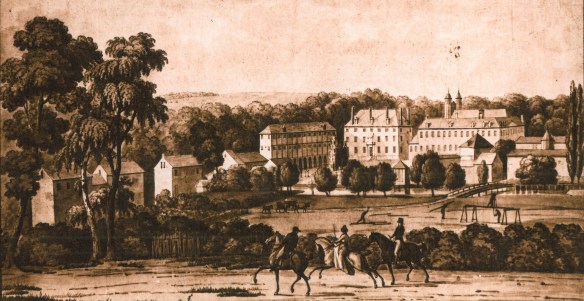
SKMBT_C45211070110270- filature-château vers 1825

I have just on Friday night at 11:27 sent off to the publisher the corrected proofs of the 2nd ed of my Free Market Economics. And while I think of the book as a modern version of John Stuart Mill’s Principles of Political Economy, I received an email that has made me think that there is possibly a different and deeper source for the book I wrote. There is about to be The First International Congress on Jean-Baptiste Say to be held in village in near Lille called Auchy-lès-Hesdin. And why there? Because that’s where J.-B. Say lived and built his business.

But the core issue of this conference is not about Say’s Law but about the entrepreneur. That, too, is what my text is about: the entrepreneur, Say’s Law (i.e. the law of markets) and the market economy. This is from the Elgar posting on the first edition of which the second is the same only much more:

The book does more than recast macroeconomics in its classical form. The microeconomic sections of the book also provide a different perspective on the nature of the market, the role of the entrepreneur and the unparalleled importance of uncertainty whose significance in economic analysis cannot be exaggerated.

That is exactly what this conference is about. These are the abstracts of the first set of papers listed in the 48-page conference program which is part of the opening round table on “J.-B. Say and the liberation of productive forces”:

It should be remembered, first of all, that under his training as a young merchant, Jean-Baptiste Say spent two years with his younger brother Horace, near London in Croydon. In 1786, he moved to Britain to learn the practice of English commercial business. This happened in the midst of the development of manufacturing in the UK when the introduction of mechanical looms gave a great boost to the whole industrial activity. It is clear that this first experiment in an expanding industrial environment, which lasted two years, deeply influenced the young J.-B Say who was gifted with an inquisitive mind and a talent of observation. Another element that makes J.-B. Say a competent expert to analyze the economic situation in England and identify the strengths and lessons for France lies in his experience as an entrepreneur in the creation of the spinning company in Auchy (France) in 1805.

In the Traité d’Economie Politique and in the Cours Complet d’Economie Politique, Jean-Baptiste Say develops a criticism of corporations and other industrial regulations. According to him, these regulations are barriers to the entrepreneurial freedom and to the progress of arts. They are almost always tools of individual and collective oppression and at the origin of various economic, social and political ills. In this paper, we detail Say’s argumentation against corporations and show that it is part of more general framework based on the influence of institutions on the economy and of machines on commerce. His critical analysis leads us to present his conception of a necessary liberation of the forces of production, which requires the creation of a general framework favorable to the freedom to undertake and a blossoming of the forces of production (machines). These elements also constitute the foundations of his political economy.

In Jean-Baptiste Say’s economic thought, a productive fund of industrial capabilities generates the emergence of entrepreneurs, workers and scholars. However, success only ensues from the exercise of entrepreneurial capabilities. This article analyzes several classifications of capabilities formulated by J-B. Say. Our first result highlights the fact that these capabilities go beyond the scope of the enterprise and concern the development of nations. Within the enterprise, there is a clear distinction between management and administration in J.-B. Say’s analysis ― the former is connected to the capacity of reasoning, whereas the latter demands qualities connected to control and supervision. Therefore, the entrepreneurial functions relative to uncertainty, innovation or inefficiency are linked to success but are not necessary conditions for the productive activity. We conclude that J-B. Say does not share the idea of an economic convergence between nations in a spontaneous way. A policy of economic development based on industrial education and the reinforcement of entrepreneurial capabilities is a necessary condition.

In his writings devoted to monetary questions, Say studies in details monetary, financial and bank innovations which he designates by the expression “representative signs of money”. Say’s analysis on money and its representation signs is very important since it takes place in a context of major change in the monetary field. The aim of this paper is to show how, in Says’ analysis, these representative signs of money are innovations of major importance. The paper begins with an analysis of the position of the representative signs of money compared to money itself. Then it studies promissory notes, bills of exchange and banknotes. Finally, the consequences of their circulation in the economy are presented, especially on the activity of producers.

Since Schumpeter, there has been a tradition in the history of the economic thought that has placed Say’s entrepreneur in a filiation Cantillon-Turgot. The aim of this article is to show that this filiation does not exist, even if certain themes such as risk, knowledge or organization of production appear in the works of these three authors. More precisely, it is possible to find a double break between Say and his predecessors. The first one lies in the analysis of the production and the division of labor, which shows that the entrepreneur in Say’s writings has not the same role as in Turgot’s ones. The second one concerns their conceptions of uncertainty and profit, which shows that the place of the entrepreneur in the distribution of income in the writings of Say is not the same that in Cantillon or Turgot’s ones. The implications of this double break are specified in the conclusion.

Jean-Baptiste Say and Joseph Aloïs Schumpeter are two key-economists in the theory of the entrepreneur. Both assigned to the entrepreneur the role of an economic engine, moved by innovation. Moreover, both lived in periods characterized by a flow of economic and political new ideas (Say: the French Revolution, the Empire of Napoléon, the Bourbon Restoration, the first industrial revolution; Schumpeter: the two World Wars, the Bolshevik Revolution, the 1929 crisis, the second industrial revolution). Their theories, embedded in troubled times; define an individual who constantly avoids being locked in (economic, social, political and technical) routines. Nevertheless, an important point distinguishes their approaches: Say describes a real entrepreneur, while Schumpeter reduces him to an ideal type.

You can see from this that the world is turning away from Keynes and towards Say. The conference papers, if the abstracts are anything to go by are all of this depth and quality. That a serious revival of Say should happen in France is not as obvious as all that although where else. But you could learn more about the nature of an economy and good policy from Say’s Treatise, I’m afraid, than from most of the textbooks found across the world today. But there is the second edition of my own which will be available in about a month.

UPDATE: Overnight I have received an extremely kind and fascinating note which included the above picture. I hope M. Tilliette will not mind my reproducing his note:

Dear Professor Kates,

Please permit me to send you this mail.

I was born in 1930 at Auchy-lès-Hesdin in the north of France where Jean-Baptiste SAY founded a cotton mill about two hundred years ago, and 200 meters from the place where he lived with his family during 8 years (1804/1805 – 1812/1813 ).

Very probably my grand–grand father met him for building matters !

Mrs. Michelle Lapierre informed me that you will meet her son Florian very soon. It is a sympathetic information for us because here we are very much interested in the revival of the memory of Jean-Baptiste SAY.

We hope other opportunities to contact you. To-day, please find here attached :

– the translation in french of your positive review about the recent book of Professor Evert Schoorl. Pr. Schoorl was happy to send me your review and I translated it for people here.

– a view of the cotton mill of Auchy around 1820 / 1825, practically as J-B SAY knew it; before it was a benedictine abbey with a water mill.

– a view of this cotton mill about fifty years later, rebuilt after a big fire in 1834. This factory was operated during almost two centuries, till 1990.

It would be a pleasure for us to send you other details about the J-B SAY time at Auchy-lès-Hesdin.

Dear Professor, I thank for your attention.

Yours truly,

Z. Tilliette

Contrasting migration policies

This is the United States, as noted at Drudge:

PAPER: Hundreds of dead border-crossers in single Texas county…
Rancher shares grotesque photos…
House passes bill…
Gutierrez in Spanish Remarks: GOP ‘Want to Punish Our Community’…
DEM: ‘Immigration Reform Not About Enforcement’…
Detention Center Has Hair Salon, Child Care, Basketball Courts, Gym, Soccer Field…
SUITES WITH FLAT-SCREEN TVS…
Immigrants’ ‘unfamiliarity with bathroom facilities’ causes problems…
REPORT: Transgender Raped…
Illegal charged in beating death of Chinese college student in LA…
UPDATE: TB, Scabies Spreading…
Feds Fly Illegals to Alaska…
TX Law Enforcement Volunteer To Form ‘Border Brotherhood’…
Ready to rumble: Activists to raid congressional town hall meetings…
Obama: ‘I’m Going To Have To Act Alone’…

Meanwhile in Australia:

Immigration Minister Scott Morrison takes hard line: 157 sent to Nauru

From which we read:

ALL the 157 people, including 50 children, who left India almost six weeks ago on a people-smuggler’s boat will arrive at the Nauru ­asylum-seeker camp today from the Curtin detention centre in Western Australia after refusing to see Indian consular officials.

The Abbott government decided to send all those from the boat late yesterday to the Pacific nation’s detention centre because they decided not to meet Indian government officials after re­ceiving advice from refugee ­advocates.

The boatload of people, mainly Tamils who had fled Sri Lanka to India, now face months on Nauru while their asylum claims are processed and the prospect of being sent back to Sri Lanka if they fail to qualify as refugees.

A self-selected program of migration is not the way this can ever work. The contrast between the US and Australia is astonishing, but you would be hard pressed to say the US has it right and Australia has it wrong.

Waffle Street on IMDb

It really is going to be a movie and how I know is because it is now up on the IMDb website. The movie is, of course, Waffle Street and this is the plot line as described:

Waffle Street’s riches-to-rags tale is an adaptation of James Adams’ 2010 memoir of the same name (published by Sourced Media Books), which chronicles the financier’s foray into the food industry. After being laid off at the hedge fund where he worked, and further jaded by his culpability in the crisis, Adams chose to work at a popular 24-hour diner where he claims “most of his financial knowledge has been gleaned.” Offering a fresh take on the fallout of corporate greed, Adams’ is a tale of the redemption and unlikely friendship found under the tutelage of Glover’s character Edward, the best short-order cook in town.

My own way of thinking about it, however, is how a bond trader at the top of the income tree is felled by the GFC and finds himself a few weeks later as the night manager of a Waffle House. He therefore enters a world that until then had only been seen at a distance but is now his daily presence. Part of what he learns is the up-close reality behind the kinds of things that are taught in economics and finance courses – things such as Say’s Law – discovering their deeper meaning by seeing them as an inseparable part of the way in which the world works. But the most astonishing lesson is embodied in the person of Edward Collins, an ex-convict who has found his own productive meaning in life by becoming not just a Waffle House cook but a moral philosopher. It is Jean Valjean again except rather than Collins being a character from a novel, he is someone from real life.

The story is exceptional, but a movie is not a book. They have the makings for the film of the year but we shall see. Release date is 2015 so it’s not long to go. I’ll let you know how well it’s been done right after the premier.

The obvious explanation is almost certainly the correct explanation

Either the explanation for the following is quite straightforward although extremely sinister, or there is a subtle policy being promoted that no one will understand until its fulfilment in some particular way.

Abbas and the PA continue to insist that any solution to the current crisis be achieved only through Egypt, which is interested in seeing an end to Hamas’ rule over the Gaza Strip.

But the Obama Administration obviously does not share this view. It has chosen a different path — one that would result in keeping Hamas in power and empowering the Muslim Brotherhood at the expense of moderate, pro-Western Arabs and Muslims.

Palestinian officials in Ramallah made it clear this week that they no longer trust the US Administration because of Kerry’s attempt to “appease” Qatar and Turkey at the expense of the Palestinian Authority and Egypt.

“Someone needs to remind Kerry that Qatar is not the sole and legitimate representative of the Palestinians,” said a senior Palestinian official in Ramallah.

Another official, Ahmed Majdalani, warned that the Palestinians and Egyptians wouldn’t allow Kerry to “bypass” their leaders and meddle in the internal affairs of the Palestinian people.

By siding with Qatar and Turkey, the Obama Administration is effectively expressing its opposition to the demilitarization of the Gaza Strip. Moreover, the Obama Administration now finds itself on the same side with Iran, which is also vehemently opposed to disarming Hamas.

The obvious explanation is that the American administration sides with Hamas and against America’s allies. Is there another? If there is, no one has been able to say what it is.