Obama – a biblical history of America’s future
Reply

If the intelligent design issue interests you, there’s a debate at The American Spectator between Stephen Meyer and John Derbyshire that you might have a look at. Meyer is at the centre of this issue on the ID side. Derbyshire is a science man who thinks that whatever a scientific community concludes is the best possible answer you can have at any moment in time.
First there’s Steve Meyer. This is typical of the approach he takes:
In Darwin’s Doubt, I show that the number of possible DNA and amino acid sequences that need to be searched by the evolutionary process dwarfs the time available for such a search—even taking into account evolutionary deep time. Molecular biologists have long understood that the size of the ‘sequence space’ of possible nucleotide bases and amino acids (the number of possible combinations) is extremely large. Moreover, recent experiments in molecular biology and protein science have established that functional genes and proteins are extremely rare within these huge combinatorial spaces of possible arrangements. There are vastly more ways of arranging nucleotide bases that result in non-functional sequences of DNA, and vastly more ways of arranging amino acids that result in non-functional amino-acid chains, than there are corresponding functionalgenes or proteins. One recent experimentally derived estimate places that ratio—the size of the haystack in relation to the needle—at 1077non-functional sequences for every functional gene or protein. (There are only something like 1065 atoms in our galaxy.)
And this is from Derbyshire who is not a frontline biologist but then none of them will enter into such debates. And while he is on the nay side of this debate, after quite a bit of skirting around the issue, if you ask me, he seems to concede the main point. I would say that he has gone a long way from what he might originally have hoped to conclude:
The problem of Mind has vexed philosophers for at least as long as the Demarcation Problem. Is Mind a part of nature, or outside nature? Since the only minds we know of are intimately attached to brains—organs with a fairly well-understood phylogeny and ontogeny—it seems that a naturalistic explanation of Mind ought to be forthcoming, but no-one has come up with one that has received general acceptance.
So the question is open, and for all we know it may be that Mind is outside nature. In that case, the kinds of interactions between Mind and nature that ID talks about can’t be ruled out.
“Mind is outside nature” practically concedes the entire ground. Thomas Nagel, atheist and man of the philosophical left if ever there’s been one, in his Mind and Cosmos has almost on his own made the notion of a separate creation of our independent minds a respectable point of view which Derbyshire mirrors in his own presentation.
Possibly the most ho hum news story of the past year has been the change in the drug laws of the state of Colorado to legalise the use of marijuana which can now be bought legally. A more sinister sign of America going to seed would be hard to find. Lives are routinely ruined and at a young age by the use of drugs but these mind altering drugs are utterly acceptable. Smoking tobacco will also ruin your life by cutting it short at its end. The psychotropic drugs will tune you out at a young age and can make a normal life impossible. Many young lives are ruined by these various drugs which are not to be messed with.
I have followed the Nigella Lawson story particularly closely because it has almost overlapped the Rob Ford story in Toronto. Ford smoked crack cocaine but is an exemplary mayor of Toronto, or at least he is from a more conservative perspective. Nigella is an icon of the modern age, famous for being beautiful and a celebrity chef. But she also took cocaine herself. But let us see from the way this is reported whether you can pick up even the tiniest hint of a campaign to have her disgraced and out of the public eye. The quotes are from her estranged husband, Charles Saatchi:
‘The truth is that she was taking illegal drugs secretly throughout the last few years of our marriage, often with her own child when she was far too young to even smoke or drink.’
He claimed that this ‘took place at an alarmingly frequent rate’ and continued. ‘That this practice seems to be considered acceptable behaviour in sections of the press is deeply disturbing, as is the notion that you can teach your children that drugs are a justifiable way to make “an unbearable situation bearable”,’ he said.
So just how much has all this damaged Nigella?
Ms Lawson on is on holiday in Spain after the UK debut of her latest television show, The Taste, and press attention over claims at a recent fraud trial had died down.
The ratings, I forecast, will be higher than ever.
This is such an incredible story. How the movie Annie Hall was really made:
The main plot of Annie Hall — the love story between Alvy Singer, played by Allen, and Annie, played by Keaton — was originally only one of many subplots in Anhedonia, an exploration of Singer’s midlife, Ingmar-Bergman-esque search for meaning after turning 40. Allen himself had just turned 40 when he and Marshall Brickman wrote the script in 1975.
The movie was a philosophical odyssey not just through Singer’s entire life — from a girl-obsessed 6-year-old living under a roller coaster to a neurotic 40-year-old comedian — but through his detailed, hilarious assessment of that life. This version made room for a murder mystery, a sci-fi spoof, a basketball match between Singer and philosophers like Kierkegaard and Nietzsche, a trip to Nazi Germany, another to the Garden of Eden and an elevator tour through all nine layers of hell (and much more).
According to Ralph Rosenblum, who edited the film from sprawling pilgrimage to its final rom-com incarnation, you’d be hard-pressed to see a love story as the original’s primary focus. Annie didn’t even show up on screen until halfway through.
Rosenblum divulges the entire cutting process in his memoir, When the Shooting Stops. Of the first cut, which took six weeks, he says, “I felt that the film was running off in nine different directions … The film never got going.” He calls the first cut “nondramatic and ultimately uninteresting, a kind of cerebral exercise.”
And what’s more, they serve almost no human purpose, which is partially why I like them. From a review of Cat Sense: How the New Feline Science Can Make You a Better Friend to Your Pet, a book on cats by John Bradshaw.
Bradshaw, a biologist at the University of Bristol in England, has studied animal behavior and cats in particular for the last 30 years. The starting point of his analysis is that cats are still essentially wild animals. They wandered into our encampments when we first started to store harvested grains, which attracted mice.
Unlike dogs, which have been greatly changed by domestication from their wolf ancestor, cats have almost never been bred for a purpose. They caught mice well enough, and their kittens made attractive companions. So cats have stayed much the same, with any evolutionary trend toward domestication constrained by frequent interbreeding with wild cats.
To this day the population of domestic cats is maintained in a semiferal state by the practice of neutering. About the only males available for domestic female cats to breed with are the wildest and least people-friendly tomcats who have escaped into the feral cat population. Some 85 percent of all cat matings, Dr. Bradshaw writes, are arranged by cats themselves, meaning with feral cats.
The result is that when cats interact with people, they have to rely almost entirely on their natural social behaviors, which are not highly developed. . . .
Also in the cat behavioral repertory are grooming and rubbing against known cats. When cats rub up against you or invite their head to be stroked, they are treating you as a nonhostile cat. An upright tail is a greeting sign between cats, and ‘is probably the clearest way cats show their affection for us,’ Dr. Bradshaw writes.
Biting the hands that feed her and attacking my toes – as my own feral-born pussy cat routinely does – does not seem to show an entirely well developed sense of self-preservation, at least not the preservation of the cushy life she is currently privileged to lead. Still, she’s in no danger of being asked to fend for herself.
Malcolm Gladwell from his article How How I Rediscovreed Faith:
I was raised in a Christian home in Southwestern Ontario. My parents took time each morning to read the Bible and pray. Both my brothers are devout. My sister-in-law is a Mennonite pastor. I have had a different experience from the rest of my family. I was the only one to move away from Canada. And I have been the only one to move away from the Church.
I attended Washington Community Fellowship when I lived in Washington D.C. But once I moved to New York, I stopped attending any kind of religious fellowship. I have often wondered why it happened that way: Why had I wandered off the path taken by the rest of my family?
What I understand now is that I was one of those people who did not appreciate the weapons of the spirit. I have always been someone attracted to the quantifiable and the physical. I hate to admit it. But I don’t think I would have been able to do what the Huguenots did in Le Chambon. I would have counted up the number of soldiers and guns on each side and concluded it was too dangerous. I have always believed in God. I have grasped the logic of Christian faith. What I have had a hard time seeing is God’s power.
I put that sentence in the past tense because something happened to me when I sat in Wilma Derksen’s garden. It is one thing to read in a history book about people empowered by their faith. But it is quite another to meet an otherwise very ordinary person, in the backyard of a very ordinary house, who has managed to do something utterly extraordinary.
Their daughter was murdered. And the first thing the Derksens did was to stand up at the press conference and talk about the path to forgiveness. ‘We would like to know who the person or persons are so we could share, hopefully, a love that seems to be missing in these people’s lives.’
Maybe we have difficulty seeing the weapons of the spirit because we don’t know where to look, or because we are distracted by the louder claims of material advantage. But I’ve seen them now, and I will never be the same.

Diana West has posted my Quadrant review of her book at her blog, The Death of the Adult. The picture is from her blog and shows an ox attacked by wolves, the very image of its title, “America, a Big Dumb Ox”. This is her intro, the rest is what I wrote:
An interesting new review of American Betrayal from the January 2014 issue of the Australian journal Quadrant, edited by Keith Windshuttle.
She has highlighted various parts of the review so you can see what she thinks are particularly relevant. But why this book has caused the commotion that it has I have no answer to.
From an article that more than just touches on the Chinese and the Jews:
There is no greater compliment to any culture than to be admired by Chinese, who with some justification regard their civilization as the world’s most ancient and, in the long run, most successful. The high regard that the Chinese have for Jews should be a source of pride to the latter. In fact, it is very pleasant indeed for a Jew to spend time in China. The sad history of Jew-hatred has left scars on every European nation, but it is entirely absent in the world’s largest country. On the contrary, to the extent that Chinese people know something of the Jews, their response to us is instinctively sympathetic. . . .
Family, learning, respect for tradition, business acumen: these are Jewish traits that the Chinese also consider to be their virtues. All this is true as far as it goes. One might also mention that China never has had reason to view the Jews as competitors for legitimacy. . . .
The Chinese, in short, have no reasons to dislike or fear the Jews, and a number of reasons to admire them simply because Jews display traits that Chinese admire among themselves. A Jew visiting China, though, senses an affinity with Chinese people, more than can be explained by the commonality of traits. There is a common attitude towards life, and especially toward adversity.
My favourite story about the film “Mary Poppins” was told to me by one of my housemates in London. He was acutely embarrassed at 15 by being asked to take his eight year old cousin to see the movie but from the moment he heard Dick van Dyke’s cockney accent, it was his cousin who ended up embarrassed because of my friend’s hysterical laughter through the whole of the rest of the film. It’s a movie I have never warmed to and even seeing parts of it again in “Saving Mr Banks” did nothing to make me think different. But “Saving Mr Banks” we did like as we watched it, and the Australian scenes were better than you might have hoped, but now that I have learned a bit more, it is quite a disgusting event we have been party to.
As for the accuracy of the story, it’s a Disney movie about Walt Disney, so it was never going to be an honest portrayal. But there is a level of accuracy that is a minimal requirement. Because having seen the film I have now read this, Nine ‘Mary Poppins’ facts ‘Saving Mr. Banks’ did not get right. The first one, though, is the most compelling and makes you see the film in such a very different light that the real question is why did they even pretend they were dealing with an actual event of any kind. The story is about how Walt Disney finally gets P.J. Travers to sign the rights to her book over to the studio. Interesting story if it were true. But this is the first of the facts that the movie did not get right:
Disney already owned the rights when Travers went to L.A.
Yes, the central conceit of the film is fictionalised. Travers had already handed over the rights when she traveled to Los Angeles to consult on the script. Saving Mr Banks screenwriter Kelly Marcel also admits that the conversation Disney has with Travers, when he convinces her to hand over control based on their shared experiences with troubled fathers, is total fiction (although the stories about Disney’s childhood are true).
You go to the movies expecting at least some integrity – not a lot but at least some. How really strange this film now looks to me. We now live in a virtual world in almost nothing beyond what we see, hear and do ourselves – the kinds of things we read in the news or watch on TV – has much of any basis in reality. If this is what they do to P.J. Travers, imagine how much the true story has been distorted, covered up and ignored in the film about Nelson Mandela. A communist, revolutionary Marxist murderer as secular saint. Find the truth about any of it, if you can. You certainly must not expect to find out about it in the film.
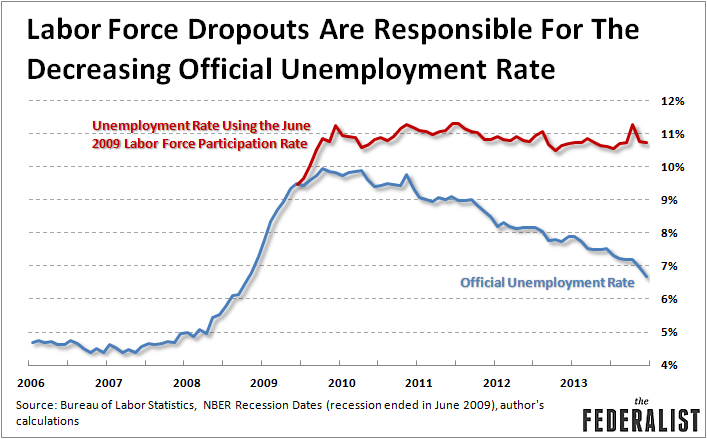
After a while the dismal state of the world’s economies becomes merely background. We forget the better times and accustom ourselves to how things now are.
I am, however, in the process of putting together the second edition of my Free Market Economics and have just been through the Keynes versus the classics section. And let me tell you, there has been a lot to add based on our experiences over the past five years but there is nothing that needs to be revised. And the most interesting part that needs no revision is the way that macro continues to be taught which is Keynesian from end to end. How anyone can still think that a public stimulus has anything to offer in bringing recessions to an end after what we have gone through is beyond me. But they do, and Y=C+I+G remains in every text and is taught as the best explanation economists have for how economies work and what needs to be done when an economy is in recession.
Anyway, the data are from the US which is the epicentre of economic policy death. From an article on the last six years of the American Labour Market and picked up at Powerline. It’s a measure I often used to do myself since the labour market data only include as unemployment people who are actively looking for work. After a while you just give up so the unemployment rate falls even while the labour market remains stagnant. That’s what the picture all too clearly shows about the US.
There is more to it than just the deadly effects of the stimulus but most of it starts from there. It’s almost as if the US had never heard about free enterprise and the private sector the way they are going about things.
Meanwhile, at Drudge the main headline highlights a new record of sorts:
92 MILLION AMERICANS NOT IN LABOR FORCE
And those subheadings beneath add to the picture:
Record Number of Women Not In Labor Force…
Growth slumps…
Slowest in three years…
1,500 people camp out for chance to apply for job…
‘For Every One Job Added, Nearly 5 People Left the Workforce’
MSNBC: ‘Awful,’ ‘Very bad,’ ‘Ugly’…
If you are interested in finding out about Say’s Law and the classical theory of the cycle, or what a classical economist would do when an economy is in recession, so far as I know there’s only one place where you could find any of that out. I may, of course, be wrong but what I write is in accord with the way economists looked at things from 1776-1936 and that includes a very large number of very cluey people. If there really is such a thing as evidence-based policy as opposed to ideologically-based policy, you could do worse than to see what the book has to say.
 Law of Markets