What does it take to get the point across?

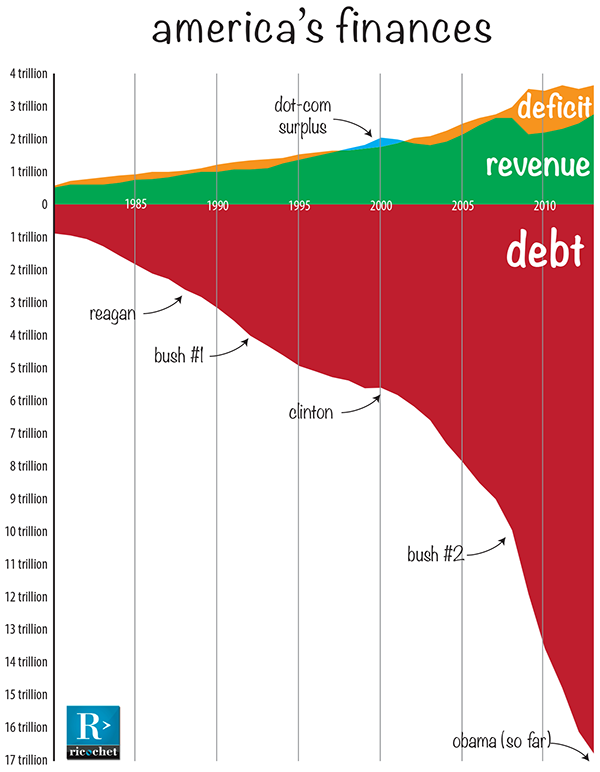
duration of unemployment - us average - 2013

There is something different about the years since 2009, that is, since the year in which the stimulus commenced. The US may never again open for business in the way it once did, and it certainly won’t without some profound change in direction for which there is no evidence of a will on anyone’ part to make that change of direction happen.

Keynes versus Hayek once again

alex on keynes and hayek

I suppose that’s one way to look at it: Keynesian economics as a make-work project for anti-Keynesians. On the other hand, if the notion that digging holes to fill them in again doesn’t strike you as the epitome of an insane economic policy then what hope is there for any of us other than for the hole-digging and hole-filling industries, along with businesses in shovel and overalls production. But Alex does get the nature of Keynesian economics 100% right. It is just what Keynes recommended and Krugman to this day supports.

[My thanks to Robert for sending this along. How could I have missed it?]

Ignorance rules

Government-run anything is a disaster waiting to happen, especially government-run governments. It is just that everyone seems to have to learn it for themselves. Our generation learned from watching the Soviet Union (what’s that? say all the under-40s). Now they have to learn it from their own soviet-type leaders, as with the Affordable Care Act in the US. This is taken directly off the Instapundit page as printed. Hilarious for the rest of the world; insanity for the US.

OCTOBER 21, 2013
BYRON YORK: President leads a surreal pep rally for ailing Obamacare.

There was a lot of speculation about what President Obama would say when he made his first extended remarks about problems with the Affordable Care Act. Would he apologize? Would he crack the whip on his own administration, pledging that no more mistakes would be tolerated? Would he attempt to deflect blame to the Republicans who have long opposed Obamacare?

What few observers expected, given the ongoing failure of the Obamacare exchanges, was that Obama would hold a pep rally for the troubled system. And yet that is what he did. . . .

The president made a few more brief mentions of Obamacare’s technical deficiencies during his 28-minute speech, but in the end his Rose Garden appearance bore a great resemblance to the campaign-style speeches he made selling the health plan when Congress was considering it back in 2009 and 2010. (Minus, of course, the now-discredited promise that anyone who has coverage and likes it can keep it under the new system.)

Nothing about the event seemed to go smoothly. For example, Obama said anyone having trouble with the Obamacare website could call an 800 number to apply for coverage. “You can get your questions answered by real people, 24 hours a day, in 150 different languages,” Obama said. But a short time later, the Washington Examiner’s Philip Klein tried the system and tweeted what he learned: “Can’t make this up. Got through to 800 number, followed prompts, and got referred to Healthcare.gov.”

Then there were the people Obama used as backdrops for his speech, people he said have “benefited from the Affordable Care Act already.” It turns out that was a stretch. One was a man who works in a Philadelphia restaurant, does not have health care through his employer, but has, according to a White House press handout, “recently used Healthcare.gov to process his application and is waiting for the options for potential plans.”

Another was a man just out of graduate school who has no health coverage but “is planning to enroll after he explores his coverage options on the D.C. exchange.” Yet another was a Tennessee small business owner who “was able to register through Healthcare.gov and now plans to comparison shop for the best plan that meets her budget and needs.”

As success stories go, they didn’t represent much success.

A short time after the president’s event, White House spokesman Jay Carney was either unable or unwilling to offer background on the website’s problems, on the testing that took place before the rollout, on the contractor involved, or on whether the administration will penalize Americans for not buying insurance when the website on which insurance is sold doesn’t work.

Talk about a bad day at the White House.

Even the traditional media are noticing.

And then immediately after – which means in time sequence, immediately before – we find this about the Canadian health care system.

OCTOBER 21, 2013
GOVERNMENT RUN HEALTH CARE: Surgery Caps In Canada:

“There’s even more demand and they’re cutting back,” he said, adding he doesn’t blame the hospital or the surgeon, opthalmologist Dr. Barry Emara. But he believes people who’ve paid taxes to the Ontario government all their lives should get prompt access to health care now they need it. “It’s like a car insurance company saying ‘We’ve had two many accidents this year, we’re cutting everyone off.’”

The problem, according to hospital CEO David Musyj, is that the number of procedures – when it comes to cataracts, hips replacements and knee replacements – is capped by the Health Ministry. And hospital officials (up until October, cataracts were done by Hotel-Dieu Grace Hospital, which has since transferred cataracts to Windsor Regional) were scheduling surgeries based on the previous year’s cap of 5, 022. Then in September, they learned the cap for the fiscal year that started April 1 would be 4,849. In 2010, there were 5,412 procedures, he said. In a guest column published in today’s Windsor Star, Musyj said the cuts are due to the continuing rise in health care costs and governments looking for ways to cope with them.

When the government runs health care, it gets worse, but more expensive. Kind of like health care websites. A move in the free-market direction would accomplish the opposite, but presents fewer opportunities for graft.

It’s bizarre how things can be ruined so quickly. No one any longer even knows how things work, specially the President of the United States and his Democrat allies. They have no idea like their Leninist friends and mentors.The damage they cause will be incredible.

I’m not a Niallist

I read Niall Ferguson’s three posts on Paul Krugman which are generally summarised in this critique of Krugman and titled, “Much Bigger Than The Shutdown: Niall Ferguson’s Public Flogging Of Paul Krugman“. And you may be sure that nothing would be of greater interest to me than a proper take down of Krugman and the Keynesian theory that lies behind it. But while this critique may work in the world of non-economists it doesn’t work for me. There is nothing in it I feel I can refer to as an actual dissection of Krugman’s views. It certainly won’t affect any of Krugman’s own beliefs nor that of any modern economist.

Krugman’s position might really be brought down to three propositions:

1) To get out of our current recession it was, and is, necessary to have a full blown Keynesian stimulus.

2) Obama’s actual stimulus was too small. It was large enough to appear large enough but it was too small to actually achieve its ends and so will only discredit Keynesian theory and policy rather than demonstrate its effectiveness.

3) And for Austrian critics, where’s the inflation that is supposed to follow this wasteful expenditure since prices have been dead flat if not tending towards deflation? You may have pointed out that inflation that followed the spending of the 1970s but now there’s none so an Austrian analysis is completely wrong.

Ferguson made no headway on any of this. Instead, he stepped back and wrote:

I am not an economist. I am an economic historian. The economist seeks to simplify the world into mathematical models – in Krugman’s case models erected upon the intellectual foundations laid by John Maynard Keynes. But to the historian, who is trained to study the world ‘as it actually is’, the economist’s model, with its smooth curves on two axes, looks like an oversimplification. The historian’s world is a complex system, full of non-linear relationships, feedback loops and tipping points. There is more chaos than simple causation. There is more uncertainty than calculable risk.

Well great. This is not just Keynesian economics it is all economics that Ferguson takes aim at. By its nature, economics is about simplification, sometimes using smooth curves on two axes (e.g. supply and demand). And while I am a critic of economic theory along many dimensions, including the way in which the uncertain future is almost invariably swept away by many forms of modern analysis, this is so superficial and wrong headed that it leaves me absolutely cold. Krugman can ignore it because it in no way touches anything that matters in his economics and analysis. This is no answer at all.

But then to go on about how beastly Krugman is in how he attacks his opponents, and to praise Keynes as the contrast, is to show a fantastic ignorance of Keynes and the polemical nature of The General Theory. This is Ferguson attacking Krugman:

Finally – and most important – even if Krugman had been ‘right about everything,’ there would still be no justification for the numerous crude and often personal attacks he has made on those who disagree with him. Words like ‘cockroach,’ ‘delusional,’ ‘derp,’ ‘dope,’ ‘fool,’ ‘knave,’ ‘mendacious idiot,’ and ‘zombie’ have no place in civilized debate. I consider myself lucky that he has called me only a ‘poseur,’ a ‘whiner,’ ‘inane’ – and, last week, a ‘troll.’

Here Krugman is doing no less than Keynes did himself. Keynes famously initiated a slash and burn on the economics of his predecessors and attacked them not just intellectually but personally, most notably his own mentor at Cambridge, A.C. Pigou. Keynes said it was to ensure that attention was paid to his book since the issues were so important, but Pigou was clearly aggrieved and said so in the opening words of his review of the The General Theory:

WHEN, in 1919, he wrote The Economic Consequences of the Peace, Mr. Keynes did a good day’s work for the world, in helping it back towards sanity. But he did a bad day’s work for himself as an economist. For he discovered then, and his sub-conscious mind has not been able to forget since, that the best way to win attention for one’s own ideas is to present them in a matrix of sarcastic comment upon other people. This method has long been a routine one among political pamphleteers. It is less appropriate, and fortunately less common, in scientific discussion. Einstein actually did for Physics what Mr. Keynes believes himself to have done for Economics. He developed a far-reaching generalisation, under which Newton’s results can be subsumed as a special case. But he did not, in announcing
his discovery, insinuate, through carefully barbed sentences, that Newton and those who had hitherto followed his lead were a gang of incompetent bunglers. The example is illustrious: but Mr. Keynes has not followed it. The general tone de haut en bas and the patronage extended to his old master Marshall are particularly to be regretted. It is not by this manner of writing that his desire to convince his fellow economists (p. vi) is best promoted.

Alas, it did turn out that this was indeed the best way to influence his fellow economists and it is a template that Keynesians have followed ever since. Krugman’s style and form of attack – stupid, ignorant, incompetent bungler that he is (two can play at this game, I suppose) – is patterned after Keynes who was as arrogant as anyone who has ever written on economic matters as well as being amongst the most incompetent. An actual economic ignoramus who did his undergraduate degree in philosophy and notoriously, on Joan Robinson’s say so, never understood basic micro – “Maynard never spent the half hour necessary to learn price theory” – which is a pretty large gap in any economist’s knowledge base. That in trying to refute Say’s Law he fell right into the oldest fallacy in economics but then took the entire profession along with him is just one of those very unfortunate events that history is filled with. Every economist of his generation with no exception thought The General Theory was end-to-end nonsense. But the economics they knew has now disappeared as have those economists and is now replaced with the poisonous nonsense peddled by Krugman.

This is what Niall Ferguson does not discuss because he doesn’t understand it himself. But you would need a combination of an actual historical understanding of the development of economic theory up to the publication of The General Theory along with a reasonably sound understanding of why it was superior to what we find today. Alas, it is a relatively rare combination but some at least do have it. But if you try to say this to Keynesians in public, they will shout you down and threaten to remove your license to practise economics. Yet it is the Keynesians of the modern text – the people who think Y=C+I+G actually makes economic sense – who are the barbarians ruining our economies right before our eyes.

Debt by the numbers

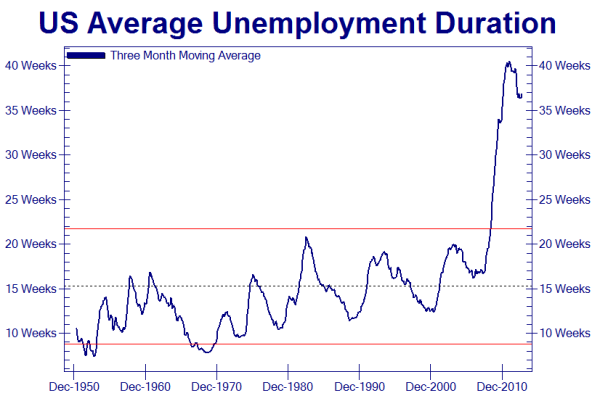
deb and deficits in the us

I wonder if this is related to this: In 23 Advanced Economies: U.S. Adults Rank 21st in Math Skills. The inability to even be frightened by these numbers, by the size of the debt, by the impossibility of ever repaying this side of inflation even some remote part of the total, by the rate of its current growth, all of these suggest a deficiency amongst large proportions of the American voting public requires an explanation. A deficient understanding of maths is not all that far from a genuine possibility. The voting population in the United States is much degraded from the informed public that had once existed.

Australia, by the way, was 13th in math, almost dead on the international average and 4th in literacy. There is hope for us yet. But with the US, I cannot see what the answer is.

Monty Python and the US economy

black knight republicans

Turns out I’m not the only one whose mind turned to this image this week. Here it is used to represent the supposed suicidal run at the American president over his Affordable Care Act. Charge of the Light Brigade kind of stuff, suicide mission and a rout.

Yet what’s a party going to do? If the only tactic is to stand still and be run over while the other side does what it wants, then do nothing and just get on with life. But if the aim is to try to avert a disaster, or at least to publicise that the aim is to avert a disaster, who is to say what is to be done?

The economics of the debt and deficits is pretty straightforward as is the likely disaster that is to follow the introduction of “Obamacare”. The politics, on the other hand, is a matter of political judgment of which most of the people who make it into Congress have at least some level of a proven expertise.

The problem of problems in the US remains the distortions created by the media. How to get any kind of non-Democrat message into the community is an unknown. The US is being ruined because there is no means to have conservative concerns widely discussed and treated with respect across most of the places in which the media might be expected to reach. The shutdown and the attempt to force a compromise was a tactic to try to achieve at least some kind of wider understanding that there are reasons for concern.

On the politics I remain agnostic and unsure but I am far from thinking it was a certain mistake.

The black knights of Keynesian economics

July Sloan has an article in today’s Australian she titles, “Robust views build better debate, so let’s have them“. I don’t mean to quibble but there is plenty of debate, just little engagement. No one who visits this site can be in any doubt that there are critics of economics around as not a few of us here bound into the various inanities that are prevalent everywhere.

I have written books and papers and blog posts about Keynesian economics but no one amongst those economists wishes to take me up on any of it or at least not for the past three years. Even Judy, in her article, never mentions Keynes and Keynesian economics although she lists “the wisdom of the fiscal and monetary policies implemented in the US since the global financial crisis” as her number one problem and uses Paul Krugman as Exhibit A of an engaged economist.

In fact, both so far as politics and policy are concerned, the Keynesians have been routed. I would be glad to hear from any of them who in 2013 would like to repeat in public all of that nonsensical “Keynes the Master” we not so long used to hear about ad nauseum. The stimulus has been an unmitigated disaster everywhere it has been applied with no exception. And slowly everyone is withdrawing the spending (except in the basket case economy of the US), even though all have high rates of unemployment, as they edge their way towards a return to prosperity. From Greece to China, in Australia and across the world, Keynesian theory is dead except in our economics texts.

And it’s not just in macro that the academic world of economics is fading. In my Free Market Economics I go after the marginal revenue-marginal cost analysis as shallow to the point of vacuous. I teach marginal analysis, of course, but heaven forfend that I should inflict any of that on my poor unsuspecting students. I also get not a little vexed about the term “perfect competition” which so far from being perfect (not to mention literally impossible as defined) is the kind of world in which no Microsoft, Apple or BHP could every exist. In my view I teach one of the finest economics courses in the world. But engagement from other economists over anything I write, never a word is said or written.

And then again re Keynes, I have written in a published article how he poached immense amounts from others in putting together The General Theory. No one has ever written a reply. I bring it up in conversations and no one even thinks even to attempt to rebut what I say. Try this on yourself if you are an economist. The term “Say’s Law” and the phrase “supply creates its own demand” are not classical in origin. Both are twentieth century, the first entering into common discourse in 1921 and the second first found in a book published in 1933 which Keynes is absolutely 100% certain to have read while writing The General Theory. So how did they get into the book? You tell me without having to acknowledge that there are things about how The General Theory was written that I know and no one else does or if they do know feel free to ignore.

And lastly, as far as individuals declaring themselves Democrat or Republican in the US, everyone registers with one side or the other so that they can vote in the primaries.

Why not call them the Washington Reds

With an eye to what’s important, the controversy that has reached even into the White House and drawn in the President has revolved around the name of the Washington football club, hitherto known as the Washington Redskins. This now offends people who would like to see a name change and we now find this suggestion from Charles Krauthammer, the leading political commentator of the Washington Post:

How about Skins, a contraction already applied to the Washington football team? And that carries a sports connotation, as in skins vs. shirts in pickup basketball.

Well my suggestion is that they call them the Washington Reds, the perfect name for a team representing the governance and regulatory capital of the United States. It is a name that fits perfectly into the ethos of the city, will be a permanent reminder of the centralised control exercised from Washington and will offend no one other than the rest of the country, but who cares about them anyway?

Washington Reds, it’s just perfect.

“I’d love to know more about what causes business cycles”

I was sent a copy of an interview with Eugene Fama, the newly minted Nobel Prize winner for economics, in which the covering letter implied that when I read it through I would see what a poor choice he had been. So I read it through and at the end I had an even higher regard for Fama than I had had before. Such is the nature of economics. But there was this one bit that jumped right off the page:

Q: What will be financial crisis’s legacy for the subject of economics? Will there be big changes?

A: I don’t see any. Which way is it going to go? If I could have predicted that, that’s the stuff I would have been working on. I don’t see it. (Laughs) I’d love to know more about what causes business cycles.

Now the depressing thought is that there actually might not be any changes, big or small. Economics is now in the hands of the public service who want nothing more from theory than an excuse for their own existence. An economics that leaves them with little to do does not have much of an appeal to heads of Treasuries and central banks. And since Fama just after he says what I quoted above then said, “I used to do macroeconomics, but I gave (it) up long ago”, makes me think that he’s not been in that part of economic theory for quite a while. And that, of course, is the area that needs to be explored.

The business cycle is where the work needs to be done but if Fama is anything like the 99% who know little of what came before Keynes then he knows too little about how to think about the cycle and its rich and detailed pre-Keynesian literature. Fama understands that you cannot beat the market, not just in terms of knowing more than anyone else, but you cannot beat the market as the way to generate economic growth and prosperity. It is the high table of economic management but we have instead handed over economic management to people whose highest personal achievement was getting high distinctions in game theory and math ec.

It used to be said it’s all in Marshall but no one meant that literally. I still say it’s all in Mill, and while I don’t mean that literally either, there’s more there than in Mankiw. But wherever it can all be found if such a place exists, it is definitely not in a modern text in macro. It’s time we all tried to know more about what causes the business cycle, because that is where the answers, if there are any answers, will be found.

Far less than many of us hoped for but far better than what some had sought

So where are we now? The President and his Democrat cohort have been put on notice so that negotiations must now take place. Since default was never an option there was going to be an agreement of sorts to get us into the new year when the process can begin again. The sequester cuts, which really burn the Democrats up, have not been reversed and are not going to be reversed under any circumstances. The air space is now clear so that more attention can be focused on the many other screw ups of the Obama administration, most particularly the Affordable Care Act which will burn its way into community consciousness as it burns its way through the incomes of many an American. How to fix it from here is their problem but there will be a lot more sick Americans unable to find medical care at affordable prices as time goes on. Bulk stupidity but if it can’t be stopped it can’t be stopped.

What seems to have been agreed looks in many ways like the maximal position the Republicans might ever have realistically hoped to achieve given that the presidency and the Senate are in the hands of others and the media are like one great big ABC of leftist bias. Big win to the Democrats. I don’t think so, and certainly not if you are thinking about the long-term future of the American economy.

This is from The New York Times relayed via Drudge who of course describe the ongoing economic mismanagement of the American economy as a great victory for those responsible for these disasters:

Speaker John A. Boehner, the leader of conservative House Republicans whose push to strip money for the health law led to the shuttering of much of the government on Oct. 1, said that the House would not block a bipartisan agreement reached in the Senate that yielded virtually no concessions to the Republicans.

‘We fought the good fight,’ Mr. Boehner said in an interview with the radio station WLW-AM in Cincinnati. ‘We just didn’t win.’

In a statement issued as the Senate and the House prepared to vote on the proposal, Mr. Boehner said: ‘The fight will continue. But blocking the bipartisan agreement reached today by members of the Senate will not be a tactic for us.’

The decision came about 24 hours before the Treasury was due to exhaust its borrowing authority, putting the nation on the brink of a default. Mr. Boehner had earlier told colleagues privately that he would not allow the nation to default.

These are the details as reported:

Under the agreement, the government would be funded through Jan. 15, and the debt ceiling would be raised until Feb. 7. The Senate will take up a separate motion to instruct House and Senate negotiators to reach accord by Dec. 13 on a long-term blueprint for tax and spending policies over the next decade.

Senator Mitch McConnell of Kentucky, the Republican leader, stressed that under the deal, which he negotiated with Senator Harry Reid of Nevada, the majority leader, budget cuts extracted in the 2011 fiscal showdown were not reversed, as some Democrats had wanted, a slim reed that not even he claimed as a significant victory.

The deal, Mr. McConnell said, ‘is far less than many of us hoped for, quite frankly, but far better than what some had sought.’

That the American economy will continue its rapid decline is just one of those things.

UPDATE: An interesting take by Tim Stanley in the UK’s Telegraph. But what is particularly interesting is the comment thread that follows. Here, however, is his core point.

What has Obama really won? He keeps his precious healthcare reform and he gets government open again – but tomorrow morning he’ll still have the same gridlocked political system that he had the night before. The shutdown is a rare example of him winning, but remember that this lame duck president has not only had a very simple (and, frankly, inoffensive) gun control bill killed in the Senate but was so spooked by bad poll numbers that he tried to dump responsibility for military action in Syria onto the Congress – before quietly dropping the idea altogether. Any thought that the shutdown payoff will be that he can sail an immigration reform package comfortably through Congress is pure fantasy. This is a broken presidency living out its last few years either holding off Republican attacks or lazily cruising the country on some pointless, endless, fatuous campaign trail. Obama’s administration is politically bankrupt.