No excess deaths because of Covid

From  Study: Absolutely NO excess deaths from COVID-19.

It appears the newsletter analysis that I linked to below was too hopeful for the authorities at Johns Hopkins, even though it was based on actual data. Mere minutes after I posted this they took it down, censoring this conclusion. Though I quoted a lot below, the article was much longer, included detailed graphs, and was thoughtful and thorough.

Positive news like this however must not be published. It must be squelched and silenced. We must live in fear, even if the thing we fear does not exist.

One of my readers below however found it on the Wayback Machine, here.

I have also embedded below the fold the webinar where the information censored was discussed in detail. In case Johns Hopkins or Youtube decides to censor this webinar also, another one of my readers below has downloaded it and made it available here. (It is very sad that a university now considers Orwell’s 1984 to be an instruction manual instead of a warning.)

Original post:
——————————
A new analysis of the 2020 death statistics in the United States has revealed that despite the panic over COVID-19, the total number of deaths in all age groups — including the elderly — showed no change before or after the arrival of the virus.

This bears repeating, in bold and italics: There have been no excess deaths in 2020.

Surprisingly, the deaths of older people stayed the same before and after COVID-19. Since COVID-19 mainly affects the elderly, experts expected an increase in the percentage of deaths in older age groups. However, this increase is not seen from the CDC data. In fact, the percentages of deaths among all age groups remain relatively the same. “The reason we have a higher number of reported COVID-19 deaths among older individuals than younger individuals is simply because every day in the U.S. older individuals die in higher numbers than younger individuals,” Briand said.

Briand also noted that 50,000 to 70,000 deaths are seen both before and after COVID-19, indicating that this number of deaths was normal long before COVID-19 emerged. Therefore, according to Briand, not only has COVID-19 had no effect on the percentage of deaths of older people, but it has also not increased the total number of deaths.

These data analyses suggest that in contrast to most people’s assumptions, the number of deaths by COVID-19 is not alarming. In fact, it has relatively no effect on deaths in the United States.

And yet, there have been so many COVID-19 deaths! How can the total number of deaths not be higher? The researcher looked more closely, and discovered (surprise! surprise!) that there was an unreasonable drop in other causes, matching exactly the increase in coronavirus deaths.

When Briand looked at the 2020 data during that seasonal period, COVID-19-related deaths exceeded deaths from heart diseases. This was highly unusual since heart disease has always prevailed as the leading cause of deaths. However, when taking a closer look at the death numbers, she noted something strange. As Briand compared the number of deaths per cause during that period in 2020 to 2018, she noticed that instead of the expected drastic increase across all causes, there was a significant decrease in deaths due to heart disease. Even more surprising, as seen in the graph below, this sudden decline in deaths is observed for all other causes.

This trend is completely contrary to the pattern observed in all previous years. Interestingly, … the total decrease in deaths by other causes almost exactly equals the increase in deaths by COVID-19. This suggests, according to Briand, that the COVID-19 death toll is misleading. Briand believes that deaths due to heart diseases, respiratory diseases, influenza and pneumonia may instead be recategorized as being due to COVID-19. [emphasis mine]

In other words, COVID-19 is just another type of flu-like respiratory disease, that is only appearing terrible because doctors and hospitals are incorrectly labeling many deaths as COVID-19 when in past years they would have labeled them based on the existing chronic illnesses the patient already had.

It has all been a scam, a Chicken Little scam induced by some very evil people in government to cause fear and panic in the general population. I leave it to my readers to figure out why.

Regardless, it is time for people to come to their senses. Let the worry warts cower in mindless fear in their basements. Rip off that mask, go back to living your normal American life, free and open, pursuing your happiness.
James Froude from Life and Times of Thomas Becket

Life and Times of Thomas Becket

James Anthony Froude

THE mind, or spiritual part of man, ought to direct his body. Nothing is more natural, therefore, than the parallel assumption that the Church, or the spiritual part of society, ought to direct the State. A theory so simple, so complete, has in all ages recommended itself to theologians. It would be accepted universally but for one difficulty that while society can be divided into separate orders, wisdom and virtue cannot be divided, and priests are sometimes worldly and wicked, and laymen sometimes also are brave and wise and good. Priesthoods, therefore, to make out their case have been driven to assume that they possess peculiar privileges; that they have special means of communicating with God and of knowing his will; that they can work miracles, visible or invisible; that they, in fact, are God’s representatives directly appointed by himself. The two swords of St. Peter are the two authorities, secular and spiritual; but to Peter they were both committed, and the civil power in Christian countries exists only as the delegate of Peter’s successors.

If it be true that the clergy are possessed of supernatural powers; if ‘the keys,’ as they are called, have in any such sense been committed to them; if through them, actually and palpably, the will of God is made known to men, and in no other way, the assumption, bold though it be, is fairly justified, and kings and cabinets ought to be superseded by commissions of bishops. If, on the other hand, the clergy are but like other orders of priesthoods in other ages and countries mere human beings set apart for peculiar functions, and tempted by the nature of those functions into fantastic notions of their own consequence the recurring conflicts between Church and State resolve themselves into phenomena of social evolution, the common sense of mankind exerting itself to control a groundless assumption. To the student of human nature the story of such conflicts is always interesting comedy and tragedy winding one into the other. They have furnished occasion for remarkable exhibitions of human character; and I take advantage of the publication of new materials and the republication of old materials in an accessible form to draw a sketch of the once famous St. Thomas of Canterbury, who, after three centuries of neglect, is again being lifted up as an object of admiration, and in whose actions and whose fate an incredulous world, though unconvinced that he was a saint, may still find instruction. I must commence with an attempt to reproduce the mental condition of the times in which St. Thomas lived. Human nature is said to be always the same. It is no less true that human nature is continuously changing. Motives which in one age are languid and even unintelligible have been in another alive and all-powerful. To comprehend these differences, to take them up into his imagination, to keep them present before him as the key to what he reads, is the chief difficulty and the chief duty of the student of history. Characteristic incidents, particular things which men representative of their age indisputably did, convey a clearer idea than any general description. Let the reader attend to a few transactions which occurred either in Becket’s lifetime or immediately subsequent to it, in which the principal actors were persons known to himself.

That’s how it begins: p 1-2. The bit about motives in different ages is absolutely true as is easily recognised by anyone who lives long enough to see the foundational ethics of their youths become the moral poisons of their old age.

The real 1620 project is coming to an end

There is a “1620 Project” in the United States that centres on the arrival of the Pilgrim Fathers at Plymouth Rock in 1620. That’s an extremely important date and for us all in the West, but there is another moment from that same year we should all be commemorating which ought to be thought of as the real 1620 Project.

The true beginning of the enlightenment among we of the English-speaking world may be dated from the publication of one of the most important books ever written, which also occurred in 1620. I am not going to pretend I am doing a massive amount of work in bringing this even to your attention, but will take most of this from known sources, and naturally from Wikipedia. But it is the date that matters and also the assessment. These are the facts under the heading Novum Organum “which is a philosophical work by Francis Bacon, written in Latin and published in 1620.” Aristotle had written the original Organum a couple of thousand years before. This was the new version that more or less underpinned the scientific revolution that was to come. This is from Wikepedia.

Bacon’s work was instrumental in the historical development of the scientific method. His technique bears a resemblance to the modern formulation of the scientific method in the sense that it is centered on experimental research. Bacon’s emphasis on the use of artificial experiments to provide additional observances of a phenomenon is one reason that he is often considered “the Father of the Experimental Philosophy” (for example famously by Voltaire). On the other hand, modern scientific method does not follow Bacon’s methods in its details, but more in the spirit of being methodical and experimental, and so his position in this regard can be disputed.[2] Importantly though, Bacon set the scene for science to develop various methodologies, because he made the case against older Aristotelian approaches to science, arguing that method was needed because of the natural biases and weaknesses of the human mind, including the natural bias it has to seek metaphysical explanations which are not based on real observations.

Essentially, the scientific method consists of the following. There is something that exists for which some explanation is sought. There is therefore a proposition put up as a tentative explanation. Evidence is sought so that the proposed theory can be examined to see if it conforms to other things we also think we know. And eventually, if the theory passes all of the tests which are applied, the theory becomes part of our scientific canon unless and until a better theory is proposed that fits the facts even better. But at its core is the testing of the evidence, “real observations” as it is stated in the passage above.

Everyone is now so knowledgable about so many things. Water, for example, is made up of two gases, oxygen and hydrogen. What a fantastically improbably idea. How could this have ever been discovered? And the reason it was eventually discovered is because of the scientific revolution that Bacon initiated with his abandonment of the Aristotelian approach based on common sense without an actual experimental basis as a means of confirmation.

I fear we are now, as I write, honouring this great tradition just as we are in the process of abandoning it. We seem to have entered a superstitious age which in a way takes us back to the Witch Trials which, as it happened, occurred following the arrival of the Pilgrims at the town of Salem. We are entering an age of superstition where what is believed is determined by what people prefer to believe. It does seem that idiocies such as global warming and its policy sister, The Green New Deal, are believed because people prefer to believe it. There has been no evidence worth the name to associate temperatures and climate with fossil-fuels and electricity production. Nevertheless, it is a belief that has swept the planet, and oddly has especially affected people who are referred to as “the educated”.

Evidence-based science seems to be in the process of being discarded in favour of common superstition. There is a bit of it about at the moment. Heaven help any scientist who comes to a conclusion that contradicts accepted beliefs.

Although it may seem somewhat off centre from the 1620 Project discussed above, the reaction among employees at Penguin Publishing in Canada to the publication of the sequel to Jordan Peterson’s Twelve Rules for Life is nothing less than astonishing but also a very troubling sign of the times. Book burning and the suppression of ideas one disagrees with was once seen as the very epitome of a Dark Age, yet here we are, and these people work inside a publishing company.

At the meeting to discuss the publication, an employee apparently said: “People were crying in the meeting about how Jordan Peterson has affected their lives.” If this is the feedstock of the generation to come we are no longer the free, open society we have been for the past four hundred years. These are people who burn witches along with books.

Stealing the American election

There are actually lots of things that stole the election from Donald Trump but this does pinpoint part of what really mattered: Media Suppression of 8 Key Stories ‘Stole This Election’ for Joe Biden

The poll raised these eight news stories: Tara Reade’s sexual assault allegations against Joe Biden; Joe Biden’s involvement in the Hunter Biden corruption scandal; Sen. Kamala Harris (D-Calif.) getting rated the most leftist senator; 33 percent GDP growth in the third quarter of 2020; 11.1 million jobs created from June 5 to October 2; the Middle East peace deals with Israel that led to three Nobel Peace Prize nominations for Trump; U.S. energy independence; and Trump’s successes with Operation Warp Speed in fighting the Wuhan coronavirus pandemic.

The legacy media’s decision to bury Biden’s scandals had the strongest impact on the election, according to the poll. More than one-third of Biden voters (35.4 percent) said they were unaware of Tara Reade’s serious allegations that Biden sexually assaulted her in the 1990s, a story the legacy media effectively buried. A full 8.9 percent of Biden voters said they would have changed their vote — either to Trump, to a third-party candidate, not voting for a presidential candidate, or not voting at all, if they had known about the Reade allegations.

That really is depressing. There is also this: Tucker Carlson: Here’s how the Democrats ‘rigged’ the 2020 election which is really just more eyewash to cover up the obvious.

The US is no longer a moral leader, but then who is? It just has the largest military and the strongest economy but has become a “corporate state” with government in operation with large business to keep things running along.

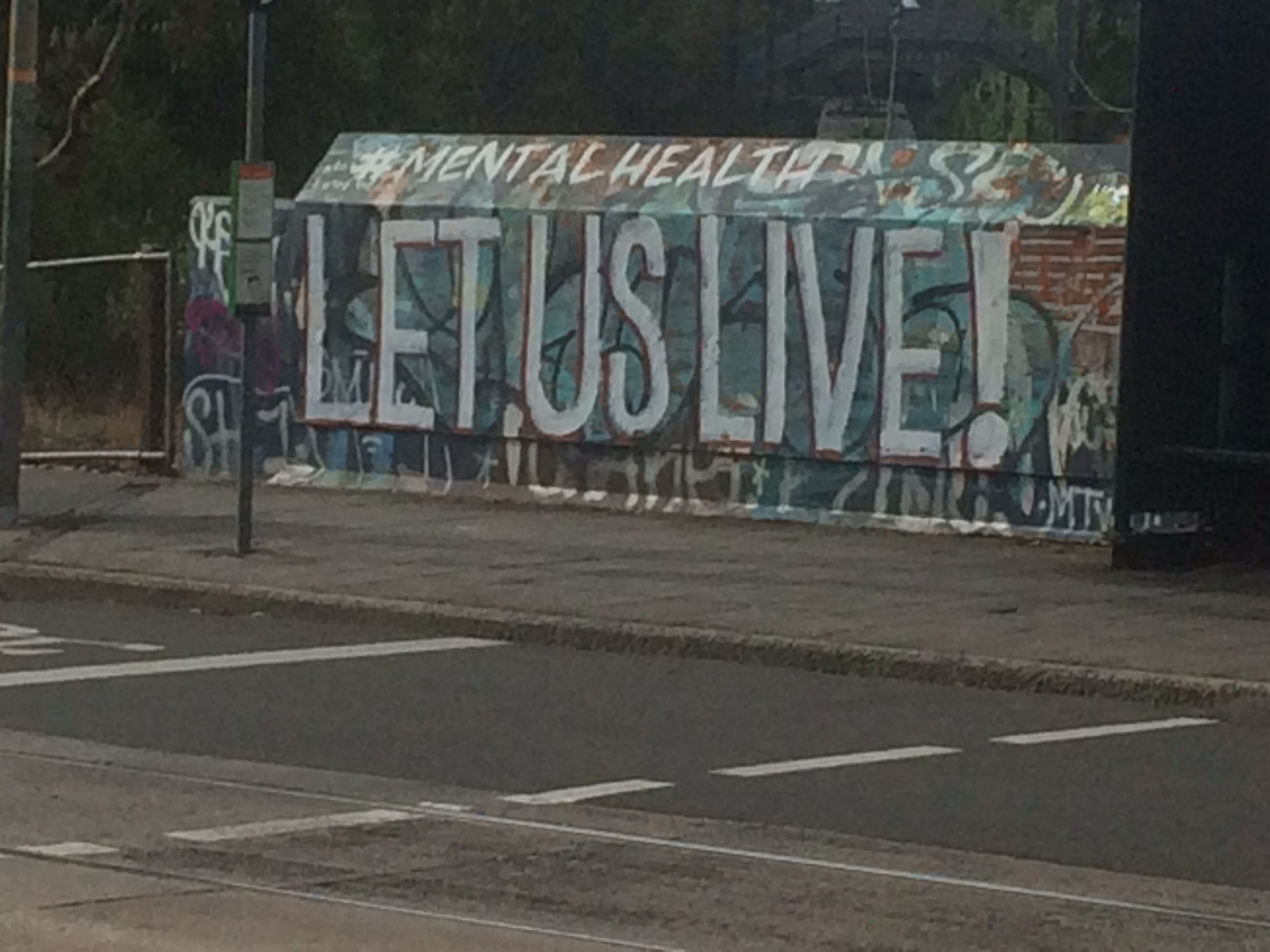
A shrink can sign you into a mental institution against your will

The only reason I know about this is because I was talking to a lawyer who had just had once of his clients released from a mental institution where he had been placed against his will. This is the legislation in regard to Temporary Treatment Orders from Victoria.

Key messages

  • Temporary treatment orders authorise the provision of compulsory mental health treatment.
  • An authorised psychiatrist may make a Temporary treatment order if the treatment criteria apply to a person subject to an Assessment Order or a Court Assessment Order.

Temporary treatment orders authorise the provision of compulsory mental health treatment.

An authorised psychiatrist may make a Temporary treatment order if the treatment criteria apply to a person subject to an Assessment Order or a Court Assessment Order.

Purpose of a Temporary treatment order

A Temporary treatment order enables an authorised psychiatrist to provide compulsory treatment to a person to whom the treatment criteria apply.

A Temporary treatment order also enables a patient:

Treatment criteria

The authorised psychiatrist must be satisfied that all of the treatment criteria apply to a person before making a Temporary treatment order.

The treatment criteria are:

  • the person has mental illness
  • because the person has mental illness, the person needs immediate treatment to prevent:
    • serious deterioration in the person’s mental or physical health or
    • serious harm to the person or another person
  • the immediate treatment will be provided to the person if the person is subject to a Temporary treatment orderthere is no less restrictive means reasonably available to enable the person to be immediately treated.

An authorised psychiatrist or their delegate who makes a person subject to a Temporary treatment order must be satisfied that if the Temporary treatment order is made the person will receive the immediate treatment. This means that services must be available to enable the person’s treatment.

The authorised psychiatrist or delegate making the Temporary treatment order must be satisfied that there is no less restrictive means reasonably available to enable the person to receive the immediate treatment, including whether the person can receive treatment on a voluntary basis.

Making a Temporary treatment order

An authorised psychiatrist may make a Temporary treatment order for a person who is subject to an Assessment Order or a Court Assessment Order if the authorised psychiatrist has examined the person and is satisfied that the treatment criteria apply to the person.

In determining whether the treatment criteria apply to the person, the authorised psychiatrist must to the extent reasonable in the circumstances have regard to all the following:

  • the person’s views and preferences about treatment of his or her mental illness and the reasons for those views and preferences including any recovery outcomes that the person would like to achieve
  • the views and preferences of the person expressed in his or her advance statement
  • the views of the nominated person
  • the views of the guardian
  • the views of the carer, if the authorised psychiatrist is satisfied that making a Temporary treatment order will directly affect the carer and the care relationship
  • the views of the parent of the person, if the person is under the age of 16 years
  • the views of the Secretary to the Department of Human Services if the person is the subject of a custody to Secretary order or a guardianship to Secretary order.

The authorised psychiatrist may consider other information communicated to the authorised psychiatrist by persons other than the person who was examined.

An authorised psychiatrist who made a person subject to an Assessment Order cannot conduct an assessment of the person and make the person subject to a Temporary treatment order.

Setting of a Temporary treatment order

An authorised psychiatrist who makes a Temporary treatment order for a person must determine whether the person can be treated in the community (Community temporary treatment order) or whether the person needs to be taken to a designated mental health service (Inpatient Temporary treatment order).

The Temporary treatment order must state whether it is a Community temporary treatment order or an Inpatient temporary treatment order.

In determining whether the Temporary treatment order has a community or inpatient setting the authorised psychiatrist must, to the extent reasonable in the circumstances, have regard to all of the following:

  • the person’s views and preferences about treatment of his or her mental illness and the reasons for those views and preferences including any recovery outcomes that the person would like to achieve
  • the views and preferences of the person expressed in his or her advance statement
  • the views of the nominated person
  • the views of the guardian
  • the views of the carer, if the authorised psychiatrist is satisfied that making a Temporary treatment order will directly affect the carer and the care relationship
  • the views of the parent of the person, if the person is under the age of 16 years
  • the views of the Secretary to the Department of Human Services if the person is the subject of a custody to Secretary order or a guardianship to Secretary order.

The authorised psychiatrist may only make a person subject to an Inpatient Temporary treatment order if the authorised psychiatrist is satisfied that the person cannot be treated in the community.

Contents of a Temporary treatment order

A Temporary treatment order must state whether the Temporary treatment order is a Community Treatment Order or an Inpatient Treatment Order.

A Temporary treatment order must also state the date and time the Order was made. It must state that the Temporary treatment order has a duration of 28 days unless it is revoked earlier

Duration of a Temporary treatment order

A Temporary treatment order remains in force for 28 days from the date the Order is made unless revoked earlier or if it expires because:

A variation of the setting of a Temporary treatment order does not affect the duration of the Temporary treatment order.

An authorised psychiatrist must immediately revoke a Temporary treatment order if the treatment criteria no longer apply to the person.

It looks like we have chosen sides

From Cold War serves no one in the Hun today:

ScoMo: Australia won’t choose sides

AUSTRALIA won’t be “forced” to choose a side as tensions escalate between the United States and China, the Prime Minister warned on Monday night.

Scott Morrison also cautioned against global powers returning to Cold War-era divisions as Beijing continued to gain power.

In a speech to the British Policy Exchange, Mr Morrison said Australia would advocate for its own interests in the Indo-Pacific region and that any assertions otherwise were “false and needlessly deteriorates relationships”.

He said Australia wanted an open and mutually beneficial relationship with China, while also maintaining a close alliance with the US.

It’s the new new normal out there.

Mitchell Podolak (1947-2019)

The banjo in the 1960s and into the 1970s was the instrument of socialists following along behind the lead set by Pete Seeger. There was a time when something like half the people I knew played the banjo. There below is a Wikipedia photo of my most long-standing friend from nursery school, Mitch Podolak, who I now find passed away last year, which I did not until this moment know. And here is his Wikipedia entry: https://en.wikipedia.org/wiki/Mitch_Podolak

image.png

This was part of what I wrote about him in days past:


Mitchell Podolak, now merely Mitch, is the person who I have consciously known for a longer time than anyone else in my entire life. We were in nursery school together and then went to various summer camps and I am not even sure that maybe we even met up at High School again. But around the age of 14 he decided that this was not for him and off he went, so by the time he was 17 or so, he had hitchhiked back and forth across Canada around a dozen times. A true Woody Guthrie type of a kind that does not exist today. I have met up with him only once since those days, on a visit I made to Winnipeg in the late 1990s, where he really has put down roots.

He is one of the few people I know from my early youth who is famous enough to show up on Google when you put in his name. Our politics are, however, not all that similar. Yet I should mention that this was not always the case. The nursery school we met at was run by comrades for the children of comrades. Both of us began our treks through life on the far left side of politics. I am where I am, and this is where he is.

I might mention our days at Camp where in 1955, two musicians came to visit, one who played the concertina and the other, none other than Pete Seeger himself, who came and played the banjo [which was, and by no coincidence, long-necked, five-stringed and wood-framed]. I remember virtually nothing else from my camping days – this is, after all, sixty years ago – but I do remember this concert. The result has been that the only two instruments I own and play are the concertina and banjo. So whatever may have separated us in life, whether time, distance or politics, we share a love of folk music that transcends all else.

Sic gloria transit mundi.

This is our Agincourt!

If we are mark’d to die, we are enough
To do our country loss; and if to live,
The fewer men, the greater share of honour.

God’s will! I pray thee, wish not one man more.
By Jove, I am not covetous for gold,
Nor care I who doth feed upon my cost;
It yearns me not if men my garments wear;
Such outward things dwell not in my desires.

But if it be a sin to covet honour,
I am the most offending soul alive.

No, faith, my friends, wish not a man of wavering thought.
God’s peace! I would not lose so great an honour
As one man more methinks would share from me
For the best hope I have. O, do not wish one more!

Rather proclaim it, though they be, through my host,
That he which hath no stomach to this fight,
Let him depart; his passport shall be made,
And crowns for convoy put into his purse;
We would not die in that man’s company
That fears his fellowship to die with us.

This day is call’d election day.
He that outlives this day, and comes safe home,
Will stand a tip-toe when this day is nam’d,
And rouse him at the name of Donald Trump.

He that shall live this day, and see old age,
Will yearly on the vigil feast his neighbours,
And say “That was the day he won re-election.”

Then will he strip his sleeve and show his scars,
And say “These wounds I had on election day.”
Old men forget; yet all shall be forgot,
But he’ll remember, with advantages,
What feats he did that day. Then shall our names,
Familiar in his mouth as household words—
Donald J. Trump, and all who stayed with him,

And on his side and with him to the end
Be in their flowing cups freshly rememb’red.
This story shall the good man teach his son;
And election days shall ne’er go by,
From this day to the ending of the world,
But we in it shall be rememberèd—

We few, we happy few, we band of brothers;
For he to-day that sheds his blood with me
Shall be my brother; be he ne’er so vile,
This day shall gentle his condition;
And gentlemen in America now a-bed
Shall think themselves accurs’d they did not stay the course,
And hold their manhoods cheap whiles any speaks
That fought with us upon election day.