He was, after all, Reverend Martin Luther King

From a great post by Steve Hayward at Powerline that focuses on the views of Martin Luther King. There we find this quote from King:

One may well ask: “How can you advocate breaking some laws and obeying others?” The answer lies in the fact that there are two types of laws: just and unjust. I would be the first to advocate obeying just laws. One has not only a legal but a moral responsibility to obey just laws. Conversely, one has a moral responsibility to disobey unjust laws. I would agree with St. Augustine that “an unjust law is no law at all”

Now, what is the difference between the two? How does one determine whether a law is just or unjust? A just law is a man-made code that squares with the moral law or the law of God. An unjust law is a code that is out of harmony with the moral law. To put it in the terms of St. Thomas Aquinas: An unjust law is a human law that is not rooted in eternal law and natural law.

“Eternal law.” “Natural law.” Supplemented in the comments by this.

From Rabbi Mordechai Finley on origins of moral law:

“The being that created the universe had the power to bring into being a universe – the one we know of – with the energy and mass of 140 billion galaxies. This being created the laws of the universe that scientists and mathematicians have discovered. I am committed to believing that the God who created the laws of light, energy and matter also created a moral law, that reveals itself to those who study it, just as scientists have discovered the laws of nature. I am a moral realist – there really are better and worse answers to moral problems.”

There is right and wrong. Our duty is to discover the moral law and act accordingly.
Does 1453 mean anything – has anyone ever heard of Lepanto?

Henry Ergas’s column on the war on the West, When faith takes up arms silence is no option, has drawn a number of letters which I thought were of interest and supplements his points quite well. First this although published last:

Henry Ergas’s article urges frank discussion. The thrust of the article could be simply stated in Greg Sheridan’s pithy comment last year on Iran, that no one in the West takes the idea of God seriously any more and cannot conceive of a government whose behaviour is determined by theological goals. It is somewhat amusing to think that a society that has jettisoned God could presumptuously give a movement with a god advice on changing its theology. The West is so satiated with its own righteousness it does not recognise all it has comes from the precepts of the God it has abandoned.

There is then this, also out of the published order.

The sickness of silence (don’t mention the war) and appeasement (peace in our time) that have infected Western politicians signal the death of Western civilisation. They will bring victory to barbarian invasions. Western politicians have become a supine tool through which the barbarians, not just Islamists, achieve their goals. There is no point continuing to jaw-jaw when you are losing the war-war.

Secular liberal democracy is the jewel in the crown of Western civilisation. It has taken centuries and millions of deaths to achieve it. To watch it being eroded by such idiocies as multicultural relativism and German Chancellor Angela Merkel’s naive Willkommenskultur is sickening.

The only thing necessary for the triumph of evil is that good men do nothing, according to Edmund Burke. Our politicians should remember that. There is going to be hell to pay.

The consequences will be experienced by others, not us. They will see the new world order as a victory since they will describe it for themselves. But it is not likely a world in which I would like to live. But then again, I won’t have to. And just one more:

Some of those who ridiculed Tony Abbott for his Margaret Thatcher memorial lecture have gone remarkably quiet. Perhaps a retraction is too much to ask. But acknowledging the wisdom of Abbott’s conclusion — we are rediscovering the hard way that justice tempered by mercy is an exacting ideal as too much mercy for some necessarily undermines justice for all — would not go astray.

If you would like to see an image of Christian Europe in a hundred or so years, the best template may be found in Constantinople post-1453.

The miracle of human existence

It’s not possible that we arrived by random selection. The evidence has been stacked up so clearly that it requires a major effort of wilful ignorance to avoid it. The video is convincing since I already believe it. Why it is not obvious on its face that we are here by design is unknown to me. In my childhood home there was no religion. But even so, what has always mattered to me is my own weighing up the facts as I am able to understand them. What does in particular amaze me is the resistance to the idea that it may be true, that it is obviously true. Beyond, it is all mystery and no answers. An amazing video.

Is there also a war on boys?

This is a quite remarkable article: Campus turmoil begins in high school. It deals with the deadening effect on free speech of various PC codes that are rigidly enforced, and which begin in high school. The problem is described as a lack of “viewpoint diversity”. Its pervasive existence may be why Donald Trump has been so successful, since he can and does say what no one else can get away with in public life, and as the article suggests, in private life as well. Well worth a read. This comes from somewhere near the end.

High schools and colleges that lack viewpoint diversity should make it their top priority. Race and gender diversity matter too, but if those goals are pursued in the ways that student activists are currently demanding, then political orthodoxy is likely to intensify. Schools that value freedom of thought should therefore actively seek out non-leftist faculty, and they should explicitly include viewpoint diversity and political diversity in all statements about diversity and discrimination. Parents and students who value freedom of thought should take viewpoint diversity into account when applying to colleges. Alumni should take it into account before writing any more checks.

[Found at Instapundit]

It’s all Greek to me but not to thee

For no reason at all, I have begun to study ancient Greek. I am hardly systematic and it’s only just to put me to sleep at night. It serves no purpose other than to allow me to pretend that my life has infinite extension and everything can be done. I therefore noticed this story when normally it would not even have caused a flicker of interest: Beginning Greek, Again and Again. It is by someone who is teaching Greek to reluctant students, but I am not so sure that it is much different for someone teaching economics. Some people get it and some don’t and if there were some way to change the balance to a larger net surplus, we would all do it. At least I had done Latin in high school so understand cases and declensions and how they work. But let us share Professor Romm’s frustrations.

Reading Greek (or Latin) depends, first and foremost, on recognition of case endings. A student must develop an instinct for seeing the word “anthrōpou” as “of a man,” “anthrōpois” as “for men,” and similarly with eight other forms of the same word. To look for meaning rather than case, to see only “man” in either word, is what readers of English are programmed to do. My task, as a teacher, is to defeat this impulse. The experience of reading without reference to word order, once students “get it,” can be exhilarating, like being freed from a kind of gravity.

But for reasons I don’t understand, some take far longer than others to “get it,” and a few never will. Lack of intelligence isn’t the problem; it’s more about adaptability, acceptance of change. How long should such students go on in the language, hoping for an epiphany? Should I encourage them to continue? And if I do, is it only to assuage my own sense of failure?

Cheer up. John Stuart Mill started Greek at age 3, but many people born in Greece start even younger. To be learned is tough, and we can only be knowledgeable in a minutely narrow range of things.

Breaching ministerial guidelines

At the same time that Bill Clinton’s depraved behaviour has entered the American political debate, we have “the Jamie Briggs affair” to consider. This is the sentence from the story in The Oz that needs to be focused on first:

Because of … concerns that any action taken against Mr Briggs might be seen as vindictive towards a supporter of Tony Abbott …

We certainly wouldn’t want to have that. So what exactly is alleged. First there is this:

At one point, the staffer, a legal graduate on her first overseas posting, complained to Mr Eaton that Mr Briggs was standing too close to her. Mr Eaton suggested she stand next to him, which the staffer did until the night out wrapped up about 2am.

Then there is this:

The consular staffer told the investigator Mr Briggs had told her she had “piercing” eyes and had placed his arm around her and kissed her on the neck.

But then there is Brigg’s version:

Mr Briggs, a South Australian conservative, has told colleagues he told another person in the bar the staffer had “beautiful eyes”, had only placed his arm around her when posing for a photograph and gave her a goodnight kiss on the cheek. There was no independent witness to the incident.

And this is how the story ends:

Senior government sources have confirmed cabinet governance committee members were concerned about the precedent that would be set by a sacking or resignation over such a borderline incident.

The claim against Mr Briggs did not contain any specific allegation of sexual harassment but rather “inappropriate” attention, but the committee members also recognised there were no sanctions available other than a sacking or resignation.

The process was seen by some to direct the outcome because once the committee was presented with a declaration that ministerial guidelines had been breached, it had little option but to endorse it.

The story did not say which ministerial guidelines in particular had been breached.

No problem is harder than the problem of consciousness

I was led to the entry on “the hard problem of consciousness” by this review of the work of Tom Stoppard by Steve Sailer, A ‘Problem’ Worth Addressing. This is the problem of consciousness focused on how it is even possible even to be conscious.

The hard problem of consciousness is the problem of explaining how and why we have qualia or phenomenal experiences—how sensations acquire characteristics, such as colors and tastes.

There are a number of philosophers who are quoted, but let me give you John Stuart Mill’s. It is naturally, Mill being Mill, the longest but also the most engaging:

Now I am far from pretending that it may not be capable of proof, or that it is not an important addition to our knowledge if proved, that certain motions in the particles of bodies are the conditions of the production of heat or light; that certain assignable physical modifications of the nerves may be the conditions not only of our sensations or emotions, but even of our thoughts; that certain mechanical and chemical conditions may, in the order of nature, be sufficient to determine to action the physiological laws of life. All I insist upon, in common with every thinker who entertains any clear idea of the logic of science, is, that it shall not be supposed that by proving these things one step would be made towards a real explanation of heat, light, or sensation; or that the generic peculiarity of those phenomena can be in the least degree evaded by any such discoveries, however well established. Let it be shown, for instance, that the most complex series of physical causes and effects succeed one another in the eye and in the brain to produce a sensation of colour; rays falling on the eye, refracted, converging, crossing one another, making an inverted image on the retina, and after this a motion—let it be a vibration, or a rush of nervous fluid, or whatever else you are pleased to suppose, along the optic nerve—a propagation of this motion to the brain itself, and as many more different motions as you choose; still, at the end of these motions, there is something which is not motion, there is a feeling or sensation of colour. Whatever number of motions we may be able to interpolate, and whether they be real or imaginary, we shall still find, at the end of the series, a motion antecedent and a colour consequent. The mode in which any one of the motions produces the next, may possibly be susceptible of explanation by some general law of motion: but the mode in which the last motion produces the sensation of colour, cannot be explained by any law of motion; it is the law of colour: which is, and must always remain, a peculiar thing. Where our consciousness recognises between two phenomena an inherent distinction; where we are sensible of a difference which is not merely of degree, and feel that no adding one of the phenomena to itself would produce the other; any theory which attempts to bring either under the laws of the other must be false; though a theory which merely treats the one as a cause or condition of the other, may possibly be true.

Descriptions of subjective experiences are objective facts. How are they even possible in a world of material fact? Maybe there are answers, but the certainty is that whatever these answers are, we do not know them.

A libertarian view of radical Islam

This is part of an email highlighting some of the events that have already been brought together for Freedomfest 2016 which will be held in Las Vegas July 13-16. There is nothing else like it. Mark Skousen over the course of three days brings together every group on the conservative/libertarian side of the political divide. And this will be just before what may be one of the most important elections in American history. You should go to the link and you should think about being there yourself. There is no other show on earth like it.

FORMER ISLAMIC RADICAL TO ADDRESS FREEDOMFEST

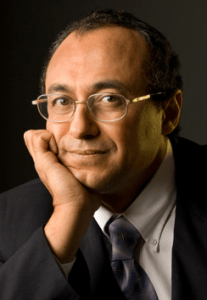
hamid

In response to the growing threat of radical Islamic terrorism both here and abroad, FreedomFest will host Dr. Tawfik Hamid, one-time Islamic extremist from Egypt, former member of Al-Qaeda, and author of the bestseller, “Inside Islam.” A physician from Egypt, he has appeared on CNN and Fox News, and has written op-eds for The Wall Street Journal. He has lectured at the Pentagon and the FBI on his strategic plan to defeat radical Islam.

radical jihad

Hamid will speak on “How Radical Islam Works. Why It Should Terrify Us, and How to Defeat It.”

Dr. Hamid will also participate in an important debate, “Can Islam be Reformed?” Not to be missed.

A cross-section of misery

Even in the affluent West, life is a trial. In the list below, some have two or three of these problems at the same time, while others may have none at the present but eventually will. This is a list put together by a psychiatrist “in a wealthy, mostly-white college town consistently ranked one of the best places to live in the country.” His specific instances are problems no one would wish to have to deal with. Here is his list of a macro breakdown of the misery that can be seen to exist if one takes a cross-section of the population.

– About 1% of people are in prison at any given time
– About 2% of people are on probation, which can actually be really limiting and unpleasant
– About 1% of people are in nursing homes or hospices
– About 2% of people have dementia
– About 20% of people have chronic pain, though this varies widely with the exact survey question, but we are not talking minor aches here. About two-thirds of people with chronic pain describe it as “constant”, and half of people describe it as “unbearable and excruciating”.
– About 7% of people have depression in any given year
– About 2% of people are cognitively disabled aka mentally retarded
– About 1% of people are schizophrenic
– About 20% of people are on food stamps
– About 1% of people are wheelchair-bound
– About 7% of people are alcoholic
– About 0.5% of people are chronic heroin users
– About 5% of people are unemployed as per the official definition which includes only those looking for jobs
– About 3% of people are former workers now receiving disability payments
– About 1% of people experience domestic violence each year
– About 10% of people were sexually abused as children, many of whom are still working through the trauma.
– Difficult to get statistics, but possibly about 20% of people were physically abused as children, likewise.
– About 9% of people (male and female) have been raped during their lifetime, likewise.

Bleak is the word for it. And even if one has no misfortunes to report so far, it is hard to get through life with no major moment of misery. But perhaps the lesson is not to read lists written down by psychiatrists.

Donald Trump may already be a conservative

IMG_1801

The picture of Donald Trump was taken by me at his very first public presentation that has taken him to the edge of the Republican nomination for president. This was at Freedomfest in Las Vegas last July. And what was notable about this presentation was that he sought out the invitation to speak. He was not on the program until he asked that he be included. And he perfectly well knew that Freedomfest is the most important annual meeting of conservatives and libertarians in the United States. What’s more, he gave one of his free wheeling speeches off the top of his head that had half the audience on its feet at the end. My feeling at the time was that in speaking to that audience he was in home territory among people who understood what he was about and about whom he understood what they were about. I live blogged his presentation and in re-reading it now, I can again see his vast appeal.

There is a post at Instapundit by Roger Simon, IT’S A CHRISTMAS MIRACLE! Roger Simon: How I Stopped Worrying and Learned to Love The Donald for Xmas. This is the passage quoted:

All the Republican candidates have their flaws, as does, in spades, the woman far at the front of the Democratic pack, described almost twenty years ago by William Safire in one of the most prescient op-eds ever as a “congenital liar.”

But my interest here is not in detailing everyone’s weaknesses – I like to remain friends with people – but, as a Christmas present to the angst-ridden, to try to explain how Trump’s flaws can be turned to the advantage of Republicans and conservatives. This is particularly important if, as appears highly possible, he wins the nomination. What do we do about it?

The answer is obvious. The solution to conservative angst over Trump is simple: stop criticizing him, co-opt him.

You don’t have to co-opt him. He is with us. Nobody understands all of the issues and everyone needs input to find their way. But what seems apparent on the evidence so far is that Trump is already onside with most of what we conservatives believe and would like to achieve. Marco Rubio had spoken the day before and left no impression other than he was too callow for the job. Given that it was Freedomfest, the libertarians there were largely ready to support Rand Paul. But it was only Trump who actually made fixing things seem possible. It may be a mirage. He may in the end not have what it takes. But unless he is the greatest charlatan in political history – putting even Obama into the shade – what you see is what you get, and what you get is possibly the most conservative candidate we have seen since Ronald Reagan. What constitutes a conservative in the era of Obama and Clinton is something different from what it was in 1980. Donald Trump may be as conservative as it is possible to be at the present time and still get elected in the United States.