John Stuart Mill and the theory of value

I have just posted this note onto the Societies for the History of Economics website in regard to François Quesnay, an eighteenth century French economist.

I found this, from Spencer Banzhaf, the most astonishing sentence I may have seen in quite some time, and I could not agree more.

“One cannot possibly discuss what happened to the role of agriculture/nature in value between Quesnay and today without talking about what happened to the meaning of “value,” conceived of as a moving target.  Rival theories of surplus value from Quesnay to Jevons will have to come into play.”

I often go on about the disastrous effect on economic theory of the Keynesian Revolution, but almost equally disastrous was the Marginal Revolution which undermined the classical theory of value, which was outlined comprehensively by John Stuart Mill in Book III Chapter VI of his Principles. Before I state my conclusion, I will just mention this, which comes from the brief profile of Mill that is on the HET website:

“John Stuart Mill’s greater economic performance was his magnificent 1848 Principles of Political Economy, a two-volume extended restatement of the Classical Ricardian theory.  He believed  Ricardo’s labor theory of value to be so conclusive that, in the beginning of a discussion on the theory of value, Mill confidently notes that:

‘Happily, there is nothing in the laws of Value which remains for the present or any future writer to clear up; the theory of the subject is complete: the only difficulty to be overcome is that of so stating it as to solve by anticipation the chief perplexities which occur in applying it.’ (J.S. Mill, Principles, 1848: Book III, Ch. 1).

“Thus putting a stone on the matter, and burying supply-and-demand theory for another quarter-century.  When Jevons’s later grumbled at the ‘noxious influence of authority’ preventing the development of economics, there is little doubt he was referring to J.S. Mill.”

That is all we think we know about the classical theory of value and it could not be more completely wrong. Mill did not restate “Classical Ricardian theory”. He explicitly discussed supply and demand. If you go to Mill, the first two of the seventeen elements in his theory of value are firstly, that the issue is not price as such, but relative prices, and then secondly, that the “temporary or market value” of something can be determined by supply and demand. There is no labour theory of value to be found anywhere. This is what Mill wrote:

“I. Value is a relative term. The value of a thing means the quantity of some other thing, or of things in general, which it exchanges for. The values of all things can never, therefore, rise or fall simultaneously. There is no such thing as a general rise or a general fall of values. Every rise of value supposes a fall, and every fall a rise.

II. The temporary or Market Value of a thing, depends on the demand and supply; rising as the demand rises, and falling as the supply rises. The demand, however, varies with the value, being generally greater when the thing is cheap than when it is dear; and the value always adjusts itself in such a manner, that the demand is equal to the supply.

The shallow reasoning and lack of depth in a modern textbook is a scandal, but is kept from most of us because no one knows what the economic theory of the past actually consisted of. If Spencer Banzhaf intends to be stating that “rival theories of value from Quesnay to Jevons” will need to be examined, then that is absolutely the case. What astonishes me is that both macro (which has replaced the classical theory of the cycle) and micro were much more profound among the later classical economists than amongst the majority of the economics profession today. We have more diagrams, they had a deeper understanding.

And this from “The Physiocrats and Say’s Law of Markets. I” by Joseph J. Spengler.

The physiocrats always expressed their theory of circular flow in interclass, rather than in interindividual, terms. Notwithstanding, their theory of circular flow forced upon them several conclusions of importance. They looked upon money as an instrument whose essential function it is to facilitate the circulation of goods and services, to serve as a medium of exchange. In consequence, they recognized that commerce consists, not in buying and selling, but in the exchange of goods and services for goods and services. They thus laid the groundwork for the formulation of Say’s law of markets and evoked its actual statement by their treatment of consumption and expenditure. They recognized, too, that if money ceases to perform its function, the nexus between potential purchasers and potential sellers is broken, thus anticipating Keynes; but they did not develop this theory, for they supposed that in a healthy economy founded upon their principles money would always perform its proper function.
Every government’s greatest wish: to spend like a drunken sailor

Next to my own article at Quadrant Online is a new one by Peter Smith, one of the few economists I think of as worth the time to read: This Can’t Go On Much Longer. His point is that you can print money from now until forever, but eventually you will cause enormous damage which will remain unrecognised until the after the deluge has struck.

I will go to economics and ask where is the money coming from and what are the implications of governments spending so much of it. I note that some commentators have referred to Modern Monetary Theory for guidance (watch for lefties coming out of the woodwork to promote it). Consult my article in the last July/August issue of Quadrant if you want to know about this theory; but, sufficient to say, it sheds more obscuration than it does light.

Governments are giving vast amounts of money to businesses and individuals to try and make up for their loss of revenue and income. Is it a good policy? Yes, it is. Governments have shut economies down and, thus, there is no option. Otherwise, people would starve and businesses across the board would collapse. At the same time, the character of giving matters. Some is sensible; some wasteful.

A formula being used in the US, and maybe elsewhere, seems by far the most sensible. Small and medium sized businesses are being given loans to cover their costs, including their wage costs, which will be forgiven if they keep all their employees on. Support to large businesses is also vital to ensure they do not collapse; and support to individuals thrown out of work.

Even on my own high street, there are all kinds of businesses in great difficulty, some even shutting down, never to return again, in many instances because landlords are not reducing their rents. Others will return, but many others won’t. Back luck to them, but also bad luck to you since your personal wealth is being depleted by these typical actions of governments, actions costless to them but not to us. This is how Peter ends:

So, what am I saying? I am saying that the normal implications of government overspending do not apply. This situation is unique. Think of it as an enforced sojourn, albeit on hard rations in solitary confinement. Most everything shuts, we sit on our hands, and the government gives those made destitute free money to pay bills and buy food and medicines. When the sojourn is over, we will have suffered a sharp loss of production but can make up for that over a period of time.

The trick is to ensure that business collapses are kept to a minimum; that most are in shape to start up again, and that individuals are kept whole. Every day will make it harder for some businesses and people to bounce back. This means the sojourn can’t go on much longer; only a few more weeks at most. Trump knows this, and could provide a lead for other countries, including Australia; if the hate-filled American media don’t deter him from acting as speedily as we need. And need it we do. Morrison, in the announcement I referred to, mentioned restrictions being in place for six months.

It’s every government’s greatest wish to throw around money at everyone and everything. Just think of Kevin Rudd and Barack Obama in the wake of the GFC. It then took near on a decade to return to where things had been in the US, and that only because of Donald Trump. Here we never got back to where we were in 2009. If you think this will be different, well good luck to you. We are being systematically robbed, and it will continue right up until the day the community at large finally says they have had enough.

EN PASSANT: From the comments thread at QoL:

Peter,

This is the economic destruction of the West (and Australia) that the globalists, climate Cultists, Fabians, Totalitarians (of every ilk) and Socialists have dreamed about since forever. Greta can now go back to skool as the capitalist world has deliberately suicided at the behest of our politicians.

It appears to be relatively easy to prophesise our future, so here are some of mine in this Orwellian Brave New World:
a. The Chinese are already buying stocks in key American (and Australian) companies.
b. They are offering big loans and support to those supporting their Belt & road initiative – like Victoria. All you have to do is bow and kneel. How easy is it to just bow and scrape in order to be saved?
c. The ‘Oz stimulus package’ will turn out to be a massive ‘hot shot’ heroin overdose that will economically ruin Oz.
d. The Oz $$ will become valueless
e. The Chinese will call in their markers and will take key assets as payment (Ports, Communications, Infrastructure, and whatever else they want that destroys our sovereignty). The Greens, the Left and the ABC will cheer this on as a ‘good thing’.
f. Emergency ‘Social Control’ measures will become more draconian and possibly permanent
g. Pollie pensions and benefits will NOT be cut …

Welcome to the future …

As usual, my solution requires ‘risk-taking’, which my children condemn as cavalier. When their arguments have no effect on me, they then (justifiably) ask, ‘But what about Mum?”
Anyway, I think that applying a harsh Triage approach has statistical merit and would contribute to achieving the prime practical objective of decreasing the ‘Rate of Increase in Infection’ through the period of Peak Hospitalisation Demand. This would maximise the number remaining at work and minimise the permanent damage to business and industry.

However, as we import so much from China our industries will probably collapse anyway as materials are already in short supply. The owner-builder next door has stopped as he cannot get – wait for it – roofing screws.We have destroyed the Australia I knew because 1,800 people are known to be infected and 16 have died.

The look of self-satisfaction on ScoMo’s face at the destruction he and Parliament have wrought on Oz beggars belief. Why not add a super-tax to our last productive industry and finish the job? Kill off mining and we will have destroyed Oz to save the planet.

John Stuart Mill on Laissez-faire

This is John Stuart Mill in his Principles of Political Economy, Book V, Chapter XI, Para 7 [Ashley edition p 950]:

Laissez-faire, in short, should be the general practice: every departure from it, unless required by some great good, is a certain evil.

This is William D. Grampp in his Economic Liberalism: , Volume II: The Classical View, Chapter 3, titled “Liberalism in the Great Century” [New York: Random House 1965]. The chapter begins:

The nineteenth century usually is thought to have been the greatest age of economic liberalism, greater than any other, from its origins in Stoicism down to the present time. Economists think of the century as the long afternoon of the ideology. They believe it then meant laissez-faire and that laissez-faire was the policy of Great Britain, the major economy of the world. In fact, the century was not like that, and historians have tried to tell us so. They have reported the many ways in which the British government intervened in the market. The historians also have said the intervention was inconsistent with liberalism. In this, they are in my opinion, mistaken. (Grampp 1965: 73)

From the introduction to the chapter he continues with his first section on “The Importance of the Nineteenth Century”. He lists six reasons, this is the fourth:

“(4) The first effort to make a comprehensive statement on its principles was in 1848.” (Grampp 1965: 74)

1848 was the date of publication of the first edition of Mill’s Principles. He makes what he means absolutely clear on the following page:

“John Stuart Mill was the first to do this – to enunciate a theory of policy – and he did it in his Principles, which was published in 1848.” (Grampp 1965: 75)

He makes clear its significance in the very first para in which he discusses the notion of laissez-faire.

“1. The idea of economic liberalism, which had been gathering force for centuries, came to their full power in the nineteenth century…. Liberalism had many different meanings to these people. But one generalization can be made. To almost all who believed in it and to some who did not, liberalism did not mean laissez faire – that is, it did not mean a policy of non-intervention by the government and of allowing the major economic decisions to be made on unregulated markets. The rejection of laissez faire was one of the few ideas on which there was nearly complete agreement among the economists and between them and the political leaders.” (Grampp 1965: 74)

In that quote from Mill, the most important word is “unless”, “unless required by some great good”. His Book V is “On the Role of Government”, and in the 185 pages that follow he makes clear just how extensive he believed that role is.

First they clock you on the head, then they revive you and call it a “stimulus”

Economic theory is confused almost to nullity. Part of my Classical Economic Theory and the Modern Economy (available from June) is a detailed discussion how modern economics, particularly the macroeconomic side, has made it almost impossible to talk about economies in a way that makes sense because of the terms we now use. This latest proliferation of the term “stimulus” to refer to the efforts to minimise the harm inflicted on our economies by closing them down is an example that had not even occurred to me. It will now make its way into the final text. Here’s the definition of economic stimulus from the net:

 An economic stimulus is the use of monetary or fiscal policy changes to kick-start growth during a recession. Governments can accomplish this by using tactics such as lowering interest rates, increasing government spending, and quantitative easing, to name a few.

Whatever you might call what is being now done, it is not a “stimulus”. Even economists can no longer distinguish the present attempts to minimise the structural damage caused by government restrictions on the economy with an attempt to “kick start growth”. The plain fact is that they have no idea what they are doing although for a change they are doing the right thing.

But here is how it will have to end in about three months time when the Corona Virus is finally declared under control. They will have to raise interest rates a couple of percentage points to pull all of this money out of the system. It won’t take much of an increase but that will be crucial.

In the meantime they should cut wages among the non-essential members of the public sector by 20% at a minimum. I would do it on a permanent basis, but do it at least temporarily until the emergency is over.

John Stuart Mill at Econ Lib

This is the EconLib (The Economics of Liberty} online biography of John Stuart Mill. The greatest defender of freedom and liberty in history, this is what they come up with. They really have no idea about the economics of Mill or about the economics of freedom for that matter, but it is sadly par for the course in our day and age.

The eldest son of economist James Mill, John Stuart Mill was educated according to the rigorous expectations of his Benthamite father. He was taught Greek at age three and Latin at age eight. By the time he reached young adulthood John Stuart Mill was a formidable intellectual, albeit an emotionally depressed one. After recovering from a nervous breakdown, he departed from his Benthamite teachings to shape his own view of political economy. In Principlesof Political Economy, which became the leading economics textbook for forty years after it was written, Mill elaborated on the ideas of David Ricardo and Adam Smith. He helped develop the ideas of economies of scale, opportunity cost, and comparative advantage in trade.

Mill was a strong believer in freedom, especially of speech and of thought. He defended freedom on two grounds. First, he argued, society’s utility would be maximized if each person was free to make his or her own choices. Second, Mill believed that freedom was required for each person’s development as a whole person. In his famous essay On Liberty, Mill enunciated the principle that “the sole end for which mankind are warranted, individually or collectively, in interfering with the liberty of action of any of their number, is self-protection.” He wrote that we should be “without impediment from our fellow-creatures, so long as what we do does not harm them, even though they should think our conduct foolish, perverse, or wrong.”

Surprisingly, though, Mill was not a consistent advocate of laissez-faire. His biographer, Alan Ryan, conjectures that Mill did not think of contract and property rights as being part of freedom. Mill favored inheritance taxation, trade protectionism, and regulation of employees’ hours of work. Interestingly, although Mill favored mandatory education, he did not advocate mandatory schooling. Instead, he advocated a voucher system for schools and a state system of exams to ensure that people had reached a minimum level of learning.
Although Mill advocated universal suffrage, he suggested that the better-educated voters be given more votes. He emphatically defended this proposal from the charge that it was intended to let the middle class dominate. He argued that it would protect against class legislation and that anyone who was educated, including poor people, would have more votes.

Mill spent most of his working life with the East India Company. He joined it at age sixteen and worked there for thirty-eight years. He had little effect on policy, but his experience did affect his views on self-government.

 
Let us in particular look at this: “Surprisingly, though, Mill was not a consistent advocate of laissez-faire.” Not only was he not a consistent advocate, he was no advocate of laissez-faire at all. No economist has ever been an advocate of laissez-faire, not Adam Smith, not David Ricardo, not anyone else. If you mean in all cases, leave it to the market, no one has ever advocated such a hands-off approach. Going further, Mill was an advocate of using government agency and regulation in a wide variety of instances. Yet his economics was the most hands-off approach to economic policy of any economist since the middle of the nineteenth century. This was from my own discussion of Mill that appeared on the EconLib website back in 2015: John Stuart Mill explaining what is wrong with Keynesian theory. My book on the economics of Mill will be published this year: Classical Economics and the Modern Economy.

This is overview of the book found on the Elgar website:

Economic theory reached its highest level of analytical power and depth in the middle of the nineteenth century among John Stuart Mill and his contemporaries. This book explains classical economics when it was at its height, followed by an analysis of what took place as a result of the ensuing Marginal and Keynesian Revolutions that have left economists less able to understand how economies operate.

Chapters explore the false mythology that has obscured the arguments of classical economists, clouding to the point of near invisibility the theories they had developed. Steven Kates offers a thorough understanding of the operation of an economy within a classical framework, providing a new perspective for viewing modern economic theory from the outside. This provocative book not only explains the meaning of Say’s Law in an accessible way, but also the origins of the Keynesian revolution and Keynes’s pathway in writing The General Theory. It provides a new look at the classical theory of value at its height that was not based, as so many now wrongly believe, on the labour theory of value.

A crucial read for economic policy-makers seeking to understand the operation of a market economy, this book should also be of keen interest to economists generally as well as scholars in the history of economic thought.

I never worry that anyone will be able to contradict me about Mill since the most certain statement I can make is that no one, but no one, has read Mill in the past fifty year to find out how an economy works, and virtually no one has read him sympathetically – other than myself and a handful of others – in over a century. But you do have to wonder about those who tell you about freedom and liberty who don’t read the author of On Liberty for some insights into how an economy works and his views on the role of government in making an economy work.


Mill’s Principles reviewed by Bonar in 1911

In 1911, James Bonar wrote a review on the publication of the Ashley edition of Mill’s Principles of Political Economy which was published in The Journal of Political Economy, titled: The Economics of John Stuart Mill. It perfectly summarises the consensus view of Mill’s economics at the start of the twentieth century, which shows just how far from the centre Mill’s economics had already by then moved.

If John Stuart Mill’s eminence is not supreme, it is great enough to make almost every utterance of his worth considering. His was rarely a hasty judgment; and what he says of his fellow-enthusiasts of the year 1825 might be applied to himself on most occasions: he never left a subject he had taken up until he had (to the best of his ability) untied every knot in it.

Another century later, there is virtually no economist who reads Mill today for instruction. And it’s not just their loss, we all lose because of the inanity of modern theory. It is the residuals from the economics of Mill and his contemporaries that allow our economies to limp along and innovation to continue. It was also interesting to discover how Mill came to write The Principles:

The success of the Logic drew him back into political economy by making the publishers willing (perhaps anxious) to print what they had refused before, namely, the Essays on Some Unsettled Questions in Political Economy, Mill’s part of the work projected in 1831 [he had originally intended to co-author a series of papers on economics which is why it was “Mill’s part”].

As he was setting out to write his Political Economy, he wrote the following to Auguste Comte in 1844:

I know what you think of the present political economy. I have a better opinion of it than you; but, if I wrote something about these things, I should never forget the purely provisional character of all its concrete conclusions and I should devote myself more especially to separating the general laws of production, necessarily common to all industrial societies, from the principles of distribution and exchange, which assume a particular state of society. Such a treatise could have a great provisional utility, especially in England.”‘ It might appear to you essentially anti-scientific; and it would be so as a matter of fact, if I were not taking great pains to establish the purely provisional character of every doctrine (about industrial phenomena) which made abstraction from the general movement of humanity. I think that if this plan is at all adequately executed it would give a scientific education (education positive) to many who are now studying social questions more or less seriously; and in taking as my general model the great and brilliant work of Adam Smith I should find good opportunities for spreading directly one or two principles of the new [positive] philosophy, as Adam Smith found them for spreading most often those of negative metaphysics in his social applications, yet without awakening dark misgivings by waving any flag.

I find this especially enlightening since quite a number of Mill’s views that have been superseded according to Bonar are views that I believe are of premier importance.

There are many details of economic doctrine in respect of which Mill has probably few followers now. Occasionally his positions, instead of being solemnly refuted, are quietly dropped as purely Ricardian. Many of the pages devoted to wages and profits are so treated. His particular form of Malthusianism has gone out of doors into the hands of an energetic sect of reformers. Without adopting the sweepingly adverse verdict of Jevons, we may admit that there is at once too much and too little in Mill’s Political Economy for most of us now. We should not confine wealth to exchange value, or believe that nothing remained to be added to the theory of value. We should not say that without competition there is no economics. We should not say so broadly that industry is limited by capital. We should not make so much of the distinction between productive and unproductive labor or try to prove that a demand for goods can never in any sound sense be a demand for labor. We cannot be induced to rank land, labor, and capital as co-ordinate factors in production, or to adopt Senior’s view that abstinence is rewarded in interest. We should probe further into the cause of interest. We might ratify the general principle of Malthus without making all progress turn on the practical recognition of it. We should be more chary than Mill in the use of the word ” laws.” We should not, all of us, admit that the “laws” of production were purely physical and the “laws” of distribution “of human institution solely.” Mill was probably aware that the abandonment by him in I869 of the wages fund carried consequences reaching into the heart of his arguments on profits and wages reducing them largely to useless dialectic.

But once we have removed Malthusian pessimism on population from the list, the rest of Mill’s judgements stand, even if few [no] modern economists any longer understand or subscribe to Mill’s position.

Much more to read at the link if these things interest you. But there is this one error that should be a reminder that no one can write anyone else’s life without error. This was the dates of Mill’s life stated by Bonar: “(May 20, 18o8, to May 8, 1873)”. Mill was, in fact, born in 1806.

“No permanent additional employment can be created by State expenditure”

A review of the following book was put up on the Societies for the History of Economics online discussion thread:

Robert W. Dimand and Harald Hagemann, editors, The Elgar Companion to John Maynard Keynes. Cheltenham, UK: Edward Elgar, 2019. xxi + 648 pp. $250 (hardcover). ISBN: 978-1-84720-008-2.

Reviewed for EH.Net by Bradley W. Bateman, Randolph College.

To get the flavour of the review, this was its first line:

Rarely does one read a reference work for pleasure. After all, would you take the Encyclopedia Britannica or the New Palgrave to the beach for your holiday? Not likely. And yet, there are reference books that one not only depends on, but enjoys. These might be surveys of the literature such as G.C. Peden’s little gem, Keynes, the Treasury, and British Economic Policy (1988); or they might be traditional multi-volume works like the Dictionary of National Biography. A good reference work can take many forms; but when you find a well-written and authoritative work that can help you in your research, you turn to it regularly and, yes, can even come to enjoy it.

I therefore wrote a note to put my own perspective forward.

I hear all the time that Keynesian economics has been transcended, that it is a thing of the past, but the evidence, both from the way our textbooks are written and in the way policy is conducted across the world, is that the very core of macro theory and policy remains Y=C+I+G. I am in no doubt that this collection is indeed a valuable collection in that it consolidates a great deal of writing on Keynesian economics and its history into a single volume. Yet the issue for me remains, that economists continue to trundle down this Keynesian path without the slightest evidence that it accurately explains how economies work, or that there has ever been a single instance where a Keynesian fiscal expansion has actually succeeded in bringing an economy out of recession and restoring full employment. You might have hoped that the failure of every stimulus in the world to succeed following the GFC might have created some kind of learning experience, but so far there is little evidence that economists are even beginning to rethink these macro models. Since the bibliography includes G.C. Peden, I will add in my favourite quotation from his writings, and leave it at that. And what this quote shows is that it’s not as if pubic spending didn’t have a constituency before Keynes, and yet, when it was tried, it turns out that the “Treasury View” was absolutely correct, as it has been every time a “fiscal stimulus” has been tried. Winston Churchill was the British Chancellor of the Exchequer and this is from his Budget Speech in May 1929, from well before the stock market crash in October.

“Churchill pointed to recent government expenditure on public works such as housing, roads, telephones, electricity supply, and agricultural development, and concluded that, although expenditure for these purposes had been justified:

‘For the purposes of curing unemployment the results have certainly been disappointing. They are, in fact, so meagre as to lend considerable colour to the orthodox Treasury doctrine which has been steadfastly held that, whatever might be the political or social advantages, very little additional employment and no permanent additional employment can in fact and as a general rule be created by State borrowing and State expenditure.’” (Peden 1996: 69-70)

I just wonder whether this volume has an entry on Critics of Keynesian Economics. I doubt that it does, but in any case it would undoubtedly and unfortunately have to be a very short entry.

So far no rejoinder to my response, but will let you know if there ever is.

Is it really that hard to understand that unproductive public spending lowers productivity?

Is there anyone anywhere who actually believes that the present recovery in the US has anything to do with Obama? Actually there are lots of people just as ignorant as that, amongst whom is Obama himself. I get the same level of irritation when I read how economic “managers” here in Oz wonder why productivity growth is so pathetic and real wages are falling even as they see before their eyes the construction of streetcars in Sydney, trains in Melbourne and the diversion of tens of billions of dollars into preventing a non-heating planet from heating. Anyway, this is Trump v Obama on why the American economy has been rising since Obama left the presidency.

President Trump fired back Monday after former President Barack Obama, in a subtle swipe at the commander in chief, claimed credit for the economic gains in both their terms.

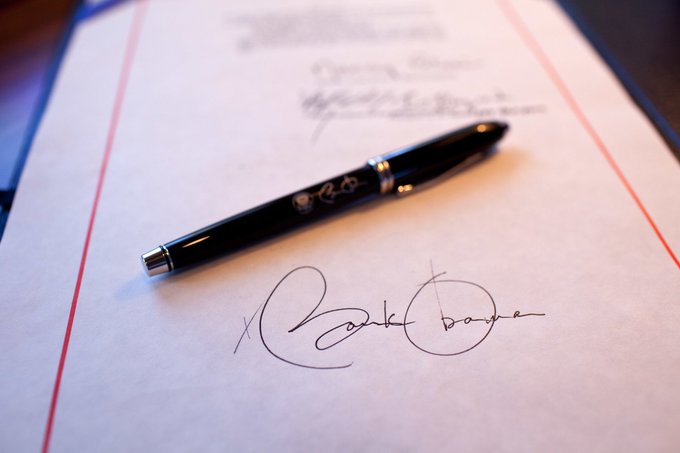
Obama tweeted Monday morning to note the anniversary of his signing the 2009 economic stimulus package.

“Eleven years ago today, near the bottom of the worst recession in generations, I signed the Recovery Act, paving the way for more than a decade of economic growth and the longest streak of job creation in American history,” Obama tweeted, alongside a photo of his signature on the bill.

But, the Trump campaign, in a statement to Fox News, countered that the economy was recovering only because of the actions Trump took to undo his predecessor’s policies.

“President Trump reversed every single failed Obama-era economic policy, and with it, reversed the floundering Obama/Biden economy,” Trump campaign national press secretary Kayleigh McEnany said. “Obama and Biden orchestrated the worst economic recovery in modern history.”

Actually, everyone else did more or less the same as Obama, Australia included, with more or less the same results. Modern macro is about as disastrous as a policy can be, although we may yet see Modern Monetary Theory given a try by one of the socialists now running for President as a Democrat.

Clueless Keynesian RBA boss leaves ministers frustrated

From the Oz: RBA boss Philip Lowe leaves ministers frustrated.

The Morrison government is ­increasingly frustrated with ­Reserve Bank governor Philip Lowe’s calls for it to spend more to lift the ­nation’s flagging productivity, after a confidential cabinet briefing from the RBA boss on Monday left ministers exasperated by an absence of detailed policy ideas.

Dr Lowe in a speech on ­Wednesday again exhorted the ­Coalition to do more to foster business spending as he highlighted a “troubling decline in productivity growth”, despite “fantastic” economic fundamentals. “While the reasons for this are complex, it is hard to escape the conclusion that higher levels of investment spending would promote productivity growth and our collective living standards,” he said.

Look Phil, have you not been paying attention to the last lost decade of public sector spending and how it’s left the economy adrift, and not just ours?

Hop on one of those streetcars down George Street to see just how wildly wasteful public spending is. Come along to Melbourne and look at the new tunnel we’re building.

Why don’t we build some more windmills? Solar panels?

Maddening to see how shallow public sector economists are. They will be the ruin of us.

Productivity growth and classical economics

Trade-off

I wasn’t going to bother with the story because its title was so ridiculius – Britain’s Productivity Decline Is the Worst in 250 Years – as if you could measure productivity going back even sixty years. But what they show in the chart is true enough, and about which I have been writing quite a bit. The Keynesian “stimulus” has been a disaster everywhere it has been tried, with the example here the UK. To compound their idiocies, this is what they wrote:

Productivity was almost 20% below its pre-2008 path in 2018 — the worst slowdown since 1760-1800, as the Industrial Revolution took hold. The present-day malaise may have been caused by the end of the information and communications technology boom, the financial crisis, and Brexit.

And the authors are, of course, part of the mainstream and at its very heights:

It’s a “shockingly bad” performance, said Nicholas Crafts, who co-authored the paper with Terence Mills, researchers at the University of Sussex and Loughborough University. The findings will published by the National Institute Economic Review on Feb. 6.

Productivity is here measured as output per hour worked. If the government diverts production from the private sector to its own public agenda, you inevitably get a vastly diminished level of value-adding production, even though employment continues to increase because the real wage adjusts. Why people cannot see this is amazing to me, but here is yet more evidence of just how out of it economists now are. That the period in question is the period following the GFC ought to have been a clue, but Keynesians – i.e. modern macroeconomists – are notoriously clueless.

Let me again mention the cover description for my next book:

‘Classical Economic Theory and the Modern Economy’

Steven Kates

Economic theory reached its highest level of analytical power and depth in the middle of the nineteenth century among John Stuart Mill and his contemporaries. This book explains classical economics when it was at its height, followed by an analysis of what took place as a result of the ensuing Marginal and Keynesian Revolutions that have left economists less able to understand how economies operate.

Chapters explore the false mythology that has obscured the arguments of classical economists, clouding to the point of near invisibility the theories they had developed. Kates offers a thorough understanding of the operation of an economy within a classical framework, providing a new perspective for viewing modern economic theory from the outside. This provocative book not only explains the meaning of Say’s Law in an accessible way, but also the origins of the Keynesian revolution and Keynes’s pathway in writing The General Theory. It provides a new look at the classical theory of value at its height that was not based, as so many now wrongly believe, on the labour theory of value.

A crucial read for economic policy-makers seeking to understand the operation of a market economy, this book should also be of keen interest to economists generally as well as scholars in the history of economic thought.

My book is premised on the belief that a modern economist is incapable of understanding what’s wrong with modern economic policy. This paper proves it all once again.