A Say’s Law moment

There are three events coming to a head at the moment that relate to my work on Say’s Law.

There is, firstly, the publication of the 2nd ed. of Free Market Economics which will be co-published by the Institute of Economic Affairs in London. On my involvement with the IEA in the publication of this book, I have written:

Let me also add how delighted I am that this second edition is being published in association with the Institute of Economic Affairs. There has been no organisation more influential on my way of thinking about economic issues than the IEA which almost alone stood up for free markets and free enterprise in those dark days of the 1970s and early 1980s. It was the IEA which brought to wider public attention authors such as Milton Friedman, Friedrich Hayek and James Buchanan. The points they made have to be continually re-iterated as ideas with a less impressive academic provenance, not to mention frequently disastrous economic results, continually take hold in public policy debates

Then, second, if it can be arranged, I will be off to the First Congress on Jean-Baptiste Say and the Entrepreneur in Auchy on the north coast of France. This is the letter of invitation I received last night.

Dear Colleague,

I am honored to invite you to participate in the 1st International Congress Jean-Baptiste Say- RNI Summer School 2014, organized by the Research Network on Innovation and the International Society Jean-Baptiste Say (SAYS) from the 27th to 30th August 2014 at Universite du Littoral Cote d’Opale, Boulogne-sur-Mer and at Auchy-les-Hesdin (Nord-Pas­ de-Calais, France):

The conference is composed of various conferences, workshops and cultural activities (Cf. the program of the conference http://says.univ-littoral.fr/?page id= 102). Your contribution to the academic debates and your participation in different activities during will be highly appreciated.

I am looking forward to meeting you this summer.

I wish I were ten years younger. I didn’t think it would come to this, but travel has a lot of wear and tear. But for this one I am definitely ready to make the effort. Say is returning, and even though they focus on his work on the entrepreneur, they only leave out Say’s Law because it is too contentious.

And last but definitely not least, there is the movie being made that has, at its very centre, a series of principles of economic management based on Say’s Law. If you would like to read the book from which the movie is being made from, it’s called Waffle Street. It is premised on an understanding of Say’s Law so you’d hardly think it’s movie material but the world is stranger than you can sometimes believe. But if you get the book, you will see nine principles at the end, the first one being, “production is the source of all consumption”, that is, demand is constituted by supply. I am told there is a cameo of my Say’s Law and the Keynesian Revolution that has been filmed. But whether or not it makes it past the cutting room floor, this is strangely the first movie ever made based on an economic principle. It also has an incredible story line that has the potential to make it the movie of the year. If you don’t believe me, read the book, and if you do, make sure you get to the list of nine “Articles of Economic Faith” at the end.

The latest horror stories on the US economy

From Drudge, just a few side comments on the American economy, not featured but just listed. All so very ho hum because really, who doesn’t know any of this:

Fed Official Warns ‘Disappointing’ Growth Could Foretell Future…

Sluggish jobs market points to structural problems…

Yellen Determined To Avoid ‘Nightmare Scenario’…

Record income gap fuels housing weakness…

Wages Down 23% Since 2008…

Bank Profits Near Record Levels…

Let’s start with the first of these, Fed Official Warns ‘Disappointing’ Growth Could Foretell Future:

The official, Stanley Fischer, who took over as vice chairman of the Fed in June, noted that although the weak recovery might simply be fallout from the financial crisis and the recession, “it is also possible that the underperformance reflects a more structural, longer-term shift in the global economy.”

In a speech delivered on Monday in Stockholm at a conference organized by the Swedish Ministry of Finance, Mr. Fischer also conceded that economists and policy makers had been repeatedly disappointed as the expected level of growth failed to materialize.

“Year after year, we have had to explain from midyear on why the global growth rate has been lower than predicted as little as two quarters back,” he said. “This slowing is broad-based, with performance in emerging Asia, importantly China, stepping down sharply from the postcrisis surge, to rates significantly below the average pace in the decade before the crisis.”

Mr. Fischer said it was difficult to determine how much of the slackness was because of cyclical factors and how much represented a more fundamental, structural change in advanced economies.

In essence, they don’t have a clue what’s going on. Clear as crystal what the problem is if you don’t think along Keynesian lines and do not believe raising aggregate demand is the answer. In fact, all of it makes perfect sense if you go back to the pre-Keynesian (i.e. classical) theory of the cycle. But economists are now three generations into Y=C+I+G that thinking in any other way is a near impossibility.

But this is the one I find the most graphic, US Wages Down 23% since 2008. The American economy is falling into bits and real incomes are falling through the floor:

U.S. jobs pay an average 23% less today than they did before the 2008 recession, according to a new report released on Monday by the United States Conference of Mayors.

In total, the report found $93 billion in lost wages.

Jobs lost during the recession paid an average $61,637. As of 2014, jobs in the same sectors paid an average of $47,171 annually.

“Under a similar analysis conducted by the Conference of Mayors during the 2001-2002 recession, the wage gap was only 12% compared to the current 23%–meaning the wage gap has nearly doubled from one recession to the next,” stated the Conference of Mayors in a statement.

The report also found that 73% of metro area households earn salaries of less than $35,000 a year.

And the only thing they have thought to do to assist business has been to lower interest rates to near zero which, if they understood anything at all, they would understand would only make matters worse.

The evolving nature of the history of economic thought

An email to a colleague in Europe who is going off to the Congress on J.-B. Say and the entrepreneur at the end of August.

I am very pleased to hear from you and to find you are heading off to this Congress. It seems exceptionally interesting and the focus on the entrepreneur has been for too long ignored within economic theory and policy. There was some interest expressed to me about my going there as well but it has unfortunately come to nothing. It would have been a quite long journey and as I also have a conference in Hong Kong just after may have been too much of an excursion. But whatever might have been the original interest in my attendance, nothing has come of it so I am off to Hong Kong which will be a bit easier than the 20,000 mile round trip going to France would have required. Still, I would have liked to have gone but that’s life.

The seriously interesting part for me, but probably of little interest to anyone looking at what Say was writing in 1803, is that I have written what amounts to Say’s Treatise for the 21st century. I will attach a blog post I did on the book, but it is about nothing less than the crucial role of the entrepreneur combined with an understanding of Say’s Law as expressed by Say, Ricardo, James Mill and John Stuart Mill. I am the living embodiment of those values but probably 150 years behind the times, but in my view, also about 15-20 years before my time. The fact of this conference is a sign of the subterranean changes going on. But it is hard for anyone who has grown up on aggregate demand and math ec to understand what’s required if you remove AD from within macro and start treating the future as genuinely uncertain. What happens then is you end up with the classical theory of the cycle which no one any longer understands. You should be able to read the back cover of the text in the blog post attached which explains all this in more detail.

I should also mention one other reason I was pleased to hear from you. Had you not written, I would not have known that my post to the SHOE website had actually been posted since it drew not a single response and google mail doesn’t post returned emails that one has sent out oneself. My campaign to save HET from the historians and philosophers of science seems to fall on deaf ears, but the more I engage in this debate, the most astonished I am at how misconceived their ideas are. Sure certain aspects of HET are HaPoS but that is not anywhere near HET’s core significance. I really do believe that HET has been overrun by philosophers and sociologists who have almost no interest in economic issues other than as a peripheral matter upon which they can contemplate everything else under the sun aside from the way an economy works. I think that because HET in Australia retains its original essence almost entirely, that the shifts that are going on elsewhere were almost invisible to us when they came to try to remove HET from economics which is why we all rose up as one. Now with conferences such as this in Boulogne-sur-Mer, where the central interest is mainly in understanding how economies function but using past economists as a vehicle, there may be a shift back coming into play. My intervention to preserve HET, however much it seems to have been resented by some of our American and European colleagues, was just in time. Had HET gone to HaPoS, it would have died within the decade within departments of economics. It would have become as relevant to economics as the history of physics is to physicists.

Finally, I am going to copy into this email my young colleague from Auchy so he can know what’s going on. I hope you enjoy the conference which I hope will be a great success and please do keep me informed.

Kind regards

FME2 cover

fme2 cover_Page_1

fme2 cover_Page_2

The cover of the second edition. I’d forgotten about the first of the cover endorsements. It was provided by a reviewer at Choice which is the magazine subscribed to by libraries to help them choose which books to buy.

Free Market Economics is virtually a must read for serious economists…. Highly recommended.

The second edition should be available in about a month.

The entrepreneur and modern economic theory

The entrepreneur has been written out of economic theory. Let me explain:

      • the dominance over the past century of the economics of the English speaking countries
      • the absence of discussion of the entrepreneur in the economic literature written in English
      • the meaning of “entrepreneur” comes from the French entreprendre which means to undertake and therefore entrepreneur in English is literally translated as “undertaker” which has its other more common meaning as someone who buries people for a living – a morbid connection
      • interestingly as a sidelight, the German word to undertake is unternehmen and therefore the German for entrepreneur is Unternehmer but in this case with none of the morbid connectivity of English
      • Mill in 1848 was discussing the need for an English equivalent of entrepreneur and lamented that no such term existed
      • Schumpeter’s notion of an entrepreneur embeds innovation
      • the Rothbardian version of an entrepreneur is someone who exploits opportunities others have overlooked
      • the meaning that is missing with such overtones is the plain notion of an entrepreneur as a factor of production that exists along with land, labour and capital – someone who runs a business and brings the other factors together in a productive profit making enterprise
      • all such entrepreneurs are almost certainly creative in their own way, some more than others, but it is the notion of the organiser of a business that is needed
      • economic theory has, however determined that it must follow physics in depending on external non-human forces, such as demand or utility with human decision making almost invisible
      • the use of MC=MR as the profit-maximising position is almost paradigmatic in that no actual human decision making is visible other than to follow the dots to the highest possible profit
      • although this is the essence of the theory of the firm, what is omitted is the possibility of novelty and innovation
      • an innovative entrepreneur is inconsistent with economics as physics since it opens up the possibility of discontinuity
    • discontinuity via innovation makes mathematically-based economics a limited approach to understanding the dynamics of economic change since the future cannot be expected to be like the past.

Economie du Libre Marché

Astonishing to come across this, my work on Say noted in French in France. To find others who think about Say in the same way as I do, is astonishing. Say along with JS Mill, are odd as it may seem, part of the road that must be travelled to put economic theory onto a solid foundation.

Steven KATES est professeur au Département « Economie, Finance et Marketing » de l’Université RMIT de Melbourne (Australie). Avant d’évoquer deux de ses récents ouvrages, citons quelques extraits de son analyse du livre d’Evert SCHOORL ci-dessus :

« C’est le genre de livre qui devrait faire de l’histoire de la pensée économique une part essentielle de l’éducation de tout économiste…
..le livre… présente donc la vie de l’un des économistes les plus influents qui ait jamais vécu et dont l’oeuvre a encore beaucoup à apporter à la fois aux économistes et aux historiens de la pensée…
… l’épisode de son affrontement à un Napoléon à l’apogée de sa puissance fait de la propre intégrité personnelle de SAY un réel sujet d’étonnement…Cela a quelque chose de surhumain…
…Le personnage mis à l’honneur est la même personne décrite par John Stuart Mill (penseur philosophe britannique de grande influence qui rencontra J-B SAY) :
« un homme réellement honnête, courageux, éclairé »
Le même John Stuart Mill a également écrit de J-B SAY :
« c’est un bel exemple du meilleur type de républicain français »

S. KATES a publié en 1998 (réédition en 2009 ) :
« La Loi de SAY et la Révolution Keynésienne »
[ Dans ce livre fascinant et bien documenté, KATES contredit l’interprétation bien connue de Keynes de la « Loi des Marchés de Say… ».
Ce livre est une critique des positions de Keynes hostiles à la « Loi des Marchés de SAY » ; il oeuvre donc en faveur d’une réhabilitation de cette dernière.]

S. KATES a également publié en 2011 :
« Economie du Libre Marché…. »
« Free Market Economics – An Introduction for the General Reader »
[Une contre-attaque théorique rafraîchissante face à la conception Keynésienne bien établie….
Le Professeur KATES a brillamment remis à l’honneur la Loi des Marchés

The entrepreneur and Say’s Law

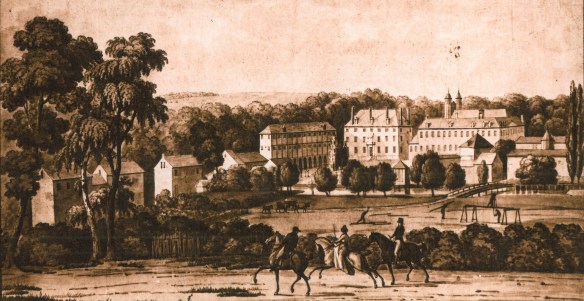
SKMBT_C45211070110270- filature-château vers 1825

I have just on Friday night at 11:27 sent off to the publisher the corrected proofs of the 2nd ed of my Free Market Economics. And while I think of the book as a modern version of John Stuart Mill’s Principles of Political Economy, I received an email that has made me think that there is possibly a different and deeper source for the book I wrote. There is about to be The First International Congress on Jean-Baptiste Say to be held in village in near Lille called Auchy-lès-Hesdin. And why there? Because that’s where J.-B. Say lived and built his business.

But the core issue of this conference is not about Say’s Law but about the entrepreneur. That, too, is what my text is about: the entrepreneur, Say’s Law (i.e. the law of markets) and the market economy. This is from the Elgar posting on the first edition of which the second is the same only much more:

The book does more than recast macroeconomics in its classical form. The microeconomic sections of the book also provide a different perspective on the nature of the market, the role of the entrepreneur and the unparalleled importance of uncertainty whose significance in economic analysis cannot be exaggerated.

That is exactly what this conference is about. These are the abstracts of the first set of papers listed in the 48-page conference program which is part of the opening round table on “J.-B. Say and the liberation of productive forces”:

It should be remembered, first of all, that under his training as a young merchant, Jean-Baptiste Say spent two years with his younger brother Horace, near London in Croydon. In 1786, he moved to Britain to learn the practice of English commercial business. This happened in the midst of the development of manufacturing in the UK when the introduction of mechanical looms gave a great boost to the whole industrial activity. It is clear that this first experiment in an expanding industrial environment, which lasted two years, deeply influenced the young J.-B Say who was gifted with an inquisitive mind and a talent of observation. Another element that makes J.-B. Say a competent expert to analyze the economic situation in England and identify the strengths and lessons for France lies in his experience as an entrepreneur in the creation of the spinning company in Auchy (France) in 1805.

In the Traité d’Economie Politique and in the Cours Complet d’Economie Politique, Jean-Baptiste Say develops a criticism of corporations and other industrial regulations. According to him, these regulations are barriers to the entrepreneurial freedom and to the progress of arts. They are almost always tools of individual and collective oppression and at the origin of various economic, social and political ills. In this paper, we detail Say’s argumentation against corporations and show that it is part of more general framework based on the influence of institutions on the economy and of machines on commerce. His critical analysis leads us to present his conception of a necessary liberation of the forces of production, which requires the creation of a general framework favorable to the freedom to undertake and a blossoming of the forces of production (machines). These elements also constitute the foundations of his political economy.

In Jean-Baptiste Say’s economic thought, a productive fund of industrial capabilities generates the emergence of entrepreneurs, workers and scholars. However, success only ensues from the exercise of entrepreneurial capabilities. This article analyzes several classifications of capabilities formulated by J-B. Say. Our first result highlights the fact that these capabilities go beyond the scope of the enterprise and concern the development of nations. Within the enterprise, there is a clear distinction between management and administration in J.-B. Say’s analysis ― the former is connected to the capacity of reasoning, whereas the latter demands qualities connected to control and supervision. Therefore, the entrepreneurial functions relative to uncertainty, innovation or inefficiency are linked to success but are not necessary conditions for the productive activity. We conclude that J-B. Say does not share the idea of an economic convergence between nations in a spontaneous way. A policy of economic development based on industrial education and the reinforcement of entrepreneurial capabilities is a necessary condition.

In his writings devoted to monetary questions, Say studies in details monetary, financial and bank innovations which he designates by the expression “representative signs of money”. Say’s analysis on money and its representation signs is very important since it takes place in a context of major change in the monetary field. The aim of this paper is to show how, in Says’ analysis, these representative signs of money are innovations of major importance. The paper begins with an analysis of the position of the representative signs of money compared to money itself. Then it studies promissory notes, bills of exchange and banknotes. Finally, the consequences of their circulation in the economy are presented, especially on the activity of producers.

Since Schumpeter, there has been a tradition in the history of the economic thought that has placed Say’s entrepreneur in a filiation Cantillon-Turgot. The aim of this article is to show that this filiation does not exist, even if certain themes such as risk, knowledge or organization of production appear in the works of these three authors. More precisely, it is possible to find a double break between Say and his predecessors. The first one lies in the analysis of the production and the division of labor, which shows that the entrepreneur in Say’s writings has not the same role as in Turgot’s ones. The second one concerns their conceptions of uncertainty and profit, which shows that the place of the entrepreneur in the distribution of income in the writings of Say is not the same that in Cantillon or Turgot’s ones. The implications of this double break are specified in the conclusion.

Jean-Baptiste Say and Joseph Aloïs Schumpeter are two key-economists in the theory of the entrepreneur. Both assigned to the entrepreneur the role of an economic engine, moved by innovation. Moreover, both lived in periods characterized by a flow of economic and political new ideas (Say: the French Revolution, the Empire of Napoléon, the Bourbon Restoration, the first industrial revolution; Schumpeter: the two World Wars, the Bolshevik Revolution, the 1929 crisis, the second industrial revolution). Their theories, embedded in troubled times; define an individual who constantly avoids being locked in (economic, social, political and technical) routines. Nevertheless, an important point distinguishes their approaches: Say describes a real entrepreneur, while Schumpeter reduces him to an ideal type.

You can see from this that the world is turning away from Keynes and towards Say. The conference papers, if the abstracts are anything to go by are all of this depth and quality. That a serious revival of Say should happen in France is not as obvious as all that although where else. But you could learn more about the nature of an economy and good policy from Say’s Treatise, I’m afraid, than from most of the textbooks found across the world today. But there is the second edition of my own which will be available in about a month.

UPDATE: Overnight I have received an extremely kind and fascinating note which included the above picture. I hope M. Tilliette will not mind my reproducing his note:

Dear Professor Kates,

Please permit me to send you this mail.

I was born in 1930 at Auchy-lès-Hesdin in the north of France where Jean-Baptiste SAY founded a cotton mill about two hundred years ago, and 200 meters from the place where he lived with his family during 8 years (1804/1805 – 1812/1813 ).

Very probably my grand–grand father met him for building matters !

Mrs. Michelle Lapierre informed me that you will meet her son Florian very soon. It is a sympathetic information for us because here we are very much interested in the revival of the memory of Jean-Baptiste SAY.

We hope other opportunities to contact you. To-day, please find here attached :

– the translation in french of your positive review about the recent book of Professor Evert Schoorl. Pr. Schoorl was happy to send me your review and I translated it for people here.

– a view of the cotton mill of Auchy around 1820 / 1825, practically as J-B SAY knew it; before it was a benedictine abbey with a water mill.

– a view of this cotton mill about fifty years later, rebuilt after a big fire in 1834. This factory was operated during almost two centuries, till 1990.

It would be a pleasure for us to send you other details about the J-B SAY time at Auchy-lès-Hesdin.

Dear Professor, I thank for your attention.

Yours truly,

Z. Tilliette

Balanced budgets make economies stronger – the latest episode

A story on how balanced budgets have caused the Canadian economy to boom. From which this:

We have a lot of cases available to us to test the proposition that we will increasingly be hearing that balancing the books is over-rated. If the all-stimulus-all-the-time Keynesians are correct, for example, France should be the strong man of Europe, for its Socialist president came to power rejecting “austerity” and preaching the virtues of stimulus. Britain, which pursued a course of fiscal discipline under the coalition government of David Cameron, should be in steep decline.

Instead the head of the International Monetary Fund, Christine Lagarde, recently had to apologise to Britain’s Chancellor of the Exchequer for having wrongly warned that his austerity policies would provoke disaster, as Britain turns in one of the strongest economic performances in the EU. Overtaxed and tapped out France, by contrast, continues to be the sick man of Europe. Interviewed on British television Ms Lagarde acknowledged that Britain’s growth seems “pretty sustainable” because it depends on private sector investment and consumer spending.

Economic theory of the Y=C+I+G variety has a lot to answer for. Balanced budgets accompanied by limited growth in public spending are the key to prosperity. The opposite can be seen everywhere in the misery and harm that are caused (see the US for exhibit A). Canada and the UK are now examples of how private sector growth along with what others choose to call “austerity” actually do create the foundations for economic growth.

Missing the point perhaps

John Cochrane published an article a few weeks back on The Failure of Macroeconomics which you tend not to see much of even though its failures are manifest and undeniable. Here is the first para of his article which refers to the US but the story is hardly better anywhere else:

Output per capita fell almost 10 percentage points below trend in the 2008 recession. It has since grown at less than 1.5%, and lost more ground relative to trend. Cumulative losses are many trillions of dollars, and growing. And the latest GDP report disappoints again, declining in the first quarter.

He is down on Keynes and Keynesian theory but his analogy is sus to me. If I read him right, he is saying that climate science is all right because it is using modern evidence unlike macroeconomics. Anyway, he writes:

The climate policy establishment also wants to spend trillions of dollars, and cites scientific literature, imperfect and contentious as that literature may be. Imagine how much less persuasive they would be if they instead denied published climate science since 1975 and bemoaned climate models’ “haze of equations”; if they told us to go back to the complex writings of a weather guru from the 1930s Dustbowl, as they interpret his writings. That’s the current argument for fiscal stimulus.

I take it that the “guru from the 1930s Dustbowl” is Keynes. I suppose then that Cochrane wouldn’t like to go back to my own set of authorities which are the economists of the mid-nineteenth century, John Stuart Mill in particular. But whether he knows it or not, that is what he’s doing in pushing structural reforms while abandoning attempts to increase aggregate demand:

These views are a lot less sexy than a unicausal “demand,” fixable by simple, magic-bullet policies. They require us to do the hard work of fixing the things we all agree need fixing: our tax code, our cronyist regulatory state, our welter of anticompetitive and anti-innovative protections, education, immigration, social program disincentives, and so on. They require “structural reform,” not “stimulus,” in policy lingo.

Economists once knew this, since that was the core element of what an economist knew that had been passed down through the first century of economic thinking, starting from Adam Smith in 1776. Yet even though Cochrane can see there are problems with a stimulus, I don’t myself think he really gets it himself since it never occurs to him to suggest that cutting the level of public spending might actually do some good.

[My thanks to J.B. for sending this article along.]

The fiscal policy of Warren Harding

Warren Harding succeeded Wilson in 1921 as the American economy fell into a post-World War I inflationary recession. Although almost never mentioned, he turned an incipient Great Depression into the Roaring Twenties. I use this story in class as the last example of a classical economic policy ever put into play. Here is how his approach is described:

Harding’s pledge to restore America to a condition of “normalcy” led to his landslide victory in November 1920. In office, he cut government spending to the bone and reduced federal income tax rates across the board. As he said to Congress, the government acted during the war as if “it counted the Treasury inexhaustible”; if that pattern continued, it would result in “inevitable disaster.” To get government spending under control, Harding established the nation’s first Budget Bureau (the forerunner of today’s Office of Management and Budget) in the Treasury Department. As a result, federal spending dropped from $6.3 billion in 1920 to $5 billion in 1921 and then $3.3 billion in 1922. He supported the Revenue Act of 1921, which eliminated the wartime excess-profits tax, lowered the top marginal income tax rate from 73 to 58 percent, decreased surtaxes on incomes above $5,000, and increased exemptions for families. . . .

Many people, he noted, benefited from the gains made “as a result of the economic measures he implemented.” Unemployment fell from 15.6 percent to 9 percent. The industrial side of the economy revived at a rapid pace. A boom took place in construction, clothing, food, and automobile sectors. From 1921 to 1923, the volume of manufacturing climbed 54 percent.

Cut public spending, cut taxes and balance the budget. A radical idea even then and today beyond the pale.