Who would have expected that stagnation would continue so long?

I will, along with the rest of us, see what happens, but I am not, to say the least, encouraged. From The Australian:

THE global economy faces another five years of stagnation, the International Monetary Fund warned overnight as it cut its growth forecasts for the third year in a row and urged nations to ­reinvigorate economic reforms.

Releasing the fund’s updated economic outlook, IMF chief economist Olivier Blanchard ­described global growth as ­“mediocre” and, in a reference to the agenda Australia has set for the G20 members ahead of next month’s summit in Brisbane, said the difficult outlook underlined the importance of identifying economic reforms that could lift output.

Who could have expected such an outcome? The people who run our economies do not have a clue. This is all so unexpected for them, and they will therefore persist in running budget deficits and keep interest rates low until our economies finally tick up which means, of course, that is of course if you are a classically trained economist, that their very policies will continue to be the reason our economies refuse to grow. And if they still attribute the problems to the Global Financial Crisis of six years ago, they are seriously seriously out to lunch.

John Stuart Mill and the logic of economics

I have just been confronted by two articles I have refereed, both on the economics of John Stuart Mill, that I rejected because they have no idea what Mill is trying to explain or the logic of what he is getting at. Both, however, are likely to be published no matter what I might think. Here was Mill, the man with the nineteenth century’s highest IQ, the author of the book on logic that was used for two generations across the English speaking world, a book still eminenty worth reading to this day, yet both of these papers criticise Mill for contradicting himself and faulty logic.

Mill’s Principles of Political Economy is far and away the best book on economic theory ever written. My own book on Free Market Economics (now in its second edition) is Mill brought up to date with a few modern gadgets. Also brought into the text and heavily criticised are the various additions to economic theory that have made economics far worse as a tool of analysis and a basis for policy, most notably MC=MR and Keynes.

All I can say is how exasperating it is to read these critics of Mill who cannot even begin to understand the problems with their interpretations. But what is the peculiar bit is that in being possibly the only economist in the world who thinks of Mill as the best economist who has ever lived, there is not a soul alive who I can turn to for support. I am not the smartest person on the world today, but I do come closer to understanding Mill than anyone else writing on economics. The massacre of our economies by the modern doctors of economic theory is as obvious to me as it is invisible to them. So on it will go but the certainty is that if we keep up in the way we have, we will never ever generate a recovery worth having and living standards will continue to fall.

The great discontinuity in Keynes’s economic thought

This is an extract from a note I have written to an economist in the United States whose work I have only just come upon. I am beginning to become aware of the various attempts by a number of economic schools to abandon modern neo-classical theory which, in my view anyway, mostly means trying to rediscover what the classical economists already knew. Perhaps there is more to it but so far I cannot see what. The interest in this letter, however, is in the nature of the Keynesian Revolution. I have no in-depth knowledge of Keynes’s Treatise on Money although am reasonably familiar with it. But it was published in 1930 while my interest begins in 1932 with Keynes’s discovery of demand deficiency as the explanation of recession and involuntary unemployment.

The paper I am commenting on treats Keynes’s ideas as if there had not been the great disruption at the end of 1932 when Keynes came upon Malthus’s 1820 letters to Ricardo. It was these that instantly converted him into a Keynesian theorist which he had not previously been, even though he had always sought to increase public spending to reduce unemployment during recessions. That virtually all of his contemporaries understood how thin Keynes’s arguments are is now just of historical interest and of interest to hardly anyone at all. Only by going back to those moments of transition, and by understanding what economic theory was like before 1936, is there any hope for again turning economic theory into something useful for analysing economic events. This then is what I wrote:

I would have written back straight away but Tuesdays is my heavy duty teaching day and I also didn’t want to clutter your inbox until I had read your brilliant article on Keynes. You cannot imagine how similarly we see the world and what a treat it is for me to read something like what you wrote. I will, of course, include this paper in my Anti-Keynesian Reader, but I must also beg your indulgence if I explain to you the 1932-1933 shift in Keynes’s thinking which is my speciality. I have also ordered your macroeconomics text which I am looking forward to since it came after your paper and must therefore incorporate the same ideas.

You have also made me even more aware than I was before that I have not been keeping up with the literature as well as I should. I found the scholarship of your article exhilarating and finished it at one go. I just sat down and read it and was only sorry that after thirty pages it turned out to be so short. My own excuse for not being aware of the most recent literature is that I spent the years from 1980-2004 as the Economist for the Australian Chamber of Commerce and Industry. I therefore think that my economic interests were driven by an eclectic interest in arguments that could be used to explain economic issues from the perspective on an entrepreneur. It is why the classical economists so appealed to me since that was their aim. From the marginal revolution on, I find almost nothing of much value in framing issues, specially since post the marginal revolution economics went micro and into equilibrium analysis, both of which are utterly contrary to what I could see right before my eyes being the need to make sense of an economy in which every business decision is fraught with the uncertainty of spending tonnes of money before the outcome of each of those decisions could be known. And while I may have been feeding on the classics, nothing I ever wrote looked archaic to those to whom our submissions went. Classical economics makes perfect sense and is much more logical and insightful than the kinds of economic theory we find today.

But what started me on the trajectory I travelled was a minor issue in the National Wage Case of 1980. I was brought on to write the economic submission to our industrial relations court on behalf of employers. It was explained to me that every argument in a court of law must be controverted so I had to go through the union submission, identify each argument they had made and then explain why it was wrong. Believe me, this was the easiest task I have ever been given, but one of them was easiest of all. This was the argument that wages had to be raised as a means to stimulate demand. So I just pointed out that you could not stimulate an economy by making employers pay an extra $100 a week so that employees could then spend that extra $100 in their shops. And then, in 1982, I was reading John Stuart Mill’s Principles, for no other reason than because I was interested in what he might have to say, and came across his Four Propositions on Capital which literally, on the spot, ended my days as a Keynesian. (And now, 32 years later, I am about to finally have an article published on these four propositions.) From there, I continued reading more of Mill and found a passage in which he pointed out how ridiculous it was that people thought an economy could be driven forward by demand. And the example he gave of how ridiculous this argument is was of someone who might steal from the till of the business they are working in, go out the back door and come back in the front and spend the money, and that the more this was done, the faster the business would grow. This was so exactly my own argument that it completely dumbfounded me. And yet, it was probably not until another couple of years later that I worked out that the notions that Mill was discussing are the actual meaning of “Say’s Law”. It has been coming to terms with Say’s Law and what it meant and all of its implications that has been the pole star for all of my economic writing ever since. And so, my Free Market Economics, which is me trying to do in my own fashion right now what Mill had done in 1848.

I have tried to explain over and again that Say’s Law is the Rosetta Stone for understanding The General Theory, and is also the foundational principle for understanding how an economy works. For the second, you can read my text when it gets to you. But the first is what you have written your article about which has been in so many ways a revelation to me. My speciality is the Keynesian Revolution and know less than perhaps I ought to about The Treatise and Keynes’s original monetary theories. You have perfectly situated Keynes’s arguments for me and his original conception which fits into everything I already know and understand. It is a tour de force, and I have tried to read everything I can on the critics of Keynes. But this is what I can add to what you have written. I have, of course, published things on this but to say that it has been ignored is something of an understatement. It so badly fits the narrative others wish to promote, and truly undermines Keynes as an original thinker and an honest purveyor of ideas, that it just cannot be allowed into the canon. Perhaps, however, you will see my point.

Keynes was doing exactly what you write all the way up to the end of 1932. He was going to write a book about the Monetary Theory of Production, almost certainly along the lines you set out. Unfortunately, it was just then that he came across Malthus’s long-lost letters to Ricardo which had just been discovered by his best friend, Piero Sraffa. In updating his “Essay on Malthus” for inclusion in his Essays in Biography, he read through those letters and discovered demand deficiency, the issue of the general glut debate of the 1820s. He therefore stopped writing about the monetary theory of production and began to write about Say’s Law. And rather than requiring a form of disequilibrium analysis, he is forced by what he wishes to argue, to adopt the most rigid form of equilibrium analysis. This may seem a conundrum to others who work forward from Keynes’s previous writings, but working backwards from The General Theory as I do, it seems perfectly clear to me what he had done.

ACCI and deficit spending

I did manage to get through Q&A last night but what caught me right from the start was where Wayne Swan, former Treasurer, said to Kate Carnell, the newly installed CEO of the Australian Chamber of Commerce, that ACCI had NEVER sought balanced budgets. Never is a long time and having been the ACCI Chief Economist up until a decade ago, I can say with perfect assurance that at least in my time, ACCI, previously known as the CAI, had never sought anything other than balanced budgets.

Way back, as far back as the days of Bob Hawke as Prime Minister, I wrote an article for our newsletter titled, “An Australian Economic Miracle?” Not many things on the net from the late 1980s, but I did find this:

“An Australian economic miracle, a truly Lazarus-like recovery is now a clear possibility,” says the Confederation of Australian Industry (CAI) in a newsletter this month.

Following the 1987 share market collapse, everyone across the world got religion and more especially Paul Keating here in Australia who balanced the budget in 1988. This was then – and always was while I was there – CAI/ACCI policy. Balancing the budget by lowering expenditure was a near-on certain cure-all for me and so it proved. What then wrecked it all was the almost immediate concern that the economy was overheating that then required the administration of a ridiculously high interest rate regime which brought on the “recession we had to have”. I had to spend the next five years shouting at the government for ruining it all with its monetary policies but it was by then too late.

But in that brave moment in 1988, Australia was set for the most remarkable recovery you ever saw. The flack I took for saying what I said, along with the organisation, was prodigious. But the then Labor Government, having balanced the budget, was indeed overseeing an economic resurrection that at the time no one had noticed was in place. So I wrote the article, signed off by my CEO, and once the recovery became common knowledge, had to endure the idiocies involved in cooling down what had only just picked up.

Balanced budgets work, and deficits do only harm. The evidence that the policies of the classical economists were overwhelmingly better than the policies of every mainstream text of the time, and of today as well, was demonstrated to me, just as it would be demonstrated again when Peter Costello balanced the budgets in the period after 1996. I am therefore pleased to see that Kate Carnell has reiterated the long-term policy of the Chamber.

And if you would like to have a better understanding of the underlying theory, you could not do any better than have a look at my Free Market Economics. Strange to relate, it is to my knowledge the only book of its kind.

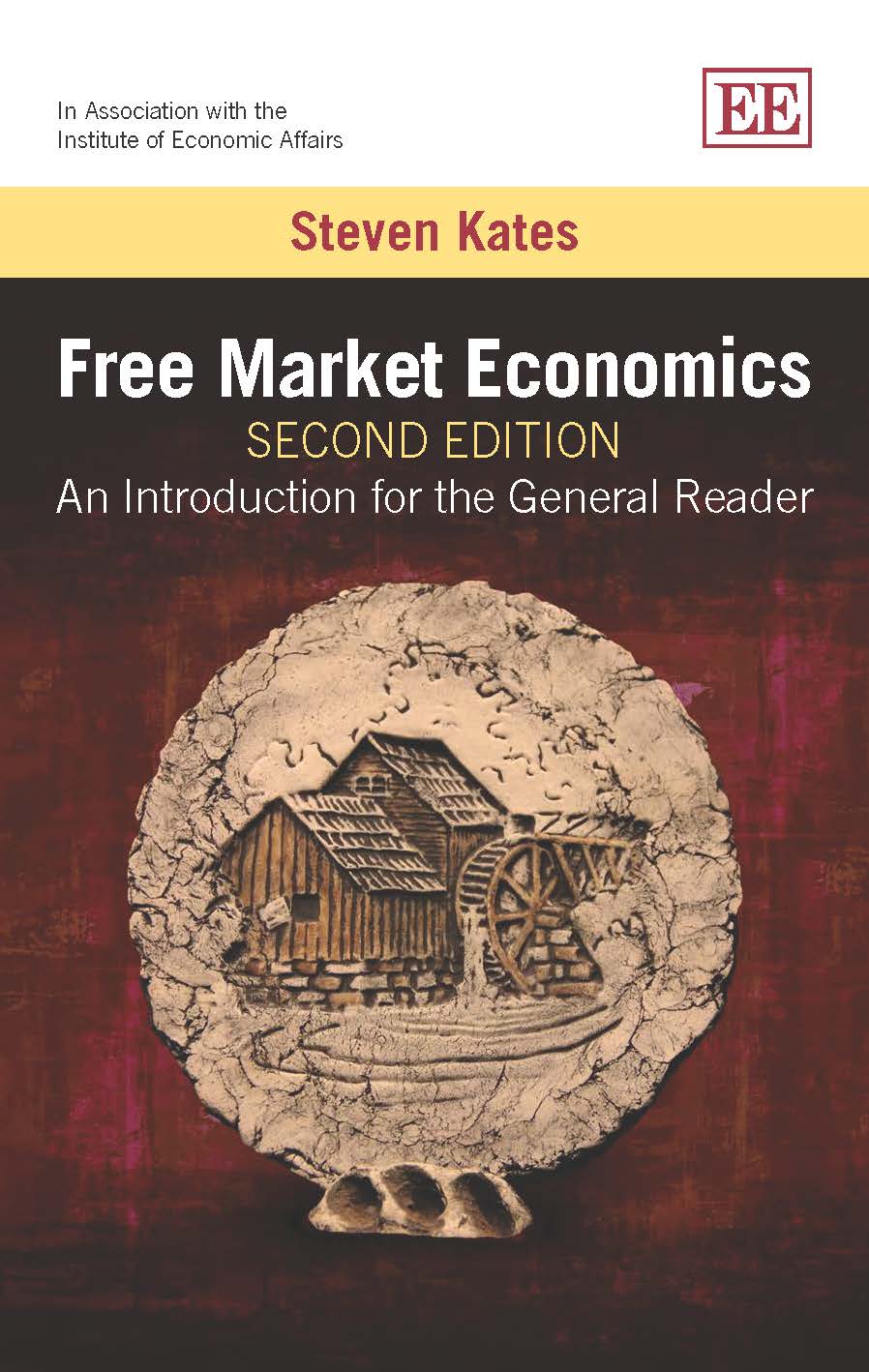
Free Market Economics 2nd ed

fme2 cover_Page_1

When I wrote the first edition of my Free Market Economics in 2009, I thought of it even then as the best introduction to economic theory anywhere. It combined five features that were unique to this book: an uncompromising anti-Keynesian core, a microeconomics that rejected the notion of an equilibrium, a focus on the role of the entrepreneur, a discussion of the classical theory of the cycle and the installation of uncertainty as the crucial element in any serious discussion of how an economy runs.

I also had no idea how much more I wanted to say until I came to write the second edition which to my eyes has transcended the first, having been fashioned out of what I learned by teaching the first edition for five years while watching how economic events unfolded following the stimulus. You may only have the author’s word for it here, but there is no book like it. If you want to understand how an economy works based on the English tradition in economic theorising that goes from Adam Smith to John Stuart Mill, there is literally only a single place you can go. The book reverses two “revolutions” in economics, not just the Keynesian of the 1930s, but the marginalist revolution of the 1870s as well. It is a companion volume to David Simpson’s wonderful The Rediscovery of Classical Economics, also co-published by the IEA. Reading the two will provide you with an understanding of just what is wrong with economic theory today. That traditional policy based on standard economic theory is ruining our economies is beyond any doubt, but the reason why that is so will nevertheless remain incomprehensible to anyone who continues to believe that aggregate demand is a valid concept in trying to make sense of economic events or that equilibrium has much if anything to do with how an economy works.

My Free Market text was written in a kind of white heat over twelve weeks as the text for the course I was giving during the first months of the worldwide introduction of stimulus packages pretty well everywhere. The absolute dead certainty I had was that public sector spending whose only aim was to create jobs would end in disaster, as it most assuredly has. Our economies are sinking under the weight of massive levels of unproductive public spending and debt levels that continuously subvert every attempt to wind them back. Yet you cannot go to any standard economics text even for an inkling of why that is.

To understand any of this you must first understand Say’s Law. Say’s Law was the bedrock principle of economic theory from the earliest years of the nineteenth century until swept away in a fit of distraction by the publication of Keynes’s General Theory in 1936. It is founded on recognising that only value adding production can create economic growth and add to the number of jobs. The most central chapter in the book is the chapter on Value Added, a chapter found in no other text that I know of. Yet without understanding value added, understanding that every form of production not just creates more goods and services but also at the same time uses up existing goods and services during the production process, it is impossible to think about public spending and economic policy correctly. Only if what is produced has greater value than the resources used up can an economy grow. Government spending seldom creates value. The stimulus was therefore doomed to fail as is so much of the policy matrix found today.

The strangest part about the book, however, was for me to discover my own beliefs on the nature of economic theory. There is not a chapter in it that would fit into a standard economics text. All of it takes you back to an earlier time and a different theoretical matrix. Space is too short to tell you much more but let me draw you to the cover which shows a water mill on a plaque made of clay. This is because the two most important influences on my own way of thinking have been two of the greatest economists England has ever produced, John Stuart Mill and Henry Clay.

I can do no more than encourage you to read this book. It is a defence of the market economy published at a time when there may never been a greater need for such a defence.

Paul Krugman has no idea what Say’s Law means

In the same week that the 2nd edition of my Free Market Economics has been published, which I began specifically in response to the stimulus that followed the GFC and the certainty that it would fail because of the principles that underlie Say’s Law, I have received copy of a review of a book titled, Seven Bad Ideas. The book is by Jeff Madrick while the review is by none other than Paul Krugman. And here once again we find Say’s Law, as the second worst idea in economics, just after the number one bad idea, “the invisible hand”. If you think the invisible hand is the worst idea economists have ever come up with, you are near enough not an economist, more a charlatan but then he has the Nobel Prize so who’s to argue. This is what Krugman thinks the invisible hand means amongst economists:

Today the phrase is almost always used to mean the proposition that market economies can be trusted to get everything, or almost everything, right without more than marginal government intervention.

What “everything, or almost everything” might consist of is a quite bizarre notion. The reality is that no one thinks an economy will run without institutional intervention at almost every facet of an economy’s operation. Every economist is perfectly aware of the absolute necessity of an institutional structure, much of it at the hands of government, and much of it based on legislation and regulation. There are debates about the sorts of regulation needed and the kinds of legislative penumbra that has to surround an economy. But the notion an economy requires only “marginal” intervention is nonsensical and straightforwardly untrue.

But so what if there are economists who think this. The absolute reality is that every economy has regulation up to its eyeballs. If some of us think less regulation would be better is hardly evidence that the economy is doing poorly because of its absence. You would have to be utterly out to lunch to think the regulation of any economy in the world could be described as light-handed. There must be quite a few gullible types out there if the kind of statement that Krugman makes can carry any weight at all.

But it is the second supposedly bad idea that is an old story. It is what is known as Say’s Law which in its micro form states that demand is created by value adding supply and in its macro form states that no economy ever goes into recession because of a lack of demand and that an economy in recession cannot be resurrected by a stimulus made up of non-value adding forms of expenditure. The macro version condemns just the kinds of expenditure every single stimulus has consisted of. The issue isn’t crowding out. The issue is that public spending uses up more value than it creates. If you waste your resources, your economy will shrink. That is what has happened universally since the “stimulus” and Krugman has not a clue in the world what has gone wrong. Here is what he wrote:

No. 2 on Madrick’s bad idea list is Say’s Law, which states that savings are automatically invested, so that there cannot be an overall shortfall in demand. A further implication of Say’s Law is that government stimulus can never do any good, because deficit spending by the public sector will always crowd out an equal amount of private spending.

But is this “mainstream economics”? Madrick cites two University of Chicago professors, Casey Mulligan and John Cochrane, who did indeed echo Say’s Law when arguing against the Obama stimulus. But these economists were outliers within the profession. Chicago’s own business school regularly polls a representative sample of influential economists for their views on policy issues; when it asked whether the Obama stimulus had reduced the unemployment rate, 92 percent of the respondents said that it had. Madrick is able to claim that Say’s Law is pervasive in mainstream economics only by lumping it together with a number of other concepts that, correct or not, are actually quite different.

Economists can say all they like that the stimulus lowered the unemployment rate but the fact of the matter is there cannot be any actual evidence one way or the other. That the models used by economists almost universally say that a stimulus will reduce unemployment is of itself the only “proof” that it has. The logic goes:

Major premise: a public sector stimulus will reduce unemployment below the level it would otherwise have reached

Minor premise: most economies introduced a public sector stimulus

Conclusion: the stimulus reduced unemployment below the level if would otherwise have reached.

That is, A causes B. There was A so therefore B. There is no evidence since there are no controlled experiments. All this is by assumption only. Well two can play at that game.

Major premise: a public sector stimulus consisting of non-value adding forms of expenditure will keep unemployment higher than it would otherwise have been

Minor premise: most economies introduced a public sector stimulus consisting of non-value-adding forms of expenditure

Conclusion: the stimulus has kept unemployment higher than it otherwise would have been.

And the fact of the matter is that the American labour market has not returned to the level it was at in 2008. Unemployment is a disaster without the slightest evidence that matters are on the mend.

Paul Krugman has not a clue. He is stuck in that Keynesian bunkum from which no actual evidence from the real world will ever dislodge him. The American economy continues to sink because of the straight out ignorance of basic economics of pretty well the entire economics profession (approximately 92 percent). Nothing can be done about it in the short term, but the smug smarmy superiority in the face of the immense harm that he and his likeminded colleagues have caused makes me very angry indeed.

Krugman is obviously a hopeless case. But I will simply state that economic theory will never provide useful guidance during recessions until Say’s Law is once again seen as the fundamental principle it is. And if you are interested in what it means and why it matters, the 2nd edition of my Free Market Economics is the place to start finding out.

The Versailles of Economics

Auchy-lès-Hesdin

say filature

New Lanark

new lanark

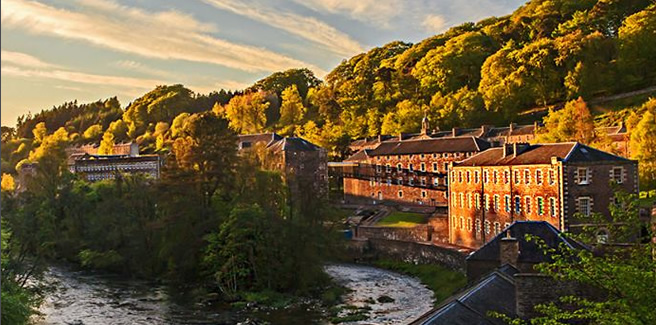
I fear, based on the thread of commentary that followed my earlier posting on the Societies for the History of Economics discussion thread, that the astonishing uniqueness and historical significance of J.-B. Say’s textile mill at Auchy-lès-Hesdin is not fully appreciated. I have now therefore put up a follow-up posting. I fear from the comments there may not be an appreciation of what is found at the site nor the will to see it preserved if it can be done. J.-B. Say was one of the greatest economists of all time, mentioned in virtually every history of economics text ever written. He was not only amongst the first economists to insist on the importance of the entrepreneur in the study of economics, he was himself an entrepreneur and we have almost intact the remains of the factory he commenced. The textile mill he built at Auchy-lès-Hesdin in 1805 remains along with the house he had commissioned. It was while he was living at Auchy that he completed the second edition of his Treatise and it was there that he provided the first ever textbook treatment of what we now call Say’s Law. There is nothing like it on the face of the earth. The nearest approximation are the buildings at New Lanark, where Robert Owen, who was not an economist, tried his own experiments in entrepreneurship, and the Thünen Museum in Germany.

These three sites are exceptional in their interest, but only one at the moment remains unattended and in near ruins. Please do look at the three websites below to see the comparison:

Jean-Baptiste Say

Robert Owen

Johann Heinrich von Thünen

This is the note I have received from M. Zéphyr Tiliette, the archivist at Auchy, based on my posting:

We have to remain modest but we agree with you : Auchy-lès-Hesdin is a very special place given its history and particularly the association of the presence of Jean-Baptiste Say, an already great figure and a famous economist, and the industrial revolution he introduced in this remote place of the north of France. Strictly speaking, he went not there into exile but he certainly enjoyed more freedom there about 200 km away from Paris and distant from the Napoleon’s government. He also prepared in Auchy the 2d edition of his « Traité d’Economie Politique » published in 1814 ; as he wrote, he had some time for that in 1811 / 1812.

Locally, it is still easy to imagine how was the site 200 years ago when Jean-Baptiste Say lived there with his family : the abbey church, park limits, surrounding walls, river, waterfall, are practically unchanged. Most of the industrial buildings have been rebuilt, their equipment continually modernized and the hydraulic power device has been rearranged in order to continue to generate some electric power additional to the main steam and electric power systems. It is under maintenance presently.

The massive « Château Blanc » was built shortly after the Jean-Baptiste Say‘s departure by the Grivel family. Our economist lived right in the same area, probably in the best abbey’s appartments, likely as his partner Grivel. Auchy « a kind of Versailles for economists » as you say !! Thank you very much for Auchy !! But a lot of things would be to be done to approach this designation. Nevertheless, the presence and the work of J-B Say there corresponds to an event very significant by many aspects related to an example of industrial revolution in a rustic place at that time. This would deserve an historical research including regional human consequences and may be the other factory of the « Say C° » in Abbeville (35 km away ) ( of the brother Louis Say ), also in relation with other industrial developments nearby.

The future of the existing industrial buildings of Auchy is a concern, of course. But I entirely agree with you : the site deserves a significant place of memory devoted to J-B Say, to his history, his work, the economy science and so on, a kind of « museum for the history of economic thought » as you write. May be such a concept could collect a part of « archives » related to studies on J-B Say carried out at the Lyon 2 University as Pr. André Tiran, the Say expert, mentioned at Auchy on August 30th. It also could be combined with a valuable, historical documentation about the regional history and with antique library pieces for instance concerning « The Âge of Enlightenment », the XVIIIth century, J-B Say being a heir of it. We also could emphasize the great interest of J-B Say in the people’s education.

Such a project has to be discussed ; it is not yet finalized. Cognizant people and officials should be met. Auchy needs money for that.

Surely it would be an attractive place to visit « midway between Azincourt and Crécy » !! as you say.

This is not some graveside or an office in an economics department of some other flotsam and jetsam from the vast history of economics. This is a living, existing embodiment on a vast grounds within an industrial estate that was the work of one of the greatest economists who ever lived who also built a factory at the very start of the industrial revolution. This is not, moreover, a pin factory. This was a cotton mill built at the very dawn of a new age. You can stand on the site and see across the last two centuries.

This is something that historians of economics should be interested in. It is something that all economists should be interested in. It is something anyone with an interest in history should be interested in. It is here now, and there are many possibilities for the site including demolition in some fit of distraction. As M. Tiliette states, the restoration is in need of money, but it is not a vast ocean of money. And until you wander the park surrounding the buildings you will not see why I have described this place as the Versailles of Economics. If you are close, you should go and look. There is nothing else like it and it will be to our shame if we let this place go to ruins when it could just as easily become a World Heritage site in the same way as New Lanark.

Auchy-lès-Hedin and the History of Economic Thought

This is a note I put up on the Societies for the History of Economics website last night.

So far as I can tell, aside from Robert Owen’s New Lanark – which is now a World Heritage Site – there are no historic sites that one would associate with the study of economics. Yet there is, in fact, one that ought to be preserved in just the same way, both because of its association with one the greatest economists of all time and also because of its on-site interest as a place in which, even now, one can trace out the contours of the industrial revolution from the earliest years of the nineteenth century almost right down to the present. I refer here to the textile mill that was set up by Jean-Baptiste Say following his exile from Paris in 1805 at the hands of Napoleon.

Auchy-lès-Hesdin is a small village, and to be quite technical about it, is found in the Pas-de-Calais department and Nord-Pas-de-Calais region of France. Say, who had been a journalist and writer, having refused to alter the text of his Treatise to suit Napoleon’s statist demands, went off to Auchy to start a textile mill. He went there because by the river sat an old abbey that had one specific feature, a waterfall which could be harnessed to run the machinery of the mill. The waterfall is still there, as are most of the buildings that were subsequently built on the site (but not the original abbey). These include the power plant that used to generate the steam when steam replaced water, and even more remarkably, an electric generator that was used even later that was driven by diverting the river past a water wheel.

There is also the “Château Blanc”, a massive three-storey house that Say commissioned to be built but which he never lived in since by 1813 he was able to return to Paris. There are also worker’s cottages nearby which are still lived in. So what we find, if you will excuse my enthusiasm, is a kind of Versailles for economists. The buildings are falling apart but are still intact. There is restoration work going on and there seems to be a determination to save this site for posterity if it can be done. But having just been there myself, I cannot tell you just how extraordinary it is. We on this discussion thread have an interest in history, and this is a kind of living history of the industrial revolution that is also a place of great interest because of its association with J.-B. Say.

At the moment, and I cannot tell you why, there is a collection of antique fire trucks housed in one of the buildings. But other possibilities are latent in how this site may be developed, including a museum for the history of economic thought. At the moment, there are some scattered artefacts associated with Say in place but things are at an early stage in thinking this through. I am off here in Australia but this is something that the European Society along with the UK Society should consider becoming closely involved with. And while it may not be politic to say it about a destination in France, as was pointed out by M. Zephyr Tilliette – who has written the history of Auchy and is an authority on all of this – the town lies midway between Azincourt and Crécy. It is also is a short drive from the Calais and Chunnel crossing points.

If I may be allowed to say so, this is a place you should visit if you get the chance. The website I am told is coming, but in the meantime you can make arrangements to visit the site by phoning this number in Auchy: 06.45.49.59.29. You will not be disappointed.

For some idea what you will find if you go, see this, which is an invitation to join J.-B. Say’s Nexus, which is something you might also consider:

http://says.univ-littoral.fr/?page_id=112

And I would go one more step and also suggest that you might join the International Society Jean-Baptiste Say:

http://says.univ-littoral.fr/

I would emphasise here that in participating in both, neither is in any way an endorsement of Say’s Law. This is about Say and his pioneering work on entrepreneurship and the entrepreneur. It is also about one of the great early works on economics which is still worth reading today. It is thus one more reminder how studying the history of economic thought is of benefit in making sense of how an economy works.

Auchy-lès-Hesdin and the history of economic thought

So far as I can think, aside from a few gravesides, there are no historic sites that one would associate with the study of economics. Yet there is, in fact, one that ought to be preserved both because of its association with one the greatest economists of all time and because of its on-site interest as a place in which, even now, one can trace out the contours of the industrial revolution from the earliest years of the nineteenth century almost right down to the present. I refer here to the textile mill that was set up by Jean-Baptiste Say following his exile from Paris at the hands of Napoleon.

Auchy-lès-Hesdin is a small village, and to be quite technical about it, is found in the Pas-de-Calais department and Nord-Pas-de-Calais region of France. Say, who had been a journalist and writer, having refused to alter the text of his Treatise to suit Napoleon’s statist demands, went off to Auchy to start a textile mill. He went there because by the river sat an old abbey that had one specific feature, a waterfall which could be harnessed to run the machinery of the mill. The waterfall is still there, as are most of the buildings that were subsequently built on the site. These include the power plant that used to generate the steam when steam replaced water, and even more remarkably, an electric generator that was used even later that was driven by diverting the river past a water wheel.

There is also the “Château Blanc”, a massive three-storey house that Say commissioned to be built but which he never lived in since by 1813 he was able to return to Paris. So thus what we find, if you will excuse my enthusiasm, is a kind of Versailles for economists. The buildings are falling apart but are still intact. There is restoration work going on and there seems to be a determination to save this site for posterity if it can be done. But having just been there myself, I cannot tell you just how extraordinary it is. We on this discussion thread have an interest in history, and this is a kind of living history of the industrial revolution that is also a place of great interest because of its association with J.-B. Say.

At the moment, and I cannot tell you why, there is a collection of antique fire trucks housed in one of the buildings. But other possibilities are latent in how this site may be developed, including a museum for the history of economic thought. At the moment, there are some scattered artefacts associated with Say in place but things are at an early stage in thinking this through. I am off here in Australia but this is something that the European Society along with the English should become involved with. And while it may not be politic to say it, as was pointed out by M. Zephyr Tilliette – Auchy’s self-appointed historian – the town lies midway between Azincourt and Crécy and is a short drive from the Calais and Chunnel crossing points.

If I may be allowed to say so, this is a place you should visit if you get the chance. The website I am told is coming, but in the meantime you can make arrangements to visit the site by phoning this number: 06.45.49.59.29. You will not be disappointed.

Value added and economic growth

I wrote about modern economics is such junk and then went out and picked up the AFR only to find across its front page that living standards in Australia are falling. The story opens:

The national income generated by each Australian has fallen for a second straight year, the first such slump since the early 1990s recession as the economy wears a sharp pay cut from the rest of the world.

Does anyone any longer base policy on the understanding that growth only occurs if what is poduced is greater than the value of the resources that are used up? The ALP set about killing off our most value adding industry through the mining tax and promoted such imbicilities as the NBN which will always be a drain on national productivity, now and forever as far into the future as you care to look. The only thing that is strange to relate is that the national accounts are even able to pick up that living standards actually are falling given what a faulty measure GDP intrinsically is. My son is astounded, as he hunts around for a place to buy, at the difference between the ratio of house prices to income in my day compared with his. The national accounts imputes the rising value of the houses we live in as a real increase in GDP so that we home owners are contributing to GDP by simply living in the places we bought years ago whose value has now gone up. That most of us could not afford our own homes today is neither here nor there.

Yet for all of the obstacles put in the way of the government by the Senate and Labor’s legacy, we are actually making progress. That the Government has been able to reverse the increases in compulsory superannuation is all to the good. These are very difficult times, but how difficult they will be when the US Fed finally does begin to raise rates is still to be seen.