The 2016 UK HET Conference in Shanghai

ukhet-group-photo

The UK History of Economic Thought Conference this year was held in Shanghai because, as I understand it, the Chinese are interested in pursuing HET and want to see how it is done. They get it, that HET brings an extra and extremely important dimension to the study of economics, something it is hard to convince economists in the West about.

The UK meeting is always extremely good, and this one was no exception, in large part because they only have a handful of presentations and they are always plenary sessions so that for presenters, you really are guaranteed the benefit of listening to comments from quite knowledgable people. And on this occasion because all of the fees and expenses were paid (but not the air fares), and partly because it was in Shanghai, it did seem to attract an astonishing array of high quality papers. It was very pleasing to be included. The group photo is above.

What’s wrong with other economists?

This is a note I have written to the contributors to What’s Wrong with Keynesian Economic Theory?
______

I hope you have all by now received your own copy of the book.

I have also put a blog post up at the Elgar website which is my own view of the book and how significant I think it is which you can find here

Let me therefore again thank each and every one of you for your articles. As I try to convey in the Introduction, a book such as this is an extreme rarity. This is from a blog post I wrote here in Australia where I tried to explain just how rare the book is.

The following quote is from Henry Hazlitt’s Economics in One Lesson.

When the government comes to repay the debt it has accumulated for public works, it must necessarily tax more heavily than it spends. In this later period, therefore, it must necessarily destroy more jobs than it creates. The extra heavy taxation then required does not merely take away purchasing power; it also lowers or destroys incentives to production, and so reduces the total wealth and income of the country.

The only escape from this conclusion is to assume (as of course the apostles of spending always do) that the politicians in power will spend money only in what would otherwise have been depressed or “deflationary” periods, and will promptly pay the debt off in what would otherwise have been boom or “inflationary” periods. This is a beguiling fiction, but unfortunately the politicians in power have never acted that way. Economic forecasting, moreover, is so precarious, and the political pressures at work are of such a nature, that governments are unlikely ever to act that way. Deficit spending, once embarked upon, creates powerful vested interests which demand its continuance under all conditions.

Hazlitt also published his Critics of Keynesian Economics of which it is said..:

Henry Hazlitt confronted the rise of Keynesianism in his day and put together an intellectual arsenal: the most brilliant economists of the time showing what is wrong with the system, in great detail with great rigor. With excerpts from books and articles published between the 30s and 50s, it remains the most powerful anti-Keynesian collection ever assembled.

And here’s the thing. The book was published in 1960 and other than Mark Skousen’s sadly out-of-print Dissent on Keynes (Praeger 1992) there has not been another attempt to do the same until my own modest What’s Wrong with Keynesian Economic Theory? which was only released last month. It is thus almost twenty-five years since anyone has has brought together a series of critics of Keynesian economics and more than fifty years since the only other. And as scarce as they were even then, critics of Keynes were easier to find, let me tell you, in the 1930s, 40s and 50s [and I might mention that Hazlitt included two nineteenth century articles of sublime excellence by J.-B. Say and J.S Mill]. Such economists are almost completely gone today in spite of there being every reason to think they should be found at every turn.

There are 13 of us in this book. I would doubt there are a hundred economists in the world who are actively anti-Keynesian and see the problem with economic management in Y=C+I+G. Yet even now there is talk of a further stimulus and negative interest rates which are further attempts to deal with our economic problems from the demand side. There was a recent article in The Wall Street Journal by Robert Barro where he said “It wasn’t the severity of the Great Recession that caused the weak recovery, but government policies” which for me is progress.

And he notes the fall off in productivity. But he doesn’t specifically say as I would that the fall in productivity has been because of the diversion of our resource base into various Keynesian stimulus projects, or due to low interest rates misdirecting resources. What I have, however, learned in putting this collection together is that some of those who are anti-Keynesian – and will remain nameless but I can say that Robert Barro was not among them – declined to contribute an article because it would put them offside with their colleagues.

So I thank you again. Hopefully the book will find its way to enough readers to make a difference to how policy is framed from now on in.

Where are the critics of Keynesian economics today?

aust unemployment stats

The thing about these Keynesians is that they have no shame. The nonsense that Australia avoided recession after the GFC is one of those self-serving myths that will not stand an ounce of analysis. The data above (from the IPA) are the latest much-revised version of what happened to the unemployment rate during the GFC. A rise in the unemployment rate by two-plus percentage points over the course of a few months is recession enough for me, whether or not we actually had two consecutive quarters of a falling GDP. Ken Henry was Secretary of the Treasury at the time, and his advice was “go hard, go early”. So Rudd and Co went hard and early, with the results before us for all to see.

So now the self-same Ken Henry is on the front page of The Australian today with some advice on how to fix the problem that hard and early have led to: Fix budget before the crunch hits, urges Ken Henry.

National Australia Bank chairman and former Treasury chief Ken Henry warns that Australia faces an unacceptable risk with its budget deficit and fears the nation will wait for a painful economic crunch before confronting true ­financial repair.

In an exclusive interview, Dr Henry issued his most powerful warning about the failure of politicians and the national parliament, saying responsible fiscal policy had become a “pretence”, the economic reform narrative “no longer exists” and politicians are fixated by “appeals to populism”.

Dr Henry said Australia was now running the risk that its AAA sovereign credit rating might be downgraded, coinciding with another global financial disturbance, and in this situation the consequences for Australia “would be truly catastrophic”.

He said this was a “small risk” in relative terms but “the consequences are so large you cannot take the risk”.

Dr Henry said politicians through domestic economic ­policy failures were now exposing the nation to such risks that the entire reason for the reforms of the 1980s and 90s had been ­forgotten.

Unless the momentum was recovered, Australia would find “we are right back with Paul Keating’s banana republic statement”.

Well Ken, what a disaster we have created for ourselves. You must tell us where we went wrong. The following gets to the heart of the matter, which one would have hoped a Treasury Secretary would already have known. The quote is from Henry Hazlitt’s Economics in One Lesson which was brought to our attention by Tel on a previous post.

When the government comes to repay the debt it has accumulated for public works, it must necessarily tax more heavily than it spends. In this later period, therefore, it must necessarily destroy more jobs than it creates. The extra heavy taxation then required does not merely take away purchasing power; it also lowers or destroys incentives to production, and so reduces the total wealth and income of the country.

The only escape from this conclusion is to assume (as of course the apostles of spending always do) that the politicians in power will spend money only in what would otherwise have been depressed or “deflationary” periods, and will promptly pay the debt off in what would otherwise have been boom or “inflationary” periods. This is a beguiling fiction, but unfortunately the politicians in power have never acted that way. Economic forecasting, moreover, is so precarious, and the political pressures at work are of such a nature, that governments are unlikely ever to act that way. Deficit spending, once embarked upon, creates powerful vested interests which demand its continuance under all conditions.

Hazlitt also published his Critics of Keynesian Economics of which it is said:

Henry Hazlitt confronted the rise of Keynesianism in his day and put together an intellectual arsenal: the most brilliant economists of the time showing what is wrong with the system, in great detail with great rigor. With excerpts from books and articles published between the 30s and 50s, it remains the most powerful anti-Keynesian collection ever assembled.

And here’s the thing. The book was published in 1960 and other than Mark Skousen’s sadly out-of-print Dissent on Keynes (Praeger 1992) there has not been another attempt to do the same until my own modest What’s Wrong with Keynesian Economic Theory? which was only released last month. It is thus almost twenty-five years since anyone has has brought together a series of critics of Keynesian economics and more than fifty years since the only other. And as scarce as they were even then, critics of Keynes were easier to find, let me tell you, in the 1930s, 40s and 50s [and I might mention that Hazlitt included two nineteenth century articles of sublime excellence by J.-B. Say and J.S Mill]. Such economists are almost completely gone today in spite of there being every reason to think they should be found at every turn.

The mysterious and inexplicable survival of Keynesian economics

Now this was very promising: The Reasons Behind the Obama Non-Recovery: It wasn’t the severity of the Great Recession that caused the weak recovery, but government policies, an article by Robert Barro which I was alerted to by a post at Powerline. The Global Financial Crisis was over within six months. The deep and ongoing recession we are in is due to the Keynesian policies that followed.

The essence of a Keynesian policy is to start with Y=C+I+G, assume that the problem is demand deficiency and then try to fix things by raising the level of G. As I have also pointed out in the past, unless government spending is value adding – that is, until whatever is being produced earns revenues greater than their costs – such expenditure is a drain on the economy and will make you worse off, not better. I am near enough the only person I ever come across saying this, so here I lived in hope that perhaps Barro would start to say it. Someone has to say it before we wreck ourselves totally by following one Keynesian idiocy after another.

Here’s the thing. Neither the words “Keynes” nor “Keynesian” show up neither in the original article nor in the comment at Powerline. The vast waste of our resources in one mis-guided stimulus program after another goes unmentioned (although it does show up in a few of the comments). Almost no one even thinks that the problems with policy is the nature of modern economic theory.

The strange thing about my What’s Wrong with Keynesian Economic Theory? is how unique it is. No one seeks to go after the actual problem, which is macroeconomic theory based as it is on deficient aggregate demand. Indeed, no one would even dare to suggest Say’s Law may actually be true, the absolute fundamental guide to managing an economy.

Here it is as it seems to me. I said in 2009 that the stimulus would be a disaster. I wrote my article for Quadrant, The Dangerous Return to Keynesian Economics in which everything that has occurred was mapped out before it began. I started writing my Free Market Economics which is now heading for a third edition. But really, I never thought the reasons for this catastrophic fall in our living standards would remain such a mystery and for so long.

Poverty is only going to get worse

It’s not just that public spending creates no jobs, it is that it also savages our standard of living. It takes a while for the results to become apparent, but the depletion of our capital base must have its effect. GDP data tells you almost nothing, but this is the very thing you must expect:

Americans ditching houses to live in vans, save money...

Terrifying signs of looming housing crisis…

Young adults ‘worn down and worried about the future’…

The young are the ones most affected since they are finding the cost of even buying into the most rudimentary standards at the bottom of the pile are disappearing before their eyes. I will only quote from the last of the articles but it is a problem that is only going to get worse. The story is mainly about young women, but it really is a general issue for the millennial generation who are being shafted left and right.

The younger generation are “despairing and worn out” as they struggle with financial and work problems, a study shows.

Research among 4,000 people aged between 18 and 30 revealed that women are worst affected as they are particularly hit by workplace discrimination.

The Young Women’s Trust said young people are having to “suspend” adulthood, often moving back in with their parents because of low pay.

Huge numbers say they are worn out, lack self confidence and are worried about the future.

The charity called on the Government to appoint a minister for young people, extend the national living wage to younger workers, and do more to help young women cope with work.

I particularly like the bit about “extend[ing] the national living wage to younger workers”. They see the problem but cannot even begin to understand what the actual problem is.

What a surprise: “use of heavy monetary weapons have failed to have the desired impact”

Although the headline reads After years of failed efforts to pull Japan out of deflation, the country’s central bank is trying something different it is really the same old same old. They are trying a Keynesian low-interest prescription which will work as well as the Keynesian expenditure program. Here’s the story:

The Bank of Japan said Wednesday that it’s introducing a new long-term interest rate target of around zero.

The bank has already gone to extreme lengths in its attempts to stimulate the country’s stagnating economy in recent years, gobbling huge amounts of Japanese government bonds and taking a key interest rate into negative territory.

But its use of heavy monetary weapons has failed to have the desired impact, raising questions over whether it’s running out of ammunition. Inflation remains far below the bank’s target and the country’s currency, the yen, has strengthened significantly against the dollar this year, hurting exporters.

And etc. Completely clueless.

Explaining the Absence of Recovery

It is not hard to see how unlikely it is that a theory that has been examined and endorsed by most economists since first brought into the world in 1936 is utterly wrong in its theoretical construction and totally misguided in the advice it gives. But that is how it is. That is what this book is intended to explain.
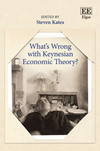
whats wrong with keynesian economic theory

What’s Wrong with Keynesian Economic Theory? is a collection of thirteen articles by economists each of whom had previously written critical articles about Keynesian economics. The authors come from every corner of the non-Keynesian world, and therefore you are guaranteed to like some approaches more than others. But at least it is in print, and there is at least this much evidence that the theoretical case behind public spending and low interest rates to create recovery has its enemies. You would think, given how badly our economies have been performing, that there would be more, but such it is. Keynesian theory remains the most easily understood fallacy in economics, retaining its savour across the world in spite of its never having had a single success. Although the application of Keynesian economic theory has never worked in practice, it continues to be the basis for macroeconomic policy with its conclusion universally applied by governments at the first sign of recession.

I cannot emphasise enough how unique this book is. The following was written in 1959 and is as unfortunately true today as it was then. It is from Henry Hazlitt’s The Failure of the “New Economics”: An Analysis of the Keynesian Fallacies. It is a book in which Hazlitt attempted to explain what is wrong with Keynesian economic theory. There he wrote:

‘There must be hundreds of economic books that may be variously described as Keynesian, pro-Keynesian, semi-Keynesian, or “post-Keynesian,” and there must be thousands of such pamphlets and articles; but there is a great dearth when we come to any literature since 1936 that may be described as definitely anti-Keynesian – in the sense that it is explicitly and consistently critical of the major Keynesian doctrines. In the works of such writers as Ludwig von Mises, F.A. Hayek, Wilhelm Röpke, Frank H. Knight, Jacques Rueff, and others, we do indeed have an impressive non-Keynesian literature, based on “neo-classical” premises, with occasional explicit criticism of Keynesian tenets. But full-length books exclusively devoted to a critical analysis of Keynesianism may be counted on the fingers of one hand.’ (Hazlitt 1959: 437)

There has been an economic consensus going back into the nineteenth century that public spending should go up during a recession. It was part of classical policy, at least in its later stages, for governments to employ the unemployment in temporary forms of work during recessions. What is different about Keynesian theory is that stimulating aggregate demand is now seen as the solution to unemployment rather than just being a palliative while the economy gets back on its feet.

It would be one thing if such policies had had a string of successes rather than the trail of catastrophic failures that have inevitably followed every peace-time Keynesian stimulus in the past.

This book brings together in one volume a series of articles by economists who find Keynesian economic theory fundamentally wrong. Even with our economies continuing to falter, in none of which there has been a genuine recovery since the GFC in 2009 in spite of every effort to stimulate demand, the allegiance to Keynesian theory remains as strong as ever. Economists must at some stage recognise that modern macroeconomic theory, built on the supposition of aggregate demand, may be fundamentally wrong in every important respect. The aim of this book is to clarify these issues so that you can understand why our economies are not responding to these Keynesian policies and therefore begin to understand what should be done instead.

If you are interested in either economic theory or policy, you should read this book.

Classical economics

It’s been a rather full week for me in the configuration of publications and presentations all surrounding my classical approach to economics.

what's wrong with keynesian economics I received my copy of What’s Wrong with Keynesian Economic Theory?, a collection I have edited of thirteen articles by economists who had previously written critical articles about Keynesian theory. The authors come from every corner of the non-Keynesian world, and therefore you are guaranteed to like some approaches more than others. But at least it is in print, and there is at least this much evidence that the moronic use of public spending and low interest rates to create recovery has its enemies. You would think, given how badly our economies are performing, that there would be more, but such it is. Keynesian theory remains the most easily understood fallacy in economics, thus retaining its savour across the world. Although Keynesian policies never work in practice – other than to enrich our elites at the expense of the rest of us – it continues to be the basis for macroeconomic theory and is universally applied by governments.

The second publication is in our local history of economics journal, The History of Economics Review. It is an article on my second favourite text, Henry Clay’s Economics: an Introduction for the General Reader (Mill’s Principles is my favourite). I subtitled my paper, “The Best Introduction to Economics Ever Written” which it remains, and there is unlikely to be anything better written until the current mania for diagrams and Keynes is finally reversed. You can get a copy of the book at Abebooks for around $10 since it must have sold in the 100,000s given its publication history from 1916 to 1951. The reason for my own article is that 2016 is the hundredth anniversary of its first publication. As a third best alternative to Mill and Clay, I do recommend my own Free Market Economics: an Introduction for the General Reader. No points for working out where I got the title.

The third publication is in this month’s Quadrant which you can pick up at your local news agency for a mere $8.90. It is the best value publication in the country. There you can read a magazine full of interesting and important articles that surround my own. My article tells the story of the trek from using interest rates to allocate resources among competing ends to have become a useless policy tool directed at keeping inflation down by keeping unemployment up. If you’d like a taste of how we classical economists look at things, this would be a very good place to start.

As for the presentations, I have just come back from China where I discussed classical economic theory, under the name supply-side economics, with people who have begun to see the deep errors of following a demand-side approach to policy. They now understand what’s wrong with Keynes. They are now examining the supply-side alternative. You may not think that matters, but just watch what happens if they finally work it out.

Six small ideas

I find modern economic theory so empty of useful ideas that it amazes me that it still survives. Nothing in a modern text ever seems to be of much value in assessing what’s going on or in deciding what policies to pursue. The Economist has put out a series it titles, Six Big Ideas which are standard forms of theory that either state the obvious in complicated ways or state what is almost certainly false in beguilingly simple ways. It is undated so may be quite old. I can only say that once economics ended up in the hands of academics, rather than being the preserve of people engaged in business and the practical realities of life (Ricardo, James and John Stuart Mill), it went off the rails. The one part that makes me think this is a bit old is the discussion of the Stolper-Samuelson theorem, which they describe in this way:

The paper was “remarkable”, according to Alan Deardorff of the University of Michigan, partly because it proved something seemingly obvious to non-economists: free trade with low-wage nations could hurt workers in a high-wage country.

Since this is what Donald Trump is trying to say, seems unlikely they would say it right now.