State of bankruptcy

I have often thought that the reason Michael O’Brien, the Victorian Leader of the Opposition, remains so out of the public eye is that the deep strategy for the Libs is NOT to win the next state election by which time not all of Daniel Andrews’ chickens will have as yet have come home to roost. But coming home they most surely are. Take this from the front page of The Age this lovely freezing Sunday morning: Unions rage as Victorian government plans to cut back public sector wage growth.

The Victorian government will cut the future salary growth of the state’s 325,000 public sector workers by a third, potentially saving billions of dollars as part of cost-cutting measures aimed at combating record levels of debt inflicted by the coronavirus pandemic.

Victoria, bless her, is a mess beyond imagination. I often mention the billion dollar station at the Shrine – the once a year train stop that is already serviced by around seven tram lines – that has for all practical purposes been abandoned. It is a shell of a worksite, as is so much else in this state run by the man who could not even walk down a flight of steps without ending up in hospital. So we also have this: Acting Premier defends tax hikes as responsible and appropriate.

Victoria’s acting Premier James Merlino has defended his government’s new suite of tax increases including a stamp duty rise on high-end property buyers as appropriate and responsible measures.

The proposal, which includes [but is by no means limited to] increases in land tax, stamp duty, taxes on developer windfalls and a 10 per cent hike on fines, to be included in Thursday’s state budget, drew criticism from the property industry and home buyers after they were announced by Treasurer Tim Pallas on Saturday.

Not to mention that other great responsibility, health care and hospitals, which according to the paper today are “at crisis point”.

All you Keynesians who think you can make growth happen by wasting public money have a lot to answer for. Frightening but unless we throw out modern economic theory along with Labor and the socialists generally, all of this and more will be a recurring problem that will never go away.

Value added

This is video I did for my introductory course in economics on Value Added (you will have to set it back to the beginning if you would like to see the whole thing yourself). When I came to write my text, it was an absolute necessity in my own mind that the core piece of understanding was the concepts that surrounded the notion of value added. You will virtually never see any mention of the concept in any modern text other than occasionally in relation to estimating the National Accounts.

But I cannot emphasise enough that it is a proper understanding of value added that transforms someone into an economist. If you don’t get this, you are useless in making judgments about how an economy works or what is needed to improve an economy’s performance.

There were a series of videos that were put together to cover my course material, but these are all covered, and far more comprehensively in my economics text: Free Market Economics: An Introduction for the General Reader.

If you are genuinely interested in what is wrong with modern economics, this is where you can find out. If you would like to understand the flaws in Keynesian macro, this is the book you must read. If you are interested in marginal analysis properly explained, you again need to read this book. Based on the classical principles of John Stuart Mill, it is what is missing today; a text based on explaining how an economy works from a supply-side perspective.

If you sincerely wish to understand how an economy works, other than reading John Stuart Mill himself, this is the place to find out.

Prudential idiocy

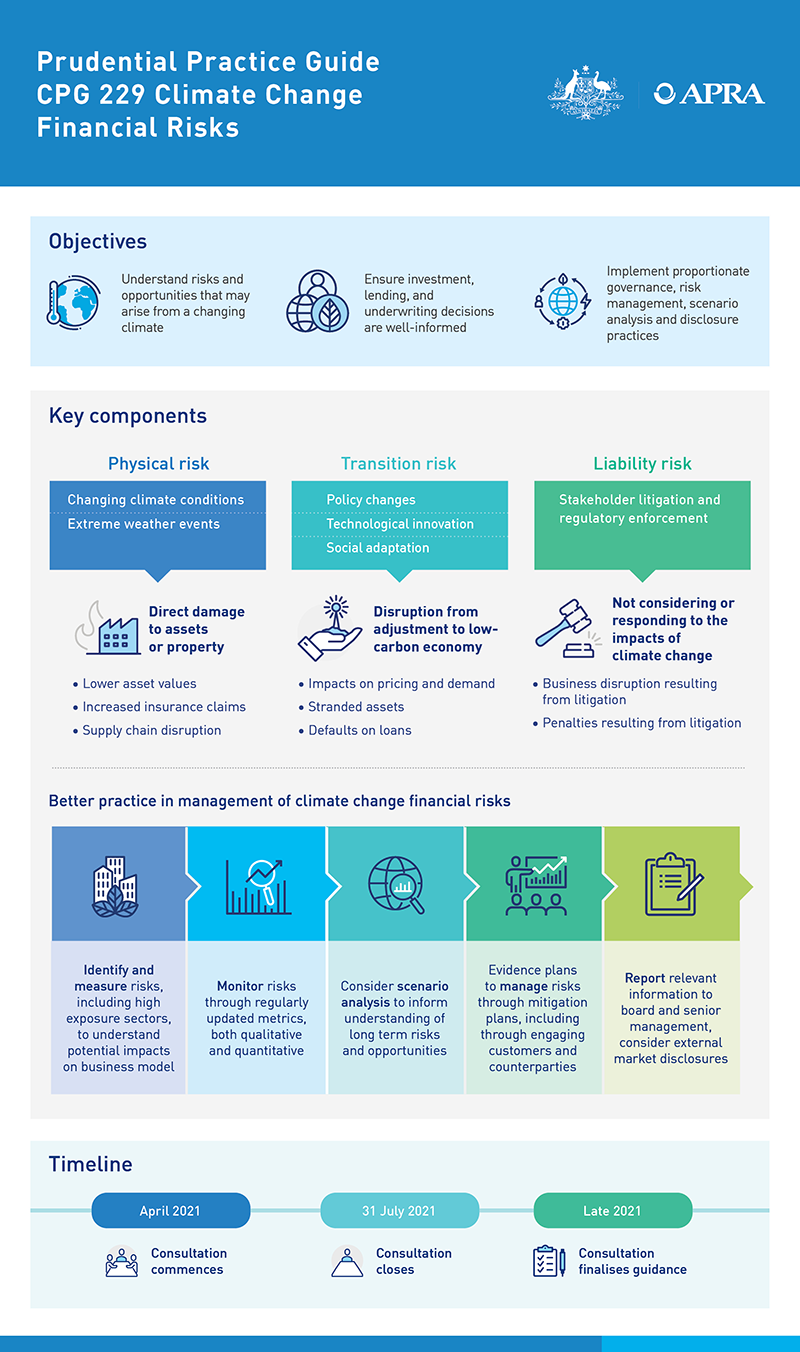
An accessible version of this infographic is available at https://www.apra.gov.au/consultation-on-draft-prudential-practice-guide-on-climate-change-financial-risks-infographic

The Australian Prudential Regulation Authority (APRA) has just released a note on “guidance on managing the financial risks of climate change” which includes the graphic shown above. Now, if they were releasing an approach to dealing with the psychologically disturbed people who take this stuff seriously, that would be one thing. But they seem to believe that the risk actually comes from global warming itself. What can be done with such fools? They will be the financial ruin of us.

What is particularly obvious is how inane modern economic theory is

I only look at Ross Gittins to find out just how far off the beam economists are, and once again he does not disappoint: Now we’re trying Plan C to end wage stagnation:

It’s a tacit acceptance of an obvious point many economists (and I) have been making for ages, but the government and its advisers haven’t been prepared to acknowledge: since consumer spending accounts for well over half of gross domestic product, and growth in wages is the chief source of growth in household incomes, without real growth in wages economic recovery simply isn’t sustainable.

The key to rising real wages is rising value added per employed person (ie higher productivity). That many economists (including Ross) think buying things will create value only shows to go you what a primitive subject economic theory remains. Come and see the billion dollar station they are building at the Shrine of Remembrance in Melbourne to see why real wages are going nowhere. If you build what no one is going to buy – a government speciality – you will not only fail to create growth you will diminish it.

Why isn’t that obvious? And it won’t matter a bit whether every single worker on every single project spends all of their income to the last dollar.

“A beautifully crafted and eminently fair review”

I’ve just written a book review for the eh.net website which I would not normally mention except that it attracted this comment from Tom Humphrey, one of the great historians of economics writing today:

A beautifully crafted and eminently fair review by Steve Kates. He takes a strong stand. But he does so in a spirit that few scholars could object to even if they disagree with him. In overall quality and readability his review rises far above the level of the average review. Wish all reviews could be so good. Nothing is as helpful and valuable as a good book review, if done right. Reviewing is an un- and under-appreciated art.

This is how my review begins:

There was a time that one might have said that economic theory was comprised of a series of concepts that help explain the way communities provision themselves and became more prosperous over time. Economic theory as it developed came in the wake of the pamphleteers of more ancient days who saw the world around them and thought there had to be a better way of getting things done. They therefore wrote polemical accounts aimed at addressing various problems as they saw them, to try to persuade others to take up the approaches they were attempting to advocate.

Meanwhile, almost from out of nowhere came the Industrial Revolution. It was not a consequence of Adam Smith having written his Wealth of Nations. The two just appeared on the scene at roughly the same time, and some — observing the world they were living in, while also reading Smith’s account of how economies worked — came to the conclusion that there was some actual theoretical knowledge that might assist in the improvement of the way in which economies grew and prospered. That is how we came to have the classical school first, and then the major critiques of the socialist writers, with Marx and Sismondi among the most significant.

The classical economists observed the world, saw the tremendous growth in output and living standards and, correctly in my view, came to the conclusion that it was the role of private entrepreneurs that had made the difference. Within the community, if it were designed in a way that allowed individuals to pursue their own best interests as they saw them, there would be a rearrangement of productive forces in response to where the greatest return on investments would occur. Output rose, innovations occurred, and as a direct result living-standards rose. It may appear to many of us looking back on those times that the social costs were immense, but many of those who were living at the time were content that England should exchange its “green and pleasant land” for a highly productive economic structure that allowed many individuals to move forward in what they could earn and in the range and quantity of the goods and services they could buy.

But the costs were high, and memories were short. Henry Mayhew’s London Labour and the London Poor, which he began in 1849 as an investigative journalist and which was finally published in 1861-62, brought the tremendous social costs into the limelight (Mayhew 1985). He was hardly the first to do so, but Mayhew’s work stands out as a depiction of the burdens that had befallen the newly formed proletariats of the industrial age. It was the appearance not just of poverty, which had till then been universal, that mattered, but the agglomeration of entire industrial suburbs that focused attention on the world as it had become. Dark satanic mills had become the way of the world.

What also was new in the world at the time was the business cycle, the periodic ebb and flow of economic activity which came at such a tremendous cost to the working classes. It was one thing to be mired in poverty. It was another thing entirely to find that the low wages upon which individuals depended would suddenly disappear, and for reasons utterly beyond the control of the workers themselves, indeed beyond the control of anyone. And while there was no denying the spectacular growth not just in the volume of output but in the assortment of goods and services that came into existence, there was also disquiet at the disruptions and harm that could be visited on individuals and their families because of the disruptions in their working lives.

And while this overview of the years of the Industrial Revolution is part of the background knowledge of every economist, the need for a means to account for how the industrial world operated was required as well as some means to control the forces that had been let loose upon the world. There was the positive side that came in terms of production. But there was the negative side that came in relation to the polluted cities that had sprung up and the uncertainties that had become embedded within the lives of so many individuals. And this is where the history of economic thought comes into the story.

Economists are the inheritors of the latest manifestations of the theory of the economy that more or less satisfies most of the profession. There are now theories of such astonishing abstraction that it is almost impossible any longer to look into what economists believe they know and truly understand how the economic world is structured or what can and should be changed to improve the operation of the productive aspects of our economies.

If you would like to read the rest, you can go here.

fyi

Who can say if any of this will really happen? What can be said is that there is no reason to be certain it couldn’t. We are pumping out money incomes across the world to people who are not producing anything. We have pushed our economies into recession as an act of policy. Value adding linkages are being broken at every turn. And the thing about recessions and crashes is that they are never seen before they happen other than by a handful of speculators who manage to clean up while everyone else goes broke. Just like in the Global Financial Crisis.

Just how useless is modern economic theory

“The 1-2-3 Toolbox of Mainstream Economics: Promising Everything,
     Delivering Nothing”
   Bichler, Shimshon; Nitzan, Jonathan
  We write this essay for both lay readers and scientists, though mainstream
  economists are welcome to enjoy it too. Our subject is the basic toolbox of
  mainstream economics. The most important tools in this box are demand,
  supply and equilibrium. All mainstream economists – as well as many
  heterodox ones – use these tools, pretty much all the time. They are
  essential. Without them, the entire discipline collapses. But in our view,
  these are not scientific tools. Economists manipulate them on paper with
  impeccable success (at least in their own opinion). But the manipulations
  are entirely imaginary. Contrary to what economists tell us, demand, supply
  and equilibrium do not carry over to the actual world
: they cannot be
  empirically identified; they cannot be observed, directly or indirectly; and
  they certainly cannot be objectively measured. And this is a problem because
  science without objective empirical tools is hardly science at all.
   JEL: E13 C01 O47
   Keywords: demand,econometrics,equilibrium,neoclassical
    economics,science,supply
   Date: 2021
 URL: http://d.repec.org/n?u=RePEc:zbw:capwps:202103&r=hpe

I made it a point in teaching micro to drill into my students that no price was ever determined according to where the supply and demand curves for a product were thought to be.

Keynesian malpractice started early

I don’t normally wish to speak ill of the dead, but with John Maynard Keynes I will make an exception. What has brought it to mind is this article today in The Australian: Investors could learn from economist John Maynard Keynes – and Winston Churchill. They do, however, admit at least this much.

A brilliant and well-connected academic, [Keynes] began as a speculator in the 1920s and initially did very well in a period that looks very much like our own, where new technology companies (auto and aircraft companies) spurred a speculative boom on wider markets.

In 1928 he had amassed a fortune of £44,000 but after the Wall Street crash of 1929 his fortune had shrunk to £8000. It is how he rebuilt his position and became a convert to what we now call value investing that is the kernel of the story. Over the next three decades Keynes evolved a system of watching and waiting for stocks he believed were undervalued by the market. He called them “stunners” and once he fixed on a bargain he went in big time.

Of course it didn’t hurt that by the 1940’s he was working inside Treasury and helping to design the budget which is part of the reason why he was able to die a wealthy man at the end of the War. But he took a bath not just in 1929, but in 1920 when he took down much of his family and many of his friends, as recorded here: John Maynard Keynes ‘a great economist but poor currency trader’.

The study found that Keynes “experienced periods of considerable losses in both the 1920s and 1930s. Indeed, he was close to being technically bankrupt in 1920 and could only stay trading thanks to his ability to borrow funds from his social circle.”

And even that understates just how catastrophic his losses were. And this was a man who worked in The City for almost all of his working life. The academic world for him was just something he did a few months a year. The General Theory is as bad for our wealth today as his speculations were for him and others while he lived. It really does irritate me to read about what a financial genius Keynes was when he was anything but.

Keynesian policy tested and once again completely failed

Keynesian stimulus actually led to a worse outcome than the predicted outcome if nothing at all was done. That is what any classical economist would have said would happen, but other than one or two here or there, no classical economists remain. So the entire profession just looked on, saw the manifest failure of the theories they all believed were true, and just blacked it out. Just as they have done on every occasion a Keynesian stimulus has been tried and inevitably failed.