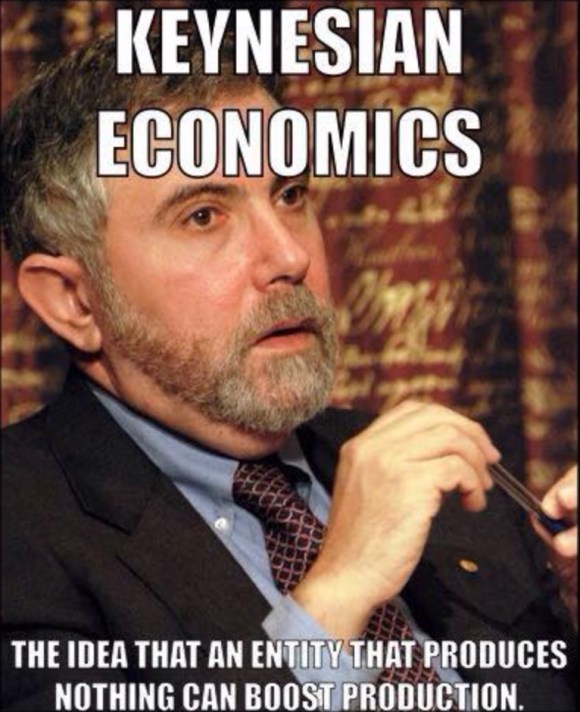
Supply must always come before the demand as strange as it may sound

China is heading for a rocky future. Their Keynesian stimulus has been a disaster. Trying to work out what to do next is the question they must now answer. This is from China approves economic blueprint for 2016.

The plan approved in the meeting that ended on Monday comes after China’s year-long effort to stoke demand through interest-rate reductions and government spending has done little to bolster the economy. Many economists say those measures have saddled Chinese companies and various levels of government with more debt, potentially putting the economy at greater risks.

At the same time, economists say, Chinese consumers’ rising demand for safer food, better medical care and other quality-of-life improvements remains unmet. “We’re not facing a lack of demand,” the official close to the leadership’s thinking said. “What we need to do is to carry out supply-side reforms to meet the unmet demand.”

The point is that there is always unmet demand. What is needed is a system where private entrepreneurs are made wealthy if, but only if, they can work out for themselves what it is that demanders want and can then meet those demands while making a profit with no government subsidy of any kind.

My favourite economics text of all time

It’s that time of year again. Even as living standards continue to slowly ebb, there is still virtually no understanding why spending of itself cannot hasten growth and increase employment. I have just submitted a paper on my favourite economics text of all time, Henry Clay’s Economics: an Introduction for the General Reader as the hundredth anniversary of its first publication in 1916 is next year. It is why I adopted his title when I wrote my own text. This is part of what I wrote on Clay’s second edition that was published 26 years later and after the publication of The General Theory in 1936. He is trying to explain what’s wrong with Keynesian theory.

Clay then makes the crucial point in noting the error in trying to generate recovery through higher spending, which brings his argument back to the very core of the classical theory of recession and unemployment.

“The error lies in ignoring the patent fact that neither money nor income as such provides employment but only spending.” (Clay 1942: 265)

This is the fundamental difference between classical theory and modern macro confined to a single sentence with no elaboration. It is merely Clay’s restatement of John Stuart Mill’s “demand for commodities is not demand for labour” (see Kates 2015). Clay knows this – it is a “patent fact”. So obvious may it have seemed to him he may not have felt any need to explain further. For whatever reason, this single sentence is his only attempt to bring the classical denial of the possibility of demand deficiency into his critique of the Keynesian Revolution that surrounds him.

The downwards spiral we are now part of is to see our economies floundering, thinking that public spending will improve our economic prospects, therefore increasing public spending and then finding things only getting worse. A hundred years ago they may not have been as wealthy and their technology may not have been as good, but they did at least understand what was needed to hasten recovery after an economic downturn.

The aim is not to scare you, however . . .

budget summary

This is from The Public Knowledge Blog which has the above chart among many other insights that are not normally found in public discussion. It really does make a difference to see these things in front of you this way. Here’s another that tells a more historical story, but just as depressing as the first chart, if not more so. The sheer damage done by public spending and deficit finance is hardly understood anywhere, and certainly seldom by those on the receiving end of the cash and payments.

debt and deficits

If you own a stock of assets already, like a house and a car, your livings standards will only be slowly eroded but downwards they will come. But if you are paying as you go, you will feel your living standards slipping away and unless you have some way to protect your income, things will only get worse. The attack on super is just one form in which our falling productivity will manifest itself in lower personal incomes. Economic management is frightening when you can see what’s going on. The Turnbull-Morrison slowly-slowly approach only works for a while, and only on the political side. The economy will continue to wear away unless things are turned around and private sector activity without any form of government subsidy becomes the order of the day. The innovation statement is more colossal waste and evidence they do not have a clue about what needs to be done.

A deeper shade of economic ignorance

The greatest political disaster of Keynesian economics was to shift the political focus away from how to raise living standards to how to increase the number of jobs. And the Keynesian answer of increased public spending has been the wrong answer on both counts, it neither increases real incomes nor adds to the number of jobs. For an example of the profoundest idiocy, I have been sent this article on Jobs to flow from NDIS in SA. I won’t mention names, but the article came with a note which read, “Reference your article on the electricity woes in our state, please read what Mr Weatherill said yesterday about NDIS being the future for jobs in our long-suffering state. Someone needs to save us!” Someone needs to save us all since these are the same beliefs that are found everywhere across the political void, with Malcolm a serious carrier of the disease. This is what that article said:

More than 6000 jobs will be created by the full rollout of the National Disability Insurance Scheme (NDIS) in SA, Premier Jay Weatherill says.

The increased workforce will provide support for 32,000 people when the scheme is fully operational from July 2018.

Many of the new jobs will go to people in the northern suburbs who will be hit hard by the closure of car maker Holden in 2017, the premier says.

“This scheme is important because for too long people with disabilities have not been included in all of the benefits of our society,” Mr Weatherill told reporters on Wednesday.

“For too often they have been second-class citizens in our community.”

The premier said the disability scheme would also provide the biggest boost to job creation in SA over the next few years.

Job opportunities will include 1600 positions for support workers, 1500 for personal assistants, 900 for therapists and more than 500 for mental health nurses.

Mr Weatherill said more than 1700 of those were expected to go to workers in the northern suburbs, hopefully to those who face losing their jobs with the decline of the car manufacturing sector.

“Some people have already transitioned into disability care and the NDIS will provide many more opportunities for those who work in declining industries,” he said.

JOBS EXPECTED TO FLOW FROM THE NDIS IN SA:

1600 organisational support workers

1500 personal assistants

900 allied health therapists

800 case managers

600 local area co-ordinators

550 mental health nurses

400 direct care workers

Either a job pays its own way or it does not. There are lots of worthy and important tasks that we should undertake if we can afford them. But if you are of the view that these kinds of things will create growth and prosperity, you could not be more in the dark about what actually makes a community prosperous. This is such deep set ignorance that unfortunately only insolvency may be able to cure.

The Coalition of Obsolete Industries needs your support

Filmed in Sydney but found at Instapundit of all places, VITAL OBSOLETE INDUSTRIES need bailouts!. From the Australian Taxpayers Alliance. But the thing is this. If governments can see a vote in it, they will do it, irrespective of anything else. We can only stop them if we stop voting for them. Until then, the March of Regress will continue.

Keynesian economics – almost everyone knows better but almost no one can resist

Keynesian economics

How ridiculously empty Keynesian theory is. But if you combine deficits with the promise of billions of dollars to businesses that lose money and individuals who don’t work, along with voting majorities for parties who promise never to reduce the level of welfare, it’s amazing how attractive these ideas become.

Attention Scott Sumner: Did you know that the Great Depression was a worldwide problem?

There’s a new book by Scott Sumner with the title, The Midas Paradox: Financial Markets, Government Policy Shocks, and the Great Depression. As is all too frequent, the view is restricted to the United States, where the Great Depression was prolonged by something like a decade until the 1940s because of Roosevelt and the New Deal. Australia reached its trough in 1932 and the UK and most of the world in 1933. The true lessons to be learned are found by not looking at the US. This is the blurb found at the link to the book.

Economic historians have made great progress in unraveling the causes of the Great Depression, but not until Scott Sumner came along has anyone explained the multitude of twists and turns the economy took. In The Midas Paradox: Financial Markets, Government Policy Shocks, and the Great Depression, Sumner offers his magnum opus—the first book to comprehensively explain both monetary and non-monetary causes of that cataclysm.

Drawing on financial market data and contemporaneous news stories, Sumner shows that the Great Depression is ultimately a story of incredibly bad policymaking—by central bankers, legislators, and two presidents—especially mistakes related to monetary policy and wage rates. He also shows that macroeconomic thought has long been captive to a false narrative, which continues to misguide policymakers in their quixotic quest to promote robust and sustainable economic growth.

The Midas Paradox is a landmark treatise that solves mysteries that have long perplexed economic historians and corrects misconceptions about the true causes, consequences, and cures of macroeconomic instability. Like Milton Friedman and Anna J. Schwartz’s A Monetary History of the United States, 1867–1960, it is one of those rare books destined to shape future research and debate on the subject.

With economics, it’s a “can’t-do attitude” that overwhelmingly works best. Leave it to the market is the answer, although there are some things governments can do. Making adjustment easier, diminishing regulation, pulling back on public spending and easing credit conditions are classical elements in a recovery program. None of these were followed by the US while all of these were followed by Australia and the UK. That’s why our economies recovered and the American economy didn’t. These are the lessons that ought to have been learned but the solipsistic approach to economic policy by American economists, where only the US economy is examined, means that the actual lessons that ought to have been learned never are. Keynes may have been British but it is Samuelson who spread the disease across the globe.

Where are the anti-Keynesian economists?

I have taken the quote below from Terry McCrann via Andrew Bolt who titles his post Economy lifts, but where’s the business investment? Trying to make sense of an economy by using modern economic theory to find your way is an impossibility. I say this often, but who can understand any of this if they have not read pre-Keynesian economics? It’s impossible to read J.S. Mill unless you are schooled in the classics, but you can read Henry Clay’s 1916 Economics: an Introduction for the General Reader, or even my own Free Market Economics: an Introduction for the General Reader (2nd ed 2014). If you do not understand the classical theory of saving and investment you will never be able to think through economic events. This is the excerpt from Terry.

THE “good” economic growth figures for the September quarter capture a simple, brutal reality about today’s, and even more, tomorrow’s Australia: after the resources boom we are getting poorer…

There’s a seeming contradiction or paradox in the GDP figures. We continue to record relatively strong growth in the economy. That’s, of course, “relative” to other developed economies which are barely staying out of recession….

Yet right now it’s become a sort of empty growth. In simple terms we are producing more but earning less; we are shipping off more and more of Western Australia to Japan and of course especially China and getting less per tonne and so more or less the same actual dollars overall…

But our incomes aren’t growing.

This shows up in all, sorts of places — like wages, which are now growing at their lowest pace in 60 years and barely keeping up with (very low) inflation.

If it’s not value adding it will not add to growth. If it requires a government subsidy – green energy, NBN, pink batts – it will lower our standard of living. You cannot make an economy grow from the demand side. The proportion of non-Keynesians in the profession is under 10%, and the proportion who are actively anti-Keynesian may be less than 1%. What to do about this I do not know, but you would think by now that there would be some kind of effort to overturn Keynesian macro, but near as I can tell, there is hardly a whisper of dissent.

Explaining the International Impact of the 2008 Financial Crisis

This was part of a video I recorded in July while in the US and has now appeared as part of a series put out by the National Center for Policy Analysis. My point was that for the US the Global Financial Crisis looked like a domestic issue, but for the rest of us it looked like a problem that had begun internationally but which had swamped our economies irrespective of the domestic policies that had existed up until then. So while the US can examine its various institutional arrangements, the rest of us have few lessons to learn about the causes of the GFC, but many lessons about what not to do when an economy enters recession. And most importantly, neither in the US or elsewhere could the explanation be based on a theory of over-saving and demand deficiency. All recessions are due to structural imbalances which are never repaired by increases in public spending.

Making people poor in old age

This is a comment on The Oz question time report, on how to arrange superannuation. Strangely, this was my proposal when I was doing what I could to oppose the introduction of the Superannuation Guarantee and compulsory super.

The present arrangements for supporting people in their later years are ridiculously complex. Why didn’t we follow the model used, very successfully, by other countries…. Everyone gets the age pension, including those who have assets (and why not? They’ve probably contributed more than most). And to pay for it we remove most of the tax breaks on Super. No assets test; and no-one manipulating their finances so that they creep into the qualification for a part pension (along with all the associated discounts).

Of course, the superannuation industry would hate it…. And the unions (who have benefitted hugely from the way Keating designed the system) would absolutely loathe it.

Everyone to get the Age Pension and then you are on your own to do what you like. Unfortunately, the possibilities for graft are much constrained with such a system. I saw the dollar signs in the eyes of many a person, and there was no deviating from the system we now have. As I said then, and I say now, it is a system that will make many a person poor in old age.