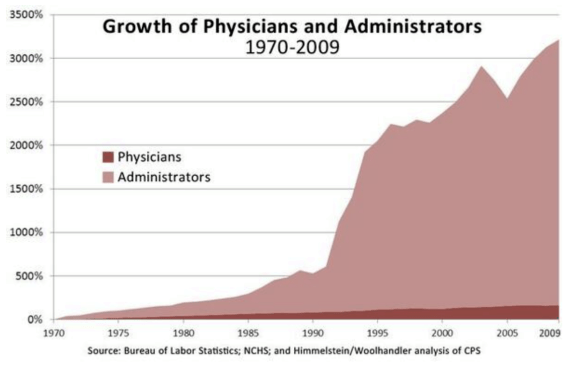
This cannot go on forever since the burdens are becoming intolerable. From Every Industry Gets Worse When Government Gets Involved. And it is now everywhere, in every aspect of life.

This cannot go on forever since the burdens are becoming intolerable. From Every Industry Gets Worse When Government Gets Involved. And it is now everywhere, in every aspect of life.
Here’s the question: IS THIS THE ONLY FEDERALLY SUBSIDIZED HOUSING PROGRAM THAT ACTUALLY WORKS?. This is the answer:
It’s in Delaware and it turns hundreds of subsidy receivers into independent, working, productive citizens. It’s called “Moving to Work” and Katie Watson of the Daily Caller News Foundation Investigative Group found it.
“’Before we started Moving to Work, we had people who were on their third or fourth generation of the same family who were at the same site,’ Rebecca Kauffman, social service senior administrator at the Delaware Housing Authority’s Moving to Work program, told The Daily Caller News Foundation,” Watson reports.
“More than 850 families have completed the program to enter assistance-free living, and 30 percent of program participants became homeowners when they left,” according to Watson. Key to the program’s success is putting a time-limit on how long people can live in subsidized housing, and requiring them to work an increasing number of hours during their tenure.
The Delaware program is one of only 39 pubic housing authorities in the country that doesn’t allow tenants to remain in subsidized housing permanently. There are more than 3,000 pubic housing authorities in the country. Moving to Work was created as an experiment during the Clinton administration. Ya think it might be time to expand it?
There is something radically wrong with the incentive structure facing governments if this really is the way it is in only one percent of programs. And since we have the template, and it is known to work, why does it stop at these 39?
The first-quarter number presented a political and PR problem for the White House, coming just as President Obama appeared to be trying to burnish his own legacy overseeing the economy since the global financial crisis of 2008.
Two stories of Keynesian ignorance and the consequences, one in America and the other in Australia.
First the US. Obama will look long and hard for a positive legacy but the only one I can think of is how good it will feel when he leaves office so that we can finally stop knocking our heads against the wall. An incompetent narcissist means he screws things up but believes he’s a policy genius. Which now comes to this: White House struggles to explain weak economy as Obama boasts of job growth.
The White House labored Thursday to explain a first-quarter economic report showing the weakest growth in two years, even as President Obama was trumpeting his mastery of the economy in a New York Times Magazine interview.
The Department of Commerce reported that U.S. gross domestic product rose 0.5 percent in the first quarter of 2016, the third straight sluggish start to a year. Consumer spending and business purchases both fell, continuing trends that could have ominous implications for Hillary Clinton’s presidential campaign as she tries to claim the mantle as Mr. Obama’s successor.
But this at the end is really the pièce de résistance:
The president told a group of college journalists Thursday that his record on the economy is among his proudest achievements.
Delusional beyond imagination. No one, absolutely no one, will defend Obama’s economic management, least of all any Democrat who wishes to hold onto their office or Hillary in trying to become his successor. If you want more on his pathetic efforts to get others to see the world in the same deluded way you can try this.
And then there’s the Australian story, told today in The Oz. Treasury forecasts have been complete nonsense for years on end, because they are made by Keynesian who really believe, bless their naive souls, that public spending leads to faster growth and increased employment even though it never has. From the story:
In May 2011, the economy had emerged from the global financial crisis growing rapidly.
Commodity prices had surpassed pre-crisis levels and were on their way to new highs, while investment in the resource sector was rising rapidly.
Treasury predicted in that year’s budget that the economy would expand by 24.5 per cent over the next four years, or by almost $350bn. Had it done so, by now there would be massive surpluses with enough left over for big tax cuts.
In reality, the economy has grown by only 14.1 per cent or $200bn, with about a third of that flowing to the government as tax.
They, of course, believe that the part of the rise in GDP between 2009 and 2011 caused by stimulus spending is the same as economic growth. Can’t be helped; that’s how they think. But they are WRONG and the damage they are doing will be immense and lasting. But they will never understand why because they will never understand the pre-Keynesian theory of the cycle.
The headline reads, RBA’s Stevens says it’s time for government to step up on growth and this is the point:
Stevens says central banks have done all they can to boost economic growth and, eight years after the global financial crisis, it is time for governments to do more.
And if you missed the message, here’s a bit more:
In a speech in New York last week, he said central bank intervention was effective at heading off a potential catastrophe after the Lehman collapse but always had limited ability to accelerate the recovery. Rate cuts bring only a short-term boost to activity. He said the fall in global interest rates, which has been under way since 2007, reflected more than the actions of central banks.
Nothing left for central banks to do. And here is a bit of financial artistry that sets out the central point:
Financial assets are just paper claims on the flow of real returns from business investments or, in the case of government bonds, on the ability to tax those real returns. “If the real economy can’t perform to provide real returns to capital, there is nothing to back higher yields on financial assets.” Stevens says the lack of profit in the real world is the cause of the global stagnation, and central banks are powerless to change that. The growth potential around the world has fallen, he says.
That is so exactly right and I don’t think you can hear it said anywhere else. We are in a fiscal mess which cannot be fixed by adjusting interest rates up or down, although pushing them up would at least do some good. And even when he shifts onto the fiscal side, he is precisely right but you have to pay attention to the words he uses.
Stevens acknowledged that years of slow growth were jeopardising the “social compact” in many parts of the world. He urged government to take advantage of record low interest rates to embark on infrastructure projects that would raise construction activity and lift productivity. The critical issue was good governance to ensure the right projects were built and managed to add value, he said, not lack of money.
Projects that add value are, unfortunately, almost never the projects chosen by governments since there is no profit and loss statement nor any serious means to ensure more value is created than is used up. But at least he understands what needs to be done, but has much more faith than I ever will in the decision making processes of government to get that kind of result
Let me start with the opening quote, which is as sound today as when first stated at least 150 years ago. It’s from Abraham Lincoln:
“No country can sustain, in idleness, more than a small percentage of its numbers. The great majority must labor at something productive.”
I specially liked that he emphasised the need for the labour to be productive, i.e. value adding. Digging holes and then filling them in again may require effort, and might even seem like work, but it is not productive and therefore should be neither paid nor encouraged. Lincoln had probably read J.S. Mill, something no one any longer does. The article, though, is not really about this, but about getting people off welfare by insisting they not just go to work but do something productive.
According to a report from the Foundation for Government Accountability, before Kansas instituted a work requirement, 93 percent of food stamp recipients were in poverty, with 84 percent in severe poverty. Few of the food stamp recipients claimed any income. Only 21 percent were working at all, and two-fifths of those working were working fewer than 20 hours per week.
Once work requirements were established, thousands of food stamp recipients moved into the workforce, promoting income gains and a decrease in poverty. Forty percent of the individuals who left the food stamp ranks found employment within three months, and about 60 percent found employment within a year. They saw an average income increase of 127 percent. Half of those who left the rolls and are working have earnings above the poverty level. Even many of those who stayed on food stamps saw their income increase significantly.
The dignity of work is more than a cliche put around by those who pay taxes to fund the idleness of others.
There are many mysteries in the universe, but in the social universe this is one of the biggest. Two separate stories but with a common cause. The first, How the state of the economy is literally killing people. This is about the United States.
Suicide rates are soaring, according to federal data released last week. Especially in economically depressed states and job-starved upstate New York. People in need of work are twice as likely to take their own lives as employed people, and people fired in their 40s and 50s find it hardest to get hired again.
That makes boosting economic growth a life-or-death issue for many. But you wouldn’t know it listening to President Obama and Hillary Clinton. President Obama whitewashes reality, claiming the “American economy is pretty darn good right now.”
False. The Obama economy is stalled. It grew at a measly .7 percent annualized rate the first quarter of this year. That’s compared with the 3.5 percent rate the US enjoyed for most of the 20th century — what’s needed to sustain employment and optimism.
The second story is if anything even more depressing: Fridges go off as Venezuela power-rationing hits.
Fridges zapped off in kitchens across Venezuela as the government turned off the electricity supply to help ease a power shortage that is worsening the country’s economic crisis.
It is the latest drastic measure by the government in a crisis that already has Venezuelans queuing for hours to buy scarce supplies in shops.
The government imposed a four-hour blackout in eight states starting Monday and said the measure will last 40 days. The states of Caracas and Vargas had also been on the list for blackouts but were spared at the last minute. . . .
President Nicolas Maduro blames the collapse on an “economic war” by capitalists.
They don’t go into the potential death toll since the odd part is that you would get the impression from the journalist that he agrees with Maduro about the causes of the blackouts. The most educated are often the most stupid – see the next Bernie Sanders rally for confirmation.
Here’s the new reality, written by someone at the Atlantic: “The Secret Shame of Middle-Class Americans: Nearly half of Americans would have trouble finding $400 to pay for an emergency. I’m one of them.” He writes:
I never spoke about my financial travails, not even with my closest friends—that is, until I came to the realization that what was happening to me was also happening to millions of other Americans, and not just the poorest among us, who, by definition, struggle to make ends meet. It was, according to that Fed survey and other surveys, happening to middle-class professionals and even to those in the upper class. It was happening to the soon-to-retire as well as the soon-to-begin. It was happening to college grads as well as high-school dropouts. It was happening all across the country, including places where you might least expect to see such problems.
It’s not a money-tree you need but a production flow. Wealth is based on real saving and real investment and its dividend is the output of goods and services produced. But it will only work if the economic system is directed by entrepreneurs, with governments as far a way as possible doing only what is required to keep the machine running in good order. Ultimately, living standards fall because there is no structure in place to keep them up.
It’s the same here. Watching Malcolm in action – with the NBN a perfect example of economic illiteracy and ignorance, leaves me unable to identify what is required to make someone like him understand what is actually required to create prosperity and growth.
Ignorant to an extent never seen before in a major world “leader”, we have this from Obama today:
President Barack Obama boasted of his legacy during a town hall in Britain, asserting that he single-handedly saved the world during his presidency.
“Saving the world economy from a Great Depression — that was pretty good,” Obama bragged when asked by a student in London what he wanted his legacy to be.
He recalled that when he visited London in 2009, the world economy was in a “freefall” because of irresponsible behavior of financial institutions around the world.
“For us to be able to mobilize the world’s community, to take rapid action, to stabilize the financial markets, and then in the United States to pass Wall Streets reforms that make it much less likely that a crisis like that can happen again, I’m proud of that,” he said.
What made the difference was the TARP that was put in place by his predecessor. A reminder since it is now so long ago even Obama seems to have forgotten:
The Troubled Asset Relief Program (TARP) is a program of the United States government to purchase assets and equity from financial institutions to strengthen its financial sector that was signed into law by U.S. President George W. Bush on October 3, 2008. It was a component of the government’s measures in 2008 to address the subprime mortgage crisis.
Obama’s contribution was the stimulus that came immediately after, which has made America’s recovery for all practical purposes non-existent, along with everyone else’s. As if a law professor turned community organiser would have the slightest idea about how an economy works. But if he doesn’t even remember who put the TARP in place, it might be a consequence of his choom-gang youth, which from other news also today we learn:
Using marijuana earlier in life is linked to poorer psychological health, and that can contribute to more health problems down the road.
“It is well-established that if you begin using at an early age and use a lot then, there are significant negative outcomes particularly in terms of mental health. . . .
Earlier cannabis use is linked to cognitive problems. Hills said, “One 2012 study showed early, regular use of marijuana – the kind of level they describe in this study — led to an eight point decline in IQ over time.”
If Obama really thinks he had much if any involvement in stabilizing international financial markets after the GFC, he must have been somewhere else at the time to be so unaware of what was going on.

It’s not particularly apt but I like it because it shows Keynesian economics is becoming the metaphor for stupid.
A kind of before and after. This is the before: Bernie is my comrade
And this is the after still to come to the US but a genuine model of a Bernie future: Yellow Water, Dirty Air, Power Outages: Venezuela Hits a New Low
The only thing one learns from history is that no one ever learns from history.
 Law of Markets