From Democratic Socialists to Socialist Democrats

Image result for venezuela shopkeeper meme

There really is a level of communal ignorance shown by the advances made by Bernie Sanders on just how savage socialism is. The problem is not just an inability to learn from history – even from the recent history of the Venezuelan economy. It is also due to the difficulty in understanding why socialism, however nice it sounds in theory, cannot work in practice, which is why it never has. Does anyone actually think Bernie Sanders is the soul of kindness and benevolence? It is hatred and anger all the way down.

The issue is much more than pure politics.

There are lots and lots of longtime Democratic political professionals who believe that nominating a self-proclaimed democratic socialist is a recipe for disaster for their side.

What these “political professionals” are worried about is that Sanders may end up losing in a landslide and then lose the House and the Senate at the same time because there is still a toxic phobic reaction among most Americans to socialism. The reality is that on the non-zero chance that Sanders might win, it would be an economic disaster for everyone, not just for Democrats. Unfortunately, why that is remains very difficult to explain. Understanding what happens under socialism requires a deeper understanding of the processes of a market economy than most people have.

It really is incredible how lacking in any understanding among those voting for Bernie are about what they are buying into, why it would be an economic disaster. There is only a shallow understanding of why socialism will almost immediately stop the economy in its tracks and impoverish almost everyone. It is almost impossible to understand why this is, in the same way it is so difficult to understand why a market economy does work. I wrote a brief pamphlet on the fatal consequences of socialism at the start of last year with the subtitle: “Why a socialist economy can never work”. The actual title may sound odd – I, Mechanical Pencil – but was chosen because it is an extension of a famous anti-socialist publication written in the 1950s titled, “I, Pencil”. This is from the intro:

Political oppression is easy to see, but economic oppression is much more difficult to identify and understand. Anybody can see without difficulty that socialist economies are inevitably poor, but many people need instruction to understand why that is. That is the reason I have written this … to explain the causes behind the economic nightmare of socialism that accompanies the political oppression that is its twin.

You can download the article at the link.

The question asked here is Will Bernie Sanders’ long-ago praise of Socialist regimes hurt Democrats in November? If he is still there in November, one can only hope, but if he is still there in November, win or lose, it will be a very bad sign of things to come, not just in America but across the world.

Image result for bernie sanders socialist meme


An economics degree is proof someone has no idea how an economy works

The point of the title – IT’S EASY TO BELIEVE AOC HAS AN ECONOMICS DEGREE – is not to point out how dumb Ocasio-Cortez is, but how shallow economic theory has become. It’s a quite nice article, which for me is only diminished because no mention is made of Keynesian theory. And this may be because by now almost no one even appreciates where the problem lies. He refers to central banks as the core of non-solutions to our economic problems but not to public spending. Still, I like what he writes. Here are some quotes from the article.

Why is it so hard to believe that she has a degree in economics? It seems far too many people have rather inaccurate ideas about what is taught in economics programs nowadays. The truth is there is little emphasis on understanding markets in economics programs, and little emphasis on the value of markets. The emphasis is now on using economics to justify state action in the economy. And any bias that may have once existed in favor of unhampered markets in these departments is vanishing.

There’s no reason to believe that a student with an economics degree is going to graduate with a deep understanding of how government intervention distorts markets or impoverishes consumers. The theoretical foundations behind such things are mentioned, of course, but at many institutions they are most certainly not emphasized. Far more likely, one learns in these programs that central banks can be relied upon to fix almost any economic problem faced in the course of a business cycle. And if a certain problem becomes especially difficult, the answer surely lies in giving the central bank even more power.

It’s entirely plausible AOC took any number of economics courses and came out with good grades after learning virtually nothing accurate about entrepreneurship, wages, money, or consumer choice. What she did learn on these topics was likely built on the premise that the state ought to be intervening and tinkering with all these things.

Economics is taught with the first priority being an ability to write some abstruse but highly mathematised paper of no relevance to anything other than it can be published in a high ranking journal. There is then some smattering of theory related to how government can fix things by hiring economic grads to work on devising policy since the market left to itself will only make things worse. An economics degree is merely proof that someone has next to no idea how an economy works. It’s sad but it’s true.

NEEDS ELEVATION FROM THE COMMENTS: Via Tim Neilson.

James Hacker:
Bernard. Humphrey should have seen this coming and warned me.

Bernard Woolley:
I don’t think Sir Humphrey understands economics, Prime Minister. He did read classics, you know?

James Hacker:
How about Sir Frank? He is head of the Treasury.

Bernard Woolley:
Well, I’m afraid he’s in even greater disadvantage in understanding economics. He’s an economist.

Many a truth is told in jest.

F.A. Hayek was not a free market fundamentalist

He was quite quite different from Mises.

F.A. Hayek was not a fan of free market fundamentalism.

“Probably nothing has done so much harm to the liberal cause as the wooden insistence of some liberals on certain rules of thumb, above all the principle of laissez faire.” — The Road To Serfdom.

He wrote this in 1944.

Of course, the word “liberal” had a different meaning back then.

Obama: robbing from the poor to give to the super-rich

Further to my post on Is it really that hard to understand that unproductive public spending lowers productivity? there is now this: Obama Instituted the ‘Greatest Transfer of Wealth in History’ to the 1%. Here are the statements made in large print.

“During [The Great Fleecing], the greatest transfer of wealth in the history of the world occurred. Some $4.5 trillion was given to Wall Street banks through its Quantitative Easing program, with the American people picking up the IOU.”

“the Obama administration is the first two-term presidency that has not posted a 3% GDP growth on an annualized basis for 8 years. Even Franklin Delano Roosevelt posted 3% growth year during the Great Depression.”

The gap between rich and poor has widened more under Obama than under any other president.

You can read the whole thing at the link. Why anyone believes that Democrats are for the poor and the hard working is anyone’s guess but is in no way built on the facts.

Is it really that hard to understand that unproductive public spending lowers productivity?

Is there anyone anywhere who actually believes that the present recovery in the US has anything to do with Obama? Actually there are lots of people just as ignorant as that, amongst whom is Obama himself. I get the same level of irritation when I read how economic “managers” here in Oz wonder why productivity growth is so pathetic and real wages are falling even as they see before their eyes the construction of streetcars in Sydney, trains in Melbourne and the diversion of tens of billions of dollars into preventing a non-heating planet from heating. Anyway, this is Trump v Obama on why the American economy has been rising since Obama left the presidency.

President Trump fired back Monday after former President Barack Obama, in a subtle swipe at the commander in chief, claimed credit for the economic gains in both their terms.

Obama tweeted Monday morning to note the anniversary of his signing the 2009 economic stimulus package.

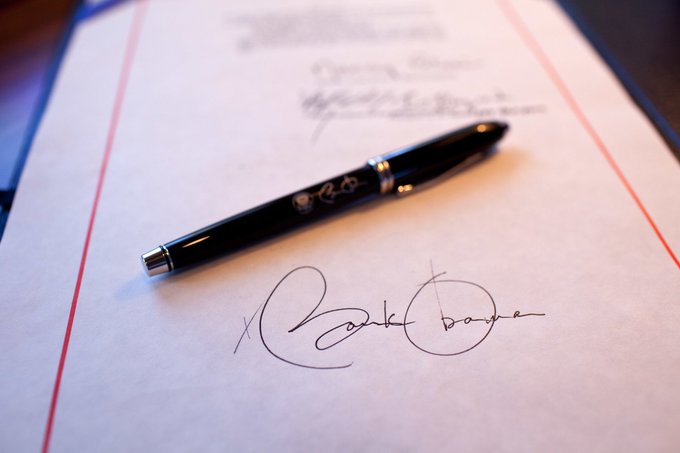
“Eleven years ago today, near the bottom of the worst recession in generations, I signed the Recovery Act, paving the way for more than a decade of economic growth and the longest streak of job creation in American history,” Obama tweeted, alongside a photo of his signature on the bill.

But, the Trump campaign, in a statement to Fox News, countered that the economy was recovering only because of the actions Trump took to undo his predecessor’s policies.

“President Trump reversed every single failed Obama-era economic policy, and with it, reversed the floundering Obama/Biden economy,” Trump campaign national press secretary Kayleigh McEnany said. “Obama and Biden orchestrated the worst economic recovery in modern history.”

Actually, everyone else did more or less the same as Obama, Australia included, with more or less the same results. Modern macro is about as disastrous as a policy can be, although we may yet see Modern Monetary Theory given a try by one of the socialists now running for President as a Democrat.

All forms of Keynesian theory are nonsense but the Milton Keynesians may be the worst

So earnest, so learned, so stupid. A different kind of Keynesian. That she tries to make the point that living standards have not risen for we normal citizens since incomes have not risen along with rising productivity represents a kind of obliviousness that is truly remarkable. But her views are the views of many. The photo is taken from Powerline where the comments thread is a real treat. The video is from here.

But whatever you might say about her knowledge and depth, she has been an active force in shifting American politics to the screwball left.

I’ve even been to Milton Keynes to a conference. How she would have even heard the name and registered it is as strange as her willingness to pontificate on just about anything.

Paul Krugman and the strawman economy

Got sent the following from Quora yesterday: Paul Krugman, Nobel Laureate economist, NYT op-ed columnist, & author, answered 44 questions. Here are a few, but let me tell you how all of his answers work.

First, he is a Keynesian so believes that government spending inevitably creates jobs.

Second, he invariably uses strawman alternatives as the supposed alternative position. His answer on laissez-faire is so absurd since there is literally no economist anywhere who believes there is no role for government. All of the debate is over what can governments do, which regulations will be effective and how much should be left to the market.

Third, as with his answer on climate change, he immediately shifts the terms of the debate into environmental protection in general. Climate change is a complete con, that uses environmental protection as a cover. No one, but no one, is against protecting the environment as a general proposition, but there is lots of discussion whether we should dismantle our economy to deal with what is to me the phantom problem of global warming.

It is all a con, but he has made quite a career from it.

Is capitalism failing all over the world and what are the economic solutions to the current woes such as rising income inequality, opportunities for all and big players dominance in businesses?

I don’t think “capitalism” is failing. Unregulated laissez-faire leads to extreme inequality and environmental damage. But regulated markets with a strong social safety net…

(more)

What is, in your opinion, the best solution to climate change without destroying the economy?

This “destroying the economy” thing is disinformation. Interest groups always claim that environmental protection will do terrible things, and they’re always wrong.

Econ 101…

(more)

I don’t think we’re going to get away from relying on markets to provide a lot of what we need. But there are some things that government does better than the private secto…

(more)

What is the best alternative to capitalism? Please describe it.

I don’t think we’re going to get away from relying on markets to provide a lot of what we need. But there are some things that government does better than the private secto…

(more)

And then there’s this today from Instapundit.

PAUL KRUGMAN ON ELECTION NIGHT 2016: “If the question is when markets will recover, a first-pass answer is never.”

Today: Dow hits record, joining S&P 500, Nasdaq.

Related: Over Three Years After His Doomsday Prediction, Paul Krugman Makes Reluctant Admission About the Trump Economy.

.
This is from that last article.

Will finish with this, which I agree with as well.

Clueless Keynesian RBA boss leaves ministers frustrated

From the Oz: RBA boss Philip Lowe leaves ministers frustrated.

The Morrison government is ­increasingly frustrated with ­Reserve Bank governor Philip Lowe’s calls for it to spend more to lift the ­nation’s flagging productivity, after a confidential cabinet briefing from the RBA boss on Monday left ministers exasperated by an absence of detailed policy ideas.

Dr Lowe in a speech on ­Wednesday again exhorted the ­Coalition to do more to foster business spending as he highlighted a “troubling decline in productivity growth”, despite “fantastic” economic fundamentals. “While the reasons for this are complex, it is hard to escape the conclusion that higher levels of investment spending would promote productivity growth and our collective living standards,” he said.

Look Phil, have you not been paying attention to the last lost decade of public sector spending and how it’s left the economy adrift, and not just ours?

Hop on one of those streetcars down George Street to see just how wildly wasteful public spending is. Come along to Melbourne and look at the new tunnel we’re building.

Why don’t we build some more windmills? Solar panels?

Maddening to see how shallow public sector economists are. They will be the ruin of us.

Productivity growth and classical economics

Trade-off

I wasn’t going to bother with the story because its title was so ridiculius – Britain’s Productivity Decline Is the Worst in 250 Years – as if you could measure productivity going back even sixty years. But what they show in the chart is true enough, and about which I have been writing quite a bit. The Keynesian “stimulus” has been a disaster everywhere it has been tried, with the example here the UK. To compound their idiocies, this is what they wrote:

Productivity was almost 20% below its pre-2008 path in 2018 — the worst slowdown since 1760-1800, as the Industrial Revolution took hold. The present-day malaise may have been caused by the end of the information and communications technology boom, the financial crisis, and Brexit.

And the authors are, of course, part of the mainstream and at its very heights:

It’s a “shockingly bad” performance, said Nicholas Crafts, who co-authored the paper with Terence Mills, researchers at the University of Sussex and Loughborough University. The findings will published by the National Institute Economic Review on Feb. 6.

Productivity is here measured as output per hour worked. If the government diverts production from the private sector to its own public agenda, you inevitably get a vastly diminished level of value-adding production, even though employment continues to increase because the real wage adjusts. Why people cannot see this is amazing to me, but here is yet more evidence of just how out of it economists now are. That the period in question is the period following the GFC ought to have been a clue, but Keynesians – i.e. modern macroeconomists – are notoriously clueless.

Let me again mention the cover description for my next book:

‘Classical Economic Theory and the Modern Economy’

Steven Kates

Economic theory reached its highest level of analytical power and depth in the middle of the nineteenth century among John Stuart Mill and his contemporaries. This book explains classical economics when it was at its height, followed by an analysis of what took place as a result of the ensuing Marginal and Keynesian Revolutions that have left economists less able to understand how economies operate.

Chapters explore the false mythology that has obscured the arguments of classical economists, clouding to the point of near invisibility the theories they had developed. Kates offers a thorough understanding of the operation of an economy within a classical framework, providing a new perspective for viewing modern economic theory from the outside. This provocative book not only explains the meaning of Say’s Law in an accessible way, but also the origins of the Keynesian revolution and Keynes’s pathway in writing The General Theory. It provides a new look at the classical theory of value at its height that was not based, as so many now wrongly believe, on the labour theory of value.

A crucial read for economic policy-makers seeking to understand the operation of a market economy, this book should also be of keen interest to economists generally as well as scholars in the history of economic thought.

My book is premised on the belief that a modern economist is incapable of understanding what’s wrong with modern economic policy. This paper proves it all once again.

Irving Fisher on Utility

Posted on the Shoe list on 27 January 2020.

Is “Utility” the Most Suitable Term for the Concept It is Used to Denote?

by Irving Fisher

American Economic Review, volume 8 (1918), pp. 335-7.

In all sciences, and particularly in one like economics, which appeals to the general public and which uses concepts and terms already at least partially familiar, it is a matter of some practical importance to select a suitable terminology.

The concept called “final degree of utility” by Jevon’s, “effective utility”, “specific utility”, and “marginal efficiency” by J. B. Clark, “marginal utility” and “marginal desirability” by Marshall, Gide and others, “Grenznutzen” by the Austrians, “Werth der letzten Atome” by Gossen, “rareté” by Walras, and “ophélimité” by Pareto, seem still in need of really satisfactory terms by which to express it.

Marshall improved greatly upon Jevons’ phrase when he substituted the term “marginal” for “final degree of”, and this improvement has been very generally recognized and accepted.

But, as yet, no generally accepted substitute for “utility” has been found. The term is a heritage of Bentham and his utilitarian philosophy. It is misleading to every beginner in economics and to the great untutored and naïve public who find it hard to call an overcoat no more truly useful than a necklace, or a grindstone than a roulette wheel. Economists cannot with impunity override the popular distinction between useful and ornamental, much less that between useful and useless, without confusing and repelling the man in the street.

In the last few years a new source of confusion has arisen from the use, in a special sense, of the phrase “public utilities.” This phrase must itself be used by economists who now find themselves discussing the marginal utility of a public utility! — and distinguishing between the marginal utility “in the economic sense” representing the esteem of the political ring or other powers that be for that public utility (which marginal utility imparts economic value to said public utility), and utility “in the popular sense” representing the real social serviceableness of that public utility!

Genuine utility for social service must, as Pareto says, be more and more studied by economists as they fulfill their task of working out plans for economic and social betterments. He therefore suggested that we should not abandon the term utility but reserve it to express the genuine article and employ in its place in price analysis the term “ophelimity” — as it has been anglicised — to express the value-making quality.

It is true that coined words have the great advantage of breaking away from the misleading associations which cling to terms already in popular use. But the difficulty has been with “ophelimity” as with most coined words, that, just because it has no association to introduce it, it would not and could not dispossess the old term.

The term “desirability” comes very near the required mark and I have used it in most of my books; but, unfortunately, like utility it carries with it to some extent an ethical connotation. Usage seems to imply that a desirable object is one which ought to be desired, rather than one which simply has the potentiality of being desired. We are force to call the most undesirable articles and services, such as whiskey and prostitution, economically “desirable” in price analysis.

It has occurred to me that the term really needed may be built on the good old economic term “want”. Long before the days of “marginal utility” economists spoke of “human wants”. Wants include wants for purposes of ornamentation as well as for purposes of real utility; wants for what is trivial or useless as well as for what s important, useful and desirable; wants for evil as well as for good purposes. So far as the influence on price is concerned the essential fact is that an object is actually wanted, or rather that it is capable of being actually wanted under stated circumstances. Whether it ought to be wanted, or whether it is wanted for a proper purpose is immaterial. It must merely have the capacity for being wanted, it must be wantable, it must have wantability. Ordinarily the short term “want” will suffice. We can speak of a marginal want for whiskey, and if we prefer a phrase in which “of” replaces the “for”, we can speak of the marginal “wantability” of whiskey. The two terms “want” and “wantability” might well be used alternatively, affording welcome variety in expression.

The more technical term of the two, “wantability”, is only half coined. It is sufficiently coined to serve notice on the reader that he must learn, not assume, its meaning; while the association of ideas it carries, leads the mind along the right path without paradox, contradiction or confusion. It is readily recognized when seen and easily recalled when wanted. In short, it bears its meaning on its face. As hinted above, it could be piloted into use by speaking of “the marginal want for” as an alternative to “the marginal wantability of.”

Another advantage is that these terms afford the means for coining an expression, to me at least much needed, for a unit of “wantability”. Such a unit might be called a “wantab”. In this case we have a free field for a coined word and no term in use to dispute possession. If, as I anticipate, the science of measuring human wants is to be developed in the future a convenient term for this unit will be needed.

No equally suitable term for a unit of “desirability” or “utility” or “ophelimity” seems available; although in my doctor’s thesis of 1891 on “mathematical investigations in the theory of value and prices” I made an attempt. The appearance last year of a French translation of this little essay has renewed my interest in a better terminology and, together with the opportunity to secure the necessary data which the war seems to promise, has led me to hope for a statistical measurement of marginal “wantability”.

Before attempting to launch any new terms for this concept, I should be glad to receive expressions of approval or disapproval from other economists.

This was David Colander’s comment on posting the article:

To SHOE

Many early neoclassical economists followed classical thought and distinguished between theoretical discussions and ethical policy discussion. Policy involved ethical judgements, which they were quite willing to make, and scientific theory related to what they could potentially measure. This led them to distinguish the measurable desirableness of a product (along revealed preference lines–a concept Pareto called ophelimity and which Fisher wanted to call “wantabes”) from a different and broader concept of utility in which value judgements entered in. Individuals maximized wantabes, not the utility that was relevant for public policy. The goal of public policy was to maximize utility, not to maximize ophelimity, which was what was potentially measurable. The distinction was never fully developed, but I think it sheds some light on Colin’s question.

Below is a short piece the Fisher wrote to drum up support for his concept of utility. It demonstrates how he uses the distinction to blend his social policy into his scientific analysis. That distinguish between ophelimity and utility approach lost favor in part because the ethical judgements Fisher made were questionable, as they involved support of eugenics among other things. In my book with Craig Freedman on Where Economics Went Wrong, I argued it should be brought back, and policy analysis should be distinguished from scientific analysis more than it currently is.