While the world reeled

I was going to keep away from this for a while, but having watched the above last night and then found this in The Oz today, I’m afraid that it’s once more unto the breach dear friends:

“While the world reeled after ­Donald Trump signed off on his trade tariffs …”

Meanwhile, on the editorial page of the very same edition of the very same paper we have: Steel tariffs show Australia isn’t fair dinkum when it comes to fair trade, where we find:

In January an anti-dumping investigation concerning steel ­reinforcing bars imported from Greece, Spain, Indonesia, Thailand and Taiwan concluded that anti-dumping duties ranging from 4 per cent to 42 per cent would be required. They came into effect last Wednesday.

I will leave it then with this. Is it at all conceivable that a country might do something so unfair that another country would then justifiably put on a tariff, or increase an existing tariff, as a means to limit some potential harm? No? OK. Yes? Then when might that be?

And just for added irony, in 1778, Adam Smith, yes that Adam Smith, was appointed as commissioner of customs in Scotland.

How to deal with an Alpha dog

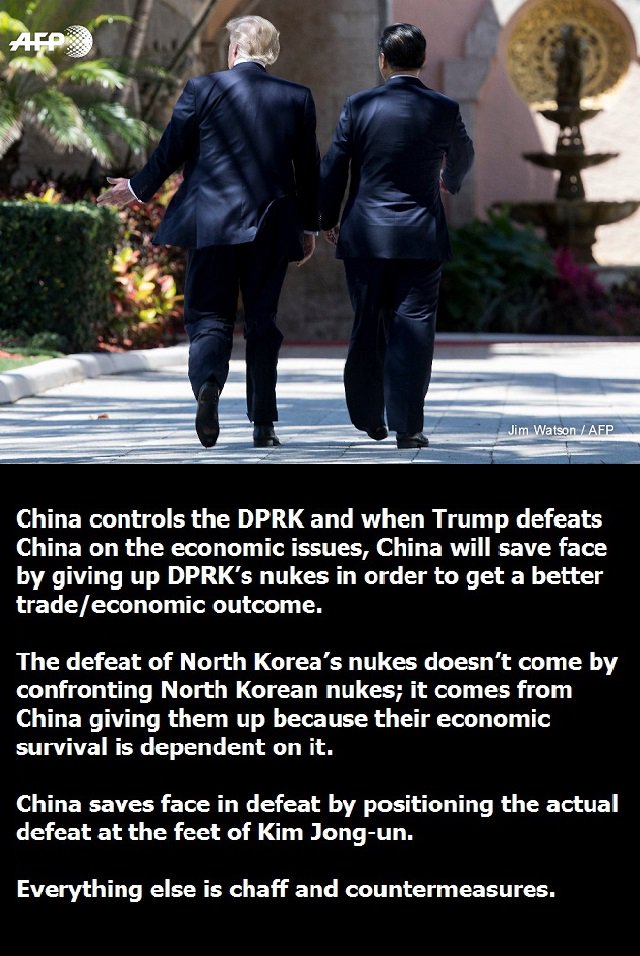
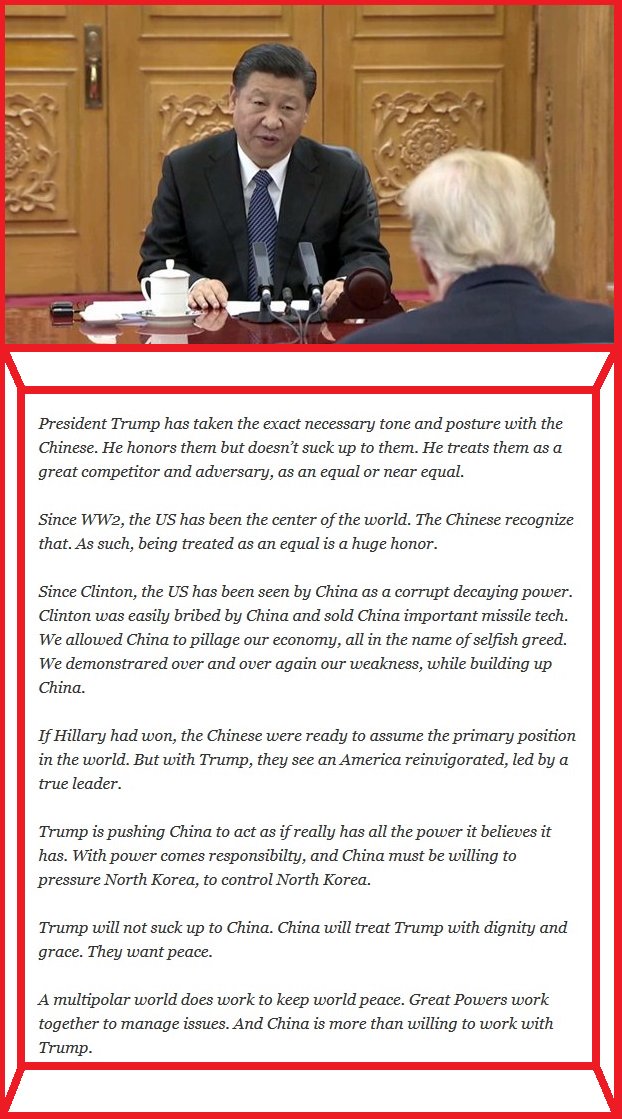
The last three of 34 from The Art of the Deal on the International Stage. It’s about the US and Chinese relations.
__________

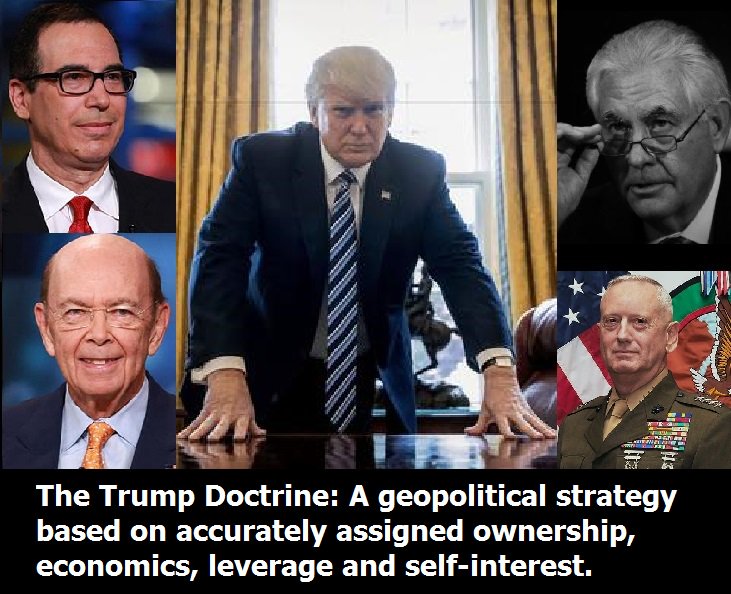
32. Facing a Red Dragon who wears a Panda mask is a challenging enterprise. ONLY, for this U.S. administration, President Trump has dealt with this level of Beijing *cultural thinking* before.

33. When it comes to the use of economic leverage to create U.S. national security outcomes, well, we are learning at the knee of an economic master player. The media will now do everything they can to stop people from realizing how effective President Trump is…

34. End


The sharpest statement on Russian collusion in the American election

An article you only need to read if you aren’t the slightest bit interested in reading what it says. From Diana West: Is it a surprise to find a Stalin apologist at the center of the Steele dossier scandal? This gets to the very core:

I asked a retired (Cold War vintage), extremely experienced intelligence professional what he thought of the news of the day (which is still the news of the day): that the Russians “hacked” the DNC, and therefore “hacked” the election. He replied that the Russians were more than good enough to mask any such activity if they wanted to; further, they were more than good enough not to mask such activity if they wanted to.

Russian collusion in American elections runs through ABC, CBS, NBC, CNN, the NYT and Washington Post. False flag ops to their very core. Willing stooges on behalf of the enemies of Western civilisation. Seriously, is there anyone more objectively on the side of Russian interests than Rachel Maddow? So let me quote from the end of the article:

Isn’t it at least conceivable that the Putin-wants-Trump line contradicts sensible Kremlin strategy? To me, Putin-wants-Trump (who wants next-generation nuclear anything he can get) sounds like a classic Moscow influence operation, another iteration of “fake newski” to manipulate the ignorant West. From Lenin is a capitalist, to “Uncle Joe” supports religious freedom, to Andropov likes jazz, to Putin (ruthlessness incarnate) is a devout Christian: We fall for it every single time.

If I am correct, where does that leave this Russian-American disinformation campaign, paid for by the DNC/Clinton campaign, assisted in still-mysterious ways by Stalin apologist Ohr, now developing the rigor mortis of Washington conventional wisdom? Four legs good; two legs bad. Putin loves Trump, Putin hates Hillary — and here’s the “dossier” to prove it and “collusion,” too.

Which is worse: to be a traitor or stupid and ignorant? Morally the answer is obvious, but in practical terms, it doesn’t mean a thing?

Pandering to ignorance

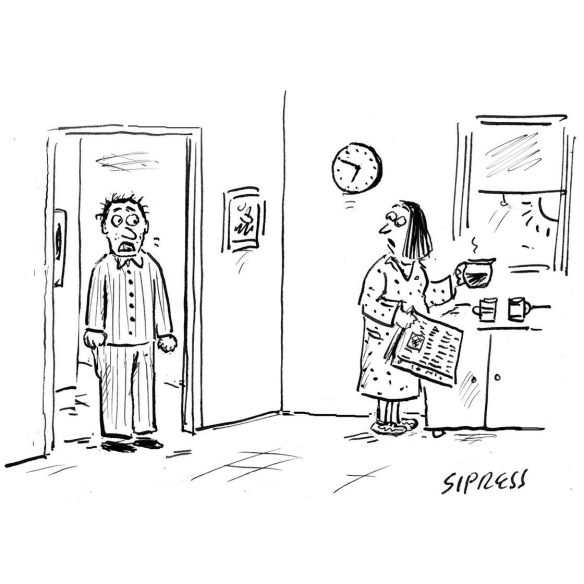
“Just woke up—anything bad happen yet?”

This is from the Financial Times, sent to me by my Porsche-driving California-based Silicon Valley high school friend who finds it his mission in life to complete my day with the worst of Donald Trump. The certainty is that if I returned the favour, my email account would be instantly blocked, but I let it continue for its interest. He is a perfect representation of the anti-Trump madness and is highly instructive. The cartoon is from him as well, and truly puts you in mind of the mindset. The story today is from the Financial Times in London, comes with the heading, “Trump, Kushner and the businessman fallacy” and this is how it starts.

When Warren Harding was 19, in 1884, he bought a small Ohio newspaper, probably for $450. By the time he ran for president in 1920, it had made him rich. Harding campaigned as an entrepreneur, promising “less government in business and more business in government”. He is often described as the worst US president, until now.

C’mon, we’ve had Carter and Obama since that time, but as with all media, for the past hundred years the best Republican is automatically ranked lower than the worse Democrat. But as it happens Harding was among the best, and it was his handling of the recession of 1920-21 for which he is best remembered, or by the likes of my mate and the Financial Times, best forgotten. Try this instead: How Government Inaction Ended the Depression of 1921.

Warren Harding was philosophically inclined to oppose government intervention and believed a downturn of this kind would work itself out if no obstacles were placed in its path. He declared in his acceptance speech at the 1920 Republican convention:

We will attempt intelligent and courageous deflation, and strike at government borrowing which enlarges the evil, and we will attack high cost of government with every energy and facility which attend Republican capacity. We promise that relief which will attend the halting of waste and extravagance, and the renewal of the practice of public economy, not alone because it will relieve tax burdens but because it will be an example to stimulate thrift and economy in private life.

Let us call to all the people for thrift and economy, for denial and sacrifice if need be, for a nationwide drive against extravagance and luxury, to a recommittal to simplicity of living, to that prudent and normal plan of life which is the health of the republic. There hasn’t been a recovery from the waste and abnormalities of war since the story of mankind was first written, except through work and saving, through industry and denial, while needless spending and heedless extravagance have marked every decay in the history of nations.

Harding, that least fashionable of American presidents, was likewise able to look at falling prices soberly and without today’s hysteria. He insisted that the commodity price deflation was unavoidable, and perhaps even salutary. “We hold that the shrinkage which has taken place is somewhat analogous to that which occurs when a balloon is punctured and the air escapes.” Moreover, said Harding, depressions followed inflation “just as surely as the tides ebb and flow,” but spending taxpayer money was no way to deal with the situation. “The excess of stimulation from that source is to be reckoned a cause of trouble rather than a source of cure.”

You know the Roaring Twenties. With PDT as president, we may end up with our own version. Harding died in 1923 so this period of prosperity is attributed to Coolidge, but it was Harding who set the prosperity in place. As for the Financial Times, like with my Californian mate, ignorance gives them peace of mind, but hopefully is not contagious.

A lesson in trade theory

“Every economic answer is a political question.”

Here then is a question for all you experts on international trade, taken directly from my Free Market Economics [pp. 248-249]. Picture two countries, A and C.

Suppose in Country A, in one hour it can produce either one car or 1000 shirts. [It’s also the same answer if Country A can produce ten cars and 10,000 shirts per hour!]

Meanwhile in Country C, in two hours it can produce either one car or 500 shirts.

According to the economic theory of comparative advantage, how many cars will Country A produce? OK, once you’ve worked that out, now tell me if you get the same answer using common sense. As chrisl said, “economic theory is all right in theory”. Personally, I’m not even sure of that, but you get the idea.

So here’s the thing. It is entirely possible that the US is tired of carrying most of the burden for the defence of the West and would like a bit of sharing the burden. It might also find some respite for itself in strengthening those parts of its economy which are more closely associated with its defence industries. And it might even wish for some kind of gratitude from others, supposedly on the same side, in trying to assist the US in resurrecting its strength. And then there are the straightforward economic issues, which are not the same as the political. So let us go to these.

And of course the issue economically is comparative advantage, and not pure let the most efficient producer produce each product. With comparative advantage, it is not always the most efficient low-cost producers who produce. If you don’t even understand that, you should keep right out of this debate.

Why encourage free trade:

  • competition is what drives improvement and growth – without competition most businesses would just coast along to the fullest extent they could
  • innovation is driven by competition – the way to take on an established business is to find a better way to do something
  • all other things being equal, free trade is best

Why “free trade” is not working for the US:

  • cheating is rife – try to sell an American car in Japan – not possible for all kinds of products in all kinds of countries
  • many countries subsidise exports while imposing non-tariff barriers to trade on imports along with tariffs themselves
  • currency manipulation – artificially holding exchange rate lower to discourage imports and encourage exports is not unknown
  • $US is world reserve currency it is unable to adjust to repair a balance of payments deficit
  • there are many forms of approved trade restrictions everywhere you look – the EU for example – such as:

Trading blocs

A regional trading bloc is a group of countries within a geographical region that protect themselves from imports from non-members. Trading blocs are a form of economic integration, and increasingly shape the pattern of world trade. There are several types of trading bloc:

Preferential Trade Area

Preferential Trade Areas (PTAs) exist when countries within a geographical region agree to reduce or eliminate tariff barriers on selected goods imported from other members of the area. This is often the first small step towards the creation of a trading bloc.

Free Trade Area

Free Trade Areas (FTAs) are created when two or more countries in a region agree to reduce or eliminate barriers to trade on all goods coming from other members.

Customs Union

A customs union involves the removal of tariff barriers between members, plus the acceptance of a common (unified) external tariff against non-members. This means that members may negotiate as a single bloc with 3rd parties, such as with other trading blocs, or with the WTO.

World Trade Organisation

There are then the WTO rules of trade engagement which are not designed to create a world where free trade is on the only answer. The rules were devised when the US economy was a lot more robust than it now is, and when the US was both willing and able to make sacrifices of all kinds to help others withstand the spread of communism. None of this is applicable today. The US is therefore no longer willing to watch others cheat their way into a stronger trade position, at the cost of its own national security, economic strength and domestic employment. Here is part of what the WTO is up to.

WTO Rules

1. Most-favoured-nation (MFN): treating other people equally Under the WTO agreements, countries cannot normally discriminate between their trading partners. Grant someone a special favour (such as a lower customs duty rate for one of their products) and you have to do the same for all other WTO members.

2. National treatment: Treating foreigners and locals equally Imported and locally-produced goods should be treated equally — at least after the foreign goods have entered the market. The same should apply to foreign and domestic services, and to foreign and local trademarks, copyrights and patents.

3. Developing countries have transition periods to adjust to the more unfamiliar and, perhaps, difficult WTO provisions — particularly so for the poorest, “least-developed” countries – so these basket case economies are allowed to whittle away at the economic strength of the developed world.

Meanwhile, economic ministers around the world increase unproductive public spending every chance they get, add new regulations on top of old, and increase business taxes at every turn, and then job on their chairs screaming, “Eek, a tariff!’

The quote at the top, by the way, is from Joan Robinson, who has quite a lot to say about free trade that ought to be read by the economic illiterates who populate the world, who are now found speaking on behalf of the status quo, as harmful as the status quo is to most of the lower half of the income distribution. Robinson was not just a Keynesian but also a big supporter of Mao, so I’d be very careful, but the above quote seems as accurate as anything else you are likely to hear about economics.

The Art of the Impossible Round 2

`
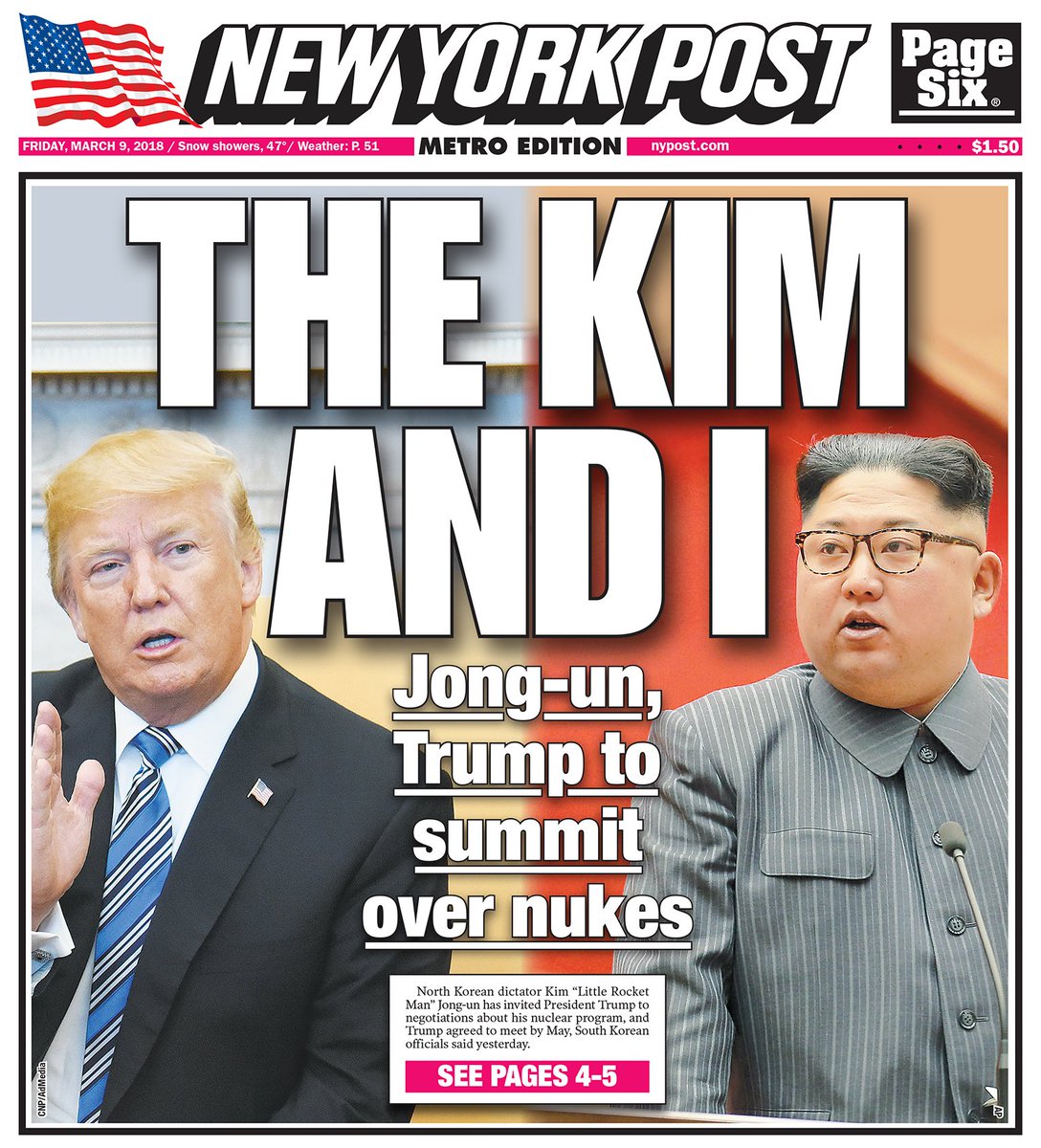
Who knows where this will end, but it’s better than how it’s been so far. Meanwhile, the Saudis are talking to the Israelis. And if you think that’s beyond belief, what about this:

CNN, MSNBC Journalists Give Trump Glowing Praise for NKorea Move...

And there’s this as well.

Peterson on how culture wars are fought with some advice of my own

I went along to hear Jordan Peterson speak last night, and went early since I did have it in my mind that our own ANTIFA types might show up. I suppose it was this story that spooked me. This happened in Kingston, Ontario on the Monday of the same week he spoke in Melbourne on the Thursday.

A woman in eastern Ontario is facing numerous charges after taking part in a protest against a lecture by a controversial Toronto professor.

Police say a 38-year-old woman was arrested near Queen’s University in Kingston Monday evening. . . .

Officials say officers searched her backpack and found a weapon — a metal wire with handles commonly known as a garrotte.

But as it happened, no demos and a very very pleasant night. I won’t discuss anything of what he said during his presentation since he has a couple more to give, but will say he received the loudest applause I have ever heard for anyone, both when he came in and when he finished up. A wonderful evening of reflective thought.

What I will reprint however, as best I can, is his answer to the question that was asked by the lad sitting next to us, who is a trainee teacher, dismayed to the farthest extent about the cultural Marxism he finds at every turn. So his question (one of only five among the around 100 who were still queuing up when the Q&A ended) was how to push back when surrounded by ideological enemies. This, to the best of my recollection and according to my notes, was how he replied.

You are in a war.

If you go along with them you are going to lose.

If you try suicidal forms of resistance you are also going to lose.

The question is how do you fight “ideological possession”*?

You pay attention looking for alternatives and ways to oppose what you see.

But do not make any unnecessary enemies.

If you are going to move forward you need to make a plan and think strategically.

Don’t burn yourself up early. Play for the long run. Do it intelligently and move forward step by step.

You have to always think about what the people you are fighting can take away from you.

And while all that is right, the bit that is missing is a recognition of the crucial importance to help your friends. I am amazed and no little angered by the lack of mutual support for those who take largely the same side but have some difference which becomes all it requires for all too many to separate themselves and declare a fundamental discontinuity between their views and yours.

To take what ought to be a trivial example but is not, Donald Trump deciding for a variety of reasons to place tariffs on aluminium and steel. As it happens, his reasons are sound and sensible – starting from the imperative of ensuring that basic requirements for its war industries, along with shoring up electoral support in potential swing states. But even if you don’t like this particular policy, why join his and our enemies in building an anti-Trump case?

The left never ever on any issue allows the slightest deviance from its core policy front. There are no end of issues for which there is exactly one answer permitted. On our side, it is one thing to explore an issue and wonder about the pros and cons. It is quite another to be subject to some kind of reflex reaction – ideological possession if you will – which does nothing other than help tear down the side you need to succeed if we are not going to be swamped by the next turn of the election cycle.

*Ideological possession = Rote and unthinking answers to genuine social questions. Or as described by someone unnamed somewhere else on a comment on a Peterson video:

“The noise made by a person that has been so fanatically indoctrinated into an ideology that they’re able, quite without conscious thought, to generate a constant stream of sterile, inoffensive, thoroughly orthodox and politically correct platitudes that are almost (but not quite) wholly removed from real meaning and (by design) totally devoid of any visceral human feeling.”

Here are examples from that same Peterson presentation at Queens – but first turn the volume down.

Many of these are apparently students studying at the university.

Jordan Peterson on how to fight the culture wars

jordan peterson melbourne

I went along to hear Jordan Peterson speak last night, and went early since I did have it in my mind that our own ANTIFA types might show up. I suppose it was this story that spooked me.

A woman in eastern Ontario is facing numerous charges after taking part in a protest against a lecture by a controversial Toronto professor.

Police say a 38-year-old woman was arrested near Queen’s University in Kingston Monday evening. . . .

Officials say officers searched her backpack and found a weapon — a metal wire with handles commonly known as a garrotte.

But as it happened, no demos and a very very pleasant night. I won’t discuss anything of what he said during his presentation since he has a couple more to give, but will say he received the loudest applause I have ever heard for anyone, both when he came in and when he finished up. A wonderful evening of reflective thought. But I will reprint, as best I can, his answer to the question that was asked by the lad sitting next to us, who is a trainee teacher, dismayed to the farthest extent about the cultural Marxism he finds at every turn. So his question (one of only five among the around 100 who were still queuing up when the Q&A ended) was how to push back when surrounded by ideological enemies. This, to the best of my recollection and according to my notes, was how he replied.

You are in a war.

If you go along with them you are going to lose.

If you try suicidal forms of resistance you are also going to lose.

The question is how do you fight “ideological possession”?*

You pay attention looking for alternatives and ways to oppose what you see.

But do not make any unnecessary enemies.

If you are going to move forward you need to make a plan and think strategically.

Don’t burn yourself up early. Play for the long run. Do it intelligently and move forward step by step.

You have to always think about what the people you are fighting can take away from you.

*Ideological possession = Rote and unthinking answers to genuine social questions. Or as described in one of the comments in the video below,

“The noise made by a person that has been so fanatically indoctrinated into an ideology that they’re able, quite without conscious thought, to generate a constant stream of sterile, inoffensive, thoroughly orthodox and politically correct platitudes that are almost (but not quite) wholly removed from real meaning and (by design) totally devoid of any visceral human feeling.”