There are three women who are trying to save America while it is not too late. At least they think it’s not too late.
Pam Geller on Islamic jihad
Ann Coulter on defending the borders
Diana West on the principles of a free society

There are three women who are trying to save America while it is not too late. At least they think it’s not too late.
Pam Geller on Islamic jihad
Ann Coulter on defending the borders
Diana West on the principles of a free society
From our sister blog in Canada, Small Dead Animals: Real Estate Prices in Vancouver Grow Beyond Absurd
A bidding war recently got some homeowners in Vancouver a lot more than they were asking. Not surprising to learn that the highest bidder was from China.
Two questions that are increasingly being asked, mostly behind the scenes, are:
Where’s all this money coming from?
Is it all entirely legitimate?
Don’t ask too loudly though, lest you be called a racist. Furthermore, most homeowners don’t want such questions asked because it means more $$$ for them. One wonders though, 20 years from now, how the majority of British Columbians will feel about how a huge amount of their province’s property being owned by foreign nationals with little to no connection to Canada’s culture and heritage.
Historians will be bemused to reflect on how simply and easily so many British Columbians were bought off with relative ease. Al Capone would be jealous.
The comments thread is also interesting. Threads like these are the only place you can find what people really believe.
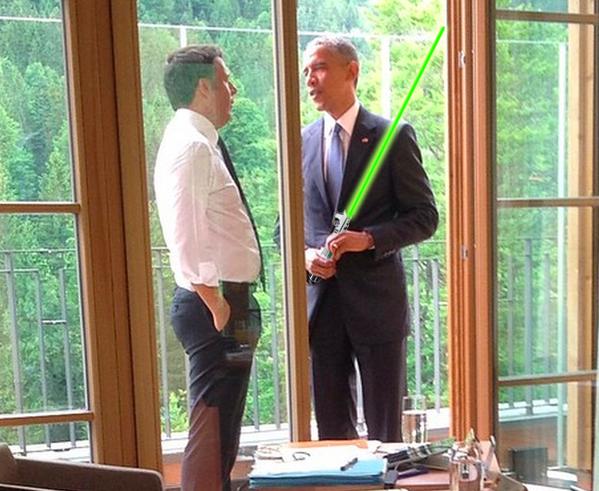
It’s not just that a picture has finally surfaced of Obama reaching for a cigarette. What is remarkable to the point of astonishment is that it has taken six years for such a photo to finally see the light of day. This is not Obama sneaking off to the toilet to have a secret fag. If this is what he does normally, smokes with others around, then why you or I should think we know anything at all about what is going on is a real question. The picture is also not from some obscure source. It is from The Washington Post with the title, Let President Obama have a cigarette, already. Here’s part of the excuse-machine that is already being cranked up:
But for God’s sake. Let the man smoke an occasional cigarette if he wants to. “One cigarette takes 11 minutes off your life,” Obama’s NIH would tell him. So smoke three and don’t plan on watching a last episode of “Parks and Rec.”
Maybe Obama smokes two packs a day, which, at his age, is not healthy. That seems very unlikely; given his reliance on Nicorette — for which he has also been criticized — it’s fair to assume that his use of actual cigarettes is more sporadic. Even if he does, the guy has the best health care and the lousiest gig in the world. If he develops a preexisting condition as a result: good news!
If he’s not smoking on camera, if he’s not passing out Marlboros at the White House Halloween party, let him have an occasional cigarette. For those of you tempted to e-mail me a lengthy harangue about how irresponsible that attitude is, feel free. Please include your own personal bad habit and what your plan is to kick it.
Liars without character, both the president and the media that follows him around.
Ann Coulter talking about her book Adios America. Also discussed here by Gavin along with part of Ann’s interview with Jorge Ramos.
The following are four notes I wrote to the Societies for the History of Economics website back in November 2011. Brad Bateman and Roger Backhouse had written a book on Keynes and Keynesian economics – Capitalist Revolutionary-John Maynard Keynes – and had put up a note to let others know. I had also written a book just then, so thought I would mention it since there are alternative ways of looking at things. As it happens, even four years later, six years following the dead hand of the stimulus was first applied – no one else has written a book explaining what is wrong with Keynesian economics and laying out the alternative. These four posts could have been written yesterday, given how economic theory has dug in and refuses even to so much as notice how useless its advice has been. In reading these, please note that others had written comments as as well, only some of which I mention.
Professors Backhouse and Bateman invite us to indulge in a visionary perspective in dealing with the Global Financial Crisis and the subsequent recession that will not go away. They wish us to look at alternative ways of thinking about the economy and how it works.
As it happens, I have done just that. In August this year, Edward Elgar published my Free Market Economics: an Introduction for the General Reader which outlines the mechanics of an entrepreneurially-driven market economy embedded within a political structure where the rules and regulations that businesses work within are determined by others. And what is particularly notable about the book is that while it explains Keynesian economics as accurately as any other introductory text on the market, it is also at the same time the most relentlessly anti-Keynesian book written in the past forty years. Moreover, if you would like to have an economics text that explains the classical theory of the cycle – the best alternative I know to Keynesian theory – my book does that as well, and I think in this regard, it may be the first book to do so in over three-quarters of a century. To my knowledge, there is no other book like it, although I truly do wish the market was flooded by hundreds of alternative titles along the same lines.
Let me therefore highlight one of the sentences in the Backhouse-Bateman article:
“Even Keynes himself was driven by a powerful vision of capitalism. He believed it was the only system that could create prosperity, but it was also inherently unstable and so in need of constant reform.”
Well I can agree with half of this but the other half is plain wrong. Capitalism is without question the only system that can create prosperity. But as the existence in 1936 of the by then hundred year old classical theory of the cycle should tell you, there has never been much doubt that capitalist systems are subject to instability. Nor was Keynes intention to explain to his fellow economists that our economies were in need of constant reform, whatever that might mean. The point of The General Theory was to introduce into mainstream economic theory the notion of aggregate demand. (Read page 32 of the GT on Malthus and Ricardo if you are in any doubt). There is nothing else in the book that is novel or that has spread like a weed throughout the discipline the way this concept has. And its adoption has been the single most disastrous mistake economic theory has ever made. Because economists now think in terms of aggregate demand we are no longer capable of explaining even the basics of the cycle and cannot provide sound advice to governments when economies fall into recessions as they inevitably will.
Let me finally say that I endorse everything written by James Ahiakpor in his earlier post. But let me also add that while the tremendously faulty structure of the bailouts can only be explained by the need to do something straightaway, that there was a need for government action could have been found by reading Bagehot’s Lombard Street which was published in 1873. It was the stimulus that came after, pure Keynes in both structure and intent, that is the core problem we are dealing with right now. The stimulus packages themselves are the most important cause of the prolonged recession most economies are facing today. It is the problems of debt and deficit that are the major problems we must find answers to, not a failing financial system which was the problem in 2009. So where Backhouse and Bateman ask:
“How do we deal with the local costs of global downturns? … If economists want to help create a better world, they first have to ask, and try to answer, the hard questions that can shape a new vision of capitalism’s potential.”
OK, I’m in. Let’s find a solution to all of this and more. But if you think Keynesian theory is any part of the answer, then my friends, you are in my view part of the problem and in no way part of the solution.
Second tranche.
I appreciate Mason Gaffney’s query about the nature of my book. And if I could, I will reply using the text of a note I sent to Roger Sandilands after reading his brilliant compilation of some of the more difficult-to-find works of Allyn Young. Two of the longer parts within Roger’s compilation were Kaldor’s notes of Young’s LSE lectures which were delivered in 1927-29, and the various entries Young wrote in the 1920s for the Encyclopaedia Britannica. If you would like to see how economists thought about economic issues prior to the publication of The General Theory, this is the place to go. Hopefully, Roger will be able to let us know how to obtain copies of his compilation of Young’s work. But to explain what my book is about, I hope this note I wrote to Roger will explain how I think of this book myself:
“I have been meaning to write to you for some time. I took Allyn Young’s LSE lectures and Britannica entries with me as my morning train reading for many many mornings in a row and it was fantastic. The first thing that it confirmed for me was that the book I have written on Free Market Economics is actually what I wanted it to be. It is the book that an economist schooled in the classical tradition would have written in the absence of the arrival of the General Theory. I learned an immense amount from Young but all of it merely deepening my own understanding of things that I had absorbed from the classical literature generally. I attach the flyer for the book which you should ask your library to buy anyway, but if you look at it, you will see that it is classical theory right down to its downward sloping supply curves and its discussion of the theory of the cycle in an almost identical way to Young’s.
“The theory of the cycle as Young portrays it (discussed pp 76-84) is not just the classical stuff in general, but is explicitly soaked through with Say’s Law. He notes that J.-B. Say “pointed out” that “what is commonly called overproduction is merely ill-balance production” (p 77). And then on the next page, “people do not over-save, they miscalculate” (p 78). Where can you find that written in a textbook any more, other than in mine, of course.
“And if you look at my book, you will even find the history of economics discussed more or less in the same place, just half way past the middle (pp 85-88). He not only feels the need to say these things, but the logic of when to put the history into the text occurs to him in just the same way and at just the same point as it occurred to me.
“But it is not merely coincidence that our work is so in parallel, but it is that he and I both think about things in the same sort of way. I have the advantage of actually having seen Keynesian economics in action whereas one can only conjecture just how savage Young would have been about the GT had he seen it for himself. Given what he has written here, there is little doubt he would have found the GT nonsense from end to end. And now, today, instead of discussing Mises and Hayek alone, we would be also discussing Young.”
That is where my letter to Roger ends. But to supplement your reading of Young, for an explanation of the nature of the business cycle as understood by classical economists, the first edition of Haberler’s Prosperity and Depression is hard to beat. That is what I built my own chapters on. But if you go to Young, who unfortunately died at 53 in 1929, you will see these same theories described in more or less exactly the same way by someone writing before there was even a hint of the Great Depression to come.
Third tranche.
It is interesting to see just how relentlessly Roger Backhouse and Brad Bateman choose to ignore what I wrote. That was the reason I thought I would bring Allyn Young into the conversation since I understand perfectly well that some faraway economist living in the antipodes would have no standing in such discussions but I thought Allyn might. Nevertheless, I do wish to impress upon them once again that what I am writing about is a direct response to the issues raised. And since the only compass in which these issues can be properly discussed is the evolution of economic theory over the past hundred years, in every way this is a subject matter for this site.
Going back to the original NYT article, let me take the final sentence as the core point Backhouse and Bateman wished to make. What they wrote was: “If economists want to help create a better world, they first have to ask, and try to answer, the hard questions that can shape a new vision of capitalism’s potential.” To do this, they argued, economic theory should include a major recognition of government and its role. To emphasise how important this point is, they criticised Hayek and Friedman for ignoring the important contributions of government, writing:
“In the 20th century, the main challenge to Keynes’s vision came from economists like Friedrich Hayek and Milton Friedman, who envisioned an ideal economy involving isolated individuals bargaining with one another in free markets. Government, they contended, usually messes things up. Overtaking a Keynesianism that many found inadequate to the task of tackling the stagflation of the 1970s, this vision fueled neoliberal and free-market conservative agendas of governments around the world. That vision has in turn been undermined by the current crisis.”
Well, what I am trying to tell them is that I have attempted to do in my book on “Free Market Economics” exactly what they have argued needs to be done. It is not perfect but what is? And because of its hostility to Keynes and what he stands for, I fear that if they read it they would unlikely find much in it that would give them pleasure. But (a) it is obviously about capitalism (although the word does not appear anywhere in the book) and (b) it provides a vision of the world in which economic actions are of necessity buried inside a political structure. Don’t believe it? Here are the opening three paragraphs of the book:
“This is a book about the market economy.
“A market economy is one in which overwhelmingly the largest part of economic activity is organised by private individuals, entrepreneurs, for personal profit. Such entrepreneurs are private citizens not government employees. They make decisions for themselves on what to produce, who to hire, what inputs to buy, which machinery to install and what prices to charge.
“There are, of course, in every nation state legislative barriers put in place by governments which limit every one of these decisions. No market is or ever has been even remotely laissez-faire. Entrepreneurial decisions are circumscribed by the laws, rules and regulations that surround each and every such decision.”
My aim in writing the book was to explain to governments, and to their citizens, how an economy can be run so that prosperity for the largest number is the result. This is not a book about how governments should be kept away from economic interactions, a completely weird and self-defeating idea. This is a book that embeds within the text the very necessity for governments to intervene to make free markets work. The point that I try to make is that since governments not only are going to intervene but must, they should do so in a way that actually does some good.
But Backhouse and Bateman do not just say we need a new vision and leave it at that. In their article and subsequent post, they are promoting a book with the title, “Capitalist Revolutionary: John Maynard Keynes”. In their view, it is in Keynes that we are to find that vision. Well the point I wish to make is that it is precisely in Keynes that we will not find that vision, and that if we economists had any sense we would abandon Keynesian theory and policy root and branch. To draw some inference from Keynes that capitalism is in constant need of reform is about as vacuous a statement as I can imagine. The need for institutional adjustment to the changing nature of the world is hardly some great insight.
Fourth tranche.
Roger Backhouse and Brad Bateman have done us all an immense favour by opening up an issue that really ought to be at the top of the economics agenda today, and that is, given what we have discovered in the past two years, whether the Keynesian policy vision still makes much sense. They think it does, which is why they wrote their book, wrote their article for the NYT, and finally initiated this thread to alert the rest of us to what they have done.
Unless they were of the opinion that no one disagrees with them about Keynes and his vision, they must take it as a rightful expectation that there are some who are of a different persuasion and that they will actually say so in reply. And what seems to trouble some is this comment of mine and particularly the word “rancid”:
“The Keynesian policy vision has created a global nightmare both politically and economically, a nightmare whose end is nowhere in sight. There may be an old guard that wishes to cling to such rancid and outdated ideas but by now it ought to be obvious beyond argument that Keynesian policies do not work. There is not a single economy in the entire world that is safe from the ravages that the stimulus has caused.
“By all means, let us find a new vision, but for heaven sake, the last place we should be looking for that vision is in the works of John Maynard Keynes.”
There is nothing ad hom in this. It is, as Brad Bateman has himself noted, the ideas which I describe as rancid. It may not be a typical word used by economists but it gets my point across. Keynesian economic theory, assuming it was ever valid which I do not, should be seen by now as well past its use-by date and recognised as having become stale and moldy over the past three-quarters of a century. But in the use of this word, it is quite clear that it is the sin and not the sinner being attacked.
Thomas Humphrey has entered into this discussion thread in exactly the right way. A great scholar and one whose writings I admire, he has posted to say that the way Keynesian economic theory has developed since the 1930s has created a macroeconomic theory of immense power and penetration and that my approach would throw baby out with bathwater. And with this, the issues thatI think are important are engaged. And unless there were anything further for me to say on the issue of Keynesian theory and vision, I would have feel there is nothing else to add. I have said my piece. Keynes, yes or no. We report; you decide.
Rob Leeson has now, however, suggested that the moderator not only determine whether something ought to be published depending on its relevance, but also dependant on the choice of words used, on the number of words used and on some determination of the degree of ad hominem involved. I take it that Rob would not therefore have published my posts had he been the moderator which makes me grateful that he is not and Humberto is.
Of course we are all bad judges in our own case but I don’t think any of my posts, nor any of the others on this thread, have been too long. I have read each one through with great interest. And if they are too long, it is only the writer who loses out since eventually others stop reading what they have to say.
The US is moving into failed-state territory. There is still lots to admire, but as time goes on, there is fewer and fewer of its social institutions that I think are of much use to the rest of us. It is an example in so many ways of what not to do. Its big cities, now overwhelmingly run by Democrats, are a lesson in wreckage. Outside of new technologies, there is so little to learn from the US at the moment that it is frightening how such descent can occur during the space of less than a single lifetime.
There is an article on the op ed page of The Australian today, Bills of rights are overrated, like the Magna Carta, written by Michael Sexton SC, described as “the author of several books on Australian history and politics”. If the rest of what he’s written is as good as this, I will have to read the lot. The kind of sentimentality over judicial concern for our freedoms is all very nice, until you watch how quickly every judicial system buckles the minute some totalitarian regime takes over. Here he is looking at whether Australia needs a Bill of Rights:
It would be easy to say a bill of rights is a lawyers’ picnic and that is why it is strongly promoted by some sections of the legal profession. While it is true, however, that a bill of rights inevitably leads to increased litigation, most human rights lawyers in Australia are funded by the taxpayer, either as academics or in community law centres, so their interests in this area are not directly financial.
The real problem with this group is that they welcome a transfer of power from the parliament to the courts and do not see this as anti-democratic. This in turn is because they tend to see every problem as having a legal solution, even if they are fundamentally economic, social or political questions. These kinds of issues are not changed into legal questions by being given to courts. All that happens is that courts are then required to decide economic, social and political questions.
The approach of human rights lawyers is demonstrated by the litigation in Australia concerning persons who arrive in the country without going through the normal immigration procedures. Some of these persons may be the victims of political persecution but most are potential economic migrants.
There have been numerous challenges to federal legislation in this area over recent years, with many of the cases going all the way to the High Court. The lawyers mounting these challenges do not accept that immigration control is a political decision for the government of the day and they rely in part on international law to say no Australian government can exercise complete control over entry to the country.
Better what we have than leave such decisions to Her Honour Justice Triggs.
As each day goes by I am more and more astonished at the Prime Minister’s ability to keep his balance and reason surrounded, as he is, by the the moral midgets he has at every turn. Q&A is always a revelation. But what can one say about Amanda Vanstone! That she represents a faction of absolutely disgusting fools who for no reason I can think of, believe there is some valid point to be worrying about the niceties of whether we deprive people of their citizenship if they show up in an Islamic State war zone is incredible to me. These are people I would at least have the pleasure of scraping out of my life thereafter should they ever raise such thoughts with me. But Abbott must work with them if he is to hold the party together and prevent even worse.
Listen Amanda, these people – AND DO NOT GO TO THE LINK UNLESS YOU ARE PREPARED FOR IT – are not shoplifting from Woolies. These people are the equivalent of guards in a Nazi concentration camp. Indeed, they are worse since they make huge efforts to go off and join. If we can keep them out of our country, we should. Aid and comfort to the enemy is what you are giving, both here and overseas. If you and your mates actually think this shows you are upholding the finest traditions of our civilisation, then you are as barbaric as the people you defend.
Not really news, but it is interesting to find confirmation: Obama secretly backing Muslim Brotherhood:
President Obama and his administration continue to support the global Islamist militant group known the Muslim Brotherhood. A White House strategy document regards the group as a moderate alternative to more violent Islamist groups like al Qaeda and the Islamic State.
The policy of backing the Muslim Brotherhood is outlined in a secret directive called Presidential Study Directive-11, or PSD-11. The directive was produced in 2011 and outlines administration support for political reform in the Middle East and North Africa, according to officials familiar with the classified study.
Efforts to force the administration to release the directive or portions of it under the Freedom of Information Act have been unsuccessful.
This is from a note to Henry Ergas on his article, Low interest rates mean more risks for investors:
Another standout column! A centrally-directed free market economy is not the original vision. And I loved your quote from Hume. I don’t know where we are going to go from here, but it is bad news all round. I also have a long-standing fury at low interest rates, but my reasoning goes back to Wicksell. You are right to note how the world has changed and how few people now make the decisions that matter. I do find low interest rates part of the Keynesian insanity since it is supposed to encourage more investment. What gets me is that even the possibility that artificially low interest rates are economically unsound never seems to cross anyone’s mind.
You should read it all, but this is the bit about Hume:
Thanks to interest rates at historic lows, and massive programs of “Quantitative Easing” in the Eurozone and Japan, investors face new, more concentrated, risks. It is no longer millions of consumers, voting with their dollars, who take the decisions that really matter; rather, it is a handful of central bankers.
No doubt, individual consumers are fickle; but their myriad choices, some going one way and others another, have a degree of statistical predictability. Not so those of the “masters of the universe” who will determine just how long the world’s great monetary policy experiment lasts.
As David Hume famously put it, “what depends on a great number, can be accounted for by determinate causes”; but the decisions “of a few persons [must] be ascribed to causes secret and unknown.”
Below is a letter from Des Moore published in the Financial Review on 29 May. But before I get to the letter itself, let me first reprint the note I sent to Des.
If I assume, as I do, that Y=C+I+G is fundamentally wrong, and that a Keynesian approach to policy is bound to fail, then nothing about the economic problems that have followed the GFC is a surprise. But the questions I would like to ask are two:
1) Who are the leading actively anti-Keynesian economists in the world at the moment, assuming there actually is such a thing?
2) If Keynes is wrong, where should one go to find a more accurate theory of recession and unemployment?
In my view, these are the most important questions in economics at the present time. And I have to tell you that the great surprise to me is that virtually no one has an answer to the first of these questions, although there are some answers to the second.
Kind regards
Where is the locus of anti-Keynesian thought? Who is leading the attack? Des is discussing Robert Skidelsky versus Niall Ferguson, that is, a debate between two historians. Where are the economists? And I have to tell you that however this is resolved, it will not be because of some empirical study based on some dataset. If even at this late date, there is anyone in doubt that the stimulus has been a disaster, there is no turning back from going over the cliff yet again. Unless there is some understanding that existing theory is a deadly fault, that it must be abandoned as a guide to policy, then we will just carry on as before. Here’s the letter sent by Des to the AFR with my further commentary on the other side.
Historian Niall Ferguson argued that the reduction in budget deficits after the 2008-09 UK recession helped improve the growth in GDP while the author of a biography on Keynes, Robert Skidelsky, argued that it reduced it.
These arguments are about hypotheticals and difficult to judge. They are important, however, in the current context faced by Australia and other countries.
Note first that UK growth has recovered to pre-2008 rates after the 2008-09 recession. This has occurred notwithstanding that “underlying balances” (budget deficits) published by the OECD have fallen from 8.5 per cent of GDP in 2009 to an estimated 4.9 per cent in 2015.
Second, Skidelsky does not explain why the large deficits in each of the five years prior to 2008 then resulted in two years of recession.
Third, Skidelsky makes no reference to the policy implications of the increase in government debt levels, which are now over 100 per cent of GDP for major countries, including the UK.
Fourth, in his article published in Australian media in 1932 Keynes himself approved the Premiers Plan to reduce budget deficits. An examination of the recovery from the 1930’s recession shows that Australia performed better than most other countries and that President Roosevelt’s budget stimuli brought a slower recovery in the US.
The solution is to reduce the role of government and increase the opportunities for private enterprises.
I agree, of course, but what’s the theory? What is the foundation on which such advice is given? It’s not just that you should do this and this, but why should you do this and this. That is the issue to me. What disturbs me to a very great extent is that it is an issue that has not, so far as I can tell, been taken up by anyone anywhere.
 Law of Markets