Keynes the big loser in UK election

Here’s a story that I can only hope our local right of centre party takes to heart: The UK Labour party should blame Keynes for their election defeat, written by Niall Ferguson no less. From yesterday’s Financial Times:

Credit where credit is due. Lynton Crosby is getting the plaudits for the Conservative party’s successful election strategy, but the real architect of this victory was surely George Osborne, the chancellor. Leave aside Labour’s collapse in Scotland, arguably the election’s most striking result. In England, the Conservatives won because Mr Osborne was right and his critics were wrong.

The comedian Russell Brand was not alone in having his celebrity endorsement of Labour roundly ignored by the voters. Even more ignominiously humbled were the Keynesian economists who have spent so much of the past five years predicting that the economic consequences of Mr Osborne’s policies would be disastrous.

In the vanguard of the Keynesian attack was Paul Krugman of The New York Times. In August 2011 he denounced the “delusions” of the chancellor whose “experiment in austerity” was “going really, really badly”.

Why? Because, in seeking to bring the government’s deficit under control, Mr Osborne was worrying needlessly about business confidence. “The confidence fairy” was the term Mr Krugman coined to ridicule anyone who argued for fiscal restraint.

Unfortunately for Mr Krugman, the more he talked about the confidence fairy, the more business confidence recovered in the UK. In fact, at no point after May 2010 did it sink back to where it had been throughout the past two years of Gordon Brown’s catastrophic premiership.

Mr Krugman was equally relentless in predicting that austerity would lead to recession; indeed, he insisted that the UK’s economic performance would be worse than during the Great Depression. In April 2012 he warned darkly that Britain would “continue on a death spiral of self-defeating austerity”.

It was, he lamented, a “policy disaster” that would cause a double-dip recession and “cripple the UK economy for many years to come”.

In fact, there was no double-dip recession. The UK had the best performing of the G7 economies last year, with a real gross domestic product growth rate of 2.6 per cent. In 2009, the last full year of Labour government, the figure was minus 4.3 per cent. Moreover, far from being in depression, the UK economy has generated more than 1.9m jobs since May 2010. UK unemployment is now 5.6 per cent, roughly half the rates in Italy and France. Weekly earnings are up by more than 8 per cent; in the private sector, the figure is above 10 per cent. Inflation is below 2 per cent and falling.

I’m not often into book burning but these Keynesian texts, with their Y=C+I+G as the cornerstone of theory and policy, are genuine candidates. If reality actually matters, which it may not actually do, Keynesian theory must now disappear. It is already disappearing from policy. Eventually economic theory must catch up, eventually.

UPDATE: Niall Ferguson has done another similar bit of writing on his blog, which he titles, The Rise and Fall of Krugmania in the UK. But it’s not Krugman, it is Keynes who remains everywhere, just as he did after the “death of Keynes” in the 1980s after the Great Inflation, which could not happen, or at least could not according to Keynesian theory. Report of Keynes’s death are greatly exaggerated, in no small part because no economist can function without aggregate demand by their side.
Rewarding hard-working families

It is something I don’t do often – I probably haven’t done it in more than a year – but I happened to be in the room when the Seven-Thirty Report was interviewing Mark Textor. He, in case you didn’t know, ran David Cameron’s polling during the election. The pleasure in watching him bat away everything asked by the interviewer was astonishing, since he is not a political person as such.

I actually think the Libs have got it, but we won’t really know until tomorrow night. He talked about the need to “reward hard-working families”. He talked about the need to raise productivity. He dismissed the “politics of envy” as a sure loser.

If the government can work it out that only the private sector, on its own without government subsidy, can cause the economy to grow, they will do well. If they think that ridiculous infrastructure spending adventures – crony capitalism plus new versions of the NBN – will pull the economy forward, then they still don’t get it and they will not do well.

This morning in the papers it was all about chopping back the public sector. And then, if the ALP decides to stop these changes, there should be one continuous campaign against the wreckage left by Labor, a series of problems they caused which they now get in the way of allowing others to fix up.

Thatcher returns?

Is this a second Thatcher revolution? Unshackled from Coalition partners, Tories get ready to push radical agenda. And radical it is:

David Cameron will use the Conservative Party’s first majority in the House of Commons for nearly 20 years to “deliver” on a radical agenda to cut welfare, shrink the size of the state and re-define Britain’s relationship with Europe.

Conservative insiders said Mr Cameron would move to the right to consolidate support among his backbench MPs after five years of compromise with the Liberal Democrats.

Among Mr Cameron’s first legislative priorities will be to enshrine an EU referendum into law, bring in the so-called ‘snoopers charter’ to give police greater powers to monitor internet communications and give English MPs a veto over legislation only affecting England. The Tories also intend to publish plans to scrap the Human Rights Act within their first 100 days. All proposals had been previously blocked by the Lib Dems. . . .

But the first challenge for Mr Cameron and Mr Osborne will be to put together a comprehensive spending review in the next few months to meet the Tory pledge of eliminating the structural deficit by 2018.

As well as deep welfare cuts The Independent understands that the Department of Business and the Department of Energy and Climate Change, previously run by the Lib Dems, will be among the biggest casualties in terms of spending reductions.

Oliver Letwin, the Tories’ policy chief, has spent the campaign in Whitehall drawing up proposals to merge quangos and slash Government regulation. These are likely to form a key part of the spending review. The review has been made more difficult by Mr Cameron’s late and unexpected election pledge to find an extra £8bn for the NHS. This has yet to be funded and if the Tories stick to their other tax and spending commitments could require further cuts. Most senior Tories had expected to be negotiating another coalition agreement with the Liberal Democrats, giving them the flexibility to raise taxes to fund their additional spending commitments. As it is they are now bound to implement legislation binding the Government not to increase income tax, national insurance or VAT rates for the next five years.

I had no idea this was the agenda. This is classical economic theory once again at the heart of policy. It will be fantastic to watch if they actually manage to do it.

Mitchell Podolak – Doctor of Laws

Mitch-Podolak

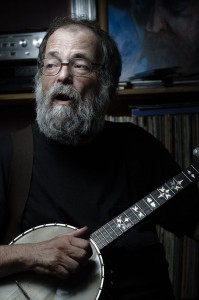
Not bad for a Grade IX dropout – a true Woody Guthrie, the most adventurous soul I ever knew. My mate from the days of nursery school, Mitchell Podolak, is about to receive an honorary doctorate from Brandon University in Manitoba. The citation reads:

Mitch Podolak is a prominent fixture in the North America folk music world and is the creator and past founding artistic director of the Winnipeg Folk Festival, the Vancouver Folk Music Festival, Winnipeg’s West End Cultural Centre, The Winnipeg International Children’s Festival and Home Routes/Chemin Nous, North America’s only house concert network. He is also the co-creator, founding artistic director and team mentor that founded the Stan Rogers Folk Festival in Canso, Nova Scotia. Since 1974, Mr. Podolak has developed and led in the evolution of folk festival culture across Canada, and his efforts have seen hundreds of thousands of folk music fans come together in a common cultural cause. His methodological approach to structuring and motivating a volunteer corps in the art of running a festival has become the Canadian standard. His work is motivated by a love of folk music, of which his knowledge is extraordinary, and by a social view paralleling that of Pete Seeger and Woody Guthrie, Mr. Podolak’s strongest influences. In 2014, he received the Unsung Hero Award, the peer-driven lifetime achievement award of the Canadian Folk Music Awards. Mr. Podolak has had huge influence on the provincial and national cultural funding institutions that now all support folk music. Brandon University is recognizing his work with an honorary doctorate.

“I am pleased to recognize Lisa de Wilde and Mitch Podolak for their contributions to arts and culture as well as the creative industries on the national and international stage,” said Dr. Gervan Fearon, BU President and Vice-Chancellor. “Both have used their talent, leadership, and commitment to excellence to showcase the music, films and ideas of others. They inspire us all to find opportunities to strive for excellence in our own endeavours and to find opportunities to contribute to the success of others on whichever stage we perform.”

The conferring of an honorary Doctor of Laws (honoris causa) at Brandon University bestows honour upon a deserving candidate who has made an outstanding contribution in one or more designated categories including the University, society, professional life, public service and the advancement of knowledge. Nominations are received from both the Brandon University and greater Westman communities.

No award has ever been more deserved. And it may truly be said for us both, aside from learning to play the banjo, all we really needed to know we learned in nursery school.

As for the banjo [and do note it is long-necked, five-stringed and wood-framed, just like mine], I might mention our days at Camp where in 1955, two musicians came to visit, one who played the concertina and the other, none other than Pete Seeger himself, who came and played the banjo [which was, and by no coincidence, long-necked, five-stringed and wood-framed]. I remember virtually nothing else from my camping days – this is, after all, sixty years ago – but I do remember this concert. The result has been that the only two instruments I own and play are the concertina and banjo. So whatever may have separated us in life, whether time, distance or politics, we share a love of folk music that transcends all else.

My book launch

There will be few moments in my life as exquisite as Wednesday when Peter Costello* came up to the University to launch the second edition of my Free Market Economics: an Introduction for the General Reader. It was a rare moment when the political side of my life, the academic side and my recognition of the importance of classical economic theory were brought together all at once, and was a moment I could share with my friends and family.

I may sometimes give the impression that the book is mostly about Keynesian economics and macro which is not the case at all. That is why I started it out, but the oddest thing for me was to find that as I wrote each chapter, that I harboured views that are far outside the standard textbook treatment. This starts even before we get to supply and demand, but I promise you this, by the time you finish with supply and demand you will know you are in a different economic world. Of course, there are demand-side market forces that limit the price that can be charged for a product, and forces on the supply side that put some kind of lower limit on the price. But the notion that there is a single equilibrium price for a product where two lines cross on a two-dimensional plane is unsupportable by even the most casual empiricism. As I point out to my classes, the price of a cup of coffee, starting from the $1 at the 7-11, to prices four and five times higher that are charged, all within a mile of the front door of our building, ought to make you appreciate that there is something else. I do teach the traditional S and D analysis, but my students also are made to understand that prices are not set by these two curves, but by entrepreneurs who are making decisions about their optimal pricing strategy, given all of the forces of the market that surround them. And most importantly, I do not let them forget that the information in a demand curve can never be known by anyone, ever. It is strictly for teaching purposes. Entrepreneurs in the real world have to work these things out for themselves in real time.

But if I have a villain on the microeconomic side, it is the MR=MC analysis and diagram. If economics had gone out of its way to find some means to cloud minds about what goes on in markets, I don’t think they could have come up with anything worse.

mc equals mr

I teach Keynesian economics, of course, but I won’t teach that. You can find it discussed in my book, but it’s in an appendix. Over the years of teaching this diagram and the explanations that surround it, I found that after going through markets and then supply and demand, you would come to this and stop a class cold. Eventually some could draw the diagram and some might have seen the point, but there would not have been many. I do, of course, teach marginal analysis, but not like this. If you would like to see how I do it, as just part of the way this book is different from any economics book you know, Quadrant Online put up a few pages of the book under the heading Margin of Success.

As I said at the end of my presentation, there are three features of the book that I stress over and again: the role of the entrepreneur, value added and the crucial importance of uncertainty. Each is part of what must truly be understood by marginal analysis: entrepreneurial decision making in the face of the unknown future. And the point I make about the entrepreneur, as I said on the night, is that we now talk about market forces and the invisible hand, but the reality is that there is only one force that matters in a market economy, and that is the entrepreneur. And I don’t mean entrepreneur as in someone who innovates and causes change. I mean entrepreneur as in the captain of a ship in the midst of a storm a thousand miles from land.

_____

* For non-Australians, Peter Costello is the nearest equivalent we have to Ronald Reagan. He ran the economy for eleven of the best years economically this country ever had. Not only was the Asian Financial Crisis a non-event when every one of our major regional trading partners was in recession, but we ended up with 5-6% at the same time. And not only budget surpluses year after year, Australia was, until Labor took over, the only country in the world that had ZERO DEBT! The momentum given to the economy by Costello meant that we travelled through the GFC with hardly a ripple. Our problems have come since due to the debts and deficits Labor piled up. We will never see zero debt again in anyone’s lifetime, and will be lucky even to see our budget balanced any time this side of 2025.

Fear the ignorance

Supposedly an answer to Fear the Boom and Bust which you can watch here as an antidote. This has been put up at the History of Economics discussion thread, but the look on the face of the student at the start when he finds that Adam Smith wrote his Wealth of Nations in 1776 suggests he may not have found the most perfect launch pad. This has been posted by the chap who put the video together.

I thought that SHOE readers would like to know about a much anticipated reply to the Hayek-Keynes rap video. Here is “Fear the Economics Textbook (Story of the Next Crook): A Rap Video,” by Stephen T. Ziliak and the RU Ready 4Justice Collective at Roosevelt University, that is, students of economics and social justice studies.

The link he provides is here. The sound hasn’t yet been perfectly coordinated with the picture so here are the lyrics to help you follow along.

[Maya and Ben sing Refrain to “Wet Dreamz” beat by J. Cole]
I took my last look, at this textbook,/
Invisible hand, /story o’ tha next crook,/
I took my last look, at this textbook,/
Invisible hand, /story o’ tha next crook,/
So proud, so game, so orthodox,/
2
But ch’yer head’s in the sand, Prof,/
don’t blame da Nash box./
We read, we think, we write about it,/
But ch’you’re standin’ there lecturin’,/
n’ we’re worryin’ about it.
Took my last look, at this textbook,/
Invisible hand, /story o’ tha next crook,/
We read, we think, we write about it,/
But ch’you’re standin’ there lecturin’,/ n’ we’re worryin’ about it.
[Cyris sings Verse 1 to “Let ‘em Blow” by Chief Keef et al.]
Readin’ Greg Mankiw, /
Queue the conservative man’s view/
Supply, demand, invisible hand too /
Following these Ten Commandments he hands to you /
Hey kids, you understand what Econ really can do? /
These ain’t the pearly gates, Mr. Mankiw/
Just preachin’ on profit and Max U/
But where’s the vertical mobility?/
Masses are enslaved in poverty/Millions for your fat pockets see/
This poverty of nations ain’t so efficient/
Mainstream economists are mentally deficient/
Monotonous lectures despite student resistance/What works on the Blackboard but not
with existence/
3
Your crackpot theories plot all the wrong axes /
If you are the state we-Uber-killin’ all your taxis /
[Maya sings Verse 2 to “Let ‘em Blow” (Chief Keef et al.)]
Yo I say that with gritted teeth/
Admittedly, when it comes to justice and liberty/
You Ivy leagues just can’t compete, I pity thee/
So tell New Jersey fans we gonna need new Jersey’s man/
Cause you just stand in the stands lookin’ white wan/
Invisible hand doin’ nothing but hurting me/
Burnin’ me, doesn’t matter if it’s third degree/
Cause your economic policy causing nothing but poverty/
Death n’ destruction are all that I can see/
We need wealth for society, stop with the perjury/
You cheat, you steal, you lie through your pearly teeth/But today’s a new day and there’s a
brand new lesson to teach/
We’re turning over Ivy leaves as we stomp our feet . . . ./
[Pause . . . . then Maya concludes:]
I’m like Steve Nash, so check out this sweet pass/
[Maya and Ben sing Refrain to J. Cole “Wet Dreamz”:]
I took my last look, at this textbook,/
Invisible hand, /story o’ tha next crook,/
I took my last look, at this textbook,/
Invisible hand, /story o’ tha next crook,/
4
So proud, so game, so orthodox,/
But ch’yer head’s in the sand, Prof,/
don’t blame da Nash box./
We read, we think, we write about it,/
But ch’you’re standin’ there lecturin’,/
n’ we’re worryin’ about it.
Took my last look, at this textbook,/
Invisible hand, /story o’ tha next crook,/
We read, we think, we write about it,/
But ch’you’re standin’ there lecturin’,/
n’ we’re worryin’ about it.
[Eboni sings Verse 3 to “Let ‘em Blow” (Chief Keef et al.)]
Lesson one, it starts in a sympathetic fashion/
Government spendin’ can stop markets from crashin’/
You askin’, “where’s the money comin’ from?”/
It’s C+I and G and then we’re done some/
You see, it’s really not that complicated/
But steppin’ on the little guy ain’t the right way to make it/
You fake it, we take it, but it’s time to unionize/
Get ourselves organized, give the capitalists a huge surprise/
And begin the journey toward a social compromise/
5
Where the poor get more and the rich standby/
We fly, get high, and soar towards the blue sky/
Where moral sentiments replace demand and supply/
[Maya and Ben sing Refrain to J. Cole “Wet Dreamz”:]
I took my last look, at this textbook,/
Invisible hand, /story o’ tha next crook,/
I took my last look, at this textbook,/
Invisible hand, /story o’ tha next crook,/
So proud, so game, so orthodox,/
But ch’yer head’s in the sand, Prof,/
don’t blame da Nash box./
We read, we think, we write about it,/
But ch’you’re standin’ there lecturin’,/
n’ we’re worryin’ about it.
Took my last look, at this textbook,/
Invisible hand, /story o’ tha next crook,/
We read, we think, we write about it,/
But ch’you’re standin’ there lecturin’,/
n’ we’re worryin’ about it.
6
[Cyris and Erika sing and chant Verse 4 to “Let ‘em Blow” (Chief Keef et al.)]
It’s clear your markets are free of justice/
Looks like your supply curve needs some adjustments/
We need benevolence and sympathy in the mix/
These textbooks are corruptin’ our moral sentiments/
We need O.G.s in here, like Smith, Marx and Lerner/
Heterodox economics is the real table turner/
Get back to the real world, no catallaxy/
Spontaneous order, can’t put me in a Cadillac, see?/
Check Ferguson, Garner, and Rodney King too
People can’t work when they face black n’ blue!
[Prof Z raps Verse 5 to “Let ‘em Blow” (Chief Keef et al.)]
Dude from George Mason had a lot to say/
Not a whole lot o’ substance at the end o’ the day/
His message n’ beats are false an’ predictable/
Does he even teach his students about Rawls’s difference principle?/
We come from Roosevelt, yo, n’ we are the Lakers,/
Let’s get back to class now n’ forget all these fakers/
[Maya and Ben sing Refrain to J. Cole “Wet Dreamz”:]
I took my last look, at this textbook,/
Invisible hand, /story o’ tha next crook,/
7
I took my last look, at this textbook,/
Invisible hand, /story o’ tha next crook,/
So proud, so game, so orthodox,/
But ch’yer head’s in the sand, Prof,/
don’t blame da Nash box./
We read, we think, we write about it,/
But ch’you’re standin’ there lecturin’,/
n’ we’re worryin’ about it.
Took my last look, at this textbook,/
Invisible hand, /story o’ tha next crook,/
We read, we think, we write about it,/
But ch’you’re standin’ there lecturin’,/
n’ we’re worryin’ about it.
[Maya and Ben repeat first stanza of Refrain, with fade out . . .]
I took my last look, at this textbook,/
Invisible hand, /story o’ tha next crook,/
Took my last look, at this textbook,/
Invisible hand, /story o’ tha next crook,/ . . . . .

Economic sinners

I am in the middle of so many projects in which the modern version of economic theory is at the centre, that I find my thoughts overflowing into these blogs. A blog is not, however, supposed to be anything other than an overview shared among like-minded people. Comments on my post on the sins of economics are reasonable and temperate, but still fill me with some dismay which has me led me to go over some of that ground again. The sense of inevitability for the Industrial Revolution in the midst of the pastoral settings of eighteenth century England is not one I share. What did happen is not necessarily what had to happen. As Tel, no doubt intending to be ironic, points out:

I dunno, it’s probably more important that Isaac Newton invented gravity… I mean, without gravity you could slip easily, lose your footing and fly off into space. Sorry, but Newton is much more important in the scheme of human progress.

As it happens, Newton’s three laws did not change all that much about anything, but it did change the climate of thought. Certain ideas matter. It was not Adam Smith by himself and on his own, although he did have a fair share to do with it. The period 1770 through to about 1830 was the only period in history when being anti-establishment meant being pro-market. It was in that relatively brief span of time that the market economy was allowed to come into the foreground in the teeth of opposition from the landed aristocracy to the Luddite opponents of new technologies. Economic theory has been trying to backtrack ever since, whether the Marxist variety or the Keynesian variety and now even the mainstream. With Green policies so insidious, where to from here is not all that obvious, although I think that with the market genie out of the bottle, it remains almost impossible to stop. But Schumpeter in 1942 was already predicting that capitalism’s success would be its downfall.

Ray has then added:

I trust we are not ascribing the growth experienced during the Industrial Revolution to Adam Smith. It was not until after the repeal of the Corn Laws and Navigation Acts in 1846 and 1849 respectively, more than seventy years after The Wealth of Nations was first published, that the teachings of Smith and Ricardo, began to dominate policy matters. Until then, the Mercantilists ran public policy, very much the antithesis of everything Smith taught us.

A climate of opinion is essential for any system to take hold. If opinion didn’t matter, if the structure of beliefs made no difference, then elect socialists and get on with spreading equity instead of wealth. These things matter now and they certainly mattered 1770-1830.

And this was brought up from the Zero Hedge list, which is supposedly an example of seeking greater market regulation:

The benefits of free trade outweigh the costs of a country losing its manufacturing sector as a result; the fact that domestic companies have to comply with much stricter and costlier regulations than their foreign competitors is of no consequence.

If you don’t think domestic regulation affects an economy’s ability to produce, just have a look at the mining industry before and after Labor. Try adding in a measure of carbon pricing and see how the aluminium industry prospers. The phrase “internationally competitive” has a meaning. This may not be phrased to your liking, but it makes a point worth thinking about.

So let me finish with this quote from Rich:

A seed takes time to grow to a tree that bares fruit, and in that time it needs its protectors and proselytisers.

If economics in 1776 was like economics today, how likely would the Industrial Revolution have been then?

The sins of economics

I was directed to a post by Tyler Durden with the title, The Farce That Is Economics: Richard Feynman On The Social Sciences. As it happens I disagree with Feynman about the social sciences, and especially with his criticisms of economics. That it did not occur to him, or perhaps he did not even notice, that it was only since the publication of Adam Smith’s The Wealth of Nations that the world has achieved the kind of prosperity that was not even within the imagination of the most visionary man alive in the eighteenth century. Economists have learned a very great deal, which is why we have become so well off, but have also forgotten almost as much, which is why mainstream economic theory is such a disaster zone. But we still keep our eye on the functioning of markets, which if left to themselves will make us progressively wealthier in spite of everything we might do.

But Tyler goes on with his own list of economists’ sins which I not only agree are disastrous, and genuine, but happen to be dealt with, each and every one, in my Free Market Economics, the second edition which may be found here. This is more or less a list of economic concepts that economists have managed to unlearn over the past half century. Indeed, it is because he can see how wrong these are that he can even put together this list.

  • Saving money is a sin and should be penalized; speculation is a virtue and should be encouraged
  • The government does not need to run its finances like every other company and individual in the country; what is good for the latter is bad for the former
  • Inflation should be kept at 2% forever; that’s the exactly right number, no more, no less; if you start paying less for your food, rent and healthcare, the central bank must intervene
  • Those who take personal risks to create prosperity and jobs have obligations; everyone else has rights
  • The state can spend its citizen’s money much more intelligently than they can
  • Business cycles are bad so we must always stimulate the economy
  • When a boom in demand pursuant to a boom in credit inevitably fades away, we should create another boom in credit to revive demand again, and again, and again
  • Creating debt at a rate above an economy’s incremental productive capacity generates wealth
  • Anyhow, debt does not matter because that liability is someone else’s asset
  • Demographics don’t matter either
  • You generate so much prosperity in your job over 40+ years that you can comfortably live in your retirement of 20+ years
  • Foreign lenders only need to be concerned with regard to banana republics; the others will always pay them back
  • The capital markets follow nicely shaped probability bell curves, and so shocks and crashes are extremely rare events; the markets are “efficient”
  • The benefits of free trade outweigh the costs of a country losing its manufacturing sector as a result; the fact that domestic companies have to comply with much stricter and costlier regulations than their foreign competitors is of no consequence
  • Human behavior is governed by mathematical equations and models, even when oversimplifying assumptions are used
  • The next generation will figure out a way to pay for all the massive debts that we are creating today; otherwise the central banks will solve the problem
  • The way to create prosperity in a society is to take away resources from the productive sector and distribute them amongst the unproductive sector
  • We all admire the free markets; we just can’t let them work

The missing ingredient from economics today, as I often mention, is value added, the central concept surrounding Say’s Law. No economics text ever mentions value added outside a brief discussion of the national accounts, and I actually think very few economists, although familiar with the phrase, have any idea what it means or why it matters. If they did, they could not possibly have endorsed the stimulus, and Keynesian economics in all its forms would now be dead.

Just because it’s the minimum wage doesn’t mean it has only minimal impact

The minimum wage costs a lot of jobs. If people prefer to work than live on welfare, we should not prevent them. These are interesting stories from San Francisco where they just had a radically large increase in the minimum wage across the city. Usually, it is an increase that is a shade higher than the prevailing wage so no one really notices. There are few extra losing their jobs, and those who were already unemployed are just part of the background. It’s a case study, When Minimum-Wage Hikes Hit a San Francisco Comic-Book Store, but for those simpletons who think minimum wage adjustments make little difference, this should be an eye opener.

‘I’m hearing from a lot of customers, ‘I voted for that, and I didn’t realize it would affect you.’

So says Brian Hibbs, owner and operator of Comix Experience, an iconic comic-book and graphic-novel shop on San Francisco’s Divisadero Street, of the city’s new minimum-wage law. San Francisco’s Proposition J, which 77 percent of voters approved in November, will raise the minimum wage in the city to $15 by 2018.

As of today, May 1, Hibbs is required by law to pay his employees at Comix Experience, and its sister store, Comix Experience Outpost on Ocean Avenue, $12.25 per hour. That’s just the first of four incremental raises that threaten to put hundreds of such shops out of business.

Hibbs opened Comix Experience on April Fools’ Day, 1989, when he was just 21 years old. Over two-and-a-half decades, the store has become a must-visit location for premier comic-book artists and graphic novelists, and Hibbs has become a leading figure in the industry, serving as a judge for the prestigious Will Eisner Comic Industry Awards and as a member of the Comic Book Legal Defense Fund’s board of directors. He notes with pride that his store has turned a profit each year — no small task — since its very first year.

But that may not last. Hibbs says that the $15-an-hour minimum wage will require a staggering $80,000 in extra revenue annually.

“I was appalled!” he says. “My jaw dropped. Eighty-thousand a year! I didn’t know that. I thought we were talking a small amount of money, something I could absorb.”

He runs a tight operation already, he says. Comix Experience is open ten hours a day, seven days a week, with usually just one employee at each store at a time. I

t’s not viable to cut hours, he says, because his slowest hours are in the middle of the day. And he can’t raise prices, because comic books and graphic novels have their retail prices printed on the cover.

What is a small-businessman to do?

The small business shuts. The next one doesn’t open, while large business just trims.

Asking people earning $350,000 a year, as we do in Australia, may be the wrong way to determine the minimum wage.

What’s wrong with economics in a single sentence

I have been reading David Romer’s Advanced Macroeconomics for some work I am doing and came across this. He is trying to explain why a particular equation doesn’t seem to capture the actual reality of the world. So he writes:

“There are other possible interpretations: the education and skills of the labor force, the strength of property rights, the quality of infrastructure, cultural attitudes toward entrepreneurship and work, and so on.”

And having noted all this in passing, he goes on his way.

To which I have added after a post in the comments which read: “Romer is referring to technology in Solow’s exogenous growth model and he does not simply move on. In fact, Romer devotes chapters 3 and 4 to a discussion of the drivers of technological growth.”

And indeed he goes on with an assembly of other factors of which the ones in the list are largely the specific ones ignored, such as the importance of property rights, say, or cultural attitudes, and the role of and attitude towards entrepreneurship.

If you cannot quantify some cause, so far as economics today is concerned it may as well not exist.